
You remember where you were. Almost everyone alive today does.
For a few strange months in 2020, the entire human race did something it had never done together before: it stopped. Airports emptied. Factories fell silent. Families that hadn’t shared an unhurried meal in years found themselves cooking side by side, with nowhere left to rush off to. We called it lockdown. We called it the new normal. We called it a lot of things in a hurry, because we needed language for something we’d never lived through before.
But there’s an older word for what happened, one written into the Hebrew Scriptures long before anyone had heard of a novel coronavirus: Shemitah — the Sabbatical year.
Every seventh year, the Torah commands something that sounds almost impossible for an agricultural nation to actually keep: let the fields lie fallow. No planting, no organized harvest. Just rest — the same Hebrew word, shabbat, used for the weekly day of rest, now applied to the land itself. It wasn’t a suggestion. It was law, with real economic teeth, built on the assumption that the God who fed His people could be trusted to provide even when the fields sat empty.
Here’s what should stop you in your tracks: when a nation persistently refused to give the land its rest, Scripture doesn’t say God simply let it slide. Leviticus 26 describes the land eventually taking the rest it was owed anyway — through exile, through desolation, on a schedule that lines up, almost eerily, with the very cycle that had been ignored. The debt of rest gets collected one way or another.
So here’s the question worth sitting with, without rushing to an answer: was 2020 only a public health emergency? Or was something older also at work — the same God who wrote rest into the seventh day of creation, and into the seventh year of the land, finally making the whole world sit still long enough to remember what it had forgotten?
That’s not a conspiracy theory. It’s not a doomsday countdown. It’s a pattern — one that shows up again and again across the last several Shemitah cycles (2001, 2008, 2014-15, 2021-22), each one landing suspiciously close to a hinge point in world history. Coincidence is always possible. But it’s at least worth noticing rather than dismissing.
And here’s where it gets genuinely interesting for anyone paying attention to the calendar: the next Sabbatical year, 5789 on the Hebrew calendar, opens in the autumn of 2028. Whatever else that year holds, one thing is certain — the same rhythm that seemed to pause the world in 2020 is due to turn again.
This isn’t a book about fear. It’s an invitation to notice a rhythm God built into time itself, long before any of us were born to track it — and to walk toward whatever comes next a little more awake than we were before.
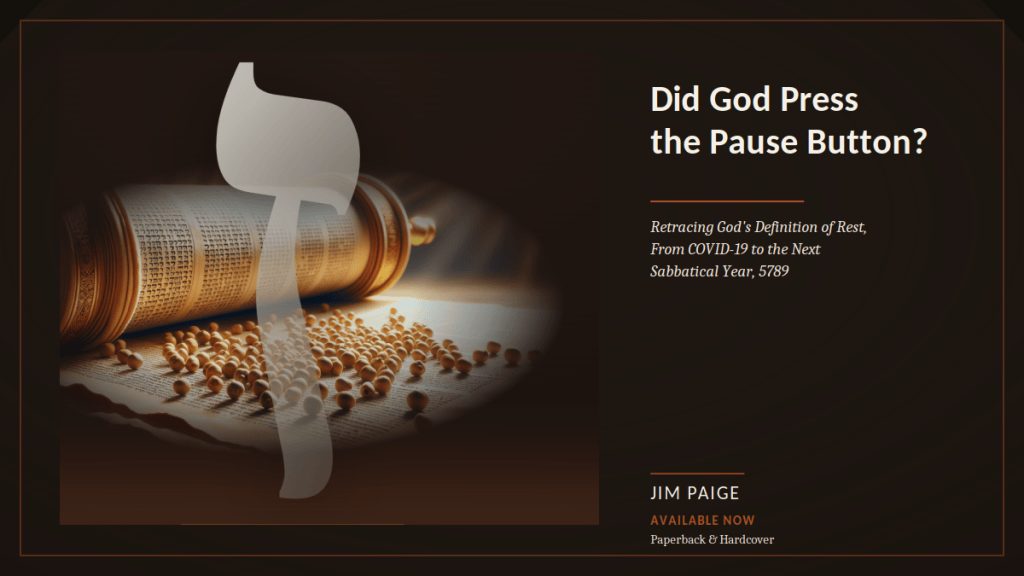
If that question interests you, I traced the whole pattern — from Genesis to the sealed scroll of Revelation to the years still ahead of us — in Did God Press the Pause Button? Retracing God’s Definition of Rest, From the COVID-19 Pandemic to the Next Sabbatical Year, 5789. 📖 Get your copy
 Faith Matters