Introduction
In Part One and Two we explained the roots, meaning and symbolism of the metaphorical Rock in scripture, examined Yeshua’s identity as a “Foundation Stone”, scrutinized a scientific perspective of the Earth’s rocky foundations, and analyzed the character of Jonah in parallels with Simon Peter. This last segment continues with Messiah Yeshua’s self-declaration as the “Foundation Rock,” then reviews the main prophetic meaning and function of the Rock, the Stone, stones, and Salvation. The final stop is where End-Time prophecy wraps it all into the image of God the Father, Messiah Yeshua, and where you fit in.
The Everlasting Rock
As we explored in Part Two, modern scientific understanding of rocks aligns with biblical symbolism in remarkable ways. Now we’ll examine how this symbolism relates to God’s eternal nature.
The scriptures say God, LORD (YHVH), the creator of the heavens and the earth was before time. Then God made man in His likeness at the dawn of time (Genesis 1:1,14,26). We are told that at the ‘End of Time’ GOD the LORD, “the everlasting Rock” will continue with His people in a timeless zone. (Isaiah 26:4; Revelation 22:1-5,14,17).
Some translations refer to the everlasting Rock as “Rock of Ages,” or “the Rock eternal,” or “everlasting strength.” This is the same “Rock” that king David referred to as “my fortress, and my deliverer, my refuge, my shield, and the horn of my salvation, my stronghold” (Psalm 18:2; Psalm 62:7-8).
The Hebrew masculine noun for “everlasting”, olam (עולם) is timeless. It means:
- Ancient time or long time
- Forever or always
- Continuous existence
- Indefinite or unending future
- Eternity
It comes from the root alam (עלם) which means to hide, blind, conceal, or keep secret.
The rock of my strength,
And my refuge, is in God.
—Psalm 62:7
The Apostle Peter wrote, “you also, as living stones, are being built up a spiritual house, a holy priesthood, to offer up spiritual sacrifices acceptable to God through Jesus Christ (1 Peter 2:5).
Earlier in Part Two we saw compelling scientific evidence where both, the Rock and the Stone share fissile characteristics. Physicists validating the biblical quotation of what God said at the dawn of time:
Then God said, “Let Us make man in Our image, according to Our likeness;” So God created man in His own image; in the image of God He created him; male and female He created them.
—Genesis 1:26-27.
Naturally people reproduce in their own likeness, after their image and die (Genesis 5:3-30). But it is ‘God’s invisible image’ that gives man the unique ability to morph from mortality into the perpetuity of a ‘living stone.’ How? There are certain things that can only be seen through the eyes of faith alone—the mysterious relationship between the ‘eternal Rock’ and the ‘living stones’ is one of them. The prophet Daniel was given a foretaste of it in a vision from heaven nearly 2,500 years ago.
Daniel’s Vision and Understanding
Daniel recorded this prophetic vision:
And many of those who sleep in the dust of the earth shall awake,
Some to everlasting life,
Some to shame and everlasting contempt.
Those who are wise shall shine
Like the brightness of the firmament,
And those who turn many to righteousness
Like the stars forever and ever.—Daniel 12:2-3
Daniel was honest when he admitted; “Although I heard, I did not understand”
the coded presentation—alam ( עלם ), to conceal (v.8,11).
When Daniel says he “did not understand,” the Hebrew word used (alam) specifically refers to something being deliberately concealed or hidden – suggesting these prophecies were intentionally sealed until the appropriate time.
Daniel is not the only one . . . the scripture says, “It is the glory of God to conceal a matter and the glory of kings to search it out (Proverbs 25:2). The plural in “kings” refers to those who by faith will follow the One who has the diet of everlasting life (1 Peter 2:9-10; Revelation 5:10; 14:4,12-13).
About 450 years later Messiah Yeshua declared He is the Bread of Life.
“For my Father’s will is that everyone who looks to the Son and believes in him shall have eternal life, and I will raise them up at the last day.”
—John 6:26,36,40,47,54.
The stunned crown that included Yeshua’s disciples found that extremely controversial and unacceptable.
From this time many of his disciples turned back and no longer followed him. “You do not want to leave too, do you?” Jesus asked the Twelve. Simon Peter answered him, “Lord, to whom shall we go? You have the words of eternal life. We have come to believe and to know that you are the Holy One of God.” —vv.66-69).
Personal Reflection on Biblical Understanding
There is nothing frustrating like trying to discuss something you expect someone to know and get a pushback instead! It takes a lot of patience and humility to rise above the disappointment and still get along. In my experience, there are times, many times when I feel like either I am not eloquent enough, or it is not really my call. But when I finally retreat into the closet and drop down on my knees after hours of introspection, the Lord always reminds me that it is not about me, it is all about Him (2 Corinthians 4:1-6).
Throughout my walk with the Lord, He has given me this unique ability to soak in scripture like a sponge. But somehow, there are times when I wish what I know should get me a sugar high or some kind of a Nescafé boost. If that is the way it was supposed to work, then I would become overdependent on the intellectual accumulation of things, rather than on the revelation of the hour. Every sugar crush I have suffered keeps reminding me that the Lord prefers an interactive relationship and practical application of faith in Him. It is a journey, and only Yeshua knows the way to the end (John 14:6).
The End of Time
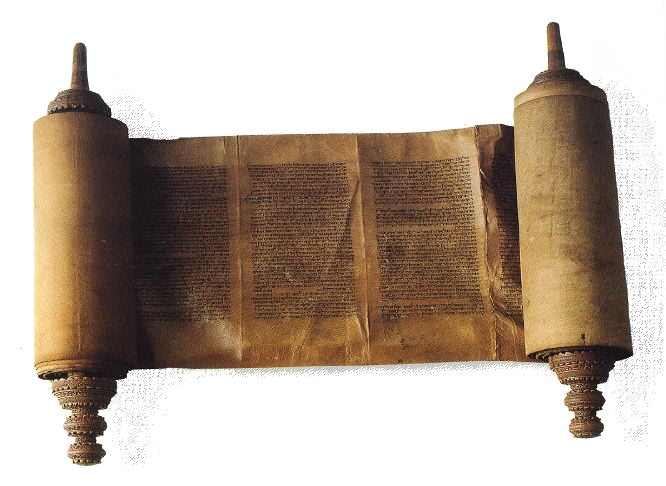
The prophet Daniel was given a fleeting image of the “End of Time”, Acharit Hayamim (אַחֲרִית הַּיָמִים):
“But you, Daniel, shut up the words, and seal the book until the time of the end; many shall run to and fro, and knowledge shall increase. . . Go your way, Daniel, for the words are closed up and sealed till the time of the end; and none of the wicked shall understand, but the wise shall understand.”
—Daniel 12:4,9-10
A while back we saw out of the Twelve original disciples, it is Simon Peter who was quick to recognize that only Yeshua has the words of eternal life (Deuteronomy 8:3; Matthew 4:4; John 6: 63,68). Because Peter learned from experience. Peter constantly errored, stumbled and fell many times. Yet, he picked himself up and kept following. It is a process. Later, the Lord Yeshua would make this complementary comment when teaching His disciples the purpose of His parables:
But blessed are your eyes because they see, and your ears because they hear. For truly I tell you, many prophets and righteous men longed to see what you see but did not see it, and to hear what you hear but did not hear it.
—Matthew 13:16-17
He is not referring to Simon Peter alone. He is congratulating all of them. They’ve come a long way filled with trials and testing. But they’re not there yet. They just need to fix their gaze at the destination, not where they’re lest they be disheartened and lose focus.
When Daniel was told to “shut up the words, and seal the book until the time of the end,” he was also given an idea of what that would look like:
“But you, go your way till the end; for you shall rest, and will arise to your inheritance at the end of the days.”
—Daniel 12:13
The Heavenly Visitor of Daniel’s Vision
There is a contentious theological debate on the identity of the heavenly visitor interacting with Daniel in chapter 12. If you go by Daniel’s account, there are several key elements that form this puzzle:
- Three men are mentioned in the vision (vv.5,6), but Daniel addresses only one standing in the middle as “My lord” (v.8)
- This man was clothed in linen and “standing above the waters of the river”
- Daniel describes seeing the same man earlier in chapter 10:
o By the side of the great river, the Tigris (v.4)
o Clothed in linen with a waist girded with gold of Uphaz (v.5)
o His body was like beryl, face like lightning, eyes like torches of fire
o His arms and feet like burnished bronze, and the sound of his words like a multitude (v.6)
This description matches only one individual across Scripture – The Lord, Yeshua HaMashiach (Jesus Christ), as confirmed by these parallel descriptions:
- The Glorious Man (Daniel 10)
- The Son of Man (Revelation 3)
o Clothed with a garment down to the feet and girded about the chest with a golden band (v.12,13)
o Head and hair white like wool, as white as snow, eyes like flame of fire (v.14)
o Feet like fine brass refined in a furnace, voice as the sound of many waters (v.15)
o Countenance like the sun shining in its strength (v.16)
o “I am the First and the Last. I am He who lives, and was dead, and behold, I am alive forevermore.” (v.17,18) - The Lamb (Revelation 14)
o “Like the voice of many waters” (v.2) - The King of Kings (Revelation 19)
o “Now I saw heaven opened, and behold, a white horse. And He who sat on him was called Faithful and True, and in righteousness He judges and makes war.” (v.11)
o Eyes like a flame of fire (v.12)
o Name called The Word of God (v.13a)
o Armies in heaven clothed in fine linen (v.13b)
o “KING OF KINGS AND LORD OF LORDS” written on His robe and thigh (v.16) - The Transfiguration of Yeshua (Matthew 17)
o Transfigured before the disciples, face shining like the sun, clothes white as light (v.2)
Yeshua promised Daniel that though he will physically die, he will be raised to his inheritance at the end of the days (Daniel 12:13). The Lord would repeat the same promise to His disciples nearly 500 years later. That solemn promise is still valid today—it is a perpetual promise, and it is for everyone who believes:
“And this is the will of him who sent me, that I shall lose none of all those he has given me, but raise them up at the last day. For my Father’s will is that everyone who looks to the Son and believes in him shall have eternal life, and I will raise them up at the last day.”
—John 6:39-40

—John 6:39-40
Notice some keywords there: “none”, “all”, “everyone”. Our Hebrew noun for “everlasting”, olam (עולם) we found earlier also means “world” (Ecclesiastes 3:11; Isaiah 45:17, 64:4). It is an open door. God takes no pleasure in shutting anyone out. The LORD (YHVH) is interested in our welfare more than we’re because man is created in His image. When we suffer God grieves with us. It is His image and His name that suffers reproach. For His name’s sake, and for His purposes invested in man, God, the Father desired that everyone would be there when the clock stops and eternity begins. That is why Yeshua needed to accomplish the legal transaction contingent on Salvation (Hebrews 10:1,5-10, 16-18).
We Are All Peter
The scripture’s metaphor of believers as “living stones” connects directly with Peter’s experience. Just as Peter (whose name means “rock”) was transformed through his relationship with Christ, we too undergo spiritual transformation when built upon the foundation of Christ, the True Rock.
That is what we are told in 1 Peter chapter 2 verse 5— “. . . you also, as living stones, are being built up a spiritual house, a holy priesthood.”
In the NT book of 2 Corinthians 5:1-4, the Apostle Paul refers metaphorically to our mortal body as a tent, ohel (אהל). Other synonyms that match the Hebrew ohel (אהל) in this context include:
- Covering
- Place
- Home
- Dwelling
- Tabernacle
The first occurrence of tabernacle in the OT book of Exodus chapter 26 refers to the temporary sacred structure the LORD (YHVH) instructed Moses to make. It became known to the children of Israel by its primary function as “the tabernacle of the congregation,” or “tent of meeting” ohel moed (אהל מועד) before the LORD:
“. . . where I will meet you to speak with you. And there I will meet with the children of Israel, and the tabernacle shall be sanctified by My glory. So I will consecrate the tabernacle of meeting and the altar. I will also consecrate both Aaron and his sons to minister to Me as priests. I will dwell among the children of Israel and will be their God. And they shall know that I am the Lord their God, who brought them up out of the land of Egypt, that I may dwell among them. I am the Lord their God.”
—Exodus 29:43-46; Exo 30:36; Exodus 33:7
Notice God promises to ‘consecration’ both; the tabernacle, and the priests.
We are told that the ‘ark of the Testimony’ containing the two stone tablets of the ten commandments God gave Moses was the most sacred artifact kept in the Most Holy chamber of the tent of meeting (Exodus 25:16,22; 31:18).
The tabernacle was replaced by two successive stonework temples (Beit HaMikdash) that stood almost 900 years combined. They have never been replaced since but the original function remain—The Lord is still able to meet with His people in a tabernacle or temple not made by man (Jeremiah 31:31-34; Hebrews 8:7-12; 1 Corinthians 3:16-17; 6:19-20).
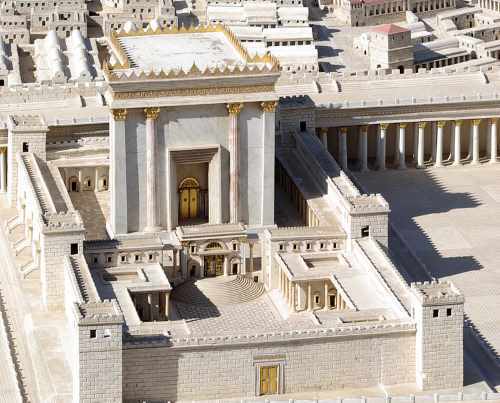
The scriptures reveal that when we die physically, it is our earthly house, covering, home, dwelling, tent, which is destroyed. But we have a building from God, a house not made with hands, eternal habitation which is from heaven (2 Corinthians 5:1-2). This is the “spiritual house” described in 1 Peter 2:5.
The symbolism of living stones means we come in different shapes and sizes, often with rough edges caused by splitting off iniquitous foundations. Similar to Jonah and Simon Peter, the Lord accepts us in our warped state and begins to chisel away erratic characteristics until we get to fit in (Joshua 8:31; 1 Peter 2:10; 1 Kings 5:17; 7:9-12).
Personal Reflection on Sharing This Message
I feel led to take a little break here to reflect ahead of the next segment. It was a point of contention the last time I shared the subject with a bunch of friends. The leader of the group looked straight at me in the eye and said, “Charles H. Spurgeon would definitely disagree with you on that one.” Then he drew a red X across the problem paragraph in the handout, and advised me to avoid such a controversial subject next time. Bottom line: the delivery was good, but the text falls within the red flags of ecclesiastical risk assessment template.
Another ‘commended‘ me for ‘handling criticism well’ and added, “Brother you should watch Myles Munroe, he’s such a great teacher, or Rick Renner— they’re amazing; you might be able to learn some tips from them. . .”
I could feel the effort in his voice to softens the tone, and avoid the perception of patronizing. I am naturally very sensitive, but able to conceal fragility with a smile when I get hit under the belt. But it can linger on, and it certainly did. Because I did not think I was called to emulate someone else’s fingerprints. I have always believed that the Lord called me to follow “the Way”, His way (John 14:6). I had spent some five weeks preparing for the session, studying scripture and praying about it. I was so reassured deep inside that what am about to share is a word in season. I could feel that it aligns with the need of the hour. I still do.
The “Tent of Appointed Time”
To everything there is a season, A time for every purpose under heaven: I said in my heart, “God shall judge the righteous and the wicked, For there is a time there for every purpose and for every work.”
—Ecclesiastes 3:1,17

The Hebrew for “time” here in Ecclesiastes is the feminine noun et (עת). It means time (of an event), as translated from the root, ad (עד) implying perpetuity, continuing future, for ever. The final root from ad is ada (עדה) meaning to:
- Advance—pass on, go on, or continue
- Take away
- Remove (as in an old robe and adorn a new ornament, garment or decor)
Adah and Jabal
Summary
The following explores biblical connections between Adah, mother of Jabal (the patriarch of shepherds), and prophetic themes in Scripture. It traces a line from Cain’s curse to Christ’s redemption, noting how Jabal—a descendant of Cain—became father of shepherds, while Christ later declared Himself the Good Shepherd. The names carry prophetic significance: Adah (meaning both “to advance” and “to remove”) connects to Christ removing iniquity, while Jabal (related to “watercourse”) links to the promised River of Life. The passage highlights how early Genesis narratives foreshadow Christ’s teachings on forgiveness (“seventy times seven”) and ultimate redemption, fulfilling God’s declaration of “the end from the beginning.”
As a footnote: Adah (עדה) was Lamech the First’s second wife and mother of Jabal (יבל), who became “the father of those who dwell in tents and have livestock” (Genesis 4:19-20). This first Lamech was the fifth-generation descendant of Cain, Adam and Eve’s firstborn son who murdered his brother Abel, “a keeper of sheep” and the first shepherd (Genesis 4:1-8). For this crime, the Lord cursed the land and Cain, sentencing him to be “a fugitive and a vagabond on the earth” (v.10-15). However, the Lord also protected Cain “sevenfold” against reprisal.
Though Abel left no biological heir, Jabal (יבל), Cain’s sixth-generation pre-flood descendant, became the new patriarch of shepherds. This continuity is prophetically reflected in the name of Jabal’s mother Adah (עדה), meaning “to pass on, advance, go on.” Jabal’s father Lamech reinforced this by declaring, “For I have killed a man for wounding me, even a young man for hurting me. If Cain shall be avenged sevenfold, then Lamech seventy-sevenfold” (vv.23-24).
Approximately 40 generations later, Messiah Yeshua declared Himself “the good Shepherd” (John 10:11,14) and echoed Lamech’s formula when explaining forgiveness:
“Then Peter came to Him and said, ‘Lord, how often shall my brother sin against me, and I forgive him? Up to seven times?’
Jesus said to him, ‘I do not say to you, up to seven times, but up to seventy times seven.’”
—Matthew 18:21-22
This highlights a deeper meaning of Adah’s name (עדה): “take away, remove.” In Zechariah 3:9-10, we are promised that Messiah will remove the land’s iniquity (cursed with Cain) in one day. The Lord will then dwell (tabernacle) with His people, with no more curse (Revelation 21:1-4; 22:3; Daniel 9:24; Isaiah 53:6,10-11).
Additionally, the name of Adah’s son, Jabal, derives from the root yāḇāl (יבל) meaning “stream, watercourse,” which connects to the End-Time “River of Life” promised to support “the healing of the nations” (Isaiah 30:25; Ezekiel 47:1-10; Revelation 21:1-5)—thus “declaring the end from the beginning” (Isaiah 46:10).
Thus, Adah’s name (עדה) is strategically aligned with the masculine noun moed (מועד) associated with “the tabernacle of the congregation,” or “tent of meeting” ohel moed (אהל מועד). Moed comes from the root verb yaad (יעד) meaning:
- To meet or meet by appointment
- To gather
- To assemble by appointment (by agreement or at a set time)
This is widely used to define the LORD’s annual ‘set times,’ moedim (מועדים) and sabbaths:
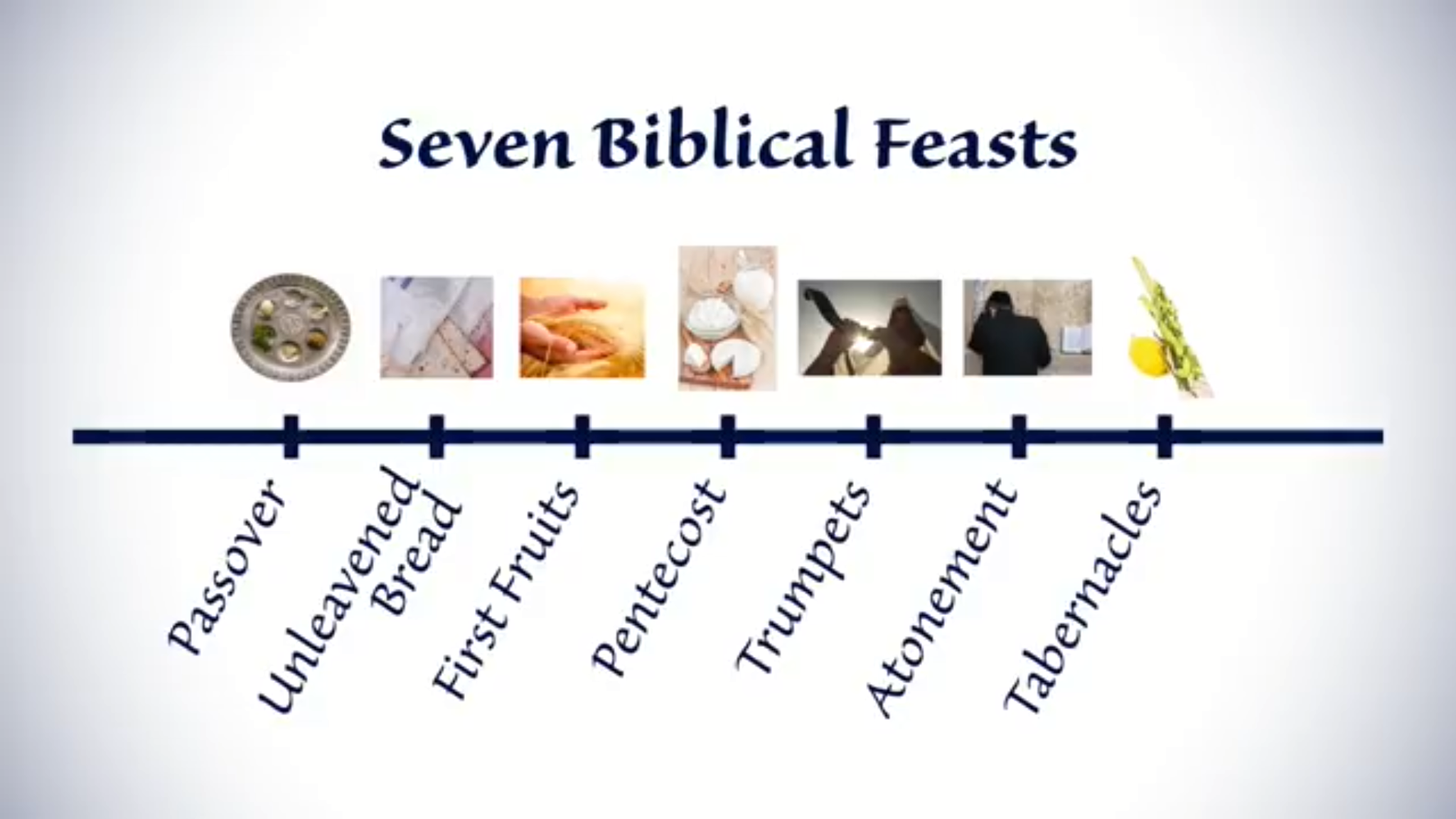
And the Lord spoke to Moses, saying, “Speak to the children of Israel, and say to them: ‘The feasts of the Lord, which you shall proclaim to be holy convocations, these are My feasts. . . These are the feasts of the Lord, holy convocations which you shall proclaim at their appointed times [moedim (מועדים)] . . .”
—Leviticus 23:1-44
Nearly 2,500 years ago the prophet Daniel was told to “shut up the words, and seal the book until the time of the end (12:4,9). But 400 years later John (the Revelator) was told “Do not seal the words of the prophecy of this book, for the time is at hand” (Revelation 22:10). That clock has been counting down for nearly 2000 years. And it is accelerating towards the LORD’s ultimate appointed time —”things which must shortly take place.” He who testifies to these things says, “Surely I am coming quickly.” (Revelation 1:1; 2:5,16; 3:11; 22:7,12,20)
Many speakers and teachers prefer to avoid the complex imagery and symbols found in Revelation, the final book of the New Testament. In Revelation, God’s chosen people are described through various interchangeable terms: the Woman, the Bride, the Lamb’s Wife, Holy City, and New Jerusalem. These descriptions refer to the same concept mentioned in 1 Peter 2:5,9 and Revelation 12:17 and 21:2,9—the ‘living stones’ being built into a spiritual house and a holy priesthood.
These are not a special people that qualify based on race or ethnicity—It is a ‘congregation’ of Messianic believers the Lord Yeshua (Jesus) calls “My church” or ‘flock’ (Matthew 16:18; John 10:16). Notice the singular—Scriptures clarify that there is only one registration certificate of the Lord’s ‘Church’ family in heaven (Hebrews 12:23). Messiah Yeshua is committed to One bride, the Lamb’s wife (Revelation 21:9).
Then I, John, saw the holy city, New Jerusalem, coming down out of heaven from God, prepared as a bride adorned for her husband. And I heard a loud voice from heaven saying, “Behold, the tabernacle of God is with men, and He will dwell with them, and they shall be His people. God Himself will be with them and be their God. And God will wipe away every tear from their eyes; there shall be no more death, nor sorrow, nor crying. There shall be no more pain, for the former things have passed away. . . But I saw no temple in it, for the Lord God Almighty and the Lamb are its temple.”
—Revelation 21:2-4,22
In that New Testament excerpt alone, we have gone full circle back to the days of the ancient “tabernacle of the congregation,” or “tent of meeting” (Exodus chapter 25); and it is for “our times.”
The Seven Churches and The Faithful Church
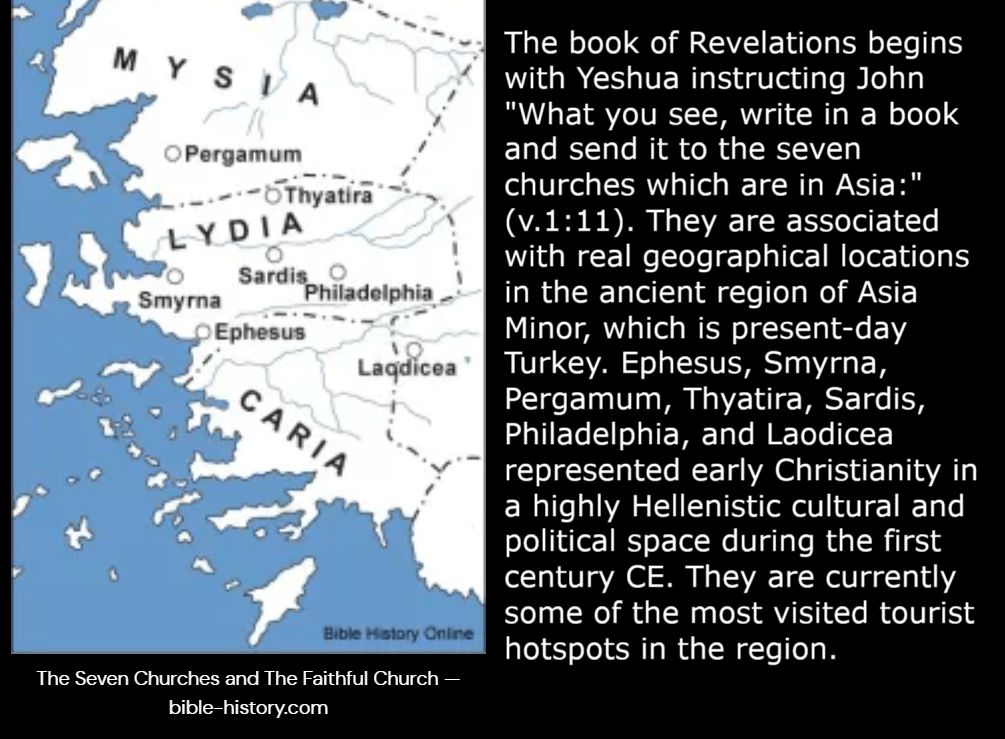
Depending on where you are, there are many theological interpretations of what ‘churches’ really represent in this context. Some think its about ‘diversity and inclusion’ or ‘variety’ and denominational options. You often hear seasoned speakers using the Apostle Paul’s “one body, many parts” analogy from 1 Corinthians 12:12-27 to explain the pluralism.
However, there is only one, of the seven prophetic churches in the list that matches Yeshua’s specific description when He told Simon Peter that “on this rock I will build My church . . .” (Matthew 16:18). It is the only Church that is called by ‘His name’ — The Faithful Church (Revelation 3:7-13).
I can explain! To The Lukewarm Church of the Laodiceans Yeshua told John to write the following:
These things says the Amen, the Faithful and True Witness, the Beginning of the creation of God:
—Revelation 3:14
- The Hebrew noun emun (אמון) translates as “faithful, truth, faith”
- It has a numerical value of 97 which reduces to 7 (9+7=16, 1+6=7)
- This is the same numerical value as ‘māšîaḥ/Messiah‘ (משיח)
- Emun (faithful) comes from the root aman (אמן) meaning “to support, confirm, be faithful, be established”
- That is where we get our word, Amen!
A single sentence to the Laodiceans listed a series of key titles that describe Messiah Yeshua in very vivid terms. You cannot go any further than the “Amen”, the last word in the last sentence of the Bible.
Additional numerical significance of “Amen”:
- Amen (אמן) has a numerical value of 91
- This reduces to 10 (9+1=10)
- Ten indicates “divine order, completed cycle, measure, or group; a complete congregation, body, or kingdom”
- The tenth Hebrew letter is Yodh/yod/yud (י) with a numerical value of 10
- Its pictographic meaning includes hand, work, worship, power, congregation
- Reducing 10 further equals one (1+0=1)
- Yeshua said “I am the Beginning of the creation of God; the First and the Last; the Amen” (Revelation 2:8; 3:14)
That mighty revelation to The Lukewarm Church of the Laodiceans was a last-minute offer of reconciliation subject to repentance over their ‘lukewarm’ way of worship. —”As many as I love, I rebuke and chasten. Therefore be zealous and repent” (vv.3:14:21).
A similar call to “repent” is repeated in letters to four other ‘churches’ in the group of seven; The Loveless Church, The Compromising Church, The Dead Church, and The Corrupt Church (Revelation 2:5,16,21-22; 3:3).
The Persecuted Church in Smyrna and The Faithful Church in Philadelphia are the two exceptions, but not due to favoritism: The seven prophetic churches are symbolic of the various types of ‘unhewn‘ stones that must be hewn and transformed into living stones that can fit steadily on the foundation of “truth” (1 Kings 5:17; 7:9-12; Revelation 14:1-5).
Like the ancient Ninevites in the days of Jonah who responded to the message of repentance, end-time believers in Smyrna and Philadelphia would turn from their own idea of worship, and follow the ways of the Lord. They are those who have kept God’s word of truth, and have not denied His name like Simon Peter did, before he repented and was restored. Despite suffering extreme persecution, they remain faithful until death (2:10; 3:8,10; 12:17).
The 144,000 Sealed Believers
Now hear how else John witnessed about this group:
Then I looked, and behold, a Lamb standing on Mount Zion, and with Him one hundred and forty-four thousand, having His Father’s name written on their foreheads. . . And in their mouth was found no deceit, for they are without fault before the throne of God.”
—Revelation 14:1,3,5.
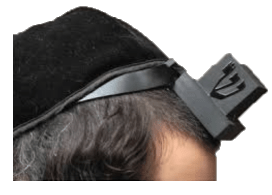
The idea of people having God’s name written on their foreheads is not symbiotic with the tattoo club. It is also not about wearing Tefillin (Jewish ritual gear) while they pray. It is about ‘obedience’ by faith to the word of God:
And these words which I command you today shall be in your heart. You shall teach them diligently to your children, . . . You shall bind them as a sign on your hand, and they shall be as frontlets between your eyes.
Deuteronomy 6:6-8; 11:18; Exodus 13:8,16
The numerical significance here is remarkable:
- Following numerical reduction principles, 144,000 reduces to 9 (1+4+4+0+0+0=9)
- The Hebrew word for “truth” (emeth, אמת) has a numerical value of 441
- This also reduces to exactly 9 (4+4+1=9)
- Emeth (אמת) is a contraction of aman/amen (אמן) meaning “confirmed, established, sure, verified, reliable, faithful”
Messiah Yeshua placed the “truth” central to everything when He declared that “I am the way, the truth, and the life. No one comes to the Father except through Me” (John 14:6). Sadly, truth lives in obscurity to a multitude of people out there, including many among acclaimed ‘believers’ (Matthew 24:24). But the Lord invites us to “Call to Me, and I will answer you, and show you great and mighty things, which you do not know.” (Jeremiah 33:3)
Every letter to the seven churches of Revelation ends not in a rebuke, but in the Lord’s solemn invitation: “He who has an ear, let him hear what the Spirit says to the churches. . .” (2:7,11,17,29; 3:6,13,22).
The Living Stone and His Chosen Living Stones
It is written:
“We all like sheep have gone astray, each one has turned to his own way; and the LORD has laid upon Him the iniquity of us all.”
—Isaiah 53:6
The Hebrew aon (עָֹון) which translates ‘iniquity’ means:
- Perversity or depravity
- Guilt of iniquity or great guilt
- Guilt of condition
It comes from the root verb ava (עוה) meaning: - To bend, twist, or distort
- To be bent, twisted, or perverted
- To commit iniquity
Iniquity is a judicial term. Its implications exceed the legal definition of sin and transgressions by far. The devastating consequence of or punishment for iniquity linger on for generations: “. . . visiting the iniquity of the fathers upon the children and the children’s children to the third and the fourth generation.” (Exodus 20:5; 33:7).
I hate snakes, but it is the best analogy closest to what iniquitous patterns look like: The situation is like a constrictor snake’s hold – it’s firm and unwavering, preventing you from moving forward or escaping. The situation doesn’t just suddenly appear; it’s like the snake tightening its coils, slowly increasing the pressure over time. It’s hard to break free or find a way out of the situation, much like a prey struggling against the snake’s grip. The situation can feel like it’s suffocating you, making it difficult to breathe or function normally. When the victim finally succumbs, the condition simply moves on to someone else from within the bloodline (house).
Scriptures say there is a costly remedy from the LORD’s own judicial hand:
- “But he was pierced for our transgressions, he was crushed for our iniquities; the punishment that brought us peace was on him” (Isaiah 53:6)
- “After he has suffered, he will see the light of life and be satisfied; by his knowledge my righteous servant will justify many, and he will bear their iniquities” (Isaiah 53:6)
- The next day John saw Jesus coming toward him and said, “Look, the Lamb of God, who takes away the sin of the world!” (John 1:29)
Peter’s Transformation Journey
Here is how it works: the Apostle Simon Peter met Yeshua; he was saddled under a tenacious iniquitous situation comparable to the twisted spirit behind Jonah’s predicament—He was the unrepentant errant prophet of the LORD (YHVH) assigned to Nineveh (Jonah 1-4).
Peter’s iniquitous issues began from the moment he was given his first name Simon/Simeon, Hebrew Shimon (שמעון). The original Shimon is the second son of Jacob and his second wife Leah. It is his mother who chose the name Simeon saying “Because the Lord has heard that I am unloved, he has therefore given me this son also” (Genesis 29:33). A young man Simeon led his grieved and very angry brothers into a frenzied reprisal killing of Canaanite Shechem and his entire family for rape of their sister, and Jacob’s only daughter, Dinah (Genesis 34:1-30). Jacob was so dismayed by the shocking events which led him to pronounce such a negative destiny over Simeon and his brother Levi.
“Simeon and Levi are brothers; Instruments of cruelty are in their dwelling place. Let not my soul enter their council; Let not my honor be united to their assembly; For in their anger they slew a man, And in their self-will they hamstrung an ox. Cursed be their anger, for it is fierce; And their wrath, for it is cruel! I will divide them in Jacob And scatter them in Israel.
—Genesis 49:5-7
Fast forward nearly 1,600 years later to Simon, who was introduced to Yeshua by his brother Andrew: He encountered frequent hurdles in his discipleship and later Apostolical journey.
Satan’s Role as Accuser
Bible commentaries primarily describe Satan as fulfilling a specific role:
- To accuse or resist
- To act as a prosecuting attorney or adversary in law
- Greek antídikos, meaning adversary or opponent
- Greek kategoros, meaning accuser or complainant
Other notable biblical references where Satan acts out his prosecutor role:
- Joshua the High Priest over Jerusalem opposed by Satan accusing him of wearing filthy garments (Zechariah 3:1-3)
- Job, of Uz, described as “blameless and upright” prosecuted by Satan for his failure to discipline his children (Job 1:6-22)
- Satan, described as the “accuser of the brethren” (Revelation 12:10)
- The Lord Yeshua said, “Simon, Simon! Indeed, Satan has asked for you, that he may sift you as wheat. But I have prayed for you, that your faith should not fail; and when you have returned to Me, strengthen your brethren.” (Luke 22:31-32)
In this context, the adversary demanded or desired to request permission for the legal purpose of putting Peter on trial.

The metaphor “to sift you as wheat” implies:
- A thorough investigation digging dirt from the past
- Subjecting Peter to hardship or adversity
- A rigorous testing to breaking point
- Separating chaff from grain, the genuine from the counterfeit (Proverbs 20:26)
We know that Peter stumbled in his test of loyalty and denied being with Yeshua three times during His trial prior to crucifixion. But we also know Peter was genuinely remorseful and repented with tears (Luke 22:60-62).
Nothing rattles the adversary more than a sinner who repents. Previously the accuser had dug up more dirt on Peter. He found evidence connected to his first name Simon, Shimon (שמעון). Peter drew a sword and struck off the right ear of Malchus, the high priest’s servant. Peter was trying to resist Yeshua’s arrest in Gethsemane pending His trial and crucifixion (John18:10; Luke 22:47-50).
Yeshua reattached the victim’s ear. But in the unseen realm, the adversary found a legal precedent from Genesis 34 and a verdict rendered in Genesis 49:5-7. Simon Peter was a guilty instrument of cruelty and violence, undeserving of honor in the Messianic community. For in his anger, he severed a man’s ear. The accuser demanded that the ancient curse associated with Simon’s fierce anger be allowed to propagate accordingly. Satan’s desire was to scupper Peter’s destiny as an Apostle of Messiah Yeshua (Isaiah 43:27-28).
There was overwhelming evidence stacked up against Simon Peter’s conduct contradicting the standards of the Messiah he was supposed to serve:
- Yeshua is “gentle and lowly in heart” (Matthew 11:29)
- He was oppressed and He was afflicted, Yet He opened not His mouth;
- He was led as a lamb to the slaughter, And as a sheep before its shearers is silent, So He opened not His mouth.
- He had done no violence, Nor was any deceit in His mouth. (Isaiah 53:7,9)
And I will not remember your sins. Meet Me in court, let’s argue our case together; Isaiah —Isaiah 43:25-28
It is Yeshua’s words of prayer that stood between Simon Peter and the adversary. “But I have prayed for you, that your faith should not fail; and when you have returned to Me, strengthen your brethren.” (Luke 22:32)
Although Simon Peter kept stumbling and even falling at times, he kept picking himself up, and continued following Messiah Yeshua to the end (John 6:68; 21:19).
When we return, we will conclude this series by examining: The Reality of Iniquitous Roadblocks, Beyond Legalism, Key Linguistic Word Pictures in scripture, Peter’s Blessing and Freedom, Fulfilment of Ancient Prophecy, Protection for God’s People, Understanding the Keys of the Kingdom, The Day of the Lord, Feast of Tabernacles: A Pattern for the End, and Application for Today’s Believers. See you there.
 Faith Matters
One response to “The True Rock (Part Three)”
[…] our first three parts, we explored the powerful Rock Imagery that appears throughout Scripture as a symbol of […]
LikeLike