
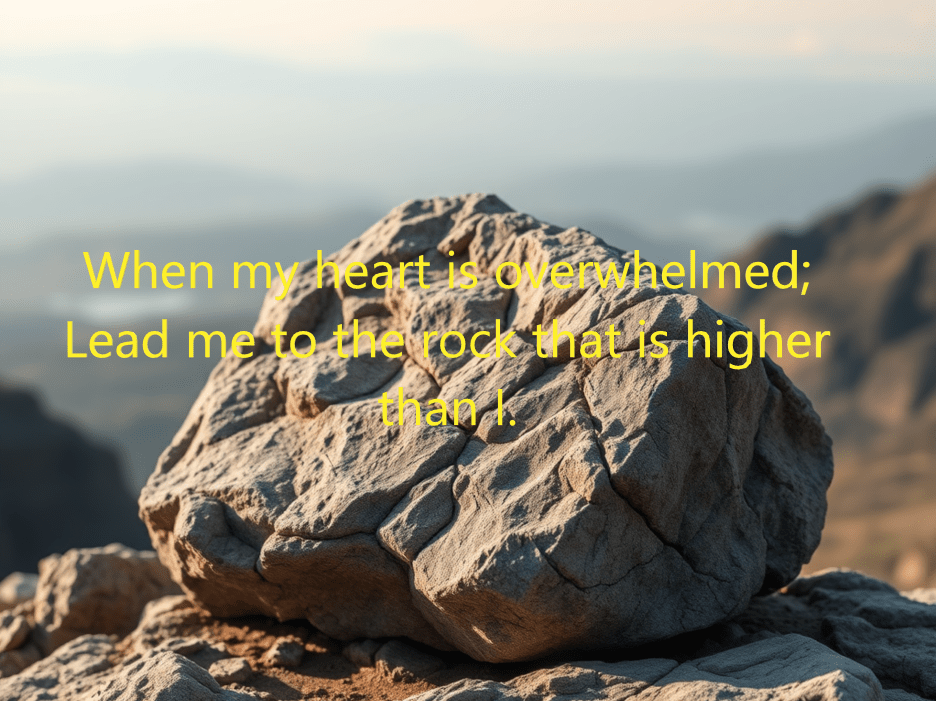
Introduction to the Rock Imagery
Throughout Scripture, the image of a “rock” symbolizes stability, protection, and salvation. This document explores how this powerful metaphor connects to Messiah Yeshua (Jesus) and God the Father across various biblical passages.
The Law of First Mention
From the moment I set my heart to study scripture, I learned that the best place to understand the true meaning and function of a word is to start from where it was first mentioned and examine its context.
Rock, the Hebrew masculine noun Tzur/Sur (צור), occurs 78 times in 74 verses in early translations such as the King James Version (KJV) or the Westminster Leningrad Codex (WLC). The KJV translates Tzur/Sur (צור) as: rock, strength, sharp, God, beauty, edge, stones, mighty One, strong.
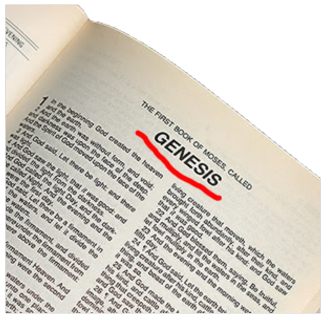
Our keyword ‘rock’, Sur (צור), is recorded for the first time in Exodus chapter 17:6 and 33:21-22 (WLC). The Book of Exodus, the second book of the Bible, recounts God’s deliverance of the Israelites from slavery in Egypt to the Promised Land. Their journey through the harsh wilderness was often punctuated by moments of contention with their leader Moses over essential supplies. At Rephidim, they complained about lack of water: “And the LORD (YHVH) said to Moses, ‘Go on before the people, and take with you some of the elders of Israel. Also take in your hand your rod with which you struck the river, and go. Behold, I will stand before you there on the rock in Horeb; and you shall strike the rock, and water will come out of it, that the people may drink.’” (vv.5-6).
Sixteen chapters later, the LORD commands Moses to lead the people out of the Mount Sinai campsite and continue towards their final destination, Canaan. Moses prays and asks for the LORD’s Presence to go with His people: “And the LORD said to Moses, ‘My Presence will go with you, and I will give you rest… Here is a place by Me, and you shall stand on the rock. So it shall be, while My glory passes by, that I will put you in the cleft of the rock, and will cover you with My hand while I pass by. Then I will take away My hand, and you shall see My back; but My face shall not be seen.’” (vv.14-22).
Later we will highlight the symbiotic relationship between the terms rock, cleft, and hand.
The Ancient Prophets Proclaim that the LORD (YHVH) is the Mighty Rock
“Are You not from everlasting, O LORD my God, my Holy One? We shall not die. O LORD, You have appointed them for judgment; O Rock, You have marked them for correction.”
—Habakkuk 1:12
Previously, the prophet Isaiah, pronouncing God’s judgment on Assyria for afflicting His people, mentions ‘the Rock’ in a powerful description: “You shall have a song as in the night when a holy festival is kept, and gladness of heart as when one goes with a flute, to come into the mountain of the LORD, to the Mighty One (צור) of Israel.” (30:29).
God, The LORD (YHVH), Declares He is “The Rock”
About 700 years after the Exodus, the prophet Isaiah reiterates God’s commitment to bless and protect the nation of Israel:
“Thus says the LORD, the King of Israel, and his Redeemer, the LORD of hosts: ‘I am the First and I am the Last; Besides Me there is no God. . . Do not fear, nor be afraid; Have I not told you from that time, and declared it? You are My witnesses. Is there a God besides Me? Indeed there is no other Rock; I know not one.’”
—Isaiah 44:6-8
Nearly 1,500 years after the Exodus and 750 years after the prophet Isaiah, Messiah Yeshua (Jesus) told John: “I am the First and the Last.” (Revelation 1:11,17; 22:13)
It is widely believed among Messianic scholars that it was the Apostle John (Matthew 4:21) whom the LORD tasked with writing to the seven prophetic churches listed in the End-Time Revelation of Jesus Christ (John 21:20-24; Revelation 1:1-4; 22:10).
A Mother’s Gratitude to the Rock
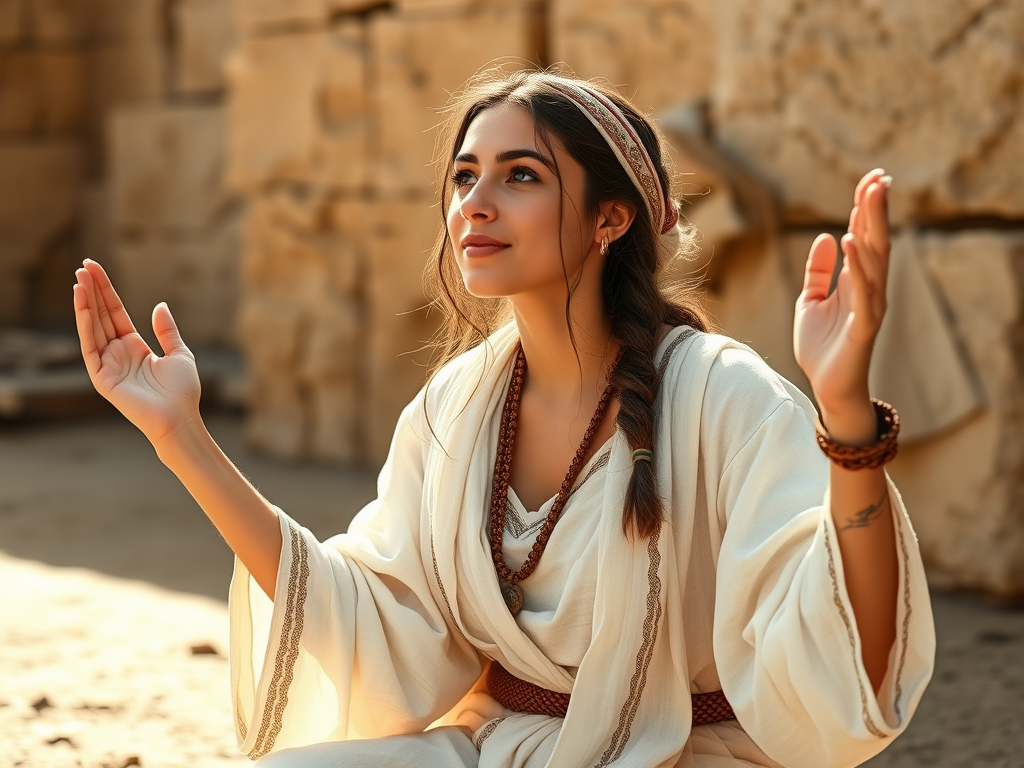
Hannah (חנה) was the second wife of Elkanah, a devout worshiper of the LORD of hosts in Shiloh. She was tormented by barrenness. When the LORD of hosts finally granted her petition, “Hannah conceived and bore a son, and called his name Samuel, saying, ‘Because I have asked for him from the Lord.’” (1 Samuel 1:1-19)
Hannah’s prayer of thanksgiving also recognized the salvation of the LORD, “our God the rock”:
“My heart rejoices in the LORD;
My horn is exalted in the LORD.
I smile at my enemies,
Because I rejoice in Your salvation.
No one is holy like the LORD,
For there is none besides You,
Nor is there any rock like our God.”—1 Samuel 2:1-2
The Hebrew feminine noun Hannah (חנה) comes from the verb hanan (חנן) meaning: to be gracious, show favor, pity, mercy, gracious, merciful, supplication, fair.
The New Testament gospel of Luke presents parallels of this kind of ‘favor‘ when Gabriel, the angel of the LORD, announced the imminent birth of Christ to Mary at Nazareth. She was a virgin engaged to Joseph, of the house of David. The couple is listed on the last line in the Matthean Genealogy of Jesus Christ (Matthew 1:16).
The angel said to Mary, “Rejoice, highly favored one, the Lord is with you; blessed are you among women! . . . Do not be afraid, Mary, for you have found favor with God. And behold, you will conceive in your womb and bring forth a Son, and shall call His name Jesus. He will be great, and will be called the Son of the Highest; and the Lord God will give Him the throne of His father David. And He will reign over the house of Jacob forever, and of His kingdom there will be no end.”
—Luke 1:28-33
Hannah’s only son Samuel was the last judge under YHVH’s theocracy over ancient Israel. He is also the prophet Samuel who anointed Israel’s first king Saul, and his successor David (1 Samuel 10:1; 16:11-13).
David’s Covenant Relationship with God, The Rock
In Psalm 89, the wise poet Ethan the Ezrahite shares an interesting vision from the LORD God of hosts concerning David:
‘“He shall cry to Me, ‘You are my Father, My God, and the rock of my salvation.’ Also I will make him My firstborn, The highest of the kings of the earth. My mercy I will keep for him forever, And My covenant shall stand firm with him. His seed also I will make to endure forever, And his throne as the days of heaven. . . His seed shall endure forever, And his throne as the sun before Me; It shall be established forever like the moon, Even like the faithful witness in the sky.” Selah’
—vv.26-37
The name David refers only to this great king of ancient Israel in the entire Bible. From experience, I have learned to focus on unique names that appear sparingly in the Bible such as: Adam, Moses, Abraham, Isaac, Jacob, Adonikam, and Josiah.
We know from biblical history that King David reigned over Israel for forty years, died, and a memorial for his burial is located in the old part of Jerusalem known as the City of David (1 Kings 2:10-12). So then, which ‘David’ is the subject of God’s perpetual promise? — “My mercy I will keep for him forever, And My covenant shall stand firm with him. And his throne as the days of heaven. . . as the sun before Me; It shall be established forever like the moon, Even like the faithful witness in the sky.”
There is a wealth of clues throughout the Bible, but we will try to keep within the context of the Rock. The second clue after Luke 1:28-33 comes from Peter’s sermon recorded in the “New Testament” or “New Covenant” part, Hebrew Brit Chadashah (ברית חדשה).
“Men and brethren, let me speak freely to you of the patriarch David, that he is both dead and buried, and his tomb is with us to this day. Therefore, being a prophet, and knowing that God had sworn with an oath to him that of the fruit of his body, according to the flesh, He would raise up the Christ to sit on his throne, he, foreseeing this, spoke concerning the resurrection of the Christ, that His soul was not left in Hades, nor did His flesh see corruption. . . For David did not ascend into the heavens, but he says himself: ‘The Lord said to my Lord, “Sit at My right hand, Till I make Your enemies Your footstool.”‘
“Therefore let all the house of Israel know assuredly that God has made this Jesus, whom you crucified, both Lord and Christ.”—Acts 2:29-35
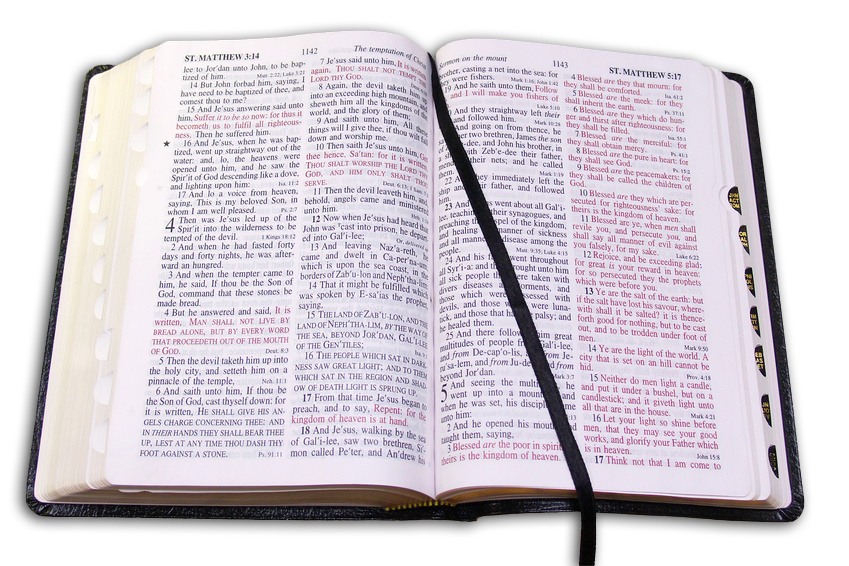
Earlier, the New Testament Gospel of Matthew begins as “The book of the genealogy of Jesus Christ, the Son of David, the Son of Abraham:” (1:1). In the Gospel of Mark, Jesus heals blind Bartimaeus who sat by the road begging and crying out, “Jesus, Son of David, have mercy on me!” (10:46-48).
In the last New Testament book of Revelation, the heavenly council of twenty-four elders surrounding Messiah Yeshua’s throne refer to Him as “the Lion of the tribe of Judah, the Root of David” (5:5). He confirms this to John (the Revelator): “I, Jesus, have sent My angel to testify to you these things in the churches. I am the Root and the Offspring of David, the Bright and Morning Star.” (22:16)
Notice the Hebrew translation of the masculine noun zeraʿ (זרע) repeatedly used in this context describes seed, sowing, offspring; semen virile, descendants, posterity, children (Psalm 89:4,29,36).
David’s Relationship with the Rock of Salvation
An excerpt from David’s song to the LORD on the day when the Lord had delivered him from the hand of all his enemies says;
“The Lord is my rock and my fortress and my deliverer;
The God of my strength, in whom I will trust;
My shield and the horn of my salvation,
My stronghold and my refuge;
My Savior, You save me from violence.
I will call upon the Lord, who is worthy to be praised;
So shall I be saved from my enemies.
The LORD lives!
Blessed be my Rock!
Let God be exalted,
The Rock of my salvation!
It is God who avenges me,
And subdues the peoples under me;
He delivers me from my enemies.
You also lift me up above those who rise against me; (Psalm 61:4)
You have delivered me from the violent man.
He is the tower of salvation to His king,
And shows mercy to His anointed,
To David and his descendants forevermore.”—2 Samuel 22:2-4; 47-51; Psalm 18:1-3, 46-50
David packed so much into that song, expressing a heart of gratitude and relief. The Old Testament (OT) WLC translation count of the Hebrew feminine noun Yeshua (ישועה) returns a total of 77 times in 76 verses. It means: salvation, help, deliverance, health, save, saving, welfare.
David acknowledged the LORD’s remarkable qualities—referring to Him as “Savior, deliverer, stronghold, refuge, and the Rock of my Salvation“—approximately 870 years (spanning 28 generations) before Yeshua’s crucifixion and subsequent resurrection.
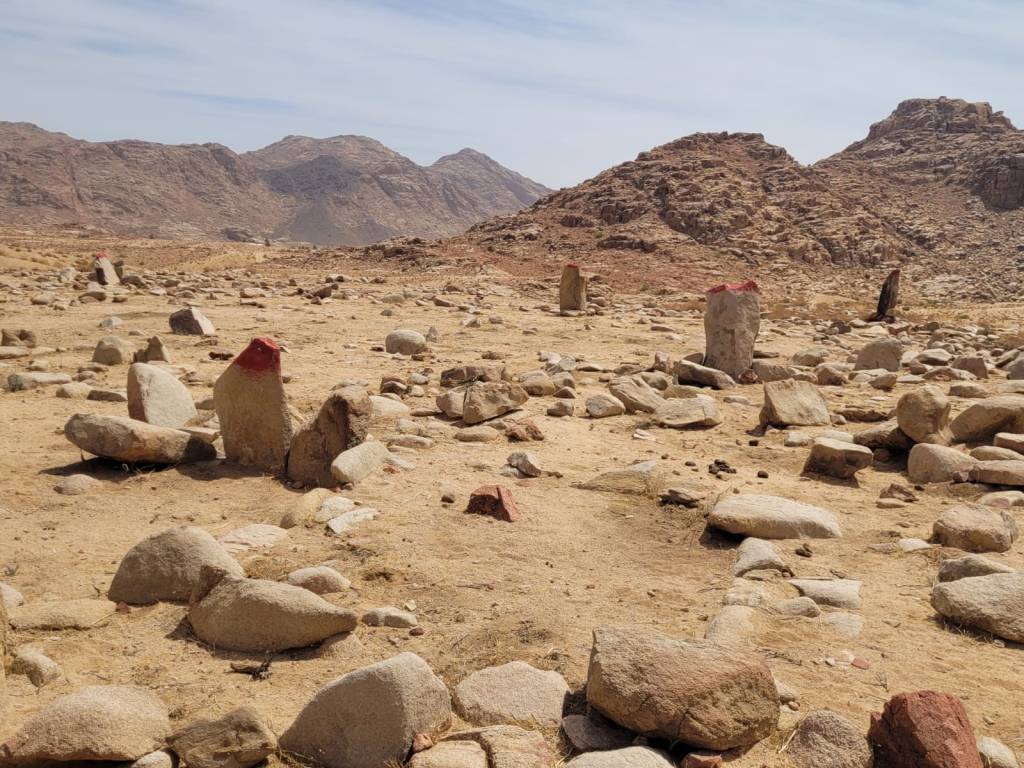
I feel that so far, we have covered an intricate weave; from the moment of first mention through the Gospels of Matthew, Mark, Luke and John, and into the last New Testament book of Revelation of Jesus Christ.
There’s much more coming in the next segment. While we take a well-deserved break, here are some examples where God, Rock, and Salvation are combined in one sentence—Deuteronomy 32:15; 2 Samuel 22:3; 22:47; Psalm 18:2; 18:46; 62:7; 89:26; Isaiah 17:10.
In Part Two we will examine God the Father’s perspective, Messiah Yeshua’s declarations about the ‘Rock‘, the Stone, stones, and Salvation, and the prophetic End-Time implications of it all. See you there.


2 responses to “The True Rock (Part One)”
[…] Part One and Two we explained the roots, meaning and symbolism of the metaphorical Rock in scripture, […]
LikeLike
[…] our first three parts, we explored the powerful Rock Imagery that appears throughout Scripture as a symbol of stability, protection, and salvation. We’ve […]
LikeLike