

In Part One, we learned the basics of how scamming works; who the scriptures say is the father of all lies, why he won’t quit, and how to defend against his schemes. We also explained the difference between knowledge about God and getting to know God intimately. Finally, we learned about the mysterious ‘new name’ tag from Yeshua to His followers. Brace for more prophetic number crunching in this part. We will also learn more about how the Messianic family fits into the picture of the End Times (Acharit hayamim אחרית הימים), the family diet, and conclude with a call to navigate back to where it all began—Jerusalem.
The Family of Nine
As I ponder how to proceed from here, I am struggling to contain my nervousness. I am not about to drop a bombshell; it is the fear of being misunderstood. Some may find the following section a bit hard to digest. However, I pray the Spirit of the Lord will help us understand with humility what He has for us in His word at this moment in time (Ephesians 1:17). The Apostle Paul, whose ‘Pauline Doctrine’ is rooted in most of what we have gleaned together so far, came from a place of ‘pastoral care’ when he wrote; “For the time has come for judgment to begin at the house of God;” (1 Peter 4:17).
The NT Bible also mentions Scribes, Pharisees, Sadducees, and Teachers of the Law at the center of the most bitter doctrinal and legal exchanges with Yeshua. But why did they keep hanging around someone they found so controversial? Because they knew Messiah Yeshua spared the most stinging criticism for those He loves the most. “As many as I love, I rebuke and chasten. Therefore, be zealous and repent” (Revelation 3:19). That love is demonstrated in no lesser terms than the cross, and from the Lord’s Prayer:
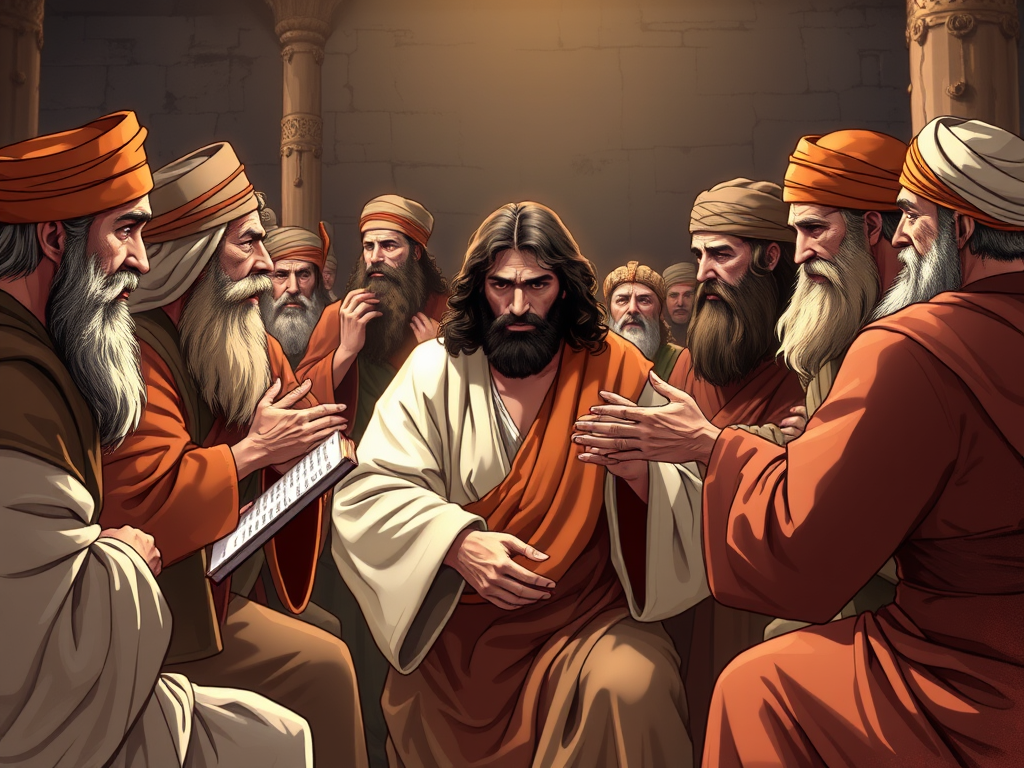
“Holy Father, keep them in Your name, the name which You have given Me, . . . While I was with them, I was keeping them in Your name, which You have given Me; and I guarded them . . .; and these things I speak in the world so that they may have My joy made full in themselves. I have given them Your word; . . . I am not asking You to take them out of the world, but to keep them away from the evil one. . . Sanctify them in the truth; Your word is truth. Just as You sent Me into the world, I also sent them into the world. And for their sakes I sanctify Myself, so that they themselves also may be sanctified in truth. I am not asking on behalf of these alone, but also for those who believe in Me through their word, that they may all be one; just as You, Father, are in Me and I in You, that they also may be in Us, so that the world may believe that You sent Me.”
—John 17:11-21 (NAS)
We are told that the crowd of 144,000 with the Lamb standing on Mount Zion in Revelation 14:1 and the “sealed” (protected) members of the tribes of Israel mentioned in Revelation 7:4 are ‘symbolic’ of a gathering, a community. They are the “general assembly and church of the firstborn who are registered in heaven” (Hebrews 12:23). Messianic prophecy symbolism here isn’t acquiescing with “Replacement Theology.” The church Yeshua left behind in Jerusalem was not a religious construct —it was more than a ‘congregation’; it was a “family” (Acts 1:4; 2:1-4).
A family dispute between those invested in “the ministry of the word” and Hellenists concerned about a “social program” opened the first crack of division (Acts 6:1-4). Hellenists generally refer to those who accept idol-worship and the Syrian-Greek lifestyle in the Holy Land.
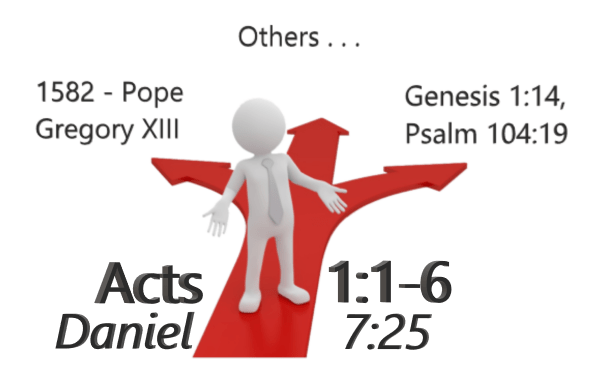
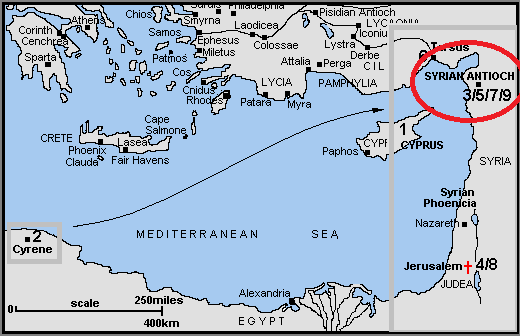
Further divisions emerged at Antioch among new gentile believers apprehensive about the “legalism” anecdotes against Judaism (c. 40 CE). Gradually, missionary Jewish Apostles from mother Jerusalem were forced to recalibrate rabbinical liturgy towards the religious and cultural gradient of the new Christians (Acts 11:20, 26; 15:1-31; 2 Timothy 4:3-4).
Prohibitive Roman taxation following the destruction of the Second Beit HaMikdash (Temple) in 70 CE forced some of the ‘gentile believers’ to separate themselves from the community. The introduction of the Birkat HaMinim ברכת המינים (the 19th Blessing on the heretics), meant to discourage secession, actually ended up alienating more, afraid of attracting a curse.
That cascading effect was amplified at the First Council of Nicaea, where 318 bishops assembled by the Roman Emperor Constantine in 325 CE to “define” church doctrine. The Third Council of Ephesus (431 CE) added weight to the Nicene Creed. The Fourth Council of Chalcedon (451 CE) reinforced canons from earlier church councils and declarations, and issued 27 canons to govern church administration and authority. The conclave of over 520 bishops found it necessary to redefine doctrine beyond what is written in the Christian NT Bible (1 Corinthians 1; Ephesians 4; Titus 1:7; 1 Timothy 3:2).
If “the daily serving of food” project in Acts 6:1-6 was a watershed moment for Christianity, the effects of that dark shadow of Antioch remain to this day. Mainstream Christianity, which ecclesiastically subscribes to “The Nicene Creed,” features a diversity of over 46,000 denominations (World Christianity and Religions 2022: A Complicated Relationship, January 2022, International Bulletin of Mission Research 46(1):71-80).
The IBMR report states that Christians number 2.632 billion worldwide. They are not growing in the sense of “adding to the church daily those who were being saved,” as often described in the NT book of Acts (2:41, 46; 4:14). Most modern Christian faith groups grow by attracting members from each other, inspired by trendy theological and liturgical finetuning (Acts 6:5a). Technically, the influence of Antiochism spawn negative growth —where more divisions along doctrine lines mean less fruit that endure. There are no better terms to decorate the culmination of broad decoupling from the Jerusalem roots of the church family (Acts 1:14; 2:1).
Credit: ASH (Abrahamic Study Hall)
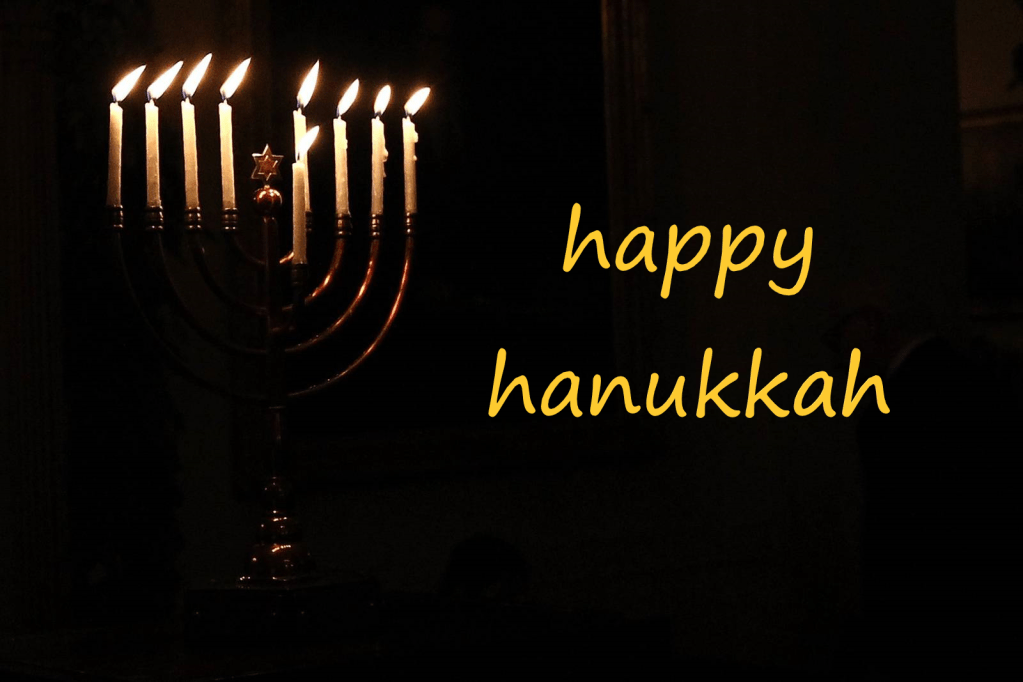
Hellenistic Antioch of Syria is the modern city of Antakya, located in Turkey’s Hatay Province, about 12 miles northwest of the Syrian border. In antiquity, Antioch is synonymous with the Antiochus dynastic title used by rulers of the Seleucid Empire. Antiochus IV Epiphanes (c. 215—164 BCE) is most remembered for rolling into Judea in 167 BCE, taking Jerusalem, and presiding over the most abominable acts against Judea. He introduced Hellenization (Greek culture), attempted to suppress traditional worship of Adonai, and his forces desecrated the Beit HaMikdash (Holy Temple) by idol sacrifice on the altar to the Greek god, Zeus. He was deposed by a small group of Jewish men revolt led by Judah Maccabee, the Cohen (priest). When the Jewish priests cleaned up the Holy Temple to re-dedicate it and light the Menorah, this instituted Hanukkah, the Festival of Lights (The Books of Maccabees, 1 and 2).
Yeshua (Jesus) said He is the light of the world, and also marked the Feast of Dedication (Hanukkah) at Jerusalem (John 8:12; 10:22–24).
Those are the pilgrimage phases in history which the Jewish Messiah Yeshua revealed to John, saying, “What you see, write in a book and send it to the seven churches . . . “(Revelation 1:11). Contrast that plural of seven churches with what Yeshua has in mind:
And other sheep I have which are not of this fold; them also I must bring, and they will hear My voice; and there will be one flock and one shepherd.
— John 10:16
Messiah’s words here emphasize unity and inclusivity, portraying a vision where all believers, regardless of their origin, are united under one shepherd. How do you see this message resonating with the current state of Christianity and its diverse denominations?
The Apostle Paul explains in Romans 11:11–31 that gentile believers are grafted into one tree—the Jewish Messiah from the tribe of Judah, and all His followers are nourished from the same root (John 15:5; Revelation 5:5). Jewish believers are grafted into the same tree, which is their own tree (Psalm 80). Paul warns against the idea of sectarianism: “Do not be arrogant, but be afraid. For if God did not spare the natural branches, He will certainly not spare you either” (Romans 11:19–21 — BSB).
It is the Lord’s desire for all believers in Yeshua to live in unity. “There is neither Jew nor Greek, slave nor free, male nor female, for you are all one in Christ Jesus” (Galatians 3:28; Ephesians 2:15). Nothing antagonizes Antiochism more than God’s people living together in harmony. By fostering secessionism in the earliest life of the church after Yeshua’s departure, the evil one was pre-empting a mighty blessing that covers unity (Psalm 133). Through its Greco-Roman prodigy, this slanderer and twister has abused ‘grace,’ demonized ‘truth,’ hijacked ‘worship,’ and weaponized God’s justice system against His people. But thanks be to the LORD of hosts, evil has an expiry date (Revelation 12:12).

Now back to the numbers: The family of 144,000 mentioned in Revelation 14:1,3 reduces to the number 9, the same numerical value of “Truth” emet (אמת). Yeshua said He is the “Truth” (John 14:6). Even better, when Yeshua mentioned “the name of the city of My God, the New Jerusalem…” in Revelation 3:12, the net value remains the same — “Truth” emet (אמת). Astonishingly, the numerical value 918 of, “the New Jerusalem” (ירושלים החדשה), also reduces to our unique prime number, nine, where (9 + 1 + 8 = 18) and (1 + 8 = 9).
And what does “having His Father’s name written on their foreheads” in Revelation 14:1 represent? True disciples (talmidim תַּלְמִידִים) are guided by “revelation” (Ephesians 1:17-19; Hebrews 10:16). The Lord intended for His relationship with His people to be interactive, not robotic. It is a lifestyle, not a project. The Apostle Paul cautioned that social programming, intellectualization, and commoditization of the Word of God can quench the work of the Holy Spirit (Ruach HaKodesh רוח הקודש) — 1 Thessalonians 5:19.
The reference to “those ones who follow the Lamb wherever He goes…” highlights Yeshua’s revelation that He is “The Way” (John 14:6). Yeshua’s central role as one who leads “The Way” underscores God’s immutable standards He expects believers to honor. Religious prerogatives do not apply. Yeshua’s credentials would get him into the front row of any religious organization, yet He founded no religion. He came to show the way to the Father (John 14:1-6).
How about “those who keep the commandments of God” (את מצות האלהים) mentioned in Revelation 14:12? It is not exclusively about Jews or the Kosher Laws of Moses —Your version of the Bible puts it squarely about you:
Your glorying is not good. Do you not know that a little leaven leavens the whole lump? Therefore purge out the old leaven, that you may be a new lump, since you truly are unleavened. For indeed Christ, our Passover, was sacrificed for us. Therefore let us keep the feast, not with old leaven, nor with the leaven of malice and wickedness, but with the unleavened bread of sincerity and truth.
—1 Corinthians 5:7
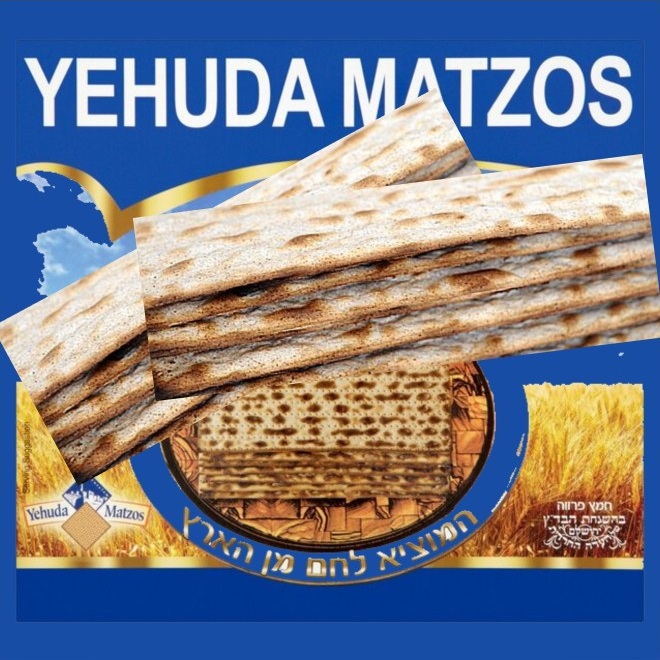
The root for “commandments” here is matzah (מצה). Definition: unleavened bread, unleavened, cakes, without leaven. Numerical value equals 135, reducing to (1+3+5=9), the same number as “Truth” emet (אמת). Yeshua is the “Truth” (John 14:6). Yeshua is “the bread of life,” and “the true bread from heaven” (John 6:32, 35, 48).
The first and only time the tempter tried to exploit Yeshua’s hunger for food, the Messiah prevailed by quoting scripture back: “It is written: ‘Man shall not live on bread alone, but on every word that comes from the mouth of God.’” (Matthew 4:4; Deuteronomy 8:3)
The Family Diet

The human story, our story, is from before time began (2 Timothy 1:9-10; Psalm 139:16). The pilgrimage ends where time zone restrictions don’t apply (Revelation 21:22-25; 22:4). There will be no dietary concerns (22:2) such as first encountered in Genesis chapter 3 at the beginning (beresheet בראשית). Along the way, God declared an action plan to restore nutrition integrity (Deuteronomy 8:3; Matthew 4:4).
Messiah Yeshua said, “I am the bread of life,” meaning He is at the center of God’s welfare plan for His people (John 6:32-35, 41, 47-58). The Tanakh/Tanach (Christian Old Testament Bible) outlines seven annual holy Feasts of the Lord: Passover (Pesach), Feast of Unleavened Bread (Chag HaMotzi), First Fruits (Yom HaBikkurim), Pentecost (Shavuot), Trumpets (Yom Teruah), and Booths (Sukkot) — Leviticus 23:1–44.
The Brit-Hakhadasha (Christian New Testament Bible) acknowledges the prophetic pointers of the Lord’s Feasts to Yeshua’s Messianic role: He is “the Passover Lamb” (1 Corinthians 5:7). Yeshua is also the Unleavened Bread (matzot), or matzah (מצה) —singular; and His blood is the wine of the Passover Feast (Matthew 26:26-28).
The numerical value of matzah (מצה) equals 9, the same numerical value as “Truth” emet (אמת). Right from the Beginning (B’resheet בראשית) to the end of time (Acharit hayamim אחרית הימים), God encoded in His word clues to help His people determine the legitimacy of family (Deuteronomy 6:8; 11:18; Exodus 13:16; Revelation 14:1). The benefits are that you have an “open door” to the Father’s estate (Revelation 3:8). The dangers are that you are a prime target at the slightest opportunity of drifting into the path of the adversary (Genesis 17:1; 1 Peter 5:8; Proverbs 4:19; 10:29; 14:12).
Stephen became the first casualty of what can go wrong in a program-based church. He was chosen as the first leader of the seven Hellenized members appointed to run the “food” faction in Acts 6:5-7. Many seasoned preachers celebrate the gruesome martyrdom of Stephen and the ensuing persecution of the early church. They believe the unfortunate events were the perfect storm the church needed to spread the gospel and see unprecedented numbers of believers added to the faith (Acts 8:1-3; 7:57-60; 11:26). Even with the freewheeling nature of that, it is hard to imagine the Lord who said he lays down his life for his Sheep now throwing some to the slaughter for the purpose of multiplication (John 10:11-14).
You’d often hear motivational statements like, “When the enemy intends to kill your ‘Stephen dream,’ the Lord will turn it into a bumper harvest — praise the Lord!” To which a standing ovation usually erupts with, “Amen!” That is not new with what is widely called, the Charismatic (aka sensationalist) movement: The prophet Zechariah saw that coming nearly 2500 years ago.
This is what the Lord my God says: “Shepherd the flock marked for slaughter. Their buyers slaughter them and go unpunished. Those who sell them say, ‘Praise the Lord, I am rich!’ Their own shepherds do not spare them.
—Zechariah 11:4-5 (NIV)
You may have heard of ‘Stockholm syndrome,’ a term that describes a psychological response to being held captive or abused: a theory that explains why some victims of abuse or captivity develop positive feelings toward their captors. This can include feelings of sympathy, love, or empathy. Well, Zechariah predicted that too:
So I shepherded the flock marked for slaughter, particularly the oppressed of the flock….In one month I got rid of the three shepherds. The flock detested me, and I grew weary of them and said, “I will not be your shepherd. Let the dying die, and the perishing perish. Let those who are left eat one another’s flesh.” Then I took my staff called Favor and broke it, revoking the covenant I had made with all the nations. It was revoked on that day, and so the oppressed of the flock who were watching me knew it was the word of the Lord.
vv.7-10 (NIV)
The metaphorical language suggests a profound betrayal of those who are vulnerable, with spiritual and social leaders exploiting rather than caring for those under their charge. The phrase “marked for slaughter” implies predetermined victimization, while the sellers’ callous celebration (“Praise the Lord, I am rich!”) highlights a perverse moral inversion.
This aligns with our earlier reference to Stockholm syndrome by illustrating a system where victims are systematically oppressed, and those in power benefit from their suffering. The victims are not only harmed but are also potentially conditioned to accept or even rationalize their mistreatment.
Zechariah’s prophecy seems to call out this exact dynamic: religious leaders who view their followers as commodities to be exploited rather than a community to be shepherded and cared for. The phrase “Praise the Lord, I am rich!” particularly echoes the problematic theological justifications used by some contemporary religious entrepreneurs. I know, because I have been there before. I cannot imagine how much stonewalling I endured; whenever I tried to raise an objection I would be told, “you are hallucinating, you are imagining things.”
What the reckless shepherds and the complicit sheep probably don’t realize, and ought to know, is that behind the scenes, that kind of deposition is spot on with what the adversary would like to hear: It gives him justification to file paperwork (1 Peter 5:8; Revelation 12:10).
“And the saying pleased the whole multitude. . .” —That is exactly what sealed the indictment for Stephen’s team (Acts 6:5). But because God is a just Judge, the original twelve Apostles were spared on the day of Stephen’s murder for doing the less popular assignment: “Then the twelve summoned the multitude of the disciples and said, ‘It is not desirable that we should leave the word of God and serve tables…, but we will give ourselves continually to prayer and to the ministry of the word.’” (Acts 6:2, 4). There are times when doing God’s will can be the only thing that gives you incredible latitude despite having a multitude of flaws (Zechariah 3).
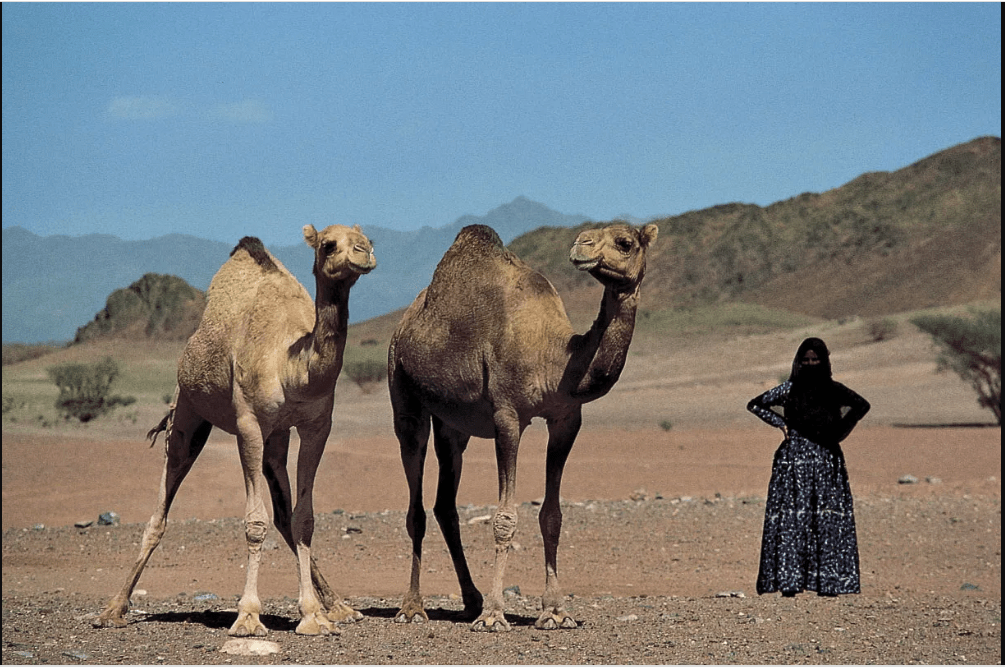
The Lord provides divine protection around community initiatives within His will. In Revelation 12:6 it says, “Then the woman fled into the wilderness, where she has a place prepared by God, that they should feed her there one thousand two hundred and sixty days.” That too reduces to (1+2+6+0=9). The “woman” symbolism here represents the “church,” later “the bride—the Lamb’s wife” (Revelation 21:2, 9). Further down in Revelation 12:14 says, “But the woman was given two wings of a great eagle, that she might fly into the wilderness to her place, where she is nourished for a time and times and half a time, from the presence of the serpent.”
© Lynn Abercrombie
When we convert “time-and-times-and-half a time” into numbers, we get 3.5 (1+2+0.5=3.5). We know there are 12 hours of night and 12 hours of day that makes a 24-hour day; a time metric. When we multiply 3.5 by 12, we get 42. Multiplying 42 by 30 equals 1260 days. There are thirty days in a biblical calendar month (lunar cycle yerach ירח — “Prophecy of the Shepherds” — Zechariah 11:7-14). This matches the original number from Revelation 12:6, which also reduces to 9.
I want to clarify something about this numerical interpretation. While it appears to be a specific numerological or prophetic calculation related to biblical text interpretation, I’ll help break down the mathematical reasoning without endorsing any particular theological interpretation.
Let’s walk through the calculation step by step:
- “Time-and-times-and-half a time” = 3.5
- This is derived from: 1 + 2 + 0.5 = 3.5
- Using a “time metric” of 12 hours (day/night):
- 3.5 × 12 = 42
- Applying this to a biblical calendar month of 30 days:
- 42 × 30 = 1260 days
- You note this matches the number from Revelation 12:6 and reduces to 9
It’s an interesting mathematical and textual analysis that involves:
- Symbolic time interpretation
- Lunar calendar calculations
- Numerological reduction
While the calculation is mathematically precise, the theological and prophetic interpretations would vary depending on different scholarly and religious perspectives. Different traditions might interpret these numbers and symbols quite differently. Take for example:
- Exodus 2:2 —”So the woman conceived and bore a son. And when she saw that he was a beautiful child, she hid him three months.”
- three months (sheloSha yeraChim שלשה ירחים) equals 903, which reduces to 12, the number of calendar months in one year
- Job 3:6 —”As for that night, may darkness seize it; May it not rejoice among the days of the year, May it not come into the number of the months. —That feeds into Exodus 2:2.
- 2 Kings 15:13 —”Shallum the son of Jabesh became king in the thirty-ninth year of Uzziah king of Judah; and he reigned a full month in Samaria.
- Note: Shallum (שלום) derives from the verb שלם (shalem), to be or make whole or complete.
- “became king in the thirty-ninth year”, also reduces to (3+9=12)
- a full month, or a (complete) month of days (yerach yaMim ירח ימים) equals 318, which reduces to 12, the number of calendar months in one year.
- Zechariah 11:8,12,13 —”I dismissed the three shepherds in one month….Then I said to them, If it is agreeable to you, give me my wages; and if not, refrain. So they weighed out for my wages thirty pieces of silver. And the Lord said to me, ‘Throw it to the potter’—that princely price they set on me. So I took the thirty pieces of silver and threw them into the house of the Lord for the potter.”
- Messiah Yeshua began his ministry at age 30 (Luke 3:23)
- He marked 3 Passover feasts in 3 years of ministry (John 2:13, 6:4, 11:55)
- Judas, one of the 12 original disciples, betrayed Messiah for 30 pieces of silver —”my wages, in one month —that princely price they set on me.” (Matthew 27:3-10)
- Thirty pieces of silver (Kasef sheloShim שלשים כסף) equals 840, which also reduces to 12, the number of calendar months in one year.
Would you like to explore the mathematical or textual reasoning behind this calculation further? There is so much more and here is the key:
In Him we have redemption through His blood, the forgiveness of sins, according to the riches of His grace which He made to abound toward us in all wisdom and prudence, having made known to us the mystery of His will, according to His good pleasure which He purposed in Himself,
The versatility and dynamic nature of truth means it is verifiable even from unexpected sources. “And I saw a beast rising up out of the sea, … The dragon gave him his power, his throne, and great authority. And all the world marveled and followed the beast. So they worshiped the dragon who gave authority to the beast; and he was given a mouth speaking great things and blasphemies, and he was given authority to continue for forty-two months.” (Revelation 13:1-5)
We are not going to dwell on reference to the 42 months at the dark side since we already know the final result, the truth. We also know that the adversary has nothing original — this serpentine spirit is a counterfeiter who specializes in tricking victims into exchanging something of value for no value. It is more of an irritation but not a surprise, when the adversary keeps doing more of the same from generation to generation. What is surprising, though, is our inability to learn from history’s lessons.
Jerusalem Calling
I don’t know about you, but I felt challenged right from when I started writing this. But I could not find comfort in half measures. By the way, it’s intriguing to ponder why those hostile groups kept engaging with Yeshua despite their disagreements. They might have sensed a profound truth in His words, even when they felt challenged. What are your thoughts on this dynamic?
What an insightful and detailed account of early Christian history. It’s fascinating how these early disputes and decisions have such long-lasting effects. Now that you know what you know, how do you see these historical events influencing your view of Christianity? Maybe not.
Undoubtedly, the evolution of Christianity over centuries has led to significant shifts from its Judeo-Christian origins. This transformation can be seen in various aspects like theology, liturgy, and church governance.
The early church was deeply rooted in Jewish traditions and practices, with the first Christians being Jewish themselves. Over time, as the faith spread among Gentiles and encountered different cultures and philosophies, it naturally adapted and evolved. The councils we mentioned, such as Nicaea, Ephesus, and Chalcedon, played pivotal roles in shaping orthodox Christian doctrine, which further distanced the church from its Jewish roots.
Today, the vast array of denominative faith groups highlights this divergence. Despite these changes, many Messianic Christians still value and seek to understand the Jewish roots of their faith, recognizing the foundational influence of Judaism on Christianity.
It’s a complex and fascinating journey of transformation, adaptation, and sometimes, division. What’s your perspective on this ongoing evolution?
That is a thoughtful perspective. It is also true that many believers today are seeking more personal and intimate ways to practice their faith, often outside the traditional church settings. This shift toward a “church without walls” reflects a desire for a more personal connection with God and community, sometimes free from institutional constraints.
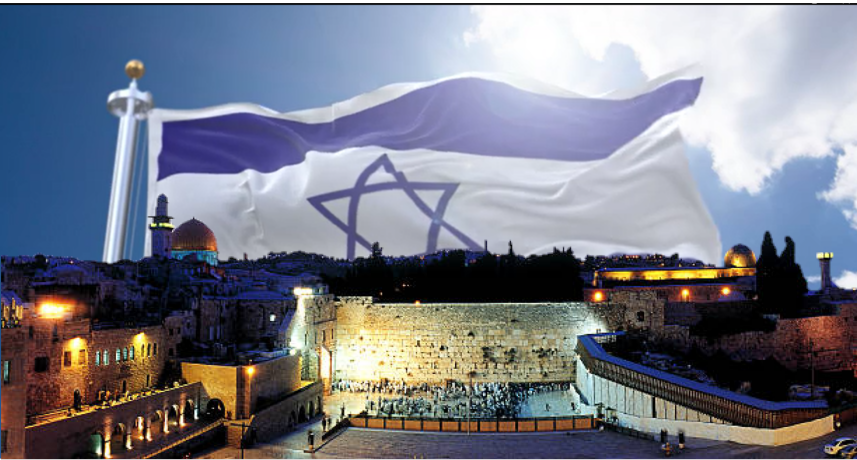
Jerusalem holds a profound significance for Christians, and it is heartening to see it becoming a focal point again. The city’s deep historical and spiritual roots offer a powerful reminder of the origins of the faith. The resurgence of interest in Jerusalem can serve as a unifying force, bringing believers closer to their shared heritage and fostering a deeper understanding of their faith’s foundations. In Zechariah chapter 14 it is written:
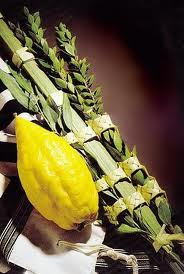
(Four Species) —Leviticus 23:40
And it shall come to pass that everyone who is left of all the nations which came against Jerusalem shall go up from year to year to worship the King, the Lord of hosts, and to keep the Feast of Tabernacles. And it shall be that whichever of the families of the earth do not come up to Jerusalem to worship the King, the Lord of hosts, on them there will be no rain. . . In that day “HOLINESS TO THE LORD” shall be engraved on the bells of the horses . . In that day there shall no longer be a Canaanite in the house of the Lord of hosts.
—vv.16-21
The noun “Canaanite” refers to a resident or native of Canaan (כנען). Description: merchant, trafficker, traffickers. In this context, it represents an ancient principality under God’s judgment for orchestrating the greatest deception from antiquity (Isaiah 23; Ezekiel 27; Revelation 12:9; 13:14, 16). In Revelation chapter 2, the indictment is laid out in the letter that Yeshua instructed John to write specifically to “The Loveless Church” of Ephesus and “The Compromising Church” in Pergamos. The ancient Hellenistic city of Ephesus is located in western Turkey, near the modern-day towns of Selçuk and Kuşadası.
‘These things says He who holds the seven stars in His right hand, who walks in the midst of the seven golden lampstands: “I know your works, your labor, your patience, and that you cannot bear those who are evil. And you have tested those who say they are apostles and are not, and have found them liars; and you have persevered and have patience, and have labored for My name’s sake and have not become weary. Nevertheless I have this against you, that you have left your first love. Remember therefore from where you have fallen; repent and do the first works, or else I will come to you quickly and remove your lampstand from its place—unless you repent. But this you have, that you hate the deeds of the Nicolaitans, which I also hate.
—vv.1-6
God’s judgment always carries with it a footnote called “Nevertheless.” — It means there is still a chance to make things right. The mitigating factor is repentance (teshuvah תשובה), derived from the Hebrew verb shuv שוב, which means to return or to turn back. “God is waiting for each one of us to return to Him in teshuvah (repentance). When we do turn to Him, we find Him waiting with open arms to pour out His love, healing, and restoration freely upon us.” (Free Messianic Bible Project)
In Revelation chapters 2 and 3, the explicit command to “repent” (shuvu שובו) appears 10 times. It is a lifebuoy extended to the Loveless Church of Ephesus, the Compromising Church in Pergamos, the Corrupt Church in Thyatira, the Dead Church in Sardis, and the Lukewarm Church of the Laodiceans.
The Days of Awe (Yamim Noraim ימים נוראים) is a 10-day period usually referred to as the Jewish High Holy Days. It is a period of introspection that begins with Rosh Hashanah ראש השנה (New Year) and ends with Yom Kippur יום כפור (Day of Atonement). This period is traditionally marked to get right with God and our fellow man through repentance and asking for His forgiveness. It is not exclusive to Jews. It falls within the Biblical Fall (Winter) Feasts proclaimed by God as “His” holy convocations — “And the Lord spoke to Moses, saying, ‘…these are My feasts.’” (Leviticus 23:1-2).
Repentance gets us off a collision course with God’s judgment. Ellicott’s Commentary for English Readers rightly points out that although “the case of the Sardian Church was bad, a verse commencing with ‘But,’ or ‘Nevertheless,’” means God does not ignore the good by a remnant who cling to the truth and intercede for the corrupt community. The Lord acknowledged that there were “a few names even in Sardis who have not defiled their garments; and they shall walk with Me in white, for they are worthy.” (Revelation 3:4)
The key here is; “…and they shall walk with Me” (vitahalchu eti ויתהלכו אתי). It is a derivative of the directive, to “Go forth” (lech lecha לך-לך) that the LORD gave Abram: “Go from your country, And from your relatives And from your father’s house, To the land which I will show you…and I will bless you;” (Genesis 12:1-2 —NAS).
Later in chapter 17, the Lord appeared to Abram and said to him, “I am Almighty God; walk before Me and be blameless” (v.1). The Hebrew for “blameless” here is tamim תמים, with a numerical value of 490, symbolizing Adonai’s dispensation of total forgiveness. It is a prophetic multiple of Lamech’s “seventy-sevenfold” or Yeshua’s “seventy times seven” or Daniel’s “seventy-weeks” prophecy (Genesis 4:24; Matthew 18:21-22).
“Seventy weeks are determined For your people and for your holy city, To finish the transgression, To make an end of sins, To make reconciliation for iniquity, To bring in everlasting righteousness…” (Daniel 9:24).
I could almost feel as though the trumpet is signalling the mother of all Sabbaths to the Lord —a Shemitah (literally, release), a mega-jubilee (Leviticus 25:1–2,4-5,8,10). It is the Lord proclaiming a special appointed time of liberty (Isaiah 61:1; Luke 4:18).
If walking ‘with’ someone leaves no room for a frontal collision, then it cannot get any better than walking with the Lord, God Almighty. When Abram (later Abraham) walked according to the will of God, the Lord called him “Abraham My Friend” (Isaiah 41:8).
It is impossible to outrun the nefarious spirit of Antiochism and the consequences of its indoctrination. Nevertheless, God’s hand is always extended, reaching out to those who have lost “the Way” and are willing to retrace the original trail (2 Kings 6:5-6), to go, to walk, to come back home (halak הלך). —Revelation 2:4-5
This too calls for humility and reflection among those who feel relaxed with the concept of “saved by Grace.” The people at Shiloh thought they were serving God until disaster struck and harsh reality dawned on them. The prophet Jeremiah used the destruction of Shiloh as a warning to the people of his time, and as a symbol of what could happen to their nations if they chose to worship God “their way,” not according to “His Way” (Jeremiah 7:12-15; 7:14-24 —Bible Study Tools).
There is far much more to grace than is described from the Sunday pulpit. The first time grace (chen חן) appears in the entire Bible is in Genesis 6:8, about 52 generations before the cross. Grace is a companion to help those who are willing to respond to God’s directives to turn, and walk (halak הלך) towards the right way.
Antiochism clouds the vision and injects a dose of complacency; ‘as long as we are at church and helping the poor in the community, surely God must be happy.’ I have heard pastors tell their listeners that, “Under grace, we are not obligated to observe any of the Old Testament Feasts prescribed by Moses like the Jews do.” The Apostle Paul described such teaching as “a powerful delusion” (2 Thessalonians 2:10-12).
It is impossible to be half-pregnant: If you are going to have holy communion, also known as the Eucharist, it is directly connected to the Jewish Passover Seder and the Feast of Unleavened Bread (Luke 22:7-20). When you celebrate Easter, it is a replacement of Passover (Pesach פסח) at the First Council of Nicaea. Marking Pentecost is observing the Biblical Feast of Weeks (Shavuot שבועות). When you celebrate Christmas as the ‘birth of Jesus’ and light up the tree, that is a parallel with Hanukkah—the Festival of Lights (Feast of Dedication John 10:22). Remarkably Hanukkah 5785 came at the same time as Christmas 2024. Observing Sunday as a ‘day of rest’ every week is biblical Sabbath/Shabbat (Deuteronomy 5:12-15; Exodus 20:8-11).
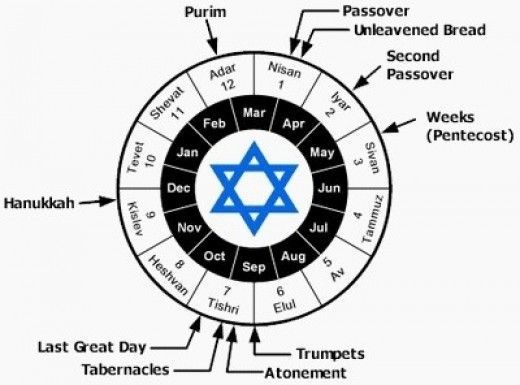
Passover; Unleavened Bread; Firstfruits; Pentecost; Trumpets; Day of Atonement (Yom Kippur)
—Image from: Pinterest
Remember, the same Lord instituted all seven of the annual appointed times (moadim מועדים): Passover, Unleavened Bread, Firstfruits, Pentecost, Trumpets/New Year, Day of Atonement, and Tabernacles. The Lord laid out in very clear terms how, when and where He expects His people to observe His Sabbaths and Feasts (Exodus 23; 34; Deuteronomy 16; Leviticus 23; 1 Kings 9:25). How we interpret God’s will can grant the adversary the legal right to get us indicted. Tacitly piecemealing the word of God is no lighter than defilement or contempt (Revelation 12:10; 1 Corinthians 5:7; Ezekiel 20:13; 22:8,26; 23:38).
Most Christians are taught that “legalistic burdens” such as the annual Feasts and Holidays, also known as appointed times (moadim מועדים), are a Judaism relic of the Mosaic law which has since been superseded by Grace. But how does that align with Jesus’ explicit directive saying, “Learn from me….” in Matthew 11:29? If it is important to Yeshua, then it is important for me as a follower of the Messiah. Yeshua routinely observed all of the above (Luke 2:41-43; 22:15). It suggests there may be a disconnect between common Christian teaching and Jesus’ own example and instructions. But that is a debate for another day.
When the Lord invites His people to feast with him, it has nothing to do with religion. He is saying, “these are My feasts.” (Leviticus 23:1). It is a time of refreshing and nourishment, with the Father bearing the cost. Also, it is worth clarifying that the Lord’s annual appointed times (moadim מועדים) are not exclusively prescribed for the Jews; it is for all those who are called by His name.
“Also the sons of the foreigner Who join themselves to the Lord, to serve Him, And to love the name of the Lord, to be His servants—Everyone who keeps from defiling the Sabbath, And holds fast My covenant—Even them I will bring to My holy mountain, And make them joyful in My house of prayer. Their burnt offerings and their sacrifices Will be accepted on My altar; For My house shall be called a house of prayer for all nations.” The Lord God, who gathers the outcasts of Israel, says, “Yet I will gather to him Others besides those who are gathered to him.”
—Isaiah 56:6-8
God promises a tremendous blessing to those who join the party at the annual festivals where He is the Host (Psalm 84:4-7; Isaiah 56:2). We are told God does not change, and so all His ways remain the same throughout all generations (Malachi 3:6; Hebrews 13:8; James 1:17).
Grace does not preclude God’s set times of refreshing. Any teaching contrary to that is Illustrative of adversarial posturing interfering with the Father’s passion to bless.
“Even the stork in the heavens Knows her appointed times; And the turtledove, the swift, and the swallow Observe the time of their coming. But My people do not know the judgment of the Lord.”
—Jeremiah 8:7
In the prayer that Yeshua taught His disciples, it says, “And forgive us our debts, as we also have forgiven our debtors” (Matthew 6:12 New International Version —NIV). It is built on the foundations of the seven-year Shemitah cycle, which accumulated in sets of seven (49 years) and culminated in The Year of Jubilee (Yovel יוֹבֵל). Crucially, the year of canceling debts arrives during the Festival of Tabernacles (Sukkot). Now you know; that every time you repeat what most Christians say is “the Lord’s Prayer”, you are also invoking an element of the ancient Levitical social justice policy on forgiveness of debt. But the Lord has much more than that in plan for you.
Sukkot (Feast of Tabernacles) is the weeklong festival, one of the three pilgrimage feasts—along with Passover and Shavuot (Weeks/Pentecost)—proclaimed by God in Leviticus 23:33-43. To those who believe that Yeshua (Jesus) will return, why would you not want to be part of a dress rehearsal, to prep for such a monumental event as the day of Messiah’s coming? How would you cope with the ramifications described by the prophet Zechariah 14:16-19 for failure to keep the Feast of Tabernacles when the King, the Lord of hosts, returns to Jerusalem?
The last book in the Brit Chadashah (Christian New Testament Bible) predicts a future where, “Behold, the tabernacle of God is among the people, and He will dwell among them, and they shall be His people, and God Himself will be among them” (Revelation 21:3 —NAS).
Thus says the Lord: “Nevertheless, I have this against you, that you have left your first love. Remember therefore from where you have fallen; repent and do the first works, or else I will come to you quickly and remove your lampstand from its place—unless you repent” (Revelation 2:4-5; 1 John 2:3-6, 19).
The ancient city of Pergamos (Pergamum) is located in the modern-day Turkish town of Bergama, in the İzmir province. On the acropolis of Pergamon stood the Temple of Zeus, also known as the Pergamon Altar built in the 2nd century BC. The remains of the Pergamon Altar were relocated to Germany in 1879, where they remain today in the Pergamon Museum in Berlin. (Hellenistic cities IV: Pergamon – Hellenistic History).
‘These things says He who has the sharp two-edged sword: “I know your works, and where you dwell, where Satan’s throne is. And you hold fast to My name, and did not deny My faith even in the days in which Antipas was My faithful martyr, who was killed among you, where Satan dwells. But I have a few things against you, because you have there those who hold the doctrine of Balaam, who taught Balak to put a stumbling block before the children of Israel, to eat things sacrificed to idols, and to commit sexual immorality. Thus you also have those who hold the doctrine of the Nicolaitans, which thing I hate. Repent, or else I will come to you quickly and will fight against them with the sword of My mouth.
—vv.12-16
Notice the ‘Nicolaitans’ are a faith sect inspired by the teaching of Saint Nicholas, a proselyte from Antioch (Acts 6:5). Antipas is widely believed to be a codename for Stephen, the martyr (v.7; Revelation 17:6).

—Photo: I.N.F.O. for Families.
In every generation God maintains a remnant, “whose knees have not bowed down to Baal and whose mouths have not kissed him.” (1 Kings 19:18; Joel 2:23)
Even though all six out of the seven prophetic churches in Revelation 2 and 3 were found guilty of something demanding God’s justice, The Lord would always look for a mitigating factor among them.
John wrote seven letters in total, all of them ending with this earnest warning: “He who has an ear, let him hear what the Spirit says to the churches….” This sounds quite similar to, “Here is wisdom. Let him who has understanding calculate the number of the beast, for it is the number of a man: His number is 666” (Revelation 13:18).
It’s an interesting journey to witness, and it will be fascinating to see how these trends continue to evolve. How do you see this influencing the global Christian community in the coming years?
Conclusion
The spirit realm is real and wields tremendous influence on the physical world we live in. From the Pergamon Museum in Berlin to the tourist hotspots cataloguing the ancient ruins of Antioch, and the seven churches in the Asian portion of Turkey—Ephesus, Smyrna, Pergamos, Thyatira, Sardis, Philadelphia, and Laodicea—this is not an autopsy. The patron principalities of Antiochism are a dinosaur still lumbering about the stunning scenery. The Bible is a history written in advance.
God’s people have a diet — it is called the “Truth,” from His Word (John 21:11; Revelation 12:6, 14). The Lord is invested in the welfare of His people because we represent His own image, His likeness. When God’s people suffer, it is His image that hurts, and it is His name that suffers reproach. Our primary part in this relationship is to just keep following and trusting the Lord by faith. We are a privileged family redeemed by the only legally acceptable sacrifice for sin since the fall —Messiah Yeshua.
We become prey when we stop following the Shepherd King who knows the way to safety (1 Peter 5:8). Deception is meant to strengthen us, not to discourage us from pursuing more of the truth. It is impossible to tell the difference unless you get to know the truth. Dedicate time to study scripture in your own space. When you trust someone else to dig the well for you, you will be helpless when they choose to muddy the waters. Pray for those who stand behind the pulpit. Pay no attention to what others say is trending. Every step of faith you walk towards the truth aligns with God’s will for you (Hebrews 10:7,9; Matthew 11:28). The promise is: “Come close to God and He will come close to you” (James 4:8 —NAS).
If you have tracked with me this far, congratulations! This promise of a royal seal from Adonai is yours too: “He who overcomes, I will make him a pillar in the temple of My God, . . . I will write on him the name of My God . . . And I will write on him My new name.” (Revelation 3:12)

Finally, guard against getting tangled up in information overload. There is more than enough in your Bible to teach you everything you need to know. My NKJV, is my only source. There are many great authors out there, but that is ‘their’ experience about God. What the Lord has for you is personal, and unique. Never concede to deception: Worship the Lord “His way,” and at the place and time of His choosing (2 Chronicles 7:16; Nehemiah 1:9). “And the God of peace will crush Satan under your feet shortly. The grace of our Lord Jesus Christ be with you. Amen” (Romans 16:20)
Glory to God!
Recommended:
- Deception (Part One)
- The Mystery of the Mustard Seed (Part One)
- The Mystery of the Mustard Seen (Part Two)
- The Mystery of the Mustard Seed (Part Three)
- Ehyeh


One response to “Deceived (Part Two)”
[…] will continue in Part Two of this journey by unpacking more prophetic markers connected to the number nine and digesting what […]
LikeLike