

Prepare For Landing

Welcome back. In Part One of this three-part article we were introduced to the concept of biblical parables, and why Messiah Yeshua (Jesus) used them effectively in His teachings. We learned where, why biblical prophecy fits into the narrative, when it all began, and how documentation began. In this segment we are going to land the craft with the “Parable of the Mustard Seed.”
Here, we will connect more dots we picked up from the judicial precedent in the New Testament books of Luke and Revelation. We will unpack the symbolism, word pictures, science, maths, and prophetic implications behind the mysterious mustard seed. It is going to be a riveting experience.
Unless otherwise stated, portions of scripture references in this publication are primarily quoted from the New King James Bible Version (NKJV).
In the last segment we mentioned a Google search of the “mustard seed” and immediately got a result in the “food” category. They are just tiny seeds in black, yellow or brown sheds in a variety of small, branded packs and little jars. There is a long list of health benefits attributed to mustard seeds including minerals and several vitamins. Every container comes with a barcode, and an expiry date. One more detail—there is no ‘spiritual’ benefits included in the list printed on the retail sticker of the mustard seeds jar.
When Messiah Yeshua picked a topic on the mustard seed, He was not thinking about food—He was thinking about Kingdom business. A quick scan in the Bible of the stand alone word “mustard” does not exist. But the compound element “mustard seed” appears 5 times in 5 verses in the Christian New Testament (Matthew 13:31; 17:20; Mark 4:31; Luke 13:19; vv. 17:6).
The mustard seed is the subject of perhaps the most consequential parables Yeshua (Jesus) ever narrated. In Part One we explained the main purpose of parables from the cultural, and biblical perspective. It is like an intelligence operation where prioritizing information integrity is a key requirement. There is a time and place when communication involves saying something, when you actually mean something else. It is not the opposite of truth, rather a smarter way of delivering classified information to those with the need to know and understand.
In antiquity prophets and political messengers were endangered species. You could lose your life for declaring, “Thus says the Lord . . .,“ or for delivering a message to a hostile king in the wrong mood. Nevertheless, someone had to do the job. Parables became some of the most effective way of sharing sensitive information in a hostile environment covertly.
The Parable of the Mustard Seed
The gospel of Matthew quotes 16 parables by Yeshua in 8 chapters. The mustard seed is the third parable of 6 listed in chapter 13. In the gospel of Mark the parable of the mustard seed also appears third in the list recorded in chapter 4. Then in the gospel of Luke the mustard seed is recorded as the ninth parable overall also in chapter 13. It is worth mentioning at this stage that the number thirteen has a very important role to play later on this journey.
In Luke 13:18 Yeshua asked, “What is the kingdom of God like? And to what shall I compare it?” —My favourite response by Yeshua to His own question is recorded in the Gospel of Mark.
”It is like a mustard seed which, when it is sown on the ground, is smaller than all the seeds on earth; but when it is sown, it grows up and becomes greater than all herbs, and shoots out large branches, so that the birds of the air may nest under its shade.”
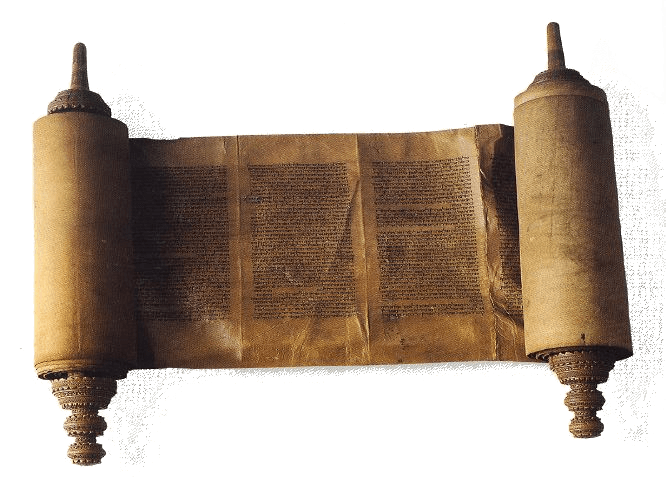
One of my favorite teachers told me the best way to research something new in scripture is to locate the place of first mentioned. Usually that means somewhere in the Torah (the first 5 books of the Hebrew Bible, or the Christian Old Testament). But I was not able to find any Hebrew reference to a mustard seed there. The literal translation I could find in the NT versions for the mustard seed is Hebrew: gargar hachardal, גרגר החרדל.
Remember the Google search tool we used earlier to investigate the “mustard seed”? I thought we could go a step further and this time, use the help of the sister Google Translator. In Hebrew we read and write from right, to left. The first word gargar (גרגר) means grain, granule, berry.
Back to Google search we find ‘berry’ described as a small, pulpy, and often edible fruit (such as blackberry, blueberry, checkerberry, cranberry, raspberry, strawberry, cherry). Then on Wikipedia berries are juicy, rounded, brightly colored, sweet, sour or tart—a description that makes me feel like raiding the refrigerator now.
What about the next word, hachardal (החרדל)? You guessed right—it is literally translated, “the mustard.” Without the Hebrew letter hey (ה), it is simply “mustard” —that article, “the” dropped.
I guess by now you have probably noticed that English is not my first language, and we’re on a crash course. Another search on Google tells me that a preposition is a word governing, and usually preceding a noun or pronoun and expressing a relation to another word or element in the clause.
What do you think ‘mustard’ symbolize, in the context of our Hebrew word, chardal (חרדל)? You are not ready for it —let me explain.
A breakdown of the original word pictures behind each of these Hebrew letters can reveal some clues into the meaning and purpose of ‘mustard’.
- The picture for chet (ח) is a fence or wall and means separation, sin, new beginning. Numerical value of 8
- The picture for resh (ר) is a man’s head and means authority, beginning, first, top. Numerical value of 200
- The picture for dalet (ד) is a door and means out or in, knock, path, way, portal to heaven, dominion, control, bough, and branch. Numerical value of 4
- The picture for lamed (ל) is a shepherd’s hook/staff, goad, rod, branch, and scepter, teaching, learning, goading, protection, yoke, bind. Infinitive prefix for verbs, meaning to or for or belonging to. Numerical value of 30.
Alef (א) is the first Hebrew letter in the alef bet (alphabet). It is a silent letter carrying the sound of a vowel. When followed by a lamed (ל), you get the Hebrew “el” (אל). Together they form the word picture of a strong leader or first, used from ancient times to describe God. For example; God Almighty, El Shaddai (אל שדי).
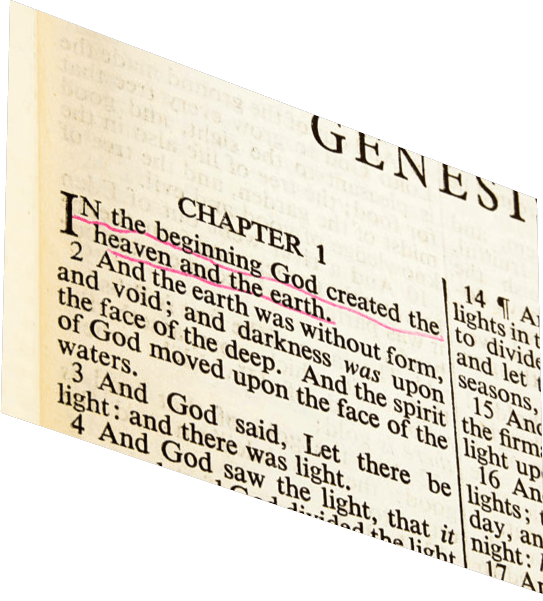
The combined word picture for our Hebrew word mustard, chardal (חרדל) can therefore be traced to the beginning of man and authority.
Therefore, just as through one man sin entered the world, and death through sin, and thus death spread to all men, because all sinned—
Therefore, as through one man’s offense judgment came to all men, resulting in condemnation, even so through one Man’s righteous act the free gift came to all men, resulting in justification of life. For as by one man’s disobedience many were made sinners, so also by one Man’s obedience many will be made righteous.
Notice the prefix ‘to’ is repeated three times, and the preposition ‘through‘ is also repeated four times in the scripture reference above. A quick Google search definition says: Through, can be used as a preposition, an adverb, and an adjective. It has several meanings, including “from one side to the other of,” “from beginning to end.” In simple terms, prefixes and prepositions in this context both mean exactly the same in purpose and function.
This means that our problem word mustard, chardal (חרדל) is actually a symbolic preposition that qualifies something. Yeshua said, “It is also written in your law that the testimony of two men is true” (John 8:17).
To connect the remaining dots we are going to have to revisit that fruity word, gargar (גרגר) which means grain, granule, berry. According to the Strong’s Concordance it comes from the Hebrew Jagur (יגור), from the root H1481—gûr/goor (גּוּר)—meaning to turn aside from the road (for a lodging or any other purpose); also to shrink fear (as in a strange place); also to gather for hostility (as afraid).
The Brown-Driver-Briggs Hebrew and English Lexicon defines Jagur (יגור) as follows:
- to sojourn, abide, dwell in, dwell with, remain, inhabit, be a stranger, be continuing, surely
- to stir up trouble, strife, quarrel, gather together
- to dread, fear, stand in awe, be afraid.
The Abarim Publications’ Biblical Dictionary also links the etymology of gargar (גרגר) to the verb גרר (garar) meaning, to drag or drag away, mostly in a circular or repetitive motion. The verb גרה (gara) means to strive or agitate strife, obviously not by means of one singular assault but rather by repeated provocations and withdrawals. Noun תגרה (tigra) means contention or opposition.

As you can see, we have come from a fruity sweet, sour or tart juicy berry—gargar (גרגר), to being dragged away towards a dreadful place full of trouble, strife, quarrel, and everything in between. If we go by the principle of first mentioned, that was way back at Bereshit (Genesis)—the first book of the Torah (Hebrew Bible, Christian OT).
Then the Lord God called to Adam and said to him, “Where are you?”
So he said, “I heard Your voice in the garden, and I was afraid because I was naked; and I hid myself.”
In case you haven’t noticed yet, the Hebrew name Adam אדם begins with the Hebrew letter alef (א), the leader, the first.
From kindergarten to Hollywood movies the story goes that Adam and his wife Eve were tricked by the serpent, and lured into violating God’s food laws in the Garden of Eden (Genesis 3:13). The forbidden fruit was just the beginning. Based on what we now know from the root gûr/goor (גּוּר) the first couple turned aside from the ways defined by the LORD. They were dragged by a stranger into another way. The adversary stirred up trouble for Adam and Eve, and plunged them into a dreadful place filled with, quarrelling and fear. Consciousness of sin and hopelessness set in.
Nothing summarizes the unfortunate turn of events the couple were about to endure like Adam’s response to God’s call; “I heard Your voice in the garden, and I was afraid because I was naked; and I hid myself.”
Brown-Driver-Briggs Hebrew Definitions of the word “afraid” (charad) that Adam used there comes from Strong: H2729—חרד.
That is the three letter root (shoresh שורש) of our second problem word mustard, chardal (חרדל) —a symbolic preposition that qualifies something. It means;
- to tremble, quake, move about, be afraid, be startled, be terrified (of the enemy)
- to be anxiously careful
- to go or come trembling (with prep)
- to cause to tremble
- to drive in terror, rout (an army).
The role of the 12th Hebrew letter in the alef bet, lamed (ל) in chardal (חרדל) is a preposition; a direction of movement, a goal, a destination.
Adam being the head (ר), he delegated authority (ל) to his wife Eve, who opened the door (ד) for the adversary to come in and create conditions (charad) that inadvertently separated (ח) the first family from God (Genesis 3:23,24).
Based on the word pictures behind the compound Hebrew words we have examined so far, mustard—chardal (חרדל) is the symbolic preposition that qualifies the seed—gargar (גרגר).
So the Lord God said to the serpent:
“Because you have done this,
You are cursed more than all cattle,
And more than every beast of the field;
On your belly you shall go,
And you shall eat dust
All the days of your life.
And I will put enmity
Between you and the woman,
And between your seed and her Seed;
He shall bruise your head,
And you shall bruise His heel.”
Notice the line that say, “And between your seed and her Seed;” —You have a lower-case (s) and an upper-case (S). Very important detail there to consider. The “Seed” is the key subject from which all life springs. On the other side, “seed” is the negative force that drags to the opposite direction of deception, strife, fear, death and distraction (John 8:44).
In Proverbs chapter 14 verse 12 it says, “There is a way that seems right to a man, But its end is the way of death.” Yeshua said, “I am the way, the truth, and the life. No one comes to the Father except through Me (John 14:6).
The way defined by the Lord leads towards the “Seed of life.” Sin seeks to create a detour, another way, a diversion, a permanent separation from the Source of Life.
In the NT gospel of Matthew the entire chapter 13 is devoted to the “Seed vs. seed” subject. Yeshua uses seven parables to explain the ‘seed’ symbolism by drawing parallels with the kingdom of heaven: The Parable of the Sower, The Parable of the Weeds, The Parable of the Mustard Seed, The Parable of the Leaven, The Parable of the Hidden Treasure1, The Parable of the Pearl of Great Price, and The Parable of the Net.
The words ‘seed, seeds, seedlings’ occur 17 times in Matthew chapter 13 of the BSB version. While ‘seed, seeds’ occur 12 times in Matthew chapter 13 of the NKJV version. The seventeenth Hebrew letter Pe/Peh (פף) has a pictographic meaning of mouth, opening, speech. The mouth declaring the word of the Lord. Remember, the role of the 12th Hebrew letter in the alef bet, lamed (ל) in ‘mustard’ (chardal, חרדל) is a preposition; a direction of movement, a goal, a destination. And the picture behind lamed (ל) is a shepherd’s hook/staff, goad, teaching, learning, goading, protection.
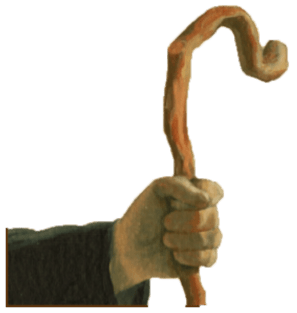
Rabbis teach that, “The rod (shevet שבט) was used by the shepherd to safeguard the sheep. Every shepherd of Israel had a rod and staff that were used to guide, protect, and set boundaries for the sheep. The shepherd used the rod to drive away predators like coyotes and wolves. He didn’t use his rod to beat his sheep.” —(The Messianic Bible Prophecy Bible Project)
Messiah Yeshua declared (פ), “I am the good shepherd (ל). The good shepherd gives His life for the sheep” (John 10:11). Yeshua also reassured His sheep to, “Take My yoke upon you and learn from Me (ל), for I am gentle and lowly in heart, and you will find rest for your souls. For My yoke is easy and My burden is light (ל).”
Calculating the Cost
Math was my worst subject at college mainly because for some reason I found the approach of my math teacher somewhat repulsive. In hindsight it was my prejudiced attitude that cost me. I tried private tuition but still got very low grades.
In the first part we touched briefly on the role of numbers in the Bible. In the last NT book of Revelation Yeshua gave a specific command: “Here is wisdom. Let him who has understanding calculate the number of the beast, for it is the number of a man: His number is 666” (vv. 13:18).
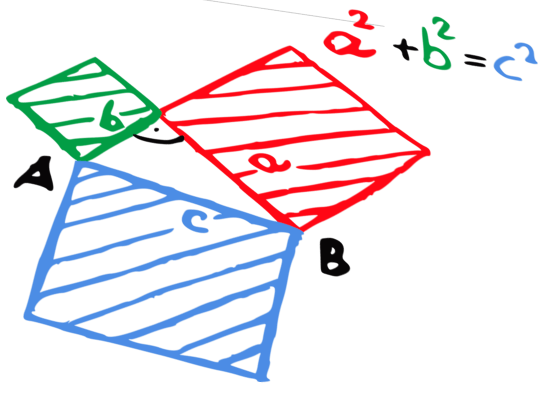
Have you noticed how we keep encountering the number 13 frequently? It is not a coincidence, and it is not from a Gnosticism playbook. Thirteen is included in your version too. The Bible is full of surprises. It is an amazing journal of history recorded in advance. Going by the law of first mentioned, “wisdom and understanding” were attributed to Messiah Yeshua by the prophet Isaiah 650 years before Yeshua was born (vv. 11:1-2). The Bible is also a mathematical marvel filled with fascinating notations. The scope of this article focuses on what I like to call CAD. According to Britannica, “The most important arithmetic properties (where a and b are real numbers) are the commutative laws of addition and multiplication, a + b = b + a and ab = ba; the associative laws of addition and multiplication, a + (b + c) = (a + b) + c and a(bc) = (ab)c; and the distributive law, which connects addition and multiplication, a(b + c) = ab + ac.
Note: Commutative Laws always produce the same result even when the position of the numbers involved are swapped. Example: a + b = b + a OR, a × b = b × a. The exception to this rule is subtraction and division—because the changes in the order of the numbers while doing subtraction and division do not produce the same result.
Yes, I will say it again; subtraction and division —the two most corrosive elements every church organization dreads the most. Following our law of first mentioned it says, “You shall not add to the word which I command you, nor take from it, that you may keep the commandments of the Lord your God which I command you” (Deuteronomy 4:2). Then in Revelation chapter 22 it concludes with this warning;
For I testify to everyone who hears the words of the prophecy of this book: If anyone adds to these things, God will add to him the plagues that are written in this book; and if anyone takes away from the words of the book of this prophecy, God shall take away his part from the Book of Life, from the holy city, and from the things which are written in this book.
—vv. 18-19
Notice, ‘testify’ there in verse 18 is a judicial term. While Deuteronomy is the last of the 5 Torah books (OT) written by Moses, Revelation is the last of 27 books in the NT. Hence, ‘everyone’ and ‘anyone’ can be held accountable—the legal obligation is not exclusive to the Jews.

The numerical value of the problem word mustard—chardal (חרדל) is 242. The commutative law application here produces (2+4+2=8). Earlier we learned the pictographic meaning of chet (ח) is a fence or wall. It means separation, sin, new beginning.
In the Berean Standard Bible (BSB) Isaiah 59 begins with a heading —“Sin Separates Us from God”.
Surely the arm of the LORD is not too short to save,
nor His ear too dull to hear.
But your iniquities have built barriers
between you and your God,
and your sins have hidden His face from you,
so that He does not hear.—vv. 1,2
Then Isaiah 59 continues to explain the chargesheet from verse 3 to 8 with a list of felonies including; strife, violence, bloodshed, deception, injustice, corruption, etc.
Earlier we saw the Apostle Paul, in the NT book of Romans pointing to Adam (אדם) in Bereshit (Genesis chapter 3), where this commutative judicial issue began.
Therefore, just as through one man sin entered the world, and death through sin, and thus death spread to all men, because all sinned—
Therefore, as through one man’s offense judgment came to all men, resulting in condemnation. . .
—vv. 5:12,18
In the NT gospel of John Yeshua also points back to Satan, “the devil”, who led Adam and Eve into sinning against God. —“He (Satan) was a murderer from the beginning, and does not stand in the truth, because there is no truth in him. When he speaks a lie, he speaks from his own resources, for he is a liar and the father of it” (8:44).
In Part One we learned that Satan is also identified by other labels including, the great dragon, that serpent of old” (Revelation 12:9). Satan’s role is not limited to sowing the ‘seed’ of sin that leads to destructive consequences. He also assumes the position of a prosecuting attorney—”the accuser of our brethren, who accused them before our God day and night” (vv. 12:10; Job 1:6-12; Zechariah 3:1-3).

Keeping in step with the law of first mentioned we know Satan is the serpent of old mentioned in Genesis chapter 3. The devil pounced when Eve became isolated (separated) for a brief moment from her husband Adam. Like a mistletoe, Satan demonstrated parasitic characteristics in the garden of Eden. From humble beginnings the iniquitous consequences gradually affected the entire family trees. To list but a few, here are some of the most predatory aspects of the mistletoe in botany profiling.
- A mistletoe is not like a normal plant
- A mistletoe relies on other trees to survive
- It prefers to grow on trees in open areas with plenty of light, rather than in dense woodlands
- Most mistletoes parasitize a variety of hosts, and some species even parasitize other mistletoes, which in turn are parasitic on a host
- After a mistletoe germinates, a modified root (haustorium) penetrates the bark of the host tree and forms a connection through which water and nutrients pass from host to parasite
- They are pests of many ornamental, timber, and crop trees and are the cause of abnormal growths called “witches’ brooms” that deform the branches and decrease the reproductive ability of the host
- Mistletoes are slow-growing but persistent; their natural death is determined by the death of the hosts. The only effective control measure is complete removal of the parasite from the host
- The traditional Christmas mistletoe (Viscum album) has thickly crowded forking branches. The flowers, in compact spikes, are bisexual or unisexual and have regular symmetry. They are yellower than the leaves, appear in late winter, and soon give rise to one-seeded white berries, which when ripe are filled with a sticky semi-transparent pulp. These berries, and those of other mistletoes, contain toxic compounds poisonous to many animals and to humans.
As a sidenote, a mistletoe also subscribes to the law of first mentioned. Some species are used as Christmas decorations and are associated with pre-Christian holiday rituals of ‘kissing’, and midsummer sacrificial burning of bonfires. —(Surprising facts about mistletoe: By Ellen McHale – Kew Gardens).
Just like a mistletoe which takes the nutrients and water from the tree it grows on; sin creeps in innocently and gradually sucks on life from the inside out (John 10:10).
The devil is that dragon with many tentacles (Revelation 12). This hostile being fits the etymology of gargar (גרגר) rooted in garar (גרר) meaning, to drag or drag away, mostly in a circular or repetitive motion. The devil is relentless by nature, with a very short memory of failure. He specializes in stalking, isolating, coiling around, and constricting prey until life snuffs out.
Rabbis painted the following word picture of Satan.
“The Hebrew word for serpent is nachash (נחש). If we look at the original word pictures for each of these letters, we can get some insight into the serpent’s mission and purpose.
- The picture for nun (נ) is a seed or fish and means life or activity
- The picture for chet (ח) is a fence or wall and means separation or private.
- The picture for shin (ש) is teeth and means to destroy, consume, or sharpen.
In this light form of word study, we find that nachash can represent the fencing in of a life for the purpose of destroying it.
By luring Eve into disobedience, the nachash fenced in humanity, placing us in bondage to his world, and sentencing us to separation from God forever.”
—(The Messianic Prophecy Bible Project)
God’s people are constantly under siege, but not beyond our defences (1 Peter 5:8-10; 1 Corinthians 15:56-57).
. . . even so through one Man’s righteous act the free gift came to all men, resulting in justification of life. For as by one man’s disobedience many were made sinners, so also by one Man’s obedience many will be made righteous.
—Romans 5:18,19
Notice the noun ‘Man’, with capital ‘M’, and the following ‘man’ in lower-case. The Apostle Paul made that enigmatic contrast with remarkable hope.
For since by man came death, by Man also came the resurrection of the dead. For as in Adam all die, even so in Christ all shall be made alive.
For He (Messiah Yeshua) must reign till He has put all enemies under His feet. The last enemy that will be destroyed is death.
And so it is written, “The first man Adam became a living being.” The last Adam became a life-giving spirit.—1 Corinthians 15:21,22,25,26,45
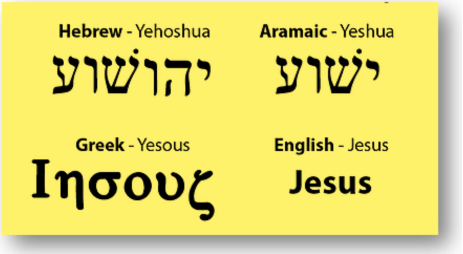
The ‘last Adam’ there being Jesus. The anglicized Hebrew translation of Jesus Christ is Yeshua HaMashiach (ישוע המשיח) or simply, Messiah Yeshua.
Now here comes some surprising mathematical results you probably did not expect.
The numerical value of Yeshua HaMashiach, ישוע המשיח is 749 or, (7+4+9=20). Twentieth Hebrew letter of the alef bet is resh/reish (ר), numerical value of 200. Pictographic meaning a man’s head, authority, beginning, first, top.
As we all know from Bereshit that Adam (אדם) came ‘first’. Not only that, God assigned man (adam אדם) “dominion over every living thing that moves on the earth” (Genesis 1:26-28). At that moment in history God’s plan involves both male and female (זכר ונקבה) but the latter is yet to come (Genesis 1:27). In Genesis 2:18 God proposes a “helper” (עזר) for the man (אדם)”. Adam began to exercise his authority first, by naming things in his environment (Genesis 2:20). Finally God makes a woman (אשה) from Adam’s rib (vv. 21-22). Adam by the authority bestowed in him by God, he calls her a “Woman” (אשה). But Adam’s world was about to change beyond his wildest dreams.
Therefore a man (איש) shall leave his father and mother and be joined to his wife (אשה), and they shall become one (אחד) flesh.
Because the couple have now “become one (אחד) flesh”, they began to share legal responsibilities in Eden, the garden of God. Adam (אדם) being the first (א) —the head (ר) of the family—assuming a primary role of helping his wife (איש) to learn (ל) based on the knowledge passed down from God. When you add (א and ר) together you get the Hebrew word or אור which translates ‘Light’. Just as the moon reflects light from the sun, the man’s ‘helper’ needed him to show her the way by reflecting light (אור) from God (אל), the original source (John 8:12).
Remember the ‘mistletoe’ strategy? —It prefers to grow on trees in open areas with plenty of light, rather than in dense woodlands. On that fateful day in Eden, the cunning serpent emerging from the shadows bypassed Adam and exploited the woman’s solitary moment of diminished lighting (Genesis 3:15).
When the Apostle Paul says, “Therefore, just as through one man sin entered the world” (Roman 5:12), it is because two became one, united (אחד) in Eden. With Adam being the head (ר) of the family—The Buck Stops at the leader (ל). One, Hebrew echad אחד, numerical value of 184, also leads us back into the path of the number thirteen, reduced from (1+8+4=13).
Man (אדם) lost ‘dominion’ following God’s judgement over sin. But Adam used what was left of his authority and named his wife Eve, Chavvah חוּה. Only two records of Adam’s wife’s name Eve appear in the Bible (Genesis 3:20 and 4:1). Chavvah חוּה means “life” or “living”, numerical value equals 19.

Nineteenth Hebrew letter of the alef bet is Koof/Quph (ק), numerical value of 100. Pictographic meaning sun on the horizon (especially at dawn or at sundown where the light is concentrated at a certain point, while the rest of the sky is dark), imitation (of God or enemy), circle.
Remember our parasitic mistletoe? —How it prefers to grow on trees in open areas with plenty of light (Matthew 5:14-16), rather than in dense woodlands? Well, Paul describes the adversary Satan, as one who “masquerades as an angel of light” (2 Corinthians 11:14).
Also by nature Satan has nothing original with him—He excels at imitation of what God has created. A mistletoe puts down a modified root (haustorium) that penetrates the bark of the host tree and settles in comfortably.
—(Britannica)
The circular features of Koof/Quph/Qoph (ק) align with garar (גרר) meaning, to drag or drag away, mostly in a circular or repetitive motion. It is the horrifying scenario of a constricting snake around prey until life snuffs out.
Let us pause for a moment at those words, ” . . . away, mostly in a circular or repetitive motion.” —That is the situation where Hagar, Sarah’s Egyptian maid and mother of Ishmael, born to Abram, later Abraham found herself in. Hagar and “her son” were “cast out” of the family home following strife with Sarah, mother of Isaac, “Abraham’s son.” Sarah accused Ishmael of “scoffing”. Notice this astonishing report from Genesis chapter 21:
And Sarah saw the son of Hagar the Egyptian, whom she had borne to Abraham, scoffing.
Therefore she said to Abraham, “Cast out this bondwoman and her son; for the son of this bondwoman shall not be heir with my son, namely with Isaac.”
The term ‘bondwoman‘ (‘āmâ אמה) also means handmaid, maidservant, maid, slave (woman).
Like any loving father would feel, scripture say, “And the matter was very displeasing in Abraham’s sight because of his son” (v.11). But it is what God said to Abraham in response that ignited sparks in my imagination!
But God said to Abraham, “Do not let it be displeasing in your sight because of the lad or because of your bondwoman. Whatever Sarah has said to you, listen to her voice; for in Isaac your seed shall be called.
Yet I will also make a nation of the son of the bondwoman, because he is your seed.”
—vv. 12,13
Immediately, the whole episode looks and sounds controversial at every frame. Metaphorically, there is a duality of ‘seed‘ connected to Isaac, and Ishmael. The best way to understand the prophetic implications of it is to check out what Hager did next after getting forced out of the family home. “Then she departed and wandered in the Wilderness of Beersheba (Genesis 21:14)
The depressing word ‘wandered‘ used there to describe Hagar’s dire situation in Hebrew is ta’a (H8582 תעה) meaning: to err, wander, go astray, stagger, to err of sin (ethically), wandering (of the mind), to be led astray (ethically), to cause to err, mislead (mentally and morally).
Now let us align that with the name Hagar (הגר). Meaning flight, to be dragged off . . . Etymology from a verb הגר (hagar), to flee (Genesis 16:8). Most significantly the roots of Hagar (הגר) align with our problem verb גרר (garar), to drag out or away. Related names via גרר (garar)—Gerar, Jagur (יגור)
—(Excerpted from: Abarim Publications’ Biblical Dictionary)
Going by the trusted law of first mentioned, Hagar takes us full circle back to that fruity but, sour or tart mustard grain, berry (gargar גרגר). It all started way back in Genesis 15 when the aged couple Abram and Sarai were childless (v. 2). God promised them children (vv. 5,13,18). They waited. But when Sarai’s patience run out she arranged for surrogacy.
So Hagar bore Abram a son; and Abram named his son, whom Hagar bore, Ishmael. Abram was eighty-six years old when Hagar bore Ishmael to Abram.
The Lord was not impressed but remained true to His promise. But first, God needed to clear some legal trip wires for the couple. He renamed them Abraham and Sarah. The Lord also gave them a name of their ‘son of the promise’ Isaac before conception. The covenant foundations between God and Abraham’s family began (Genesis 17:5,15,19).
Abraham demonstrated love for both his sons Ishmael and Isaac. But God told Abraham explicitly that, “My covenant I will establish with Isaac, whom Sarah shall bear to you at this set time next year” (vv. 21). God was legally, ethically and morally bound by the covenant terms through a biological seed between Sarah and Abraham, not via a surrogate arrangement with a third-party. Three times, God referred to Isaac as, “your son, your only son” when discussing Isaac with his father Abraham (Genesis 22:2,12,16).
My head was spinning over what I thought was unfair treatment against Hagar, especially because it was her boss Sarah who pushed her into the “embrace” of her husband Abram (Genesis 16:5). But when I found out there is a fire beneath the smoke, I rested my case. Verse 4 says when Hagar realised that “she had conceived, her mistress became despised in her eyes.” That is what drove Abram’s wife mad. Sarah went to court armed with evidence of God’s covenant promise tied to Isaac. She also convinced the court that Hagar’s behavior was a mockery of God’s will and purposes for the family. A verdict was rendered, Sarah won.
Then Sarai said to Abram, “My wrong be upon you! I gave my maid into your embrace; and when she saw that she had conceived, I became despised in her eyes. The Lord judge between you and me.”
Hagar became conceited the moment she realized she’s carrying her boss’s baby. Humility was replaced by ta’a תעה, when fantasies began to accumulate in Hagar’s mind. She was led to err, mislead (mentally, morally and ethically). She became drunk with pride, to wander about mentally, She was deceived, led astray. There is no record of Hagar asking for forgiveness from her lady boss. Instead, she flees to the wilderness by the spring on the way to Shur (vv. 6,8).
That was the first time Hagar chose to flee, rather than endure chastening. In verse 9 we are told, “The Angel of the Lord said to her, “Return to your mistress, and submit yourself under her hand.”
The idea of ‘submitting yourself under someone’s hand’ doesn’t necessarity mean to endure abuse under a despotic thumb. The Hebrew meaning there comes from the root anah ענה (generally) to heed, that is pay attention; by implication to respond —(English Strong’s Lexicon).
We do not get to hear anything more concerning Hagar until when her son Ishmael hits 13 years old, and celebrate his Bar Mitzvah moment (Genesis 17:25). “The Bar Mitzvah tradition continues to this day that at the age of thirteen, a boy is considered to be a man and is now responsible to keep all of the commandments” —(The Messianic Prophecy Bible Project).
Apparently it seems a lot had changed at the Abrahams household since. Sarah had moved on, busy raising her own biological son Isaac, Ishmael’s half-brother. Unfortunately something that should not be there crept into Ishmael’s head. He was now an adult accountable for his actions, but was about to rattle the cage that almost ruined Isaac’s Bar Mitzvah party (Genesis 21:8). But Sarah, the strict mother had her eyes on Ishmael ‘scoffing‘ around. The scars of the past reopened instantly. This time Hagar and her son Ishmael had to depart, for good.
How am I feeling about the plight of Hagar, the proud unrepentant mother, and of Ishmael her seed? Well, the fallout is regrettable. Proverbs chapter 22 verse 6 says, “Train up a child in the way he should go, And when he is old he will not depart from it.” We know from scripture Ishmael is repeatedly referred to as his mother’s son. Was that the beginning of the ‘single mother concept?’ Did Hagar wrest too much parental responsibility and sidelined Abraham to the detriment of Ishmael’s behavior? What is it that Hagar was discussing with her son privately when no one else is listening in? Was the lad’s mind fed on a diet of bitterness and jealousy against his sibling? Ishmael probably grew up hearing that Isaac was the golden child and he was just the son of a maid.
As I process this, I could almost feel something like, “it is not fair—it is just not fair!” But the question is; favouritism by whose standards? God already knew what He is going to do with Ishmael at the other side of discomfort. He would become the patriarch of 12 tribes with incredible material wealth. (Genesis 17:18,20).
From antiquity God demonstrates how to use the negative as a stepping stone. Yeshua used parables and prophecy regularly to train His disciples how to use the negative as a blessing. You can choose to sink, or to pick yourself up and excel through lessons of refinement—things that do not sit well with us. Another Proverb says:
When pride comes, disgrace follows,
but with humility comes wisdom.
The integrity of the upright guides them,
but the perversity of the faithless destroys them.—Proverbs 11:2,3 (BSB)
Sadly family discord is costly. Everyone involved suffers. Hagar and her son Ishmael became ‘separated’ from Abraham. The Father suffered emotionally watching his family split and their lives disrupted. Sarah suffered recrimination for seeking to defend Isaac’s rights. Isaac was denied the opportunity to bond with his sibling. The loving God who facilitated the blessing of children to the Abrahams now regrettably had to step into the Justice’s role, and render a painful verdict based on the Covenant terms invoked by Sarah.
From the law of first mentioned, we know the boogeyman—That cherub who chose to weaponize his anointing against God’s purposes (Ezekiel 28). He is the great dragon, that serpent of old, called the Devil and Satan, who deceives the whole world; he was cast out from heaven to the earth, and his angels were cast out with him (Revelation 12:7-12).
Deception is where the long list of Satan’s credentials start; he provokes and accuses his victims. This vicious dragon is the pompous oppressor, the father of all iniquity! The ‘seed‘ that this nefarious being sowed from ancient times is not the innocent berry (gargar גרגר) which the serpent of old advertise—It is rooted in strife and agitation (gara גרה). The adversary delights in constant contention (tigra תגרה). The devil thrives on sowing terror in the hearts of his victims (jagur יגור), and then drags them away to error (garar גרר) and judgement.
What has become of that problem seed is no hyperbole—it has not stopped propagating since Eden. “We know that we are of God, and that the whole world lies in the power of the evil one” (1 John 5:19 NASB).
The name Hagar (הגר) is the epitome of this incredible story of 3,700 years ago. Yet It is for our times.
“Behold, the days are coming, says the Lord, that I will sow the house of Israel and the house of Judah with the seed of man and the seed of beast. And it shall come to pass, that as I have watched over them to pluck up, to break down, to throw down, to destroy, and to afflict, so I will watch over them to build and to plant, says the Lord. In those days they shall say no more:
‘The fathers have eaten sour grapes,
And the children’s teeth are set on edge.’But every one shall die for his own iniquity; every man who eats the sour grapes, his teeth shall be set on edge.
The Valley of Baca
The pattern of verse sections separated chronologically by letters of the Hebrew alef bet in Psalm 119 presents a chilling feeling of desperation at ק Qoph.
I cry out with my whole heart;
Hear me, O Lord!
I will keep Your statutes.
I cry out to You;
Save me, and I will keep Your testimonies.
I rise before the dawning of the morning,
And cry for help;
I hope in Your word.
My eyes are awake through the night watches,
That I may meditate on Your word.
Hear my voice according to Your lovingkindness;
O Lord, revive me according to Your justice.
They draw near who follow after wickedness;
They are far from Your law.
You are near, O Lord,
And all Your commandments are truth.
Concerning Your testimonies,
I have known of old that You have founded them forever.—vv. 145-152
Why are even here now? I believe the best way of learning something new is by repetition. Qoph (ק) has something in common with the name of the world’s first ‘woman’, and Adam’s wife Eve, Chavvah חוּה, the mother of all living seed (חיים). Numerical value of חוּה equals 19, the ordinal number of (ק). Qoph also bears profound consistency with the name Hagar (הגר), and with the verb garar (גרר) meaning, to drag or drag away. For Hagar and her son Ishmael it was to the wilderness of Beersheba (Be’er Sheva).
Scripture say the water in the skin was used up, and Hagar placed the boy (Ishmael) under one of the shrubs. Then she went and sat down across from him at a distance of about a bowshot; for she said to herself, “Let me not see the death of the boy.” So she sat opposite him, and lifted her voice and wept. (Genesis 21:15-16).
The verb ‘cry‘ appear three times in the Qoph (ק) section of Psalm 119. Crying out with the ‘whole heart’; crying out to the ‘Lord’; crying out for help. That is beyond tears. It is weeping. Hagar ‘wept‘. The exact Hebrew word used there for weeping is bâkâ/bâkâh/Baca (בכה)—H1058. It is used very sparingly in the English translations of the original Hebrew Bible (OT).
As they pass through the Valley of Baca,
They make it a spring;
The rain also covers it with pools.—Psalm 84:6
The footnote says ‘pools’ Or blessings.
In Psalm 30 verses 4 and 5 it says, “Sing praise to the Lord, you saints of His, And give thanks at the remembrance of His holy name. For His anger is but for a moment, His favor is for life; Weeping may endure for a night, But joy comes in the morning.”
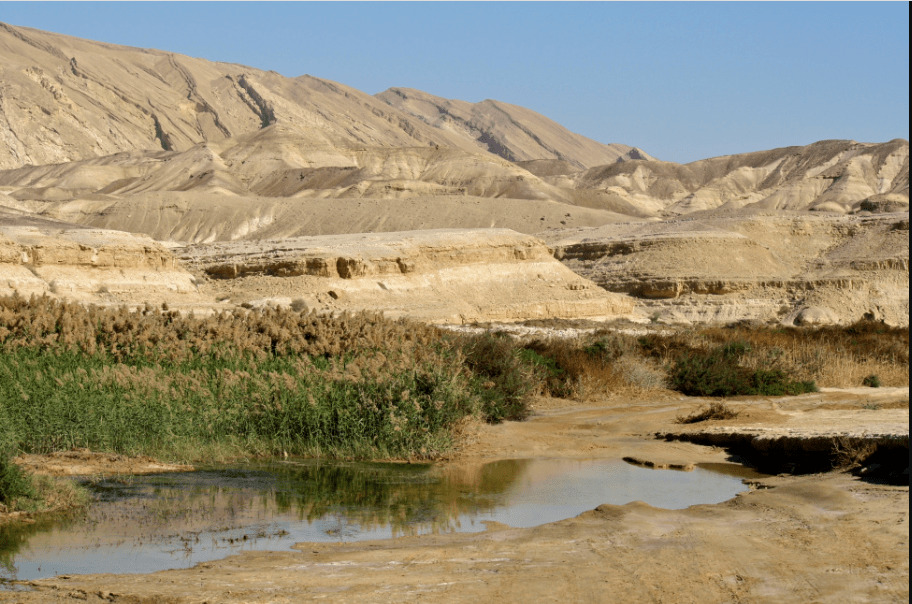
Hagar’s tears of despair were wiped permanently with pools of blessings that followed. From the meagre “skin of water” they carried, God gave them a “well of water” in the wilderness. Ishmael would take a wife from Egypt and become a “great nation.”
“Then God opened her eyes, and she saw a well of water (Genesis 21:19). When emotions take over you won’t see it until you take the pill. You won’t see the blessing until you submit to the One who opens the eyes. You won’t get it until you humble yourself and stay right where you are until Help comes your way. Do not fret. In 2 Chronicles chapter 7 verses 15 and 16 the LORD says, “Now My eyes will be open and My ears attentive to prayer made in this place; and My eyes and My heart will be there perpetually.”
You shall call his name Ishmael, Because the LORD has heard your affliction.
—Genesis 16:11
The name Ishmael (ישמעאל) literally means God Hears —The Lord heard everything (שמע יהוה). Compare that to verse 146 of Psalm 119 above where it says, “I cry out to You; Save me, and I will keep Your testimonies.” I could almost hear Hagar crying out, “Save me”, Hebrew hoShiEni (הושיעני), from Yasha (ישע), meaning to save, be saved, be delivered. That is where we get the nouns Jeshua (ישוע) yeshua (ישועה), anglicized Jesus.
About 1,800 years later the Apostle Paul wrote in the NT book of Romans chapter 10 verse 13 that “whoever calls on the name of the Lord shall be saved.” —Paul was teaching about Yeshua (ישוע). Is that the “saviour” that responded to Hagar and Ishmael’s tears in the wilderness? Well, Messiah Yeshua made this bold statement; “Truly, truly I say to you, before Abraham was born, I am” (John 8:58 NASB).
Not only that, Yeshua revealed to John that He is the Lamb that was slain from the foundations of the world (Revelation 13:8). And our law of first mentioned confirms men began to call upon the name of the Lord in the days of Enosh (אנוש) the son of Seth, the third son of Adam and Eve (Genesis 4:26).
The anglicized John, Greek Ioannes is the Hebrew name Yohanan (יוחנן) meaning Yah Is Gracious or ‘God is gracious’. The law of first mentioned takes us back to the roots of this Hebrew noun חן (hen) in Genesis 6 verse 8. It means ‘favour, grace, acceptance’. Numerical value equals 58. You guessed correctly, חן reduces to (5+8=13), our Bar Mitzvah age number.
The Law of Grace And Love
Earlier we learned that Bar Mitzvah literally means son of commandment and Bat Mitzvah means daughter of commandment. According to the Christian NT gospel of Luke chapter 2 Yeshua understood the legal implications behind the tradition and seized the opportunity when the time was right (vv. 41-50).
The ecclesiastical definition of grace is “unmerited favor. Grace is not something you earn by works.” Although our scope here is limited to ‘seed‘, our trusted law of first mentioned encourages us to check our rear view morors before we make the final turn.
But Noah found grace in the eyes of the LORD.
The prophet Zechariah quoted the Angel of the Lord saying, “For these seven rejoice to see The plumb line in the hand of Zerubbabel. They are the eyes of the Lord, Which scan to and fro throughout the whole earth.”
You don not get your hands on “The plumb line” unless for the purpose of “doing some work” with it. But what exactly are the 7 eyes of the Lord? The Prophet Isaiah described them as follows:
The Spirit of the Lord,
The Spirit of wisdom
and understanding,
The Spirit of counsel
and might,
The Spirit of knowledge
and of the fear of the Lord.
Those seven are the necessary conditions Noah needed from the Lord before embarking on the monumental task of pulling off the world’s most complex engineering project to date.
Thus Noah did; according to all that God commanded him, so he did.
That is to say; Noah used the wisdom, understanding, counsel, knowledge, reverence, to follow technical instructions given by God in order to build the ark. For Noa’s family to survive the flood, he needed to execute a series of practical steps based on the “grace” (חן) he found in the “eyes” of the Lord.
In Romans chapter 13 the Apostle Paul mentioned “commandments” and “love” in the same paragraph. He concluded that “love is the fulfillment of the law.” Then in Matthew chapter 22 a lawyer asked Yeshua a question, testing Him, and saying, “Teacher, which is the great commandment in the law?” Yeshua replied, “‘You shall love the Lord your God with all your heart, with all your soul, and with all your mind. You shall love your neighbor as yourself. On these two commandments hang all the Law and the Prophets.’” (vv. 36-40)
The Law of Moses, also called the Mosaic Law was a detailed interpretation of the original 10 commandments given by God on Mount Sinai (Exodus 20; 24; Deuteronomy 5). You often see them throughout the OT Bible described as the Lord’s statutes, judgments, precepts, commands, and commandments. Rabbis teach that they were 611 laws covering a wide range of social, health, administration aspects of the Israelites—above all, warship, and the love of God” (Genesis 6:4).
If you type: תורה in Google Translate from Hebrew to English you get “Bible” That Hebrew word for Torah has a numerical value of 611 (ת = 400, ו = 6, ר = 200, ה = 5). Combining 611 commandments which Moses taught.
When Yeshua came He ratified “Love the Lord your God,” and “Love your neighbour as yourself” —These two commandments raised the bar of the entire Law to 613 (Matthew 22:37). Yeshua emphasised, “Do not think that I came to destroy the Law or the Prophets. I did not come to destroy but to fulfill” (Matthew 5:17). The Greek equivalent used there is plhrovw (πληρόω) from the root: plhro (πληρό) meaning to fulfill, make full; (pass.) to be filled, full, complete. The Apostle Paul used the term fulfilled, fulfillment (peplērōken | πεπλήρωκεν) when explaining the “Love Your Neighbor” law to the gentiles in Romans 13:8,10.
In the NT book of Acts another Greek synonym of fulfilled, completed, is eplērōsan | ἐπλήρωσαν. It appears frequently for example in Acts 12:25 and 13:27. In the next example some English translations use ‘accomplished’ (NASB) or ‘fulfilled’ (ESV).
From Attalia they sailed back to Antioch, where they had been committed to the grace of God for the work they had now completed.
—Acts 14:26
The early church Apostles graduated through Yeshua’s discipleship relationship where they experienced the law of love first hand. Strong’s describes the Greek mathētḗs (μαθητής) — connected to our word math — as the “mental effort needed to think something through”) – properly, a learner; a disciple, a follower of Christ who learns and puts into practice the knowledge acquired. It is a lifestyle emulating the “teacher.” Yeshua said He learned from His Father too (John 5:19). That makes Messiah the first disciple (mathētḗs).
Talmid (תלמיד) is the Hebrew word for a disciple; talmida תלמידה (female), talmidim תלמידים (plural). Its roots are associated with Lamad למד meaning to teach, learn, instruct. Earlier we saw Lamed (ל), the twelfth letter of the Hebrew Alphabet with a pictograph of a cattle goad, a staff or a rod. Where grace and love meet, the rod in the hands of the teacher is for guidance, not punishment. Our law of first mentioned points to Noah as the world’s first graduate disciple, talmid (תלמיד) who successfully completed the assignment set before him following instructions from the Lord.
The Hebrew description of what Noah accomplished comes from the root tāmam/tamam תמם meaning to be complete, finished (be at an end). Numerical value equals 480, or (4+8+0=12), bringing us back to our Lamed (ל).
Building the ark was just the beginning. Scriptures say Noah’s relationship with God continued to a new level.
This is the genealogy of Noah. Noah was a just man, perfect in his generations. Noah walked with God.
The footnote describes “perfect” as; blameless or having integrity. The Hebrew equivalent used there is tāmîm/tamiym תמים meaning: integrity, truth (without blemish), sincerely, sound, without spot, undefiled, upright, whole, perfect, complete, full.
That brings us to the world’s second successful graduate disciple, talmid (תלמיד).
When Abram was ninety-nine years old, the LORD appeared to Abram and said to him, “I am Almighty God; walk before Me and be blameless.
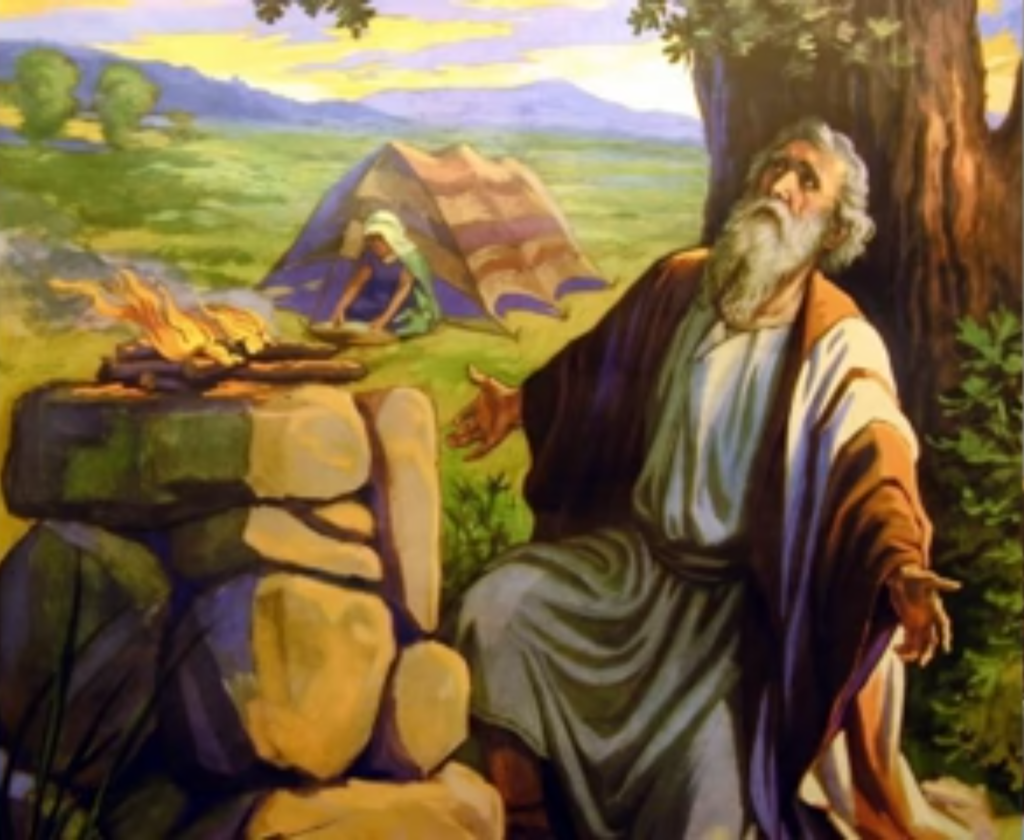
Do you see what I see? Noah ‘Walked’ with God. Abraham was commanded to ‘walk’ before the LORD. Yeshua said, “I am the way . . . (John 16:4). The followers of Yeshua who formed the first Church were His disciples talmidim תלמידים first. They walked with the Messiah. They followed the “ways of the Lord.” Hence, the first group of Apostles and believers Yeshua left behind were called, the “Way” (Acts 9:2). Messiah left behind no church named after Him because He came to point the “way” back to the Father, not to Himself (John 14:6; John 17:6,11,12,26).
Fathers primary role is to teach, and to support their children. God’s role as Father and Judge is not to enforce a legalist regime of “do, don’t”. The law is God’s “support system” to help His children reach their potential. When we succeed, it is God who gets the glory. When we fail, it is God’s purposes in us that suffer. Now here comes some interesting figures:
- tāmîm/tamiym תמים occurs 91 times in the original WLC Hebrew and the KJV Bible. That reduces to (9+1=10), the Ten Commandments (Exodus 20; 24; Deuteronomy 5)
- tāmîm/tamiym תמים occurs in 85 verses in the original WLC Hebrew and KJV. That reduces to (8+5=13), our Bar Mitzvah/Bat Mitzvah age (Luke 2: 41-50)
- Commutatively the numerical value of talmidim תלמידים (plural) equals 534, reducing to (5+3+4=12), our ordinal level number of the Hebrew letter Lamed (ל)
- Numerical value of tāmîm/tamiym תמים equals 490, reducing to (4+9+0=13). The same numerical value of Grace, and Love.
That also brings into focus The Parable of the Unforgiving Servant —Peter came to Yeshua and said, “Lord, how often shall my brother sin against me, and I forgive him? Up to seven times?” Jesus said to him, “I do not say to you, up to seven times, but up to seventy times seven (John 18:21-22). Numerically that works our 70×7=490, reducing to (4+9+0=13). Love by God’s standards.
Finally, guess what we find when we apply some of the math we have learned to the name of the Father, the Lord God of Israel יהוה אלהי ישראל? Numerical value equals 613! Commutatively (6+1+3=10), the Ten Commandments. God is love (1 John 4:16). The Lord could never ask His people to do what He cannot do Himself. When Yeshua taught about loving God, and loving one another, He was not liberating us from the ‘cumbersome Law,’ or from the ’10 commandments.’ Instead, Yeshua was inviting us to “learn” from Him in order to accomplish the requirements of the law.
A new commandment I give to you, that you love one another; as I have loved you, that you also love one another. By this all will know that you are My disciples, if you have love for one another.
—John 13:34-35
There is only one way to live outside God’s law —stop loving. Once you cross that bridge there is a certificate of lawlessness waiting (2 Thessalonians 2:1-12). Because God loves us, He will not stop us from choosing the opposite of His will. Once we have experienced evil then we can tell the difference when we find the good side. When we love, it is for our own benefit—heaven identifies us as the Lod’s beloved Bar Mitzvah (son of commandment) and Bat Mitzvah (daughter of commandment).
It is written, “God Himself is Judge (Psalms 50:6). That is where we get the name Daniel דניאל, original form דנאל without a yod (י). Numerical value of 85, reducing to (8+5=13). God judges by the standards of His established law (Isaiah 33:22). That was from the Old Testament. But hear what Yeshua says about His own judicial credentials in the New Testament:
For the Father judges no one, but has committed all judgment to the Son, For as the Father has life in Himself, so He has granted the Son to have life in Himself, and has given Him authority to execute judgment also, because He is the Son of Man. I can of Myself do nothing. As I hear, I judge; and My judgment is righteous, because I do not seek My own will but the will of the Father who sent Me.
—John 5:22,26,27,30

The Hebrew word used there for Love is Ahava אהבה. Numerical value equals 13, exactly the same value as ‘grace’ hen (חן). In the Christian NT bible, 1 Corinthians 13 is often fondly called the ‘love chapter’ by mainstream speakers on Sunday. But how many know that “The Greatest Gift” of all is also a “law” and it is “practical?” Noah followed instructions given by God to build the life-saving ark because he loved the Lord, and his family enough to “do” the work.
It is my prayer that this would help those worried about their loved ones who have failed to publicly confess their Christian faith, and are unchurched. The Lord knows where they are, and what is in their hearts. The condition is, “whoever calls on the name of the Lord . . . ,” not whoever shall come to church. Hagar’s tears and practical steps she took responding to instructions given by the Angel of the Lord paid off. Mother and son found grace in the wilderness, far removed from the welcoming environment of a corporate auditorium. Your primary legal responsibility is to just keep loving them and pray. Grace (חן) is what God leads you to accomplish by following the Ways of the Lord —His Will (Matthew 6:10; Hebrews 10:7,9; John 14:6).
In the last part of this incredible journey of discovery we will start right from where we left off at the Qoph (ק) part of Psalm 119. There is a bit more number crunching starting with the name of Yeshua (ישוע). Finally, we get to shine the spotlight into the science lurking behind the mysterious mustard seed. Meet you there.


3 responses to “The Mystery of the Mustard Seed—Part Two”
[…] In the next segment, the fog clears as we continue to explore the meaning and prophetic implications of the mustard seed in details. We will unpack original word pictures for each item of interest and interpret purpose. See you there. […]
LikeLike
[…] back. In the first and second segments of this three-part article we were introduced to the symbolism of biblical parables, and […]
LikeLike
[…] The Mystery of the Mustard Seen (Part Two) […]
LikeLike