

Introduction:
Welcome to the first of the three-part article exploring the coded information packed in the biblical “Parable of the Mustard Seed.”
Unless otherwise stated, portions of scripture references in this publication are primarily quoted from the New King James Bible Version (NKJV).
Our journey is inspired by a metaphorical presentation of the mustard seed through a bioecological projector. Expect a curious detour in the world of astrophysics and arithmetic characteristics hidden in plain sight. At the end, many will be asking the same question I had—how come I did not see that before?

Mustard is the powder substance ground or made from the seeds of a mustard plant. The moment you type “Mustard Seed” in the Google search window you get a result categorized in, “Food:” If you chose to stay, then you will be lured deeper in a staggering array of options in fancy packaging and containers. Why? It is all about commercialism.
In the whole Bible, the stand alone word “mustard” does not exist. The compound “mustard seed” occurs only 5 times in 5 verses in the New Testament (Matthew 13:31; 17:20; Mark 4:31; Luke 13:19; 17:6). It is the subject of perhaps the most consequential parables Yeshua (Jesus) told during His rabbinic work.
What is the Purpose of Parables in the Bible?
In antiquity literacy was developed pictographically. Cuneiform and Egyptian hieroglyphs are some of the earliest known writing methods. Ancient Aramean tribes used Paleo pictographs which gradually evolved into what many scholars refer to as pre-Christian Biblical Hebrew (Ktav Ashuri, Hebrew: כְּתָב אַשּׁוּרִי). The modern Hebrew alef bet (alphabet) retains its ancient pictographic characteristics. Also behind every pictorial sign or symbol of the Hebrew language lurks a numerical value which makes it alphanumerical, just like Greek.
Although Hebrew is the only language in the world that has kept its roots for over 3000 years, it is not immune to change—As diaspora Jews and Israelis continue to perform “Aliyah” (relocate to Israel) meaning of certain words or phrases steadily become subject to interpretation. “That ancient script can reveal the true intent of any particular Hebraic word when it was originally written.” —(Mini Manna Moments: Valuable resource helping scholars to make sense of scriptures in context).
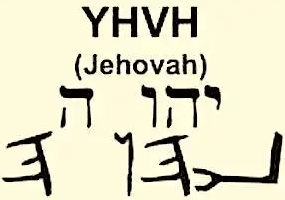
Storytelling in the Judean region where Yeshua (Jesus) grew up primarily revolved around their relationship with YHWY (יהוה), the God of their ancestors. Many interesting rabbinic teachings and idioms widely derived from pastoral lifestyle reliant on agricultural cycles (seasons of planting, sowing and harvest). A typical Hebrew language story not only provoke curiosity, but also appeal to the combination of all five senses— sight, sound, smell, taste, and touch.
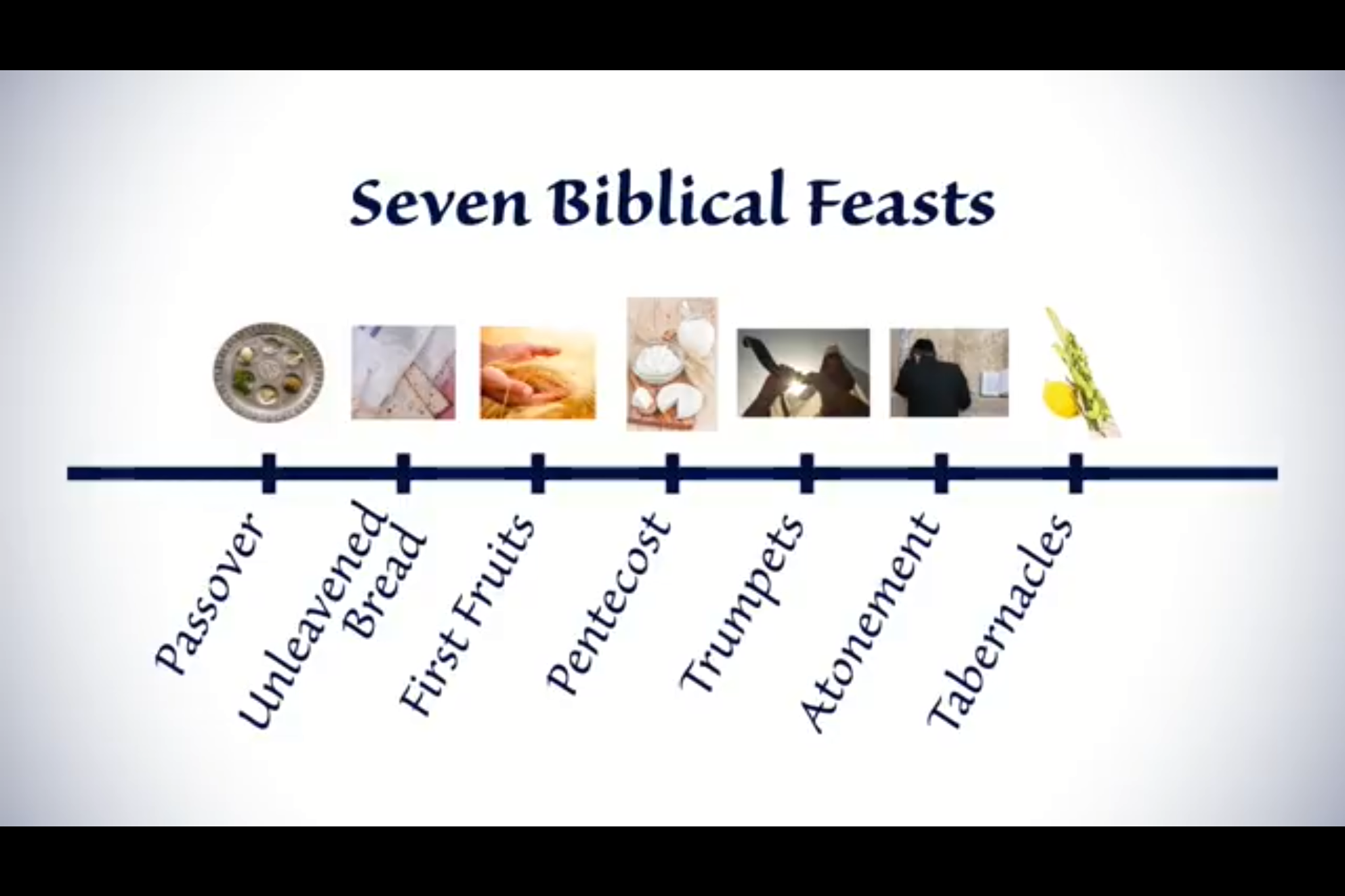
Majority of the ancient Biblical prophecy I have studied follow a similar pattern. However, any attempt to interpret them literally is presumptuously risky (Deuteronomy 18:20-22). The prophet Moses is widely credited for transcribing the Torah (first 5 books of the Hebrew Bible, Christian Old Testament). He foretold of Yeshua’s ‘Prophet’ credentials nearly 1,342 years before Yeshua was born in Bethlehem of Judea (Matthew 21:11; Luke 7:16; 24:19).
The LORD your God will raise up for you a prophet like me from among your brothers. You must listen to Him . . . I will put My words in His mouth, and He will tell them everything I command Him. And I will hold accountable anyone who does not listen to My words that the prophet speaks in My name.
—Deuteronomy 18:15,17-19 (Berean Standard Bible –BSB)
At the height of Yeshua’s ministry in Galilee He constantly faced controversial questions related to His teachings. While Yeshua’s disciples wanted to learn, factious traditionalists (Pharisees, Sadducees, Scribes, teachers of the Law) and cynics often sought to fault Him for prosecution.
And the disciples came and said to Him, “Why do You speak to them in parables?”
He answered and said to them, “Because it has been given to you to know the mysteries of the kingdom of heaven, but to them it has not been given.
The word mysteries there highlighted in the footnotes as, ‘secret or hidden truths’. In the Hebrew mindset, “Truth therefore is Dynamic. A matter of trust —not abstract knowledge. It is based on concrete ideas where attention is given to function, meaning, that you must DO in order to UNDERSTAND”
—(Mini Manna Moments).
Yeshua continued to explain by quoting Isaiah 6:9-10.
Therefore I speak to them in parables, because seeing they do not see, and hearing they do not hear, nor do they understand. And in them the prophecy of Isaiah is fulfilled, which says:
‘Hearing you will hear and shall not understand,
And seeing you will see and not perceive;
For the hearts of this people have grown dull.
Their ears are hard of hearing,
And their eyes they have closed,
Lest they should see with their eyes and hear with their ears,
Lest they should understand with their hearts and turn,
So that I should heal them.’
Now to a detractors tuning in, that wouldn’t make sense —it would be perceived like a stinging insult instead. But to Yeshua’s disciples keen to learn, those comments would be the wakeup call urging them to pursue wisdom from the master.
But blessed are your eyes for they see, and your ears for they hear; for assuredly, I say to you that many prophets and righteous men desired to see what you see, and did not see it, and to hear what you hear, and did not hear it.
Matthew also quoted the Levite Asaph, famous author of twelve recorded Psalms (50,73-80). Asaph prophesied about Yeshua’s teaching in parables nearly 860 years prior.

All these things Jesus spoke to the multitude in parables; and without a parable He did not speak to them, that it might be fulfilled which was spoken by the prophet, saying:
“I will open My mouth in parables;
I will utter things kept secret from the foundation of the world.”
That last statement highlighting things kept ‘secret’ from the ‘foundation’ of the world, is the key. Because in ancient times pursuing a career in the prophetic was a very dangerous preposition. Elijah nearly lost his life at the hands of Jezebel and Ahab (1 Kings 19). Judah’s backslidden King Joash ordered a hit job on Zechariah, the son of Jehoiada the priest for pronouncing God’s judgement on Judah’s ruling elite and their complicit subjects (2 Chronicles 24:20-22).
Prophets continued to live precariously for daring to declare hair-trigger statements such as, “Thus says God . . . “ even during Yeshua’s time in the Holy Land. Violence against “The Way” (first church followers of Yeshua) escalated well into the early Christian period (Luke 11:47-51; Acts 7). Besides fear of retribution, some prophets of old would prefer to stay quiet rather than risk losing credibility when things don’t necessarily turn out exactly as predicted (Jonah 4:1-11). Nevertheless, prophets are “watchmen”—they have a legal obligation to just go ahead and spell it out, and let God worry about the consequences (Ezekiel 33:7-16).
Those with military experience will attest to the fact that telegraphing your intentions to the adversary is one of the greatest miscalculations imaginable. Losing the element of surprise can be costly and regrettable indeed. When teaching His disciples how to pray, Yeshua told them to direct their prayer to God, “Our Father in Heaven . . .” (Matthew 6:9-13). No father would like to be misunderstood by their children (1 Corinthians 14:33; Ephesians 1:9).
The covert construct of parables and prophecies is meant to maintain operational integrity for God’s people in a hostile environment. The cipher combination of symbols and numbers on which the original Biblical script is based also embedded adequate cryptographer tools. That remains true with the modern Hebrew language. Most mainstream Christians suspect any attempts to collate scripture analysis with Gematria aids is Jewish mysticism. I have come across many who were raised in faith groups that dismiss the whole idea of numbers in the Bible as kabbalistic occult. That was my mindset too until I came across this command by Yeshua in the last book of the Christian NT Bible;
Here is wisdom. Let him who has understanding calculate the number of the beast, for it is the number of a man: His number is 666.
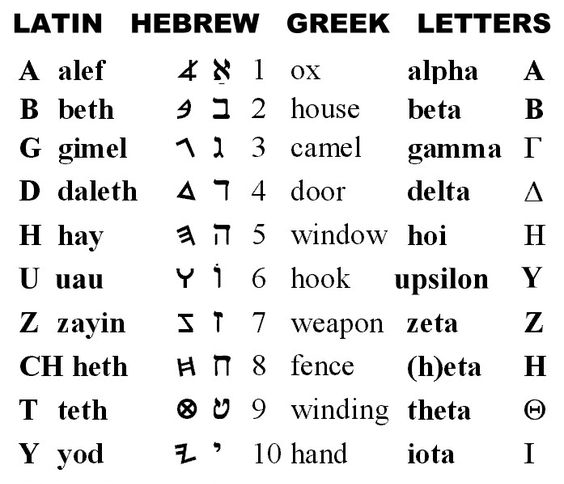
That was my eureka moment—I quickly learned that both Hebrew and Greek are alphanumeric. For the first time I realized there are too many numbers in scripture to be ignored. Then I immersed in deeper understanding of the cultural gradient that influenced the early church Jewish Apostles. Today, Paul’s teachings (the Pauline doctrine) feature prominently in Christianity theology.
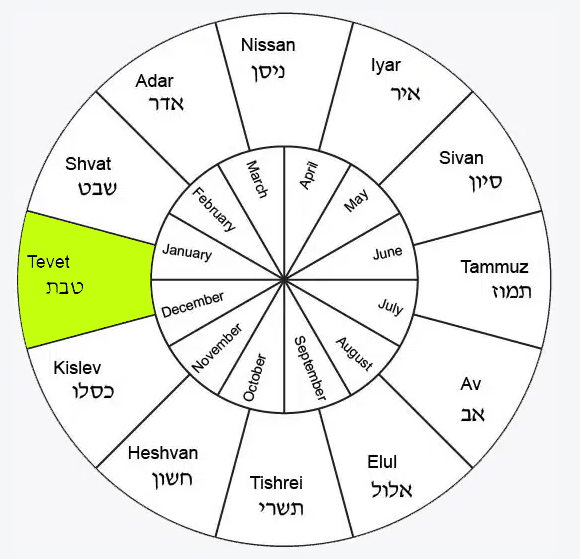
Yeshua left behind the Apostles and disciples of the first century church in a highly Hellenized region. They learned Greek, and embraced Greek culture. We are told that large Jewish communities in the diaspora spoke Greek instead of Hebrew. Unsurprisingly, the first Christian New Testament Bible has it’s roots in the Septuagint. Records date back to the 8th day of the month of Tevet,טבת (December–January) 3rd century BCE when the Egyptian King, Ptolemy, ordered that the Tanakh (Hebrew Bible) be translated into Greek. That work by 72 Hebrew sages (scholars) delivered the Septuagint.
“At the time of Yeshua (Jesus), the Septuagint was on equal standing with the Hebrew text.” —(The Messianic Prophecy Bible Project: Jerusalem Under Siege).
But the Hellenists did not appreciate the Apostles’ message of the Kingdom passed down by Yeshua. Prior to His departure, Yeshua warned his disciples to be wise and prepare for the worst (Matthew 10:16-26; John 16:1-4,33). The Apostle Paul prayed for believers;
“that the God of our Lord Jesus Christ, the Father of glory, may give to you the spirit of wisdom and revelation in the knowledge of Him, the eyes of your understanding being enlightened. . .”
One Sunday morning I heard Pastor Alwin Wall at Calvary London say, “The life of discipleship is not a playground, it is a battlefield. We have a choice—to quit, or to win.” The battle lines were drawn in ancient times. Throughout scripture we are told that the battle must be won in the unseen realm first before it is made manifest in the physical. The adversary excels in psych-warfare (2 Corinthians 10:1-6; Ephesians 6:10-18).
The Apostle Paul—quoting from Isaiah chapter 29 verse 14—subtitled this truth in his first letter to the church at Corinth as follows: “Christ the Power and Wisdom of God.”
For the message of the cross is foolishness to those who are perishing, but to us who are being saved it is the power of God. For it is written:
“I will destroy the wisdom of the wise,
And bring to nothing the understanding of the prudent.”Where is the wise? Where is the scribe? Where is the disputer of this age? Has not God made foolish the wisdom of this world? For since, in the wisdom of God, the world through wisdom did not know God, it pleased God through the foolishness of the message preached to save those who believe. For Jews request a sign, and Greeks seek after wisdom; but we preach Christ crucified, to the Jews a stumbling block and to the Greeks foolishness, but to those who are called, both Jews and Greeks, Christ the power of God and the wisdom of God. Because the foolishness of God is wiser than men, and the weakness of God is stronger than men.
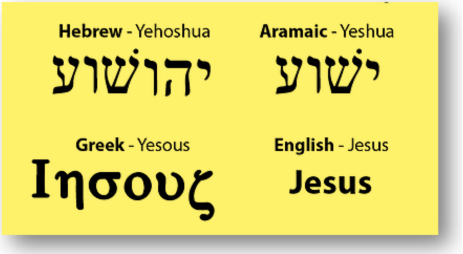
Many questions, but there are plenty of answers too for those who want to learn how to navigate the ways of the Lord. In modern Israel and the West, there are plenty of individuals who identify with big titles of “prophet, apostle, bishop, pastor, evangelist”, etc. Many of them are doing quite well in ‘ministry’. It is no longer dangerous to use “the Greeks” and “foolishness” in one sentence. But there are also places elsewhere in the world where persecution against Christian faith groups regrettably persist. Ancient prophecy covers both sides of that reality.
The last book in the Christian NT Bible talks about Messiah Yeshua’s letters to the seven End Time churches (Revelation chapters 1, 2 and 3). They include; The Loveless Church of Ephesus, The Persecuted Church in Smyrna, The Compromising Church in Pergamos, The Corrupt Church in Thyatira, The Dead Church in Sardis, The Faithful Church in Philadelphia, and the Lukewarm Church of the Laodiceans.
Those 7 church addresses are not meant to be taken literally. They are a prophetic pictograph of what Messiah Yeshua predicted would become of “The Way” —that Church He left behind bonded in Jerusalem (Acts chapters 1 through to 5). Notice the singular in Matthew chapter 16 verse 18 where Yeshua declared, “on this rock I will build My church, and the gates of Hades shall not prevail against it.” Some believe Yeshua meant the ‘coalition‘ of churches, denominations, or faith groups theologically referred to as the “holy catholic church“, or the “holy universal church“. But for the scope of this article, this will be a topic for another day.
Church divisions began around 31CE (Acts chapter 6) between Jewish conservative believers who decided to “continue with prayer and the ministry of the word,” and Hellenists who complained over daily supplies (vv. 1-7). Nevertheless, the church continued to grow, but so did the divisions. Today, it is estimated that there are over 45,000 faith groups around the world that identify as “Christians” —(International Bulletin of Mission Research – IBMR).
How to Pray
At the end of the judicial ‘Parable of the Persistent Widow’ Yeshua narrated to His disciples in Luke chapter 18, He posed this question—“Nevertheless, when the Son of Man comes, will He really find faith on the earth?”
Those familiar with the story conclude the woman’s persistence is a demonstration of great faith which eventually got her justice. That the practical application for Christians therefore, is to not give up on praying and believing even if sometimes it might feel like for some reason God is taking too long. Good! But there is more. . . Previously the Lord said, “If you have faith as a mustard seed, you can say to this mulberry tree, ‘Be pulled up by the roots and be planted in the sea,’ and it would obey you” (Luke 17:6). Five chapters and six more parables further back the Lord taught His disciples about the kingdom of God in the “Parable of the Mustard Seed” (Luke 13:18). We can complete this part of the puzzle by returning one more step back on what Yeshua taught His disciples about prayer.
“When you pray, say:
Our Father in heaven,
Hallowed be Your name.
Your kingdom come.
Your will be done
On earth as it is in heaven.”
God’s ‘will’ is simply doing things His Way, not our way. There is a big difference between what we wish should happen, when, and how versus reality from God’s perspective. The quantity of faith, or how persistent you can keep asking doesn’t really accomplish anything outside of God’s will.
Yes, God is the compassionate Father who is concerned about the welfare of His children (Luke 11:3). But He is also the ‘Just Judge’ who will not compromise on justice (Isaiah 33:22; Psalm 50:6).
When Yeshua taught His disciples to call in God’s kingdom, and His will be done on earth as it is in heaven (Luke 11:2; Matthew 6:10), He meant total and fast victory (Luke 18:8; Isaiah 65:24). Some NT versions say, “I tell you, he will see that they get justice, and ‘quickly’” (NIV), or “promptly” (BSB). Time retreats when God’s will responds to prayer because time zone restrictions do not apply in heaven. Daniel’s intersession prayer for Israel delayed for 21 days not because it was God’s will, but because there was contention in the unseen realm (Daniel 10:12-13). The breakthrough came once Daniel fulfilled the legal requirements to “repent” of his own sins, transgressions and iniquities, and on behalf of God’s people in Babylonian captivity. Notice the astonishing exchange bellow:

Now while I was speaking, praying, and confessing my sin and the sin of my people Israel, and presenting my supplication before the Lord my God for the holy mountain of my God, yes, while I was speaking in prayer, the man Gabriel, whom I had seen in the vision at the beginning, being caused to fly swiftly, reached me about the time of the evening offering. And he informed me, and talked with me, and said, “O Daniel, I have now come forth to give you skill to understand. At the beginning of your supplications the command went out, and I have come to tell you, for you are greatly beloved; therefore consider the matter, and understand the vision:
The keywords that made my day include: —’Now’, ‘while I was speaking in prayer’, ’caused to fly swiftly’, ‘about the time of the evening offering’, ‘at the beginning of your supplications the command went out’.
According to the prophetic book of Revelation there is a woman, one woman. She is ”the Lamb’s wife” (Revelation 21:9). Just like the woman of Luke 18:1-8, she is a subject of lawfare persecution (Revelation 12:10,11,13,16). She prevails against her adversary by a judicial process involving ‘the blood of the Lamb’ (her husband) and “and by the word of their testimony.”
Two important clues to note there: (1) the plural ‘their’ in this context is the ‘couple‘. Symbolically, the church is that ‘woman’ who is the subject of persecution—“the bride, the Lamb’s wife.” In Hebrews chapter 12, verse 23, this woman is identified as “the general assembly and church of the firstborn who are registered in heaven.” (2) the ‘testimony’ is a judicial term. When God instructed Moses to build the Tabernacle, “the ark of the Testimony” and the mercy seat that is on it’ was part of the furniture of the tabernacle. Then God, “gave Moses two tablets of the Testimony, tablets of stone, written with the finger of God” (Exodus 24:12; 31:7,18).
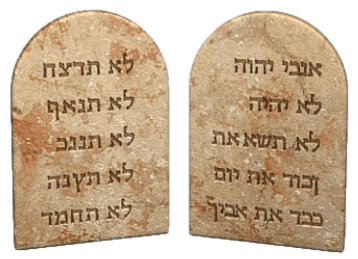
What would the ancients say if they came back to life and found our kids playing with electronic tablets? We have come a long way—from stone tablets, clay, papyrus and crude parchments before pen and paper emerged. But none of that takes God by surprise. He allowed the prophet Daniel a sneak preview of it thousands of years in time. Daniel understood how in heaven everything is done by the book.
“I watched till thrones were put in place,
And the Ancient of Days was seated;
His garment was white as snow,
And the hair of His head was like pure wool.
His throne was a fiery flame,
Its wheels a burning fire;
A fiery stream issued
And came forth from before Him.
A thousand thousands ministered to Him;
Ten thousand times ten thousand stood before Him.
The court was seated,
And the books were opened.
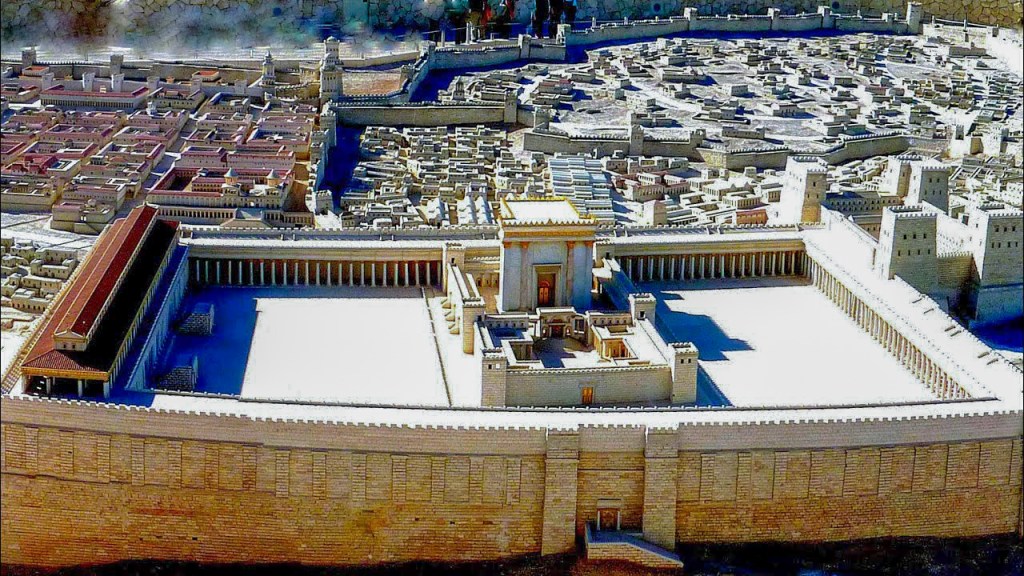
The first century church Apostle Paul taught that following Yeshua’s intervention on the Cross, the Tabernacle (temple) function has since been relocated (1 Corinthians 3:16; 6:19). He was quoting the OT prophet Jeremiah in chapter 32 verses 31-34. Notice the list of judicial terms (witness, covenant, laws, lawlessness, and truth) bellow.
But the Holy Spirit also witnesses to us; for after He had said before,
“This is the covenant that I will make with them after those days, says the Lord: I will put My laws into their hearts, and in their minds I will write them,” then He adds, “Their sins and their lawless deeds I will remember no more.”
. . . let us draw near with a true heart in full assurance of faith, having our hearts sprinkled from an evil conscience and our bodies washed with pure water.
Prior to construction of the masonry temples in Jerusalem, the Tabernacle that housed “the ark of the Testimony”, and where Moses met with God during the Israelites’ journeys in the wilderness was also called the “Tent of Meeting”, Hebrew: ‘Ohel Moed’ אוהל מועד.
The Apostle Paul called the body, “this tent” (2 Corinthians 5:1-8). Every time a believer begins to pray, they are technically synchronizing with kingdom activity (Exodus 33:7-11; 40:34; Luke 11:1-13; 18:1-8). The Lord, God Almighty is interactive and approachable. He responds to dialog from ‘the heart’, not from ‘the books.” The Lord did not teach us ‘what to pray’. Yeshua said, “In this manner, therefore, pray:” (Matthew 6:9). It is for everyone—“whoever calls on the name of the Lord . . .” (Romans 10:13; Joel 2:32).
The meeting is conditional on the following:
- God’s ‘Will’, not as we wish (Luke 11:2; Hebrews 10:7,9)
- God’s ‘Way’, not another way (Matthew 6:7,9; 1 Thessalonians 5:19)
- God’s preferred place and time (Deuteronomy 14:23; Matthew 6:5-6)
- Be willing to pray for others (Luke 11:5-8; 2 Corinthians 5:20)
- Humility—resist lawlessness (Luke 18:1-8; Hebrews 10:16).
- Forgiveness—of self, and others (Matthew 6:12-15)
I can almost feel a bit of tension on ‘lawlessness‘ —Have we not been told we live by ‘grace’, not by the OT ‘law’? Thus far we want to keep track of the Parable of the Mustard Seed we set out to explorer. There is so much to the subject of the law still to come, I promise. I keep telling my friends, “if it works for you, just keep doing what you are doing.” But for now, we can reflect on; Luke’s judicial presentation in ‘The Parable of the Persistent Widow’ (Luke 18:1-8), Apostle Paul pointing the way to the Lord’s throne room of Grace and mercy where He is the presiding ‘Just Judge of all’ (Hebrews 12:22-24), and to the church—the bride, the Lamb’s wife—destined to overcome by the “blood of the Lamb, and by the word of her testimony (Revelation 12:11).
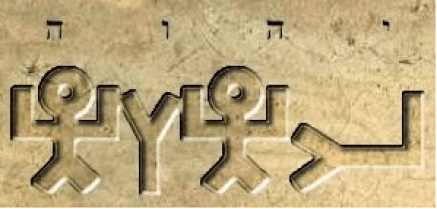
As a footnote, when John recorded those “who keep the commandments of God and have the testimony of Jesus Christ” in Revelation chapter 12 verse 17, he was not talking about Jews who follow the Torah or the Tanach (Hebrew Bible-OT). He was talking about those who call on the sacred Name (HaShem) that God Almighty (El Shaddai) revealed in Exodus chapter 6 verses 2 and 3. The LORD, YHVH ( יהוה ) is His Name. He spelt it out very clearly through the prophets of old, and modern times.
I am the LORD, that is My name;
And My glory I will not give to another,
Nor My praise to carved images.
Behold, the former things have come to pass,
And new things I declare;
Before they spring forth I tell you of them.”
Paul revealed in Philippians chapter 2 verse 11 that, “Jesus Christ (Yeshua HaMashiach) is Lord, to the glory of God the Father.” Yeshua confirmed it by saying, “I and My Father are one” (John 10:30). Since ancient times, the noun Yeshua (ישועה) means savior, and teshua (תשועה) means salvation. Yeshua (Jesus), is the One who the Jewish Apostle Paul was testifying about to the gentiles saying, “For whoever calls on the name of the Lord shall be saved.”
From ancient times, the “command” to call upon the name of the Lord has gone out (Genesis 4:26; Romans 10:13; Joel 2:32). Salvation is available to those who have the “testimony of Jesus Christ” (1 John 5:6-13; Revelation 1:2,9; 19:10). That is the legal precedent the adversary (Greek: antidikos) of Luke 18, and Revelation 12 failed to overcome in front of the “Just Judge” of all.
It has been a winding road indeed. I am so glad we have made it to the home straight that brings into focus the answer to the question posed at the end of the widow’s legal triumph—” when the Son of Man comes, will He really find faith on the earth?” Yes, He will.
Here is the patience of the saints; here are those who keep the commandments of God and the faith of Jesus.
They are the remnant who by faith believe that Yeshua is “The Way, the truth, and the life.” When the Lord returns, He will reunite with His ‘bride’—the ‘church’ that choose to follow “The Way” even where it does not make sense to the rest of the world (Matthew 11:28-29).
These are the ones who follow the Lamb wherever He goes. These were redeemed from among men, being firstfruits to God and to the Lamb. And in their mouth was found no deceit, for they are without fault before the throne of God.
For anyone not familiar with an environment where “the commandments of God and the faith of Jesus” are mentioned in the same sermon on Sunday, I look forward to a quality moment when we can discuss that at length. Meanwhile, allow me to leave this one more thought to chew on—When Yeshua was introducing Himself to ‘The Lukewarm Church of the Laodiceans’ He instructed John to write;
These things says the Amen, the Faithful and True Witness, the Beginning of the creation of God:
“He who has an ear, let him hear what the Spirit says to the churches.”
The cue are the three judicial terms following each other—Faithful, True, Witness. We will pick it up from right there next time.
As we wait, it is the Lord’s desire to help us understand that his mind is preoccupied with nothing else but to reunite with His bride, the Lamb’s wife (Psalm 8:4). Messiah Yeshua is betrothed with One, not more (Hosea 2:16). I can feel the question in the air—“what happens to the rest?”
In the next segment, the fog clears as we continue to explore the meaning and prophetic implications of the mustard seed in details. We will unpack original word pictures for each item of interest and interpret purpose. See you there.


3 responses to “The Mystery of the Mustard Seed—Part One”
[…] back. In the Part One of this three-part article we were introduced to the concept of biblical parables, and why Messiah […]
LikeLike
[…] back. In the first and second segments of this three-part article we were introduced to the symbolism of biblical […]
LikeLike
[…] The Mystery of the Mustard Seed (Part One) […]
LikeLike