
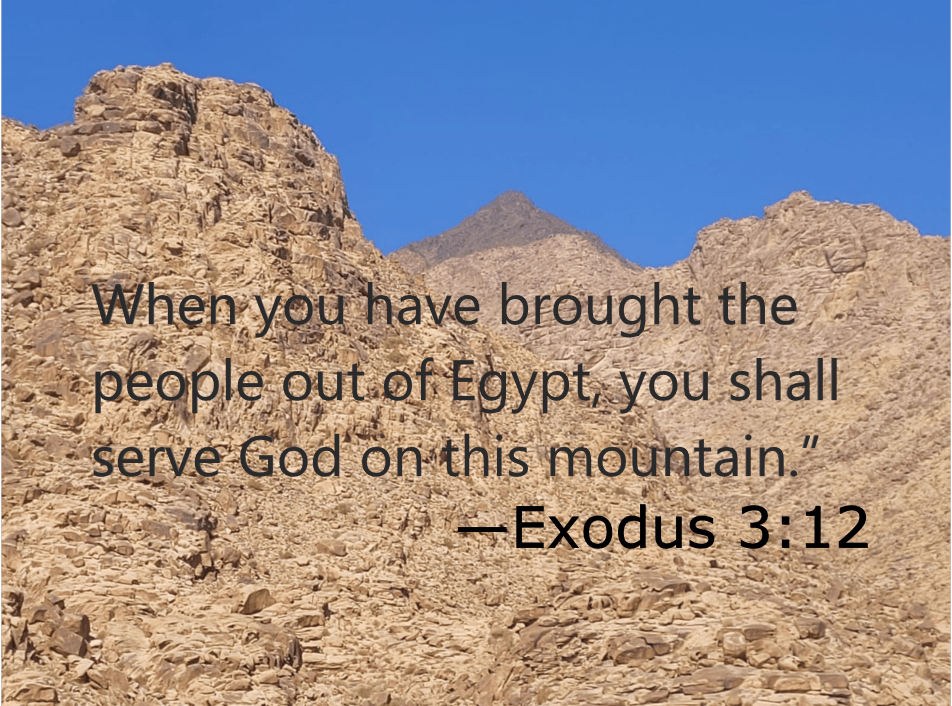
In Part One we explained the roots, meaning and symbolism of the metaphorical Rock in scripture. Here, our journey introduces Yeshua’s identity as a “Foundation Stone”, takes a glance at the scientific perspective of the earth’s rocky foundations and lands at Jonah’s relationship with Simon Peter.
The Lord (YHVH) Refers to Yeshua as, a “Stone”
I know . . ., this got me a bit confused too at first sight in Hebrews, the 19th book in the New Testament (NT). But because the entire Bible from Genesis (B’resheet), the first book in the Old Testament (OT), to Revelation, the last book in the NT is one story, it all became clear when I kept searching.
According to the author/writer of Hebrews, God the Father refers to Yeshua (the Son) as; “God, LORD, anointed, and a foundation stone.”
But to the Son He says: “Your throne, O God, is forever and ever; A scepter of righteousness is the scepter of Your kingdom. You have loved righteousness and hated lawlessness; Therefore God, Your God, has anointed You With the oil of gladness more than Your companions.” And “You, LORD, in the beginning laid the foundation of the earth,”
—Hebrews 1:1-12
I guess it is time to invoke our Law of First Mention to make sense of it —from the OT foundations:
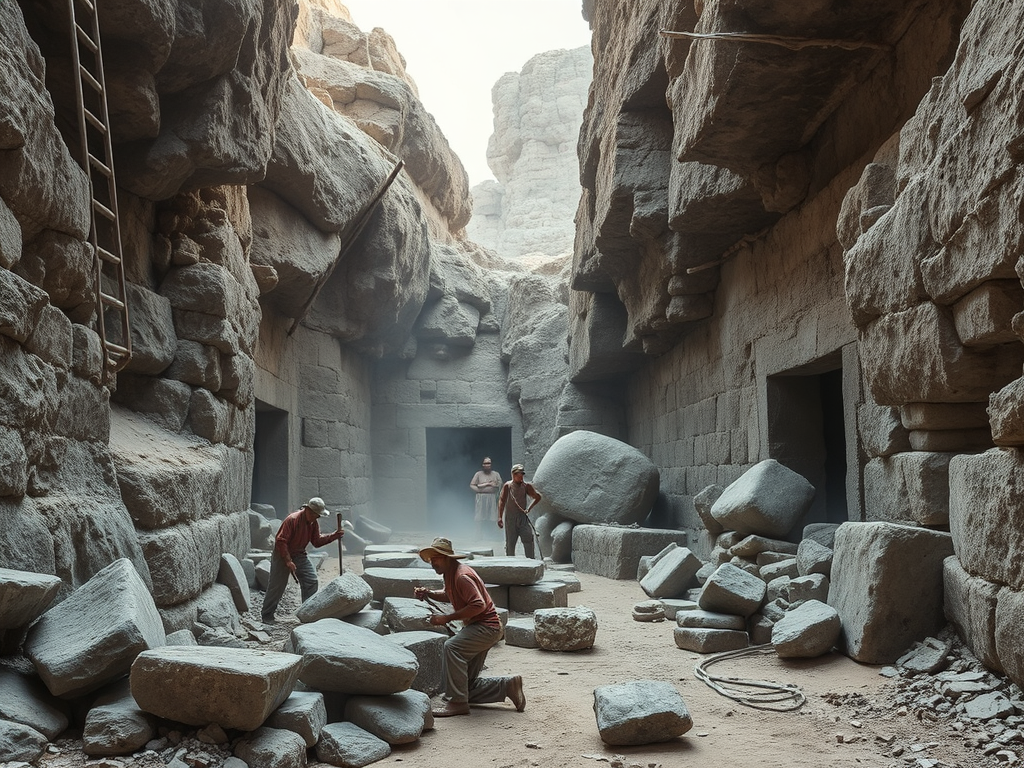
Solomon’s builders, Hiram’s builders, and the Gebalites quarried large stones, costly stones, and hewn stones, to lay the foundation of the temple.
And the king commanded them to quarry large stones, costly stones, and hewn stones, to lay the foundation of the temple. So Solomon’s builders, Hiram’s builders, and the Gebalites quarried them; and they prepared timber and stones to build the temple.
All these were of costly stones cut to size, trimmed with saws, inside and out, from the foundation to the eaves, and also on the outside to the great court. The foundation was of costly stones, large stones, some ten cubits and some eight cubits. And above were costly stones, hewn to size, and cedar wood. The great court was enclosed with three rows of hewn stones and a row of cedar beams. So were the inner court of the house of the LORD and the vestibule of the temple.—1 Kings 5:17; 7:9-12
Solomon, Hebrew Shelomoh (שלמה) from the Hebrew root salom or shalom שלם (peace). Solomon is the second son of David with Bathsheba who grew up to become the third king of the United Kingdom of Israel.
King Solomon was chosen by the LORD (YHVH) to build the house for Him in Jerusalem —also known as The First Temple (Beit HaMikdash), or fondly as Solomon’s Temple.
Besides his incredible wealth, king Solomon was also renowned for his wisdom, and author of Proverbs (Mishlei) and Song of Songs (Shir-Hashirim).
— 2 Samuel 7:12-13; 12:24; 2 Chronicles 1:12; 6:5-11; 9:3-24).
Notice the specifications King Solomon ordered for the type of stones needed for the project; “large stones—some ten cubits and some eight cubits—costly stones, and stones hewn to size, to lay the foundation of the temple.”
And hear YHVH’s contribution to that;
“Therefore thus says the LORD God: ‘Behold, I lay in Zion a stone [aven (אבן)] for a foundation, A tried stone, a precious cornerstone, a sure foundation;’”
— Isaiah 28:16
From the Rock sûr/tsoor (צור), and now to the Stone aven (אבן). Depending on where you are, both look and feel more or less the same—They’re both hard geological elements, come in various colors, shapes and sizes, and can be remodelled for masonry purposes.
Now, this feels like that moment when I need some of that prayer the early church Apostle Paul prayed for the saints in Ephesus . . .
“. . . that the God of our Lord Jesus Christ, the Father of glory, may give to you the spirit of wisdom and revelation in the knowledge of Him, the eyes of your understanding being enlightened;”
—Ephesians 1:17-18
Before we examine Yeshua’s thoughts about this topic, let me first share a quick analysis of the Rock and the Stone.
The Science in Scripture
Similar to Greek, in Messiah’s native language every letter is also a number and a picture. Some cringe at this concept, suspicious of Kabbalistic influence. But the historic and scientific benefits transcend tradition and mysticism.
Just so you know, biblical Math is ‘Simple and Fun’, and it is primarily based on Commutative, Associative and Distributive Laws (CAD), which we know from elementary school. Example: The “Commutative Laws” say we can swap numbers over and still get the same answer when we add: a + b = b + a.”
—mathsisfun.com
Let’s examine the numerical values in Hebrew:
- Rock (sûr/tsoor – צור) = 296 → When reduced: 2+9+6=17
- The 17th Hebrew letter is Peh (פ), with value 80 (8+0=8)
- Peh symbolizes: mouth, opening, speech
- Stone (aven – אבן) = 53 → When reduced: 5+3=8
- The 8th Hebrew letter is Chet (ח), with value 8
- Chet symbolizes: wall, fence, protection, new beginning, separation
KEY INSIGHT: Both Rock and Stone ultimately connect to the number 8, which represents both division (as a separator) and new beginnings.
Accordingly, the number eight (8) seems to be the glue that binds the characteristics of both the Rock, and the Stone together. What a contradiction! —by default, eight is supposed to be a dividing agent. But there is more, far much more when it comes to function. From Hebrews 1:10, God, the Father has already told us that in the beginning (Genesis, B’resheet) it is the LORD (Yeshua) who “laid the foundation of the earth.”

Geologists confirm that the Earth’s crust underneath where we live is a solid rock layer. It is a composite of various types of rocks, including igneous, metamorphic, and sedimentary rocks and minerals. At the center of Earth is a combustible, dense metal core which periodically vents out magma through volcanic activity.
Scientists also say on the periodic table, the number 8 refers to the atomic number of oxygen. This means that every oxygen atom has 8 protons in its nucleus. Protons, neutrons and electrons give the atoms solidity.
Scientific Facts About Atomic Structure:
- Changing the number of neutrons in an atom transforms it into an isotope
- A change in the number of electrons transforms it into an ion
- The key difference is that isotopes of the same element have the same number of protons but different numbers of neutrons, while ions are atoms that have gained or lost electrons, resulting in a net electrical charge
Within an atom’s nucleus, there is ‘an incredibly powerful nuclear force’ responsible for holding together its highly electrostatic and repulsive subatomic particles. Physicists believe it is this anonymous force that prevents the nucleus from disintegrating.
Theoretically, that level of instability is a recipe for suicide—we are not supposed to be here, but here we’re—Whatever is keeping the Earth from self-destruction under those circumstances defies logic. Scientists refer to it simply as “Atomic glue” —the mysterious anchor to which all life is tethered.
According to the Bible, we won’t have to wait indefinitely. God, the architect of it all has not hidden the fact that the “Time of the End” Acharit Hayamim (אחרית הימים) will happen at some point (Daniel 12:4). Eschatologists refer to the period and events leading up to that climax, the “end times” or “last days.“
Scripture speaks clearly about this future renewal:
“For behold, I create new heavens and a new earth; And the former shall not be remembered or come to mind”
—Isaiah 65:17
Scripture is sprinkled with enough prophetic information to help God’s people to prepare for ‘that day and hour’ (Matthew 24:36-44; Joel 2:1,2,11,30-32).
The Revelation of Jesus Christ, which God gave Him to show His servants—things which must shortly (quickly or swiftly) take place . . . Blessed is he who reads and those who hear the words of this prophecy, and keep those things which are written in it; for the time is near. . . Now I saw a new heaven and a new earth, for the first heaven and the first earth had passed away. Also there was no more sea. . . And he said to me, “Do not seal the words of the prophecy of this book, for the time is at hand.
—Revelation 1:1,3; 21:1; 22:10
Undoubtedly, that kind of messaging evokes mixed feelings. Some feel despondent on hearing about “the end” especially when it feels like the fun has just begun. Others anxiously can’t wait to see “the end” of a traumatizing episode. God has an answer to all of that. Remember our 8th Hebrew letter Chet (ח)? The pictographic meaning of a wall, fence also demarcates evil from good, and separates the old from the new beginning.
Change is inevitable—for good, or for bad. Change is welcome for the oppressed (Joel 2:32), but unwelcome and dreadful for the oppressor (2:31).
I wouldn’t paraphrase that better than what my favorite teacher said:
‘While “new beginnings” sound wonderful to the soul, it is imperative that one considers the cost for this to occur. All new life, new births, and new beginnings require a death (at least figuratively). The old must die in order for new life or for a new beginning to occur.’ —Kisha Gallagher, author of the BEKY Book, and Grace in Torah, a ministry devoted to the Gospel of Yeshua.
When Messiah Yeshua went on the cross, His death and subsequent resurrection started the countdown for the passing of the old, and the beginning of the new.
Jesus, the Greek translation of the Hebrew noun Yeshua (ישוע) or Jeshua, meaning “he will save.” It is a variant of Joshua or Jehoshua (יהושוע), from a duo root YHVH (יהוה) and yasha’ (ישע) meaning “the LORD (YHWH) is salvation” or its shortened form, “Ya is salvation.”
The Name Connection to Our Theme:
- Yeshua (ישוע) = 386 → When reduced: 3+8+6=17
- The 17th letter Peh (פ) = 80 → When reduced: 8+0=8
- Pictographic meaning: mouth, opening, speech
IMPORTANT CONNECTION: It is hard to hear about the good news of salvation and remain quiet about it (Isaiah 61:1; Luke 4:16-19; Mark 1:38).
Thus far, the circle is finally closing in: The Rock, the Stone, and Yeshua all have the same numerical value of eight (8). On one side it is a wall, fence of separation, yet on the other, the glue that binds everything together for stability.

— Psalm 18:46
All the pieces are beginning to come together in the imagery from when David acknowledges the LORD as “Savior, deliverer, stronghold, refuge, and the Rock of my Salvation” (Psalm 89:26)—even though at times his life seem to be falling apart as demonstrated from the majority of the Psalms he authored (Psalm 18:4-19; 61:1-2).
Like David, many of us often find ourselves in a rollercoaster of desperation where relief seems like beyond our reach. We can take comfort in the life lessons presented in scripture. “It is written . . .”
That which has been is what will be, That which is done is what will be done, And there is nothing new under the sun. Is there anything of which it may be said, “See, this is new”? It has already been in ancient times before us.
—Ecclesiastes 1:9-10
That is the mindset of hope that kept David focused on the LORD’s salvation credentials against all odds and a multitude of unpredictable life challenges.
Scripture references to Christ as the rejected stone that becomes primary:
To you who believe, then, this stone is precious. But to those who do not believe, “The stone the builders rejected has become the cornerstone,” and, “A stone of stumbling and a rock of offense.” They stumble because they disobey the word—and to this they were appointed.
—1 Peter 2:7-8
As it is written: “Behold, I lay in Zion a stumbling stone and rock of offense, And whoever believes on Him will not be put to shame.”
— Romans 9:33
Messiah Yeshua’s Self-declaration
One day Yeshua asked His disciples saying, “But who do you say that I am?” Simon Peter answered and said, “You are the Christ, the Son of the living God.” Jesus answered and said to him, “Blessed are you, Simon Bar-Jonah (son of Jonah), for flesh and blood has not revealed this to you, but My Father who is in heaven. And I also say to you that you are Peter, and on this rock I will build My church, and the gates of Hades shall not prevail against it. And I will give you the keys of the kingdom of heaven, and whatever you bind on earth will be bound in heaven, and whatever you loose on earth will be loosed in heaven
—Matthew 16:16-18
This is a significant passage in Christian theology that has been interpreted in various ways throughout history.
In Matthew 16:16-18, Peter has just replied correctly that Jesus is “the Christ, the Son of the living God,” and Jesus responds with this blessing and statement about building his church.
There’s an interesting wordplay in the original Greek text that doesn’t fully translate into English. Jesus says, “You are Peter (Petros, meaning a stone or rock), and on this rock (petra, meaning a large rock or bedrock) I will build my church.” —Notice the attribute ‘large‘ here which directly modifies the noun, rock describing quality of that noun as we saw earlier with the ‘large stones‘ used in construction of Solomon’s Temple (1 Kings 5:17; 7:9-12).
This has led to different interpretations:
- Some (particularly in Catholic tradition) see this as establishing Peter as the foundation of the church and the first pope.
- Others (many Protestant traditions) interpret “this rock” (הצור הזה) as referring to Peter’s confession of faith in Jesus as the Messiah, suggesting that the church is built on this foundational truth rather than on Peter himself.
- Some interpret “this rock” as referring to Jesus himself, connecting to other biblical passages that describe Jesus as the cornerstone or foundation stone.
The passage also mentions “the gates of Hades shall not prevail against it,” suggesting the enduring nature of the church Jesus would establish.
Throughout scripture, there are numerous references to God, the LORD (YHVH) or the Messiah as the Rock, foundation stone, or cornerstone:
- Psalm 118:22: “The stone the builders rejected has become the cornerstone“
- Isaiah 28:16: “See, I lay a stone in Zion, a tested stone, a precious cornerstone for a sure foundation“
- 1 Corinthians 10:4: “They drank from the spiritual rock that accompanied them, and that rock was Christ“
- 1 Peter 2:6-8: References Christ as both the cornerstone and “a stone that causes people to stumble.”
The connection between “the gates of Hades shall not prevail against it (the church built on the rock foundation)” and Christ’s resurrection is compelling. This phrasing does seem to foreshadow Jesus’ victory over death through his resurrection —death literally could not contain him or prevail against him.
This also connects well with the eternal nature of Christ’s kingdom as mentioned in passages like:
- Daniel 7:14: “His dominion is an everlasting dominion that will not pass away, and his kingdom is one that will never be destroyed”
- Luke 1:33: “His kingdom will never end.”
In this interpretation, the church is built on the bedrock of Christ himself —his identity, his teaching, his death and resurrection —making it an unshakable foundation that even death cannot overcome.
Why Simon Peter?
The Gospels say Messiah Yeshua (Jesus) chose twelve disciples at the beginning of His Galilean ministry, including Simon (Matthew 4:18-22; Mark 1:16-20; Luke 5:1-11; John 1:25-42). They later became the original early church Apostles (Luke 6:12-16).
Simon’s first encounter with Yeshua immediately redefined his identity —a new beginning.
Now when Jesus looked at him, He said, “You are Simon the son of Jonah. You shall be called Cephas” (which is translated, A Stone).
—John 1:42
The Gospels don’t categorically identify who Simon Peter’s biological father is, but name his brother Andrew, a former disciple of John ‘the Baptist’ and forerunner of Yeshua (Matthew 1:1,13-17; John 1:6-9,23-33). It was Andrew who introduced his brother Simon to Yeshua (John 1:40-42).
The Significance of Jonah
Etymologically the name Jonah that Yeshua identified with Simon’s father or parent is from the Hebrew yona (יונה) translated as dove, pigeon. Closest root is yāvēn/yawen (יון), meaning mire, miry or swampy, boggy ground.
Scripture connects this concept of being stuck in mire:
For the choirmaster. To the tune of “Lilies.” Of David. Save me, O God, for the waters are up to my neck. I sink in deep mire, Where there is no standing (where there is no footing); I have come into deep waters, Where the floods overflow me.
—Psalm 69:1-2
For the choirmaster. A Psalm of David. I waited patiently for the LORD; He inclined to me and heard my cry. He lifted me up from the pit of despair, out of the miry clay; He set my feet upon a rock, and made my footsteps firm (And established my steps).
—Psalm 40:1-2

By our Law of First Mention the dove, hayona (היונה) appears for the first time in Genesis (B’resheet). The Great Flood has just wiped-out life on earth. Noah’s family of eight (8) are saved by his compliance with YHVH’s directives to build the ark of refuge (6:8,22; 7:6,7,10,17).
So it came to pass, at the end of forty days, that Noah opened the window of the ark which he had made. Then he sent out a raven, which kept going to and fro until the waters had dried up from the earth. He also sent out from himself a dove, to see if the waters had receded from the face of the ground. But the dove found no resting place for the sole of her foot, and she returned into the ark to him, for the waters were on the face of the whole earth. So he put out his hand and took her, and drew her into the ark to himself. And he waited yet another seven days, and again he sent the dove out from the ark. Then the dove came to him in the evening, and behold, a freshly plucked olive leaf was in her mouth; and Noah knew that the waters had receded from the earth. So he waited yet another seven days and sent out the dove, which did not return again to him anymore.
— (Genesis 8:6-10).
Here are some key points I gleaned from that:
- The first missionary sent out by Noah after the Great Flood was a raven, which kept going to and fro. The prophets of old foresaw a replay thousands of years later. — “But you, Daniel, shut up the words, and seal the book until the time of the end; many shall run to and fro, and knowledge shall increase.” (Daniel 12:4)
- The second missionary sent out by Noah after the Great Flood was a dove hayona (היונה). But the dove found no resting place for the sole of her foot, . . .
- The Hebrew for ‘the sole’ here is LeChaf (לכף) from chaf/kaf (כף), meaning: palm, hand, sole, palm of the hand, hollow or flat of the hand.
- The 11th Hebrew letter of the Alef Bet kaf/Khaf has a numerical value of 20, which reduces to (2+0=2), a duality.
- The Connection to the Number 8:
- Jonah/yona (יונה) = 71 → When reduced: 7+1=8
- This equals the same number as Yeshua, Rock, Stone
- In this context, the symbolic significance of Jonah’s numerical value 8 stems from its Hebrew ordinal position, “Eighth” Shemini (השמיני)
Following the Exodus from Egypt the LORD commanded Moses to proclaim His “Moedim” (מֹועֲדִים). Generally, it means annual religious “festivals” or Jewish “holy days.” But the LORD (YHVH) specifically set these “appointed times” and instituted them “to be holy convocations.” —The LORD emphasized, “these are My feasts” (Leviticus 23:1-2). They include special Sabbaths. The last one in the cycle comes at the “end” of The Feast of Tabernacles.
Rabbis teach that Shemni Atzeret (שמיני עצרת) literally means “eighth [day] stop.” It is from the verse which tells us that after the seven days of Sukkot (Feast of Tabernacles), “on the eighth day, a stop it shall be for you.” —chabad.org
I cannot think of a better contrast between stop (rest), and keep “going to and fro,” or “many shall run to and fro,” or finding “no resting place for the sole of her foot, . . .” (Genesis 8:6-10; Daniel 12:4).
Jonah’s Journey – A Parallel to Peter?
While Genesis 8 recounts the restlessness of Noah’s second emissary, the dove hayona (היונה), the OT book of Jonah (יונה) documents a prophet’s bitter experience of oscillating in a four-chapter thriller. Jonah flees towards the opposite direction the first time the LORD comes to him saying, “Arise, go to Nineveh, that great city, and cry out against it; for their wickedness has come up before Me” (Jonah 1:1-2). The LORD’s judgement for disobedience is swift—Jonah survives a near shipwreck, but ends up inside the belly of a giant fish for three days and three nights. He cries out to the LORD from the fish’s belly in repentance and is delivered. The LORD restores him to his original assignment. He complies.
Now the word of the Lord came to Jonah the second time, saying, “Arise, go to Nineveh, that great city, and preach to it the message that I tell you.” So Jonah arose and went to Nineveh, according to the word of the Lord.
—Jonah 3:2-3
Yes, Jonah learned the hard way, but still kept some rough edges on his character. The Ninevites repented averting God’s judgement (vv.5-10). “But it displeased Jonah exceedingly, and he became angry (4:1).
It is actually shocking, and humbling at the same time hearing the final exchange between the LORD (YHVH), and Jonah, the prophet He sent to help spread the good news of salvation. While still fuming Jonah’s next prayer to God quickly turns into a legal argument accusing the LORD of being “a gracious and merciful God, slow to anger and abundant in lovingkindness, One who relents from doing harm.” (Exodus 20:6; 34:6-7; Numbers 14:18; Psalm 86:15)
Astonishingly, Jonah assumes jury and judge roles and demands he be left alone to die not once, but three times (Jonah 4:3,8,9). Meanwhile, the LORD keeps reaching out invitingly posing three times with open questions giving Jonah enough time to reconsider his options. Later, we see Yeshua using a similar strategy asking Peter the same question three times: “Simon, son of Jonah (יונה), do you love Me?” (John 21:1-19)
That is not a coincidence. Whenever you see the Lord asking questions in scripture it is not for lack of information—He wants to prescribe a “solution” subject to our response (John 5:6; Mark 9:21). Yeshua’s question about who people “say that I am” in Matthew 16:13,15 was for the purpose of equipping His disciples with “the spirit of wisdom and revelation in the knowledge of Him” (Ephesians 1:17). Yeshua restored Peter to a key Apostolic position after asking him the same question three times.
Peter was grieved because He said to him the third time, “Do you love Me?” And he said to Him, “Lord, You know all things; You know that I love You.”
Jesus said to him, “Feed My sheep . . . “Follow Me.”
—John 21:17-19
Restoration and rehabilitation was the LORD’s intent when He spent time trying to reason with Jonah and engaging him with questions three times. Sadly, Jonah chose death instead.
Then the Lord said, “Is it right for you to be angry? Is it right for you to be angry about the plant? . . . And should I not pity Nineveh, that great city, in which are more than one hundred and twenty thousand persons who cannot discern between their right hand and their left—and much livestock?”
—Jonah 4,9,11
There is a theological debate raging to this day whether or not someone else wrote the 32nd OT book of the Bible called by Jonah’s name. I believe his closing statement leaves no more room for legal ambiguity—And he said, “It is right for me to be angry, even to death!” (v.9).
But I tell you that men will give an account on the day of judgment for every careless word they have spoken. For by your words you will be acquitted, and by your words you will be condemned.”
—Matthew 12:37
It is written; “A matter must be established by the testimony of two or three witnesses . . . On the testimony of two or three witnesses a man shall be put to death, but he shall not be executed on the testimony of a lone witness.” (Deuteronomy 17:6; 19:15; 2 Corinthians 13:1).
Some may question the logic of compliance with the old ‘Mosaic Laws’ in the ‘dispensation of grace . . .’ But what do you do with the Brit Chadashah (New Covenant) that quotes the LORD saying: “I will put My laws in their mind and write them on their hearts . . . ? (Hebrews 8:10; 10:16)

Both, Jonah and Simon Peter had a lot in common. But the one thing that separated them is while Jonah chose death, Peter chose to follow the author of “the Law of Love” instead (Matthew 22:37-40; John 14:15; 21:15-17).
Unfortunately, Jonah’s unrestrained anger, emotional instability, negativity of his tongue, and unyielding conceit may have sealed his fate. Coincidentally, his dove counterpart of Genesis 8 also disappeared against her master’s will . . . (v.12). That lends more credibility to the theory that a third-party witness wrote Jonah’s tragic story.
The intricate story of Noah’s dove, and the Ninevite prophet Jonah yields very important clues of a non-biological reason why Yeshua repeatedly referred to Simon Peter as “Simon Bar-Jonah” or “Son of Jonah” (Matthew 16:17; John 21:15-17)—something deeper.
He is venerated as “Saint Peter, the Rock” by Rome and affiliated faith groups. But from certain pulpits Simon Peter is often a subject of ridicule for being spontaneous, impulsive, controversial and emotionally reckless.
- Simon Peter is the disciple who drew a sword and struck off the right ear of Malchus, the high priest’s servant. Peter was resisting Yeshua’s arrest in Gethsemane pending His trial and crucifixion (John 18:10)
- Peter denied Yeshua three times during His trial (Luke 22:34,54-62)
- Just moments after being restored to ministry Peter tried to discourage Yeshua from fulfilling His Messianic mandate (Matthew 16:22-23)
The list is long. Despite his flaws, Simon Peter demonstrated genuine love for the Lord, and loyalty to his calling (John 21:17; Acts 1:13,15; 2:14-39).
In Part Three we will continues with Messiah Yeshua’s self-declaration as the “Foundation Rock”, then probe the main prophetic meaning and function of the Rock, the Stone, stones, and Salvation. The final stop is where End-Time prophecy wraps it all into the image of God the Father, Messiah Yeshua, and His people. I can’t wait to catch up again with you there . . . Shalom!
 Faith Matters