-
The Word is Very Near You . . .

Faith, Without the Influence of Religion
Welcome! I’m committed to sharing something powerful with you—faith that transcends religious boundaries.
My journey began in elementary school when I first attempted to read the Bible on my own. It wasn’t a promising start. I stumbled upon complex genealogies and Jesus’s parables that left me overwhelmed and ready to quit.
Despite this, I maintained our family’s Sunday traditions—attending service, Easter celebrations, and Christmas gatherings. Yet the repetitive messages of Grace and Love couldn’t break through my initial barriers.
Years later, a chance encounter with a former college associate transformed my perspective. Hearing him confidently quote scripture from memory to a stranger on a Nairobi street both amazed and inspired me. Before I could ask how he’d changed so dramatically, he simply said with a smile: “You can do it too.”
The following weekend at his church, Pastor Don Matheny spoke words that resonated deeply: “The word is near you, in your mouth and in your heart… Be equipped. Just go ahead and be God’s hand extended. Reach out to the poor and oppressed world. Be the ambassador they have been waiting for.”
That moment changed everything. The mental block vanished. I discovered I could read, understand, and remember scripture without relying on others’ interpretations. What was once daunting became exciting—each reading revealing something new, even in familiar passages.
Looking back, I realize structured religion had created my initial hurdle. The breakthrough came through a simple message about direct relationship with God and connection to humanity. This understanding transformed my life forever.
I’m sharing my experience because I know others face similar struggles. This isn’t an invitation to join a church or religious affiliation. My motivation comes from experiencing that God is real and His Word is accessible to everyone—regardless of religious background or lack thereof.
While religious traditions offer guidance, a personal relationship with God transcends boundaries of time and space.
Join me as we explore fascinating insights about God and the Bible beyond conventional frameworks.
Thank you for sharing your time with me today. I hope you’ve found inspiration in these words and will return for future discussions.
God Bless.
-
The True Rock (Part Four)
The Home Stretch
In our first three parts, we explored the powerful Rock Imagery that appears throughout Scripture as a symbol of stability, protection, and salvation. We’ve seen how this rich metaphor connects to God the Father, Messiah Yeshua (Jesus), and His Church.
Now, we’ll examine the Reality of Iniquitous Obstacles in our lives, their impact on us, and God’s plan for justice. We’ll discover how Simon Peter overcame adversity to secure his blessings and freedom—a journey that fulfills important End-Time prophecy.
We’ll also decode key biblical concepts through helpful word pictures, including:
- The Keys of God’s Kingdom
- The Day of the Lord
- The Feast of Tabernacles
- The 144,000 Sealed
How does this ancient wisdom speak to our modern challenges? Join us as we uncover these timeless truths…
Peter’s Struggle with Iniquity

At the end of part three Yeshua has just reattached the victim’s ear. But in the unseen realm, the adversary has found a precedent from Genesis 34 where the defendant is found guilty of anger. A verdict is rendered in Genesis 49:5-7 with devastating consequences: This passage condemns Simeon and Levi for their violent actions against Shechem, describing them as “instruments of cruelty.”
Simon Peter was now vulnerable as a guilty instrument of cruelty undeserving of honor in the Messianic community. For in his anger, he severed a man’s ear. The accuser demanded that the curse associated with Simon’s fierce anger be allowed to resume accordingly. Satan’s desire was to scupper Peter’s destiny as an Apostle of Messiah Yeshua.
It is Yeshua’s words of prayer that stood between Peter and the adversary: “But I have prayed for you, that your faith should not fail; and when you have returned to Me, strengthen your brethren.” (Luke 22:32)
Although Peter kept stumbling and even falling at times, he kept picking himself up, and continued following Messiah Yeshua to the end (John 6:68; 21:19).
Understanding Spiritual Barriers
Iniquitous roadblocks—spiritual barriers resulting from past sins and generational patterns—are real and cannot be stopped unless the Lord intervenes. There were 38 generations from the son of Jacob, Shimon to Simon Peter.
Thus says the Lord,
“I, even I, am He who blots out your transgressions for My own sake;
And I will not remember your sins.
Put Me in remembrance;
Let us contend together;
State your case, that you may be [justified] acquitted.
Your first father sinned,
And your [interpreters] mediators have transgressed against Me.
Therefore I will profane the princes of the sanctuary;
I will give Jacob to the curse,
And Israel to reproaches.”—Isaiah 43:26-28
There is a conflict that must be won in the unseen courthouse before the Just Judge can render a verdict on our behalf. The adversary has a legal right to investigate, sift evidence, and afflict (Job 1:12; Psalm 119:67; Isaiah 53:7-8). The Father’s passion to bless can be made manifest in the physical realm only when the opposition has been legally defeated (Ephesians 6:10-20).
The unseen realm is vast, and knows more about us than we do them. The greatest strength of the unseen realm is our ignorance of it, and lawlessness. So many of God’s people are suffering silently because they have been desensitized to God’s judicial blessings by the gospel of ‘grace, grace, grace.’
One of my favorite worship song of all time goes is “Ascribe Greatness” by Don Moen (Integrity Worship). The lyrics come from Deuteronomy 32:3-4.
Ascribe greatness to our God.
He is the Rock, His work is perfect;
For all His ways are justice,
A God of truth and without injustice;
Righteous and upright is He.The third line there emphasize that ‘everything‘ about God’s government revolves around a judicial system. In Isaiah 33:22 the LORD (YHVH) assumes the following roles:
- The LORD is our Judge,
- The LORD is our Lawgiver,
- The LORD is our King;
- The LORD is our Savior (defence attorney)
In a court of law, quoting legal precedents is incredibly important for attorneys on both sides. It’s a cornerstone of the legal system, ensuring consistency, predictability, and fairness. Attorneys use precedents to support their arguments, demonstrate how the law should be applied, and potentially guide the judge towards a specific outcome.
Moses quoted a clause from the second commandment to intercede for the children of Israel over their protest against God’s directive to enter Canaan. “The Lord, the Lord God, merciful and gracious, longsuffering, and abounding in goodness and truth, keeping mercy for thousands, forgiving iniquity and transgression and sin, to those who love Me and keep My commandments” (Exodus 20:6; 33:6,7; Numbers 14:11-20).
Just like Moses pleaded for the Israelite rebels in Numbers 14, Yeshua invoked God’s judicial “third and fourth generations” conditional relief on behalf of Simon (Peter) in Luke 22:31-32.
Beyond Legalism
Notice the sequential keywords in the legal pleas Moses used:
- merciful
- gracious
That sounds great, but it is conditional to: ” love God”, and “keep His commandments.”
The Lord is not talking about the Levitical laws and regulations: He is talking about his Messianic congregation who will keep his commands, and follows the Lamb wherever He goes—every nation, tribe, tongue, and people—The Faithful Church (Revelation 3:7-13; 14:4,6).
The adversary knows that the Lord ‘hates lawlessness’ and uses that to maximum advantage (Hebrews 1:9). The next time Yeshua ‘tabernacles with His people,’ notice the sequence of words here:
“Now I saw heaven opened, and behold, a white horse. And He who sat on him was called Faithful and True, and in righteousness He judges and makes war.” (Revelation 19:11)
- He Judges (the conflict must be won in the courtroom first)
- and makes war (victory on the battlefield belongs to the Lord of Hosts)
Understanding the Law of Faith in Scripture
My purpose here is not to impose my views on you. Rather, I aim to share scriptural resources and perspectives to help inform your own decision-making process. You have both the ability and wisdom to make decisions based on these realities, according to your own discernment.
In Part One we explored the Law of First Mention, which connects grace and salvation for the first time in Genesis 6:8—’But Noah found grace in the eyes of the Lord.’ Grace was Noah’s essential companion, enabling him to understand and follow God’s complex engineering instructions for building the life-saving ark. Fourteen verses later, Scripture affirms, ‘Thus Noah did; according to all that God commanded him, so he did‘ (v.22; 7:16). Grace remained with Noah’s family and livestock throughout the flood and beyond (8:1,15-16).
This pattern continues throughout Scripture. In his letter to the Christian church in Rome, the apostle Paul explains that we are justified by the law of faith. Grace serves as the companion that empowers you execute what God commands you to do by your faith. Like a navigation aid guiding you to a predetermined destination (Isaiah 30:21; John 21:19,22), grace illuminates your path. Salvation is just one part of the journey (John 14:6). The function of grace doesn’t end after you’ve secured justification by faith—it continues to guide you into the next phase of your journey—serving God (John 14:26; 21:19,22; Revelation 22:21).
I’ve noticed that many of my friends sometimes struggle with reconciling the concepts of salvation, grace, and the law. Many have been taught that “we are saved by grace alone, we don’t have to do anything—Jesus has done it all for us on the cross. We just have to believe; it is ‘unmerited favor.’”
This understanding is deeply meaningful to many believers, and I respect that. But is it really a free pass as it may sound? In my personal study, however, I became curious about how the term “unmerited favor” appears in scripture, and what I found was quite interesting.Exploring Biblical Language
When I searched for the compound phrase “unmerited favor” throughout the Bible, I couldn’t locate it verbatim. However, I discovered that the concept of “favor” appears frequently throughout scripture, often with certain conditions or contexts attached.
One of the first examples I encountered in the Old Testament is:
But You, O Lord, shall endure forever,
And the remembrance of Your name to all generations.
You will arise and have mercy on Zion;
For the time to favor her,
Yes, the set time, has come.—Psalm 102:12-13
Interestingly, the Hebrew word hesed (חסד) translated as “favor” here is the same word translated as “grace” in the final verse of the New Testament:
The grace of our Lord Jesus Christ be with you all. Amen
חסד אדונינו ישוע המשיח עם כל הקדושים אמן
—Revelation 22:21
Connecting Old and New Testament Concepts
The Apostle Paul, in his Second Epistle to the Corinthians, quotes from Isaiah 49:8:
For he says, “In the time of my favor I heard you, and in the day of salvation I helped you.” I tell you, now is the time of God’s favor, now is the day of salvation.
—2 Corinthians 6:2 (NIV)
The original Hebrew text in Isaiah translates:
Thus says the LORD: “In an acceptable time I have heard You, And in the day of salvation I have helped You;
—Isaiah 49:8
The Time-Sensitive Aspect of Grace
In both passages, there appears to be a space-time or time-space qualifier:
- “Acceptable time” be’Et ratzOn (בעת רצון)
- “In the day” baiyom HaHu (ביום ההוא)
From this perspective, favor or grace seems to work alongside these “acceptable conditions” for salvation—not replacing conditions but helping us align with God’s timing and purposes.
As we explored in Part Three regarding the Hebrew concept of time (Et – עת), the LORD’s “set times” appear to hold significant meaning in our relationship with Him. This timing aspect adds richness to our understanding of how grace operates in our lives.
Early in the book of Exodus, the LORD (YHVH) sends Moses to Egypt with a clear message: “Go to Pharaoh and say to him, ‘Thus says the Lord: “Let My people go, that they may serve Me.” God was delivering His people from the yoke of slavery and oppression in Egypt (3:7-12; 4:21-22). After Pharaoh’s first refusal, the LORD adds something specific to the instructions: “Let My people go, that they may hold a feast to Me in the wilderness” (Exodus 5:1).
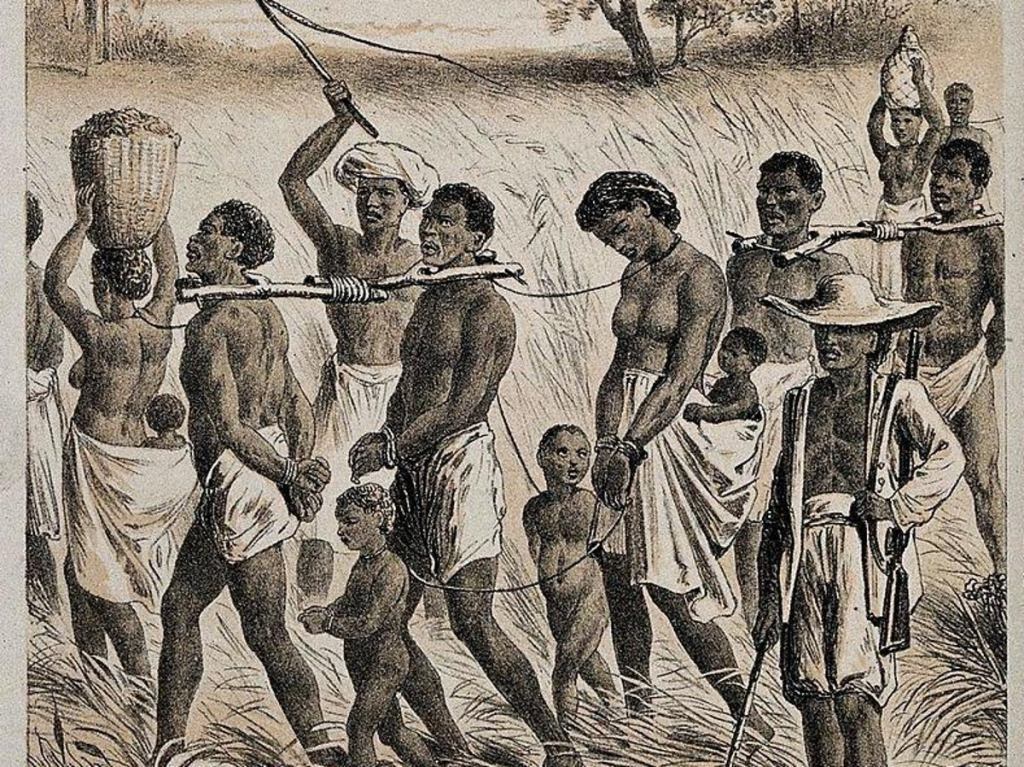
Details of horrific first voyages in transatlantic slave trade —Jacob Wainwright – Wikipedia The Hebrew verb hagag (חגג) means to hold a feast, celebrate a festival, or make pilgrimage. The Bible defines three pilgrimage feasts: the Feast of Passover (Pesach) and Unleavened Bread (Chag HaMatzot), the Feast of Weeks (Shavuot), and the Feast of Tabernacles (Sukkot)—as outlined in Exodus 23:16-18, 34:22-23, and Deuteronomy 16:16.
Moses’s role was to facilitate the deliverance (salvation) of God’s people for the purpose of serving God. The LORD instituted special Sabbaths called pilgrimage feasts and defined specific protocols that detailed what to observe, when to celebrate, and where to gather:
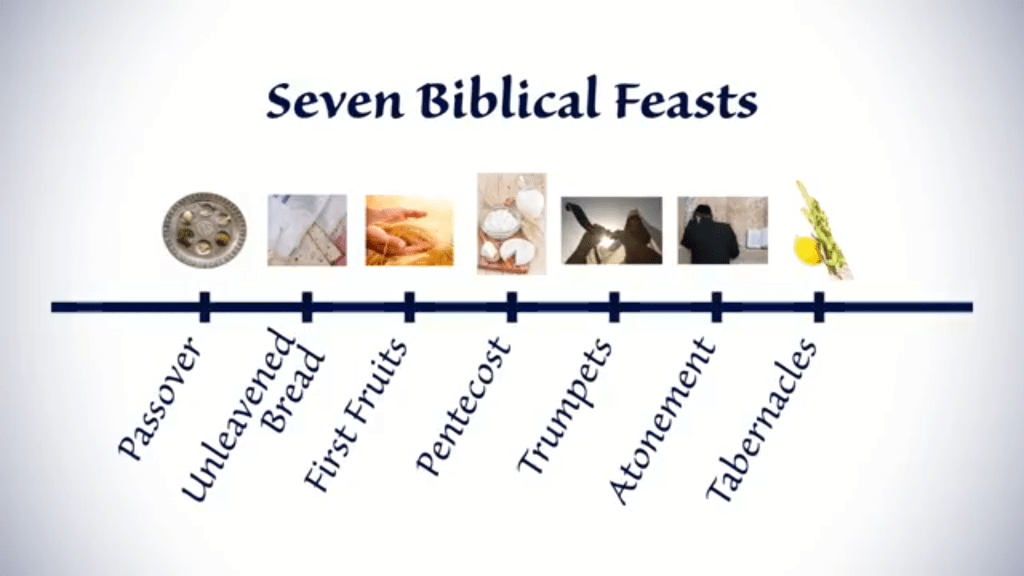
The Passover (Pesach —in the month of Abib):
- Celebrates the Israelites’ liberation from slavery in Egypt
- “Observe the month of Abib, and keep the Passover to the Lord your God, as I commanded you, in the appointed time of the month of Abib” (Exodus 34:18)
- “You shall sacrifice the Passover at twilight, at the going down of the sun, at the time you came out of Egypt.”
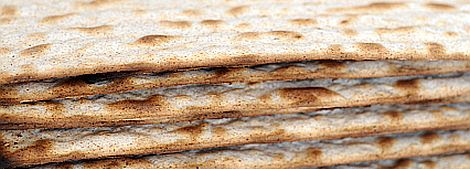
A piece of matzah during Passover of the ritual Pesach meal called a Seder (order) —Exodus 34:18; 1 Corinthians 5:8 The Feast of Weeks (Pentecost/Shavuot):
- Commemorates the giving of the Ten Commandments at Mount Sinai. In New Testament (Brit Chadashah), it marks the ‘Coming of the Holy Spirit’
- “You shall count seven weeks for yourself; begin to count the seven weeks from the time you begin to put the sickle to the grain” (Deuteronomy 16:9).
The Feast of Tabernacles (Sukkot —in the seventh month of Tishri):
- Celebrates the Israelites’ wandering in the desert after the Exodus and the harvest season.
- “You shall observe the Feast of Tabernacles seven days”
- “And you shall rejoice in your feast”
- “Every man shall give as he is able”
- “Seven days you shall keep a sacred feast to the Lord your God in the place which the Lord chooses”

With their cooperation, the LORD God promised the people that “I will bless you in all your produce and in all the work of your hands, so that you surely rejoice” (Deuteronomy 16:13-17).
In ancient times, when the Temple in Jerusalem stood, Jews and Israelis were obligated to travel to the Temple for these festivals, making them pilgrimage festivals. While the Temple is no longer standing, these festivals continue to be celebrated with special prayers, readings, and customs.
The purpose of these special pilgrimage feasts extends far beyond simply having a good time: “Moreover I also gave them My Sabbaths, to be a sign between them and Me, that they might know that I am the LORD who sanctifies them” (Ezekiel 20:12; Exodus 31:13). We will explore this further in the next few chapters.
The Bible mandates that the three Pilgrimage Feasts (Passover, Shavuot, and Sukkot) transcend cultural and religious constructs: The scriptures clearly say they are to be observed for all generations. Specifically, Exodus 12:14 and Leviticus 23:41 explicitly state that these feasts are to be observed as an ordinance (statute) “for ever” and “throughout your generations.”
For the non-Jews and Israelis the LORD says:
“To the eunuchs who keep My Sabbaths,
And choose what pleases Me,
And hold fast My covenant,
Even to them I will give in My house
And within My walls a place and a name
Better than that of sons and daughters;
I will give them an everlasting name
That shall not be cut off.“Also the sons of the foreigner
Who join themselves to the Lord, to serve Him,
And to love the name of the Lord, to be His servants—
Everyone who keeps from defiling the Sabbath,
And holds fast My covenant—
Even them I will bring to My holy mountain,
And make them joyful in My house of prayer.
Their burnt offerings and their sacrifices
Will be accepted on My altar;
For My house shall be called a house of prayer for all nations.”
The Lord God, who gathers the outcasts of Israel, says,
“Yet I will gather to him
Others besides those who are gathered to him.”—Isaiah 56:4-8
In the NT book of Revelation, Messianic believers from “every nation, tribe, tongue, and people” are symbolically referred to as; “all kinds of precious stones” (7:9; 14:6; 21:19)
Historians and theologians agree that Pesach (Passover) and Shavuot (Feast of Weeks) have already been fulfilled by Messiah Yeshua (1 Corinthians 5:7), and the the coming of the Holy Spirit, Ruach HaKodesh (רוח הקודש) —Acts 2:1-4.
In Zechariah 14:16 we are told: “It shall come to pass that everyone who is left of all the nations which came against Jerusalem shall go up from year to year to worship the King, the Lord of hosts, and to keep the Feast of Tabernacles.”
The fulfilment of Sukkot (Feast of Booths or Tabernacles) by Messiah’s return to dwell with His people is just the beginning. There is more, and it is hidden in plain sight—We will get back to that at some point, I promise.
Until then, we are called to hold station, and serve the LORD who saved us out of bondage. It is for our own benefit when we serve God according to His standards, not by our own religious constructs. God delivered the children of Israel from serving Pharaoh so that they could serve Him. We are not meant to serve God by standards defined by others—that is what God wants to save us from. Why? Because God cares more about His image invested in His people than those who did not create us.
God did not set out to create us for a temporary relationship here on the Earth. He calls us leaving stones destined to eternity with Him—the Rock of our Salvation.
Key Linguistic Word Pictures
The first thing that happened when Yeshua declared “Blessed are you, Simon Bar-Jonah:” He was practically equipping Peter with additional responsibilities in alignment with Jonah’s prophetic ministry of ‘declaring the good news’ to the people.
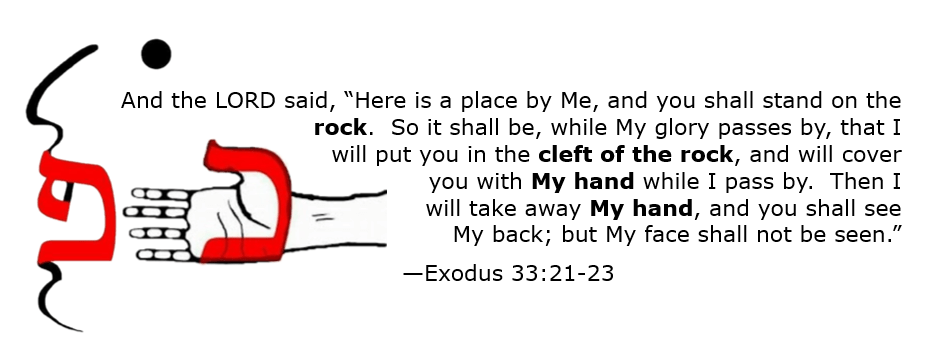
The word picture of the Hebrew Cepha/Kefa (כף) reading from the Right to the Left is of an open hand, and an open mouth. Just as Andrew found the Messiah and brought his brother Simon Peter to Jesus, that is our call too (John 1:40-42; Matthew 28:19-20). For every believer, the journey of freedom begins the moment Yeshua names you His chosen and precious “Cephas” (John 1:42).
Yeshua is the True Living Stone, and the Faithful Church is His Chosen Living Stones. Like Simon Peter, we all needed a solid Rock of Salvation to stabilize our erratic walk to freedom. Peter is not the rock on which Messiah promised to build His church. Yeshua is the tried stone, the precious cornerstone, the sure foundation, and that True Rock of Salvation (Isaiah 28:16).
Peter’s Blessing and Freedom
The second thing that happened when Yeshua declared “Blessed are you, Simon Bar-Jonah,” He was practically declaring Simon Peter be released from his iniquities. It is written:
“Blessed is he whose transgression is forgiven, whose sin is covered. Blessed is the man to whom the Lord does not impute iniquity, and in whose spirit there is no deceit.”
—Psalm 32:1-2
Scriptures say only Yeshua has the right to forgive sin on earth (Matthew 9:6). That encounter with Simon Peter was a defining moment in a judicial setting. Peter was testifying that Yeshua is the Messiah, “the Son of the living God.” Yeshua accepts: “for flesh and blood has not revealed this to you, but My Father who is in heaven.” (Matthew 16:16-17)
That is a double-edged statement. If we are going to succeed in outwitting the adversary, we need to live by ‘revelation knowledge‘ from God (Isaiah 1:1-2; Ephesians 1:17). Discipleship is a lifestyle—We tune in to the frequency higher than us. It is ok to be organized, but we can easily get diverted off the trail if programs are allowed to ‘quench the spirit’ (1 Thessalonians 5:19). That is a pretty dangerous place to be (1 Peter 5:8).
Fulfillment of Ancient Prophecy
That same statement of the Father’s revelation to Simon Peter fulfils a 650-year-old prophecy by Isaiah. It situates Yeshua in a justice’s seat on the earth long before He was born:
“And He shall not judge by the sight of His eyes, nor decide by the hearing of His ears; But with righteousness He shall judge the poor, and decide with equity for the meek of the earth.”
—Isaiah 11:3-4; 33:22
“…And I also say to you that the gates of Hades shall not prevail against it” (Matthew 16:18).
The symbolism of the church being the bride, the Lamb’s wife demonstrates how far Messiah Yeshua can go to care about and protect His family. Yeshua told John (the Revelator) that “I am He who lives, and was dead, and behold, I am alive forevermore. Amen. And I have the keys of Hades and of Death” (Revelation 1:18). Keys are used to lock, or unlock something. Only the resurrected Messiah has the power and means to restrain death (9:1,6; 20:1,13-15).
Protection for God’s People
When God’s chosen stones (the church) by faith accepts the invitation to relocate to their new foundation Stone—The Everlasting Rock Messiah Yeshua—they are legally entitled to His full protection detail. Hear what Yeshua promised The Faithful Church in Philadelphia:
‘These things says He who is holy, He who is true, “He who has the key of David, He who opens and no one shuts, and shuts and no one opens”: “I know your works. See, I have set before you an open door, and no one can shut it.”
—Revelation 3:7-8
Why the “key of David”? It was written 650 years before He was born that Messiah Yeshua would come from the line of David, will inherit king David’s throne, and that His Kingdom will never end (Isaiah 89:3,4,27,29,36-37).
There is more: John (the Revelator) heard the heavens declare “Behold, the tabernacle of God is with men… there shall be no more death, for the former things have passed away.” (Revelation 21:3-4)
When the creator of time shows up in the “Tent of Appointed Time”, time stands still—there isn’t enough time to die. Remember that Hebrew word description of “time” et (עת) in Ecclesiastes? It is translated from the root, ad (עד) implying perpetuity, continuing future, forever. When we are together with Messiah, time sees something far much bigger than death, and gives way.
Understanding the Keys of the Kingdom
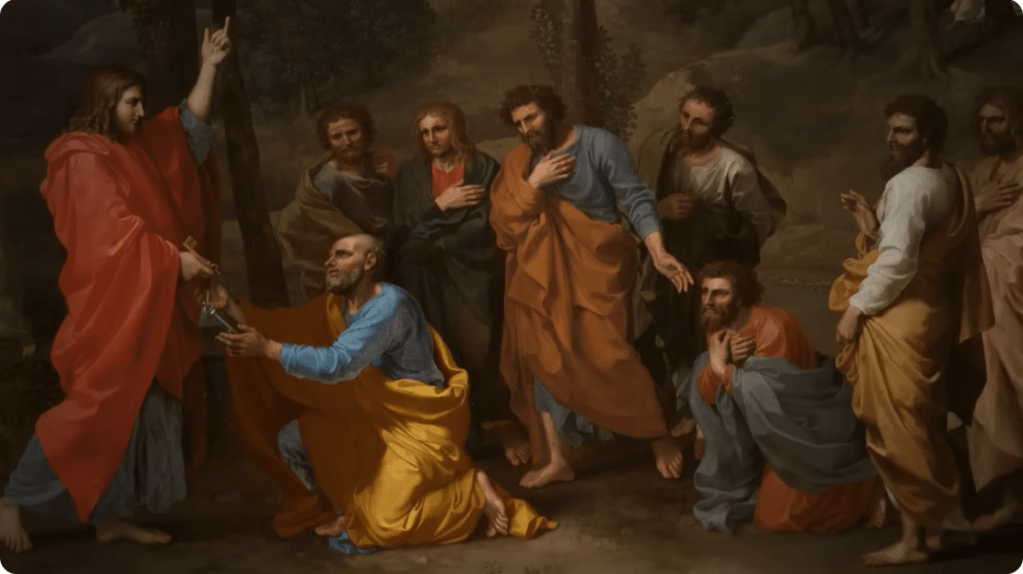
Simon Peter Receiving Keys From Jesus — Image by Timeline – World History Documentaries Roman Catholicism honors Peter as “the prince of the Apostles.” Jesus gave Simon this new name because He saw Peter as both a rock He could rely on and the foundation stone of Christianity. The keys Jesus entrusted to Simon Peter symbolize his tremendous responsibility to judge souls—forgiving sins or condemning to hell for eternity—That those Peter forgave would be forgiven in heaven, and those he did not forgive would remain unforgiven.
That through this exceptional authority among the disciples, Peter became the first Pope. The magnificent Saint Peter’s Basilica in the Vatican City illustrates Peter’s special status in Roman Catholicism as “the prince of the Apostles,” highlighting how Jesus gave him exceptional authority to forgive sins, and established him as the rock upon which Christianity was built.
Some ‘charismatic’ faith groups quote Matthew 16:19 when encouraging believers ‘to rebuke, to bind the Devil; to loosen, or set free’ of suspected demonic influence—That is a very dangerous way of misunderstanding, misinterpreting, and misrepresenting God’s word. It simply makes the bad situation worse. You risk provoking a backlash unnecessarily.
There is a comical episode in Acts 19:13-16 describing a scenario where seven Jewish exorcists attempted to cast out a demon in Jesus’ name, but the demon retaliated and overpowered them, causing them to flee naked, wounded, and humiliated.

for the battle is the LORD’s —1 Samuel 17:47
That was physical; but it is the battles waged in the unseen realm that you really don’t want to second guess. For anyone who has been taught to directly confront evil through yelling, hurling insults, name-calling, rebuking, binding, or similar confrontational practices: you may want to exercise greater discretion, whether or not you fully understand the broader spiritual ramifications. Such approaches can be spiritually dangerous, potentially exposing you to counter accusations of defamation, slander, and other spiritual attacks.
Scripture provides important examples of proper conduct. Consider how Joshua the High Priest remained silent in Zechariah 3:1-2 when he stood accused while wearing filthy garments. Similarly, Yeshua (Jesus) remained silent during His trial when facing judicial abuse. These weren’t acts of weakness, but demonstrations of spiritual discipline. Only the righteous Lord of Hosts has the true legal and spiritual authority to “rebuke” the adversary on your behalf. As promised in Malachi 3:11:
“And I will rebuke the devourer for your sakes, So that he will not destroy the fruit of your ground, Nor shall the vine fail to bear fruit for you in the field,” Says the Lord of hosts.
When The Lord says, “I will give you the keys…” it has nothing to do with a license to engage Satan in a verbal confrontation. Only the Lord of Hosts has the authority to tell the devil what he can, or cannot do (Job 1:12; Zechariah 3:2,9).
Yes, it is true; Yeshua told the 72 that “Behold, I have given you authority to tread on snakes and scorpions, and over all the power of the enemy. Nothing will harm you. . . (Luke 10:19). It is also true that “the weapons of our warfare are not of the flesh, but divinely powerful for the destruction of fortresses.” (2 Corinthians 10:4).
When we are attacked and are feeling overwhelmed, our default response is not to address the adversary directly, but to always call upon the Lord, the Rock of our Salvation (Psalm 18:1-19; 61:1-4). You risk attracting a fresh charge of trying to diminish Yeshua’s role in securing justice for His people. The Devil is a legalist who doesn’t mind keeping people convoluted into lawlessness and religious fervor.
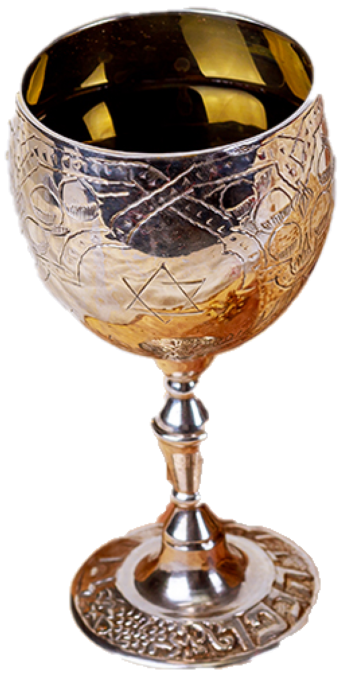
The Hebrew noun for keys, mefatchot (מפתח) comes from the root verb patah/pâthach (פתח). In the context of Matthew 16:19, it simply means “to engrave.” It comes from the account of Joshua standing in front of the Just Judge. Notice the image here of The Passover Seder golden tumbler called Elijah’s Cup. According to Jewish tradition, the Prophet Elijah will announce the coming of the Messiah (Matthew 17:10-12; Mark 9:11-13). It is left standing empty on the table as ‘a powerful symbol of our anticipation and hope.’ Elijah’s Cup. has inscriptions engraved, or inscribed on it, including the ‘Star of David.”
The Hebrew word “Pesach” (פסח) closely resembles the Hebrew root verb for “key,” which is “patah/pâthach” (פתח). The root verb of Pesach itself is “pasha” (פסח), which has several meanings: “pass over,” “become lame,” “leap,” and “halt.” According to rabbinical teaching, during the first Passover described in Exodus 12:13, the Angel of the LORD “halted” or stood guard outside every home that followed the instruction to mark their doorposts with the blood of the Passover lamb. Interestingly, Elijah is the only person in the entire Bible quoted using the word “pasha” (פסח) with the specific meaning of “halt” (sometimes translated as “falter”) in 1 Kings 18:21.
Joshua Before the Just Judge
The adversary was contending against Joshua’s appointment as High Priest over Jerusalem because he “was clothed with filthy garments” (Zechariah 3:1-3). Joshua, in this context, was the High Priest who returned with the Jews from Babylonian exile, tasked with rebuilding the Temple in Jerusalem.
Throughout the trial, Joshua did not address the prosecuting foe. Instead, he remained silent. The Judge sifted through the evidence and decided to set Joshua free for two significant reasons: (1) For the sake of Jerusalem and (2) for the sake of the Lord’s name that Joshua (יהושע) represents (v.2-5).
Like every one of us, Joshua had a checkered background for sure. His namesake Joshua the son of Nun, Moses’ assistant during the Exodus had jealous fits (Numbers 11:29). Forty years later, Joshua the son of Nun would lead the Israelites into battle to take the Promised Land. It is not clear why, but he cursed the defeated city of Jericho (Joshua 6:26). It took four-hundred years until the LORD, through the prophet Elisha expunged the iniquity, lifted the curse and healed the city of Jericho (2 Kings 2:19-22).
Modern Jericho is known as the “City of Palms” due to its abundance of palm trees, particularly date palms, which thrive in the fertile soil of the area. This nickname reflects the city’s prosperity and abundance, and the palm trees are often seen as a symbol of God’s presence to bless.
In the OT, palm trees or branches are specifically mentioned in Ezekiel 40:16, 31, and 41:18-25. These verses describe the new temple, with palm trees depicted on the walls, pillars, and doorways. The next time we see palm trees without a temple is during Sukkot/Sukkoth (סֻּכֹות), the last of the LORD’s annual Pilgrimage Feasts—The Feast of Tabernacles (Leviticus 23:39).
‘Holy to the LORD’: Joshua’s Restoration
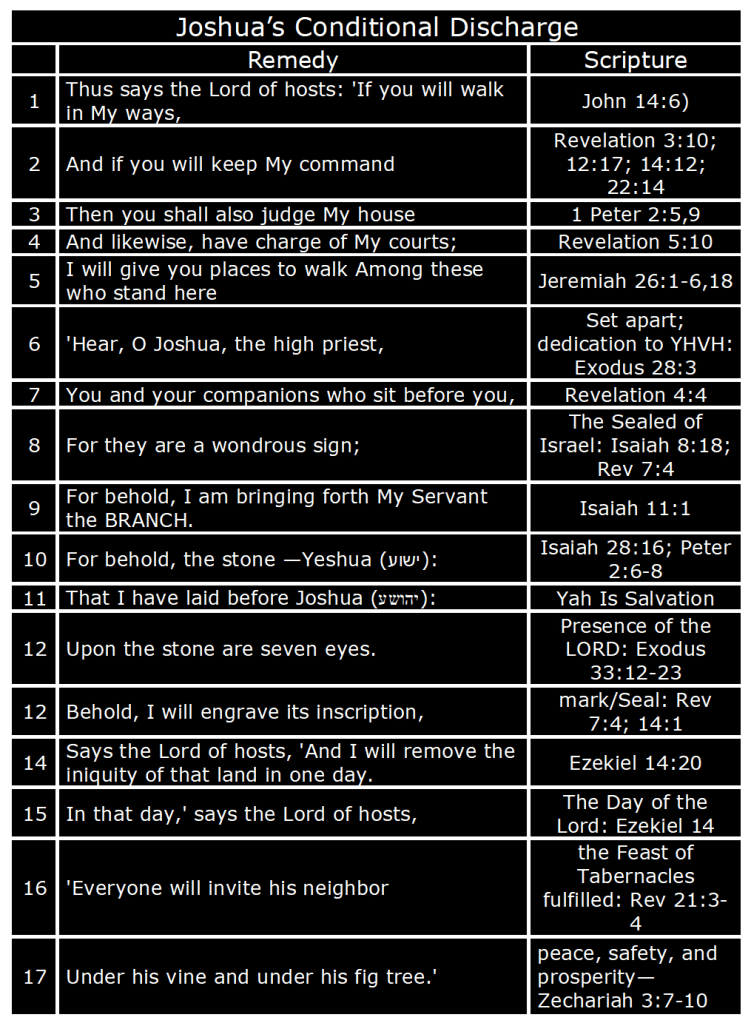
Three Key Legal Remedies
Joshua’s case sets precedence of God’s judicial intervention to end iniquity based on three main mitigating factors:
- God’s Purposes: Joshua responded to the Lord’s compassionate quest for a High Priest for the purpose of interceding on behalf of Jerusalem and avert an impending judgement against the city (Jeremiah 26:1-6,18).
- God’s Name: Joshua (יהושע) and Jeshua/Yeshua (ישוע) are etymologically related to ‘Salvation’—”and if My people who are called by My name humble themselves and pray and seek My face and turn from their wicked ways, then I will hear from heaven, forgive their sin, and heal their land” (2 Chronicles 7:14).
- God’s Ways: ‘If you will walk in My ways, and if you will keep My command’—Joshua got a conditional discharge: A sentence where a defendant is found guilty but receives no immediate punishment. Instead, they must not commit any new offenses during a set period. If they remain trouble-free, no further action is taken for the original offense. However, if they reoffend during this period, they can be sentenced for both the original and new offenses. Joshua’s only chance to remain safe, clean, and stable is to keep following the BRANCH; the stone; Lord of hosts (Zechariah 3:6-9).
As long as the priest keeps clean on the job, the adversary will comply with the Judge’s rebuke, and cannot devour at will until the opportunity comes (1 Peter 5:8; Exodus 33:12-23).
Royal Priesthood
That legal arrangement is not unique to Joshua. Messianic believers “are a chosen generation, a royal priesthood, a holy nation, God’s own special people,”—For what purpose? “…That you may proclaim the praises of Him who called you out of darkness into His marvelous light” (Zechariah 3:10; 1 Peter 2:5,9; Revelation 5:10).
When believers begin that journey of transformation into living and precious stones, a holy priesthood, chosen by God; their royal status is engraved on a signet (seal).
“Then you shall take two onyx stones and engrave on them the names of the sons of Israel: With the work of an engraver in stone, like the engravings of a signet, you shall engrave the two stones with the names of the sons of Israel… And you shall put the two stones on the shoulders of the ephod as memorial stones for the sons of Israel.” (Exodus 28:9-12)
“You shall also make a plate of pure gold and engrave on it, like the engravings of a signet (seal), HOLINESS TO THE LORD” (28:36).
That ancient custom is not confined to the history books. The Apostle Paul reminds us that ‘keeping clean’ is for our times too:
Therefore purge out the old leaven, that you may be a new lump, since you truly are unleavened. For indeed Christ, our Passover, was sacrificed [e]for us. Therefore let us keep the feast, not with old leaven, nor with the leaven of malice and wickedness, but with the unleavened bread of sincerity and truth.
—1 Corinthians 5:7-8
End Times: The Sealed of the Lord
Fast forward to the “Time of the End” Acharit Hayamim (אחריתהימים)—the prophetic period that culminates in God’s ultimate redemption—documented by John (the Revelator). In Revelation 7:4 he says, “And I heard the number of those who were sealed. One hundred and forty-four thousand of all the tribes of the children of Israel were sealed.”
They are not the only ones: We are told in 2 Timothy 2:19 that “God’s firm foundation stands, bearing this seal: ‘The Lord knows those who are His,’ and, ‘Everyone who calls on the name of the Lord must turn away from iniquity.’”
The general definition of a seal is broad. In this context, it carries your royal biometric credentials in the spirit realm. It cannot be compromised because it is engraved on you, the ‘living stone’. It carries authentication features fully recognizable in the heavenly realm.
To The Faithful Church in Philadelphia, He says; “See, I have set before you an open door, and no one can shut it;” (Revelation 3:8). To the Simon Peters of this generation, He says: “And I will give you the keys of the kingdom of heaven, and whatever you bind on earth will be bound in heaven, and whatever you loose on earth will be loosed in heaven.” (Matthew 16:19)
The Day of the Lord
The last part of Joshua’s legal process to become High Priest in Jerusalem is very significant:
For behold, I am bringing forth My Servant the BRANCH.
For behold, the stone
That I have laid before Joshua:
Upon the stone are seven eyes.
Behold, I will engrave its inscription,
Says the Lord of hosts,
‘And I will remove the iniquity of that land in one day.
In that day,’ says the Lord of hosts,
‘Everyone will invite his neighbor
Under his vine and under his fig tree.’—Zechariah 3:8-9
“The Day of the Lord” refers to a future time when God will personally and dramatically intervene in world affairs, bringing both judgment and restoration. This prophetic concept appears throughout Scripture, describing the culmination of history when God establishes His kingdom on earth.
Here is why this passage is significant:
- By default, iniquitous patterns linger for generations until suspended by conditional discharge. There is always danger of snapback at the slightest opportunity (1 Peter 5:8). There is only one day described in scripture where iniquity and its legal consequences are expected to be completely wiped out: “For behold, I am bringing forth My Servant the BRANCH; For behold, the stone; Behold, the tabernacle of God is with men; And God will wipe away every tear from their eyes; there shall be no more death, nor sorrow, nor crying. There shall be no more pain, for the former things have passed away.” (Revelation 21:3-4)
- The phrase, ‘In that day,’ baiyom HaHu (ביוםההוא) has a numerical value in Hebrew gematria equal to 75. When these digits are added together (7+5), they equal 12, which in biblical numerology represents completeness and divine governance
- In Revelation 7:5-8, there are 12 tribes of ‘The Sealed of Israel’ recorded 12 times which equals 144.
- One hundred and forty-four thousand of all the tribes of the children of Israel who were reportedly sealed in Revelation 7:4 and 14:1,3. The values that come from “The sealed” (144,000), and “In that day” (144) simultaneously reduce to the same number, nine (9). Nine is the value that expresses alignment with the “truth,” Hebrew emeth (אמת). That is the opposite of ‘deceit’. The ‘Truth’ also represents the Father’s name written (or To inscribed) on the foreheads of the sealed, who are seen with a Lamb standing on Mount Zion, described in Revelation 14:1,3,5.
- The context here is, Mount Zion is a symbol for what is happening in the heavenly Jerusalem; “Tent of Appointed Time” or the ultimate sanctuary and kingdom of God. Here on earth, we are told, in that day Yeshua’s feet will stand on the Mount of Olives, not Mount Zion (Zechariah 14:4-5).
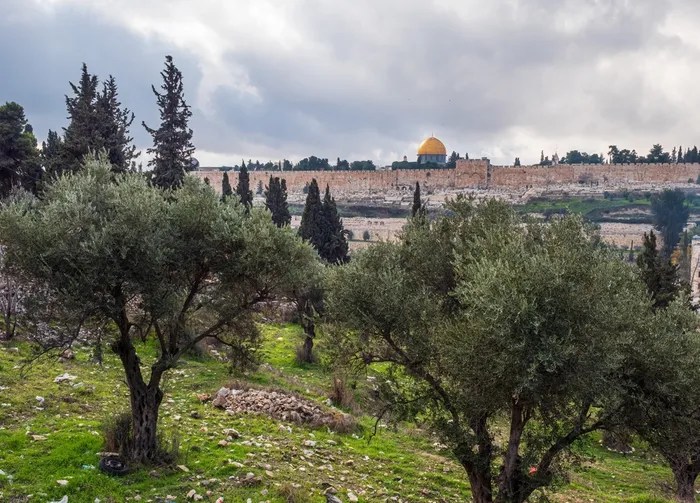
The Mount of Olives
The Mount of Olives (Olivet), next to the Old City in Jerusalem.—artzabox.comThe context here is, Mount Zion is a symbol for what is happening in the heavenly Jerusalem; “Tent of Appointed Time” or the ultimate sanctuary and kingdom of God. Here on earth, we are told, in that day Yeshua’s feet will stand on the Mount of Olives, not Mount Zion (Zechariah 14:4-5).
The phrase ‘in that day,’ baiyom HaHu (ביוםההוא) is repeated seven (7) times in Zechariah chapter 14. This sevenfold repetition underscores the completeness and divine perfection of this prophetic day. Notice the escalation here:
- For behold, I am bringing forth My Servant the BRANCH.
- For behold, the stone
- Upon the stone are seven eyes.
- ‘And I will remove the iniquity of that land in one day.
- In that day,’ says the Lord of hosts, ‘Everyone will invite his neighbor
Now you know why pause at the fulfilment of Sukkot (Feast of Booths or Tabernacles), the third Pilgrimage Feast of the LORD.
In Revelation 1:7 it says; “Behold, He is coming with clouds, and every eye will see Him, even they who pierced Him. And all the tribes of the earth will mourn because of Him. Even so, Amen.”
Feast of Tabernacles: A Pattern for the End
That sequence represents Messiah Yeshua fulfilling Sukkot (the Feast of Tabernacles), the last of seven annual Feasts of the Lord. Sukkot, meaning “booths” or “tabernacles,” celebrates God’s provision and presence among His people. It is celebrated from the fifteenth day of the seventh month lasting a period of seven days. It is also the last of three annual pilgrimage feasts (including Passover and Shavuot/Pentecost) ordained by the LORD (Deuteronomy 16:16).
There is a sabbath-rest decreed on the first day, and on the eighth day. But more detail is given for the eighth day as: a holy convocation, a sacred (solemn) assembly, and no customary work to be done on it. Eighth, Hebrew Shemini (השמיני) points toward “rest,” or “completion” (Leviticus 23:36,39).
Shemini (השמיני) has a numerical value equal to 415, reducing to 10 (4+1+5=10). Both ten and seven have something of divine order in common: God completed His creation work and rested on day seven. God gave Moses a complete set of 10 commandments on 2 stone tablets. The seven annual feasts complete the cycle of God’s redemptive calendar.
Ten completes the full measure, or group (congregation), body, or kingdom, whether good or evil. On the other hand, eight, ten and one also have something in common: a new beginning. Day eight is practically day one after the seventh day of rest. The number 10 reduces (1+0=1), which is also a new beginning.
Is Shemini Atzeret (השמיני עצרת)—the “Eighth Day Assembly” that follows the seven days of Sukkot—the coming “Great and awesome Day of the Lord” as described by Malachi and Joel?
All I know is that there is, and will always be great joy in the presence of the LORD. It is the ultimate rest He promised; menukha (מנוחה), a “peaceful dwelling” (1 Kings 8:66). And it is for “everyone” who will go up to worship the King and Lord of hosts, at the Feast of Tabernacles.
In that day “HOLINESS TO THE LORD” shall be engraved on the bells of the horses. Yes, every pot in Jerusalem and Judah shall be holiness to the Lord of hosts. In that day there shall no longer be a Canaanite in the house of the Lord of hosts.
— Zechariah 14:16-21
A Snapshot on Prophecy
Most prophecies are often more symbolic and vision-filled. So, I looked up the word ‘Canaanite,’ and found such a fitting reference in the book of Hosea chapter 12 verse 7—”A cunning Canaanite! Deceitful scales are in his hand; He loves to oppress.” In another version it says, “A merchant, in whose hands are false balances, He loves to oppress.”
Hosea’s prophecies are more focused on personal and relational themes to illustrate God’s relationship with His people. Hosea often uses the metaphor of Jacob and Ephraim to illustrate the perpetrator of lies and desolation (v.1).
And Ephraim said, ‘Surely I have become rich, I have found wealth for myself; In all my labors They shall find in me no iniquity that is sin.’ (v.8)
From “The Revelation of Jesus Christ, which God gave Him to show His servants—things which must shortly take place,” Satan is identified as “the great dragon, that serpent of old, called the Devil, who deceives the whole world” (12:9; 20:8,10). And that is what the Lord of Hosts promised will come to an abrupt end when Messiah finally tabernacles with His people (Zechariah 3:9; 14:20; Revelation 21:4,8; 22:15).
If you haven’t found time to check out all those scripture quotations, the summary is: The future looks bright for God’s people. But for the adversary, the future looks bleak!—”For the day of the Lord is great and very terrible; A day of darkness and gloominess, A Day of clouds and thick darkness (Joel 2:1,2,11; Malachi 4:1,3,5; Revelation 19:11).
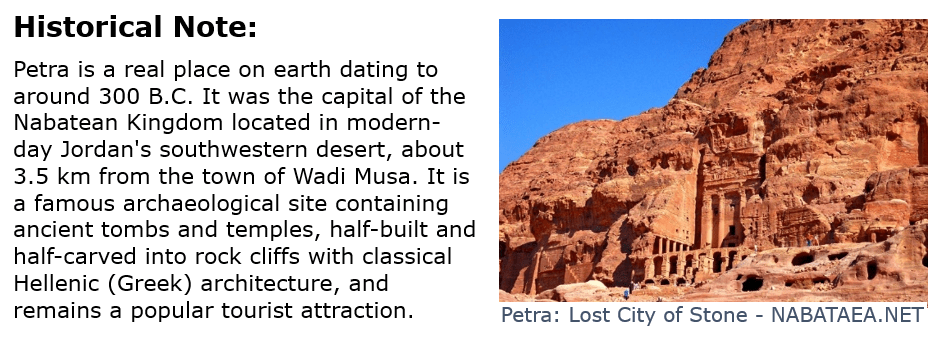
Historical Note:
Conclusion
All prophets quoted in this incredible journey address the themes of God’s love, judgment, and the importance of repentance and righteousness.
“But I am the Lord your God,
Ever since the land of Egypt;
I will again make you dwell in tents,
As in the days of the appointed feast. (Sukkot/Tabernacles)
I have also spoken by the prophets,
And have multiplied visions;
I have given symbols through the witness of the prophets.”
By a prophet the Lord brought Israel out of Egypt,
And by a prophet he was preserved.”— Hosea 12:9,10,13
Fast forward to the “Time of the End” Acharit Hayamim (אחריתהימים), our times: Messiah Yeshua, the BRANCH, the Everlasting Rock, and the Rock of our Salvation who will tabernacle with His people on that Great and Awesome Day of the Lord.
- Yeshua (Jesus) is the living Stone/Rock (צור) that gives life (1 Corinthians 10:4; 1 Peter 2:4)
- Yeshua is the foundation Stone/Rock (צור) of the LORD’s House that was split into smaller living stones and pebbles [kefayim (ּכַּפַיִם)] to build His Church (Matthew 27:51-53; 1 Peter 2:5; Zechariah 4:7,9,8).
- Yeshua is the chief Stone Marker that points the Way to the Father (John 14:6).
- Just like with Jonah and Peter Son of Jonah (Bar-Jonah), the primary purpose of the living stones (the church) is to proclaim the good news that points the needy and oppressed world to Yeshua, our Rock of Salvation (1 Peter 2:9; Matthew 28:19-20).
Application for Today’s Believers

It is the word of the LORD that fights your battles—equip yourself in scripture.
“Then the Lord saw it, and [c]it displeased Him That there was no justice. He saw that there was no man, And wondered that there was no intercessor; Therefore His own arm brought salvation for Him; And His own righteousness, it sustained Him.
For He put on righteousness as a breastplate, And a helmet of salvation on His head; He put on the garments of vengeance for clothing, And was clad with zeal as a cloak. According to their deeds, accordingly He will repay, Fury to His adversaries, Recompense to His enemies; So shall they fear The name of the Lord from the west, And His glory from the rising of the sun; When the enemy comes in like a flood, The Spirit of the Lord will lift up a standard against him.”
—Isaiah 59:15-19
We are called to continue honoring the sacred dress rehearsal awaiting His return (Revelation 3:7-12; 19:11; 21:2; 22:12). Life on the earth is a cycle: The Lord designed rest stations to help us reflect on where we’ve been, where we are, and our final destination.
Scriptures promise a tremendous blessing for “those whose strength is in the Lord, whose hearts are set on pilgrimage” (Psalm 84:5). Just as Peter found his identity and strength in Yeshua the Rock, we too must anchor ourselves in Him to withstand the storms of life.
The opposite of a blessing is a curse. Your adversary’s preoccupation is to find cause to oppose the Father’s hand to bless (Proverbs 26:2; 1 Peter 5:8). If you are going to outwit the adversary, you just don’t want to lose step with Messiah Yeshua, the “Way” (John 14:6; Galatians 3:13).
“He who has an ear, let him hear what the Spirit says to the churches.”
“Behold, I am coming quickly! Blessed is he who keeps the words of the prophecy of this book.” Blessed are those who do His commandments, that they may have the right to the tree of life, and may enter through the gates into the city. He who testifies to these things says, “Surely I am coming quickly.” (Revelation 3:13; 22:7,14,20)
Hear the earnest entreat of John as he concludes… “Worship God! For the testimony of Jesus is the spirit of prophecy.” (19:10)
חסד אדונינו ישוע המשיח עם כל הקדושים אמן
The grace of our Lord Jesus Christ be with you all. Amen. (22:21)
Amen!
-
The True Rock (Part Three)
Introduction
In Part One and Two we explained the roots, meaning and symbolism of the metaphorical Rock in scripture, examined Yeshua’s identity as a “Foundation Stone”, scrutinized a scientific perspective of the Earth’s rocky foundations, and analyzed the character of Jonah in parallels with Simon Peter. This last segment continues with Messiah Yeshua’s self-declaration as the “Foundation Rock,” then reviews the main prophetic meaning and function of the Rock, the Stone, stones, and Salvation. The final stop is where End-Time prophecy wraps it all into the image of God the Father, Messiah Yeshua, and where you fit in.
The Everlasting Rock
As we explored in Part Two, modern scientific understanding of rocks aligns with biblical symbolism in remarkable ways. Now we’ll examine how this symbolism relates to God’s eternal nature.
The scriptures say God, LORD (YHVH), the creator of the heavens and the earth was before time. Then God made man in His likeness at the dawn of time (Genesis 1:1,14,26). We are told that at the ‘End of Time’ GOD the LORD, “the everlasting Rock” will continue with His people in a timeless zone. (Isaiah 26:4; Revelation 22:1-5,14,17).
Some translations refer to the everlasting Rock as “Rock of Ages,” or “the Rock eternal,” or “everlasting strength.” This is the same “Rock” that king David referred to as “my fortress, and my deliverer, my refuge, my shield, and the horn of my salvation, my stronghold” (Psalm 18:2; Psalm 62:7-8).
The Hebrew masculine noun for “everlasting”, olam (עולם) is timeless. It means:
- Ancient time or long time
- Forever or always
- Continuous existence
- Indefinite or unending future
- Eternity
It comes from the root alam (עלם) which means to hide, blind, conceal, or keep secret.
The rock of my strength,
And my refuge, is in God.
—Psalm 62:7The Apostle Peter wrote, “you also, as living stones, are being built up a spiritual house, a holy priesthood, to offer up spiritual sacrifices acceptable to God through Jesus Christ (1 Peter 2:5).
Earlier in Part Two we saw compelling scientific evidence where both, the Rock and the Stone share fissile characteristics. Physicists validating the biblical quotation of what God said at the dawn of time:
Then God said, “Let Us make man in Our image, according to Our likeness;” So God created man in His own image; in the image of God He created him; male and female He created them.
—Genesis 1:26-27.
Naturally people reproduce in their own likeness, after their image and die (Genesis 5:3-30). But it is ‘God’s invisible image’ that gives man the unique ability to morph from mortality into the perpetuity of a ‘living stone.’ How? There are certain things that can only be seen through the eyes of faith alone—the mysterious relationship between the ‘eternal Rock’ and the ‘living stones’ is one of them. The prophet Daniel was given a foretaste of it in a vision from heaven nearly 2,500 years ago.
Daniel’s Vision and Understanding
Daniel recorded this prophetic vision:
And many of those who sleep in the dust of the earth shall awake,
Some to everlasting life,
Some to shame and everlasting contempt.
Those who are wise shall shine
Like the brightness of the firmament,
And those who turn many to righteousness
Like the stars forever and ever.—Daniel 12:2-3
Daniel was honest when he admitted; “Although I heard, I did not understand”
the coded presentation—alam ( עלם ), to conceal (v.8,11).When Daniel says he “did not understand,” the Hebrew word used (alam) specifically refers to something being deliberately concealed or hidden – suggesting these prophecies were intentionally sealed until the appropriate time.
Daniel is not the only one . . . the scripture says, “It is the glory of God to conceal a matter and the glory of kings to search it out (Proverbs 25:2). The plural in “kings” refers to those who by faith will follow the One who has the diet of everlasting life (1 Peter 2:9-10; Revelation 5:10; 14:4,12-13).
About 450 years later Messiah Yeshua declared He is the Bread of Life.
“For my Father’s will is that everyone who looks to the Son and believes in him shall have eternal life, and I will raise them up at the last day.”
—John 6:26,36,40,47,54.
The stunned crown that included Yeshua’s disciples found that extremely controversial and unacceptable.
From this time many of his disciples turned back and no longer followed him. “You do not want to leave too, do you?” Jesus asked the Twelve. Simon Peter answered him, “Lord, to whom shall we go? You have the words of eternal life. We have come to believe and to know that you are the Holy One of God.” —vv.66-69).
Personal Reflection on Biblical Understanding
There is nothing frustrating like trying to discuss something you expect someone to know and get a pushback instead! It takes a lot of patience and humility to rise above the disappointment and still get along. In my experience, there are times, many times when I feel like either I am not eloquent enough, or it is not really my call. But when I finally retreat into the closet and drop down on my knees after hours of introspection, the Lord always reminds me that it is not about me, it is all about Him (2 Corinthians 4:1-6).
Throughout my walk with the Lord, He has given me this unique ability to soak in scripture like a sponge. But somehow, there are times when I wish what I know should get me a sugar high or some kind of a Nescafé boost. If that is the way it was supposed to work, then I would become overdependent on the intellectual accumulation of things, rather than on the revelation of the hour. Every sugar crush I have suffered keeps reminding me that the Lord prefers an interactive relationship and practical application of faith in Him. It is a journey, and only Yeshua knows the way to the end (John 14:6).
The End of Time
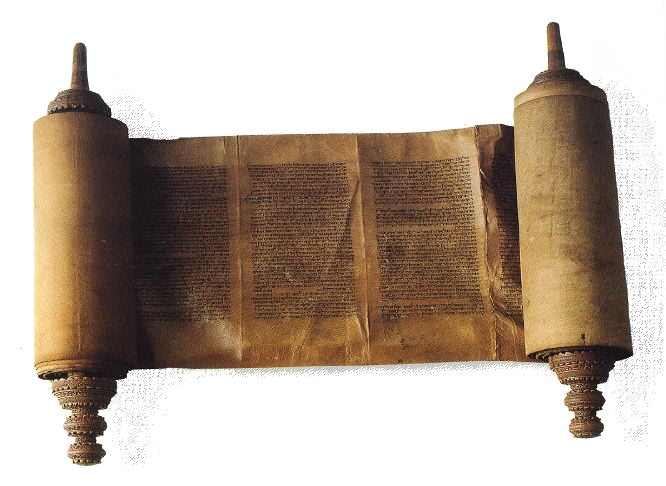
Prophecy of the End Time —Daniel 12 The prophet Daniel was given a fleeting image of the “End of Time”, Acharit Hayamim (אַחֲרִית הַּיָמִים):
“But you, Daniel, shut up the words, and seal the book until the time of the end; many shall run to and fro, and knowledge shall increase. . . Go your way, Daniel, for the words are closed up and sealed till the time of the end; and none of the wicked shall understand, but the wise shall understand.”
—Daniel 12:4,9-10
A while back we saw out of the Twelve original disciples, it is Simon Peter who was quick to recognize that only Yeshua has the words of eternal life (Deuteronomy 8:3; Matthew 4:4; John 6: 63,68). Because Peter learned from experience. Peter constantly errored, stumbled and fell many times. Yet, he picked himself up and kept following. It is a process. Later, the Lord Yeshua would make this complementary comment when teaching His disciples the purpose of His parables:
But blessed are your eyes because they see, and your ears because they hear. For truly I tell you, many prophets and righteous men longed to see what you see but did not see it, and to hear what you hear but did not hear it.
—Matthew 13:16-17
He is not referring to Simon Peter alone. He is congratulating all of them. They’ve come a long way filled with trials and testing. But they’re not there yet. They just need to fix their gaze at the destination, not where they’re lest they be disheartened and lose focus.
When Daniel was told to “shut up the words, and seal the book until the time of the end,” he was also given an idea of what that would look like:
“But you, go your way till the end; for you shall rest, and will arise to your inheritance at the end of the days.”
—Daniel 12:13
The Heavenly Visitor of Daniel’s Vision
There is a contentious theological debate on the identity of the heavenly visitor interacting with Daniel in chapter 12. If you go by Daniel’s account, there are several key elements that form this puzzle:
- Three men are mentioned in the vision (vv.5,6), but Daniel addresses only one standing in the middle as “My lord” (v.8)
- This man was clothed in linen and “standing above the waters of the river”
- Daniel describes seeing the same man earlier in chapter 10:
o By the side of the great river, the Tigris (v.4)
o Clothed in linen with a waist girded with gold of Uphaz (v.5)
o His body was like beryl, face like lightning, eyes like torches of fire
o His arms and feet like burnished bronze, and the sound of his words like a multitude (v.6)
This description matches only one individual across Scripture – The Lord, Yeshua HaMashiach (Jesus Christ), as confirmed by these parallel descriptions:
- The Glorious Man (Daniel 10)
- The Son of Man (Revelation 3)
o Clothed with a garment down to the feet and girded about the chest with a golden band (v.12,13)
o Head and hair white like wool, as white as snow, eyes like flame of fire (v.14)
o Feet like fine brass refined in a furnace, voice as the sound of many waters (v.15)
o Countenance like the sun shining in its strength (v.16)
o “I am the First and the Last. I am He who lives, and was dead, and behold, I am alive forevermore.” (v.17,18) - The Lamb (Revelation 14)
o “Like the voice of many waters” (v.2) - The King of Kings (Revelation 19)
o “Now I saw heaven opened, and behold, a white horse. And He who sat on him was called Faithful and True, and in righteousness He judges and makes war.” (v.11)
o Eyes like a flame of fire (v.12)
o Name called The Word of God (v.13a)
o Armies in heaven clothed in fine linen (v.13b)
o “KING OF KINGS AND LORD OF LORDS” written on His robe and thigh (v.16) - The Transfiguration of Yeshua (Matthew 17)
o Transfigured before the disciples, face shining like the sun, clothes white as light (v.2)
Yeshua promised Daniel that though he will physically die, he will be raised to his inheritance at the end of the days (Daniel 12:13). The Lord would repeat the same promise to His disciples nearly 500 years later. That solemn promise is still valid today—it is a perpetual promise, and it is for everyone who believes:
“And this is the will of him who sent me, that I shall lose none of all those he has given me, but raise them up at the last day. For my Father’s will is that everyone who looks to the Son and believes in him shall have eternal life, and I will raise them up at the last day.”
—John 6:39-40

God’s Promises Do Not Have an Expiry Date
—John 6:39-40Notice some keywords there: “none”, “all”, “everyone”. Our Hebrew noun for “everlasting”, olam (עולם) we found earlier also means “world” (Ecclesiastes 3:11; Isaiah 45:17, 64:4). It is an open door. God takes no pleasure in shutting anyone out. The LORD (YHVH) is interested in our welfare more than we’re because man is created in His image. When we suffer God grieves with us. It is His image and His name that suffers reproach. For His name’s sake, and for His purposes invested in man, God, the Father desired that everyone would be there when the clock stops and eternity begins. That is why Yeshua needed to accomplish the legal transaction contingent on Salvation (Hebrews 10:1,5-10, 16-18).
We Are All Peter
The scripture’s metaphor of believers as “living stones” connects directly with Peter’s experience. Just as Peter (whose name means “rock”) was transformed through his relationship with Christ, we too undergo spiritual transformation when built upon the foundation of Christ, the True Rock.
That is what we are told in 1 Peter chapter 2 verse 5— “. . . you also, as living stones, are being built up a spiritual house, a holy priesthood.”
In the NT book of 2 Corinthians 5:1-4, the Apostle Paul refers metaphorically to our mortal body as a tent, ohel (אהל). Other synonyms that match the Hebrew ohel (אהל) in this context include:
- Covering
- Place
- Home
- Dwelling
- Tabernacle
The first occurrence of tabernacle in the OT book of Exodus chapter 26 refers to the temporary sacred structure the LORD (YHVH) instructed Moses to make. It became known to the children of Israel by its primary function as “the tabernacle of the congregation,” or “tent of meeting” ohel moed (אהל מועד) before the LORD:
“. . . where I will meet you to speak with you. And there I will meet with the children of Israel, and the tabernacle shall be sanctified by My glory. So I will consecrate the tabernacle of meeting and the altar. I will also consecrate both Aaron and his sons to minister to Me as priests. I will dwell among the children of Israel and will be their God. And they shall know that I am the Lord their God, who brought them up out of the land of Egypt, that I may dwell among them. I am the Lord their God.”
—Exodus 29:43-46; Exo 30:36; Exodus 33:7
Notice God promises to ‘consecration’ both; the tabernacle, and the priests.
We are told that the ‘ark of the Testimony’ containing the two stone tablets of the ten commandments God gave Moses was the most sacred artifact kept in the Most Holy chamber of the tent of meeting (Exodus 25:16,22; 31:18).
The tabernacle was replaced by two successive stonework temples (Beit HaMikdash) that stood almost 900 years combined. They have never been replaced since but the original function remain—The Lord is still able to meet with His people in a tabernacle or temple not made by man (Jeremiah 31:31-34; Hebrews 8:7-12; 1 Corinthians 3:16-17; 6:19-20).
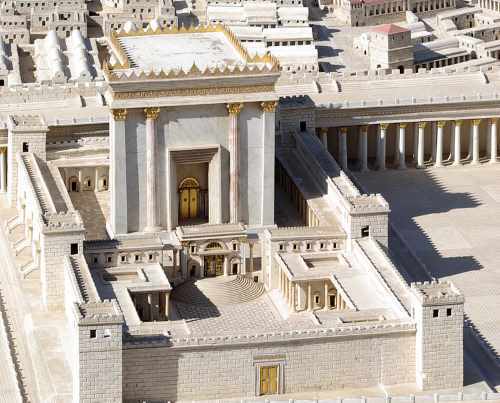
The Second Temple in Jerusalem (Beit HaMikdash) —Image courtesy The Messianic Prophecy Bible Project The scriptures reveal that when we die physically, it is our earthly house, covering, home, dwelling, tent, which is destroyed. But we have a building from God, a house not made with hands, eternal habitation which is from heaven (2 Corinthians 5:1-2). This is the “spiritual house” described in 1 Peter 2:5.
The symbolism of living stones means we come in different shapes and sizes, often with rough edges caused by splitting off iniquitous foundations. Similar to Jonah and Simon Peter, the Lord accepts us in our warped state and begins to chisel away erratic characteristics until we get to fit in (Joshua 8:31; 1 Peter 2:10; 1 Kings 5:17; 7:9-12).
Personal Reflection on Sharing This Message
I feel led to take a little break here to reflect ahead of the next segment. It was a point of contention the last time I shared the subject with a bunch of friends. The leader of the group looked straight at me in the eye and said, “Charles H. Spurgeon would definitely disagree with you on that one.” Then he drew a red X across the problem paragraph in the handout, and advised me to avoid such a controversial subject next time. Bottom line: the delivery was good, but the text falls within the red flags of ecclesiastical risk assessment template.
Another ‘commended‘ me for ‘handling criticism well’ and added, “Brother you should watch Myles Munroe, he’s such a great teacher, or Rick Renner— they’re amazing; you might be able to learn some tips from them. . .”
I could feel the effort in his voice to softens the tone, and avoid the perception of patronizing. I am naturally very sensitive, but able to conceal fragility with a smile when I get hit under the belt. But it can linger on, and it certainly did. Because I did not think I was called to emulate someone else’s fingerprints. I have always believed that the Lord called me to follow “the Way”, His way (John 14:6). I had spent some five weeks preparing for the session, studying scripture and praying about it. I was so reassured deep inside that what am about to share is a word in season. I could feel that it aligns with the need of the hour. I still do.
The “Tent of Appointed Time”
To everything there is a season, A time for every purpose under heaven: I said in my heart, “God shall judge the righteous and the wicked, For there is a time there for every purpose and for every work.”
—Ecclesiastes 3:1,17

Before Time Began, There Was the ‘Now’ The Hebrew for “time” here in Ecclesiastes is the feminine noun et (עת). It means time (of an event), as translated from the root, ad (עד) implying perpetuity, continuing future, for ever. The final root from ad is ada (עדה) meaning to:
- Advance—pass on, go on, or continue
- Take away
- Remove (as in an old robe and adorn a new ornament, garment or decor)
Adah and Jabal
Summary
The following explores biblical connections between Adah, mother of Jabal (the patriarch of shepherds), and prophetic themes in Scripture. It traces a line from Cain’s curse to Christ’s redemption, noting how Jabal—a descendant of Cain—became father of shepherds, while Christ later declared Himself the Good Shepherd. The names carry prophetic significance: Adah (meaning both “to advance” and “to remove”) connects to Christ removing iniquity, while Jabal (related to “watercourse”) links to the promised River of Life. The passage highlights how early Genesis narratives foreshadow Christ’s teachings on forgiveness (“seventy times seven”) and ultimate redemption, fulfilling God’s declaration of “the end from the beginning.”
As a footnote: Adah (עדה) was Lamech the First’s second wife and mother of Jabal (יבל), who became “the father of those who dwell in tents and have livestock” (Genesis 4:19-20). This first Lamech was the fifth-generation descendant of Cain, Adam and Eve’s firstborn son who murdered his brother Abel, “a keeper of sheep” and the first shepherd (Genesis 4:1-8). For this crime, the Lord cursed the land and Cain, sentencing him to be “a fugitive and a vagabond on the earth” (v.10-15). However, the Lord also protected Cain “sevenfold” against reprisal.
Though Abel left no biological heir, Jabal (יבל), Cain’s sixth-generation pre-flood descendant, became the new patriarch of shepherds. This continuity is prophetically reflected in the name of Jabal’s mother Adah (עדה), meaning “to pass on, advance, go on.” Jabal’s father Lamech reinforced this by declaring, “For I have killed a man for wounding me, even a young man for hurting me. If Cain shall be avenged sevenfold, then Lamech seventy-sevenfold” (vv.23-24).
Approximately 40 generations later, Messiah Yeshua declared Himself “the good Shepherd” (John 10:11,14) and echoed Lamech’s formula when explaining forgiveness:
“Then Peter came to Him and said, ‘Lord, how often shall my brother sin against me, and I forgive him? Up to seven times?’
Jesus said to him, ‘I do not say to you, up to seven times, but up to seventy times seven.’”
—Matthew 18:21-22
This highlights a deeper meaning of Adah’s name (עדה): “take away, remove.” In Zechariah 3:9-10, we are promised that Messiah will remove the land’s iniquity (cursed with Cain) in one day. The Lord will then dwell (tabernacle) with His people, with no more curse (Revelation 21:1-4; 22:3; Daniel 9:24; Isaiah 53:6,10-11).
Additionally, the name of Adah’s son, Jabal, derives from the root yāḇāl (יבל) meaning “stream, watercourse,” which connects to the End-Time “River of Life” promised to support “the healing of the nations” (Isaiah 30:25; Ezekiel 47:1-10; Revelation 21:1-5)—thus “declaring the end from the beginning” (Isaiah 46:10).
Thus, Adah’s name (עדה) is strategically aligned with the masculine noun moed (מועד) associated with “the tabernacle of the congregation,” or “tent of meeting” ohel moed (אהל מועד). Moed comes from the root verb yaad (יעד) meaning:
- To meet or meet by appointment
- To gather
- To assemble by appointment (by agreement or at a set time)
This is widely used to define the LORD’s annual ‘set times,’ moedim (מועדים) and sabbaths:
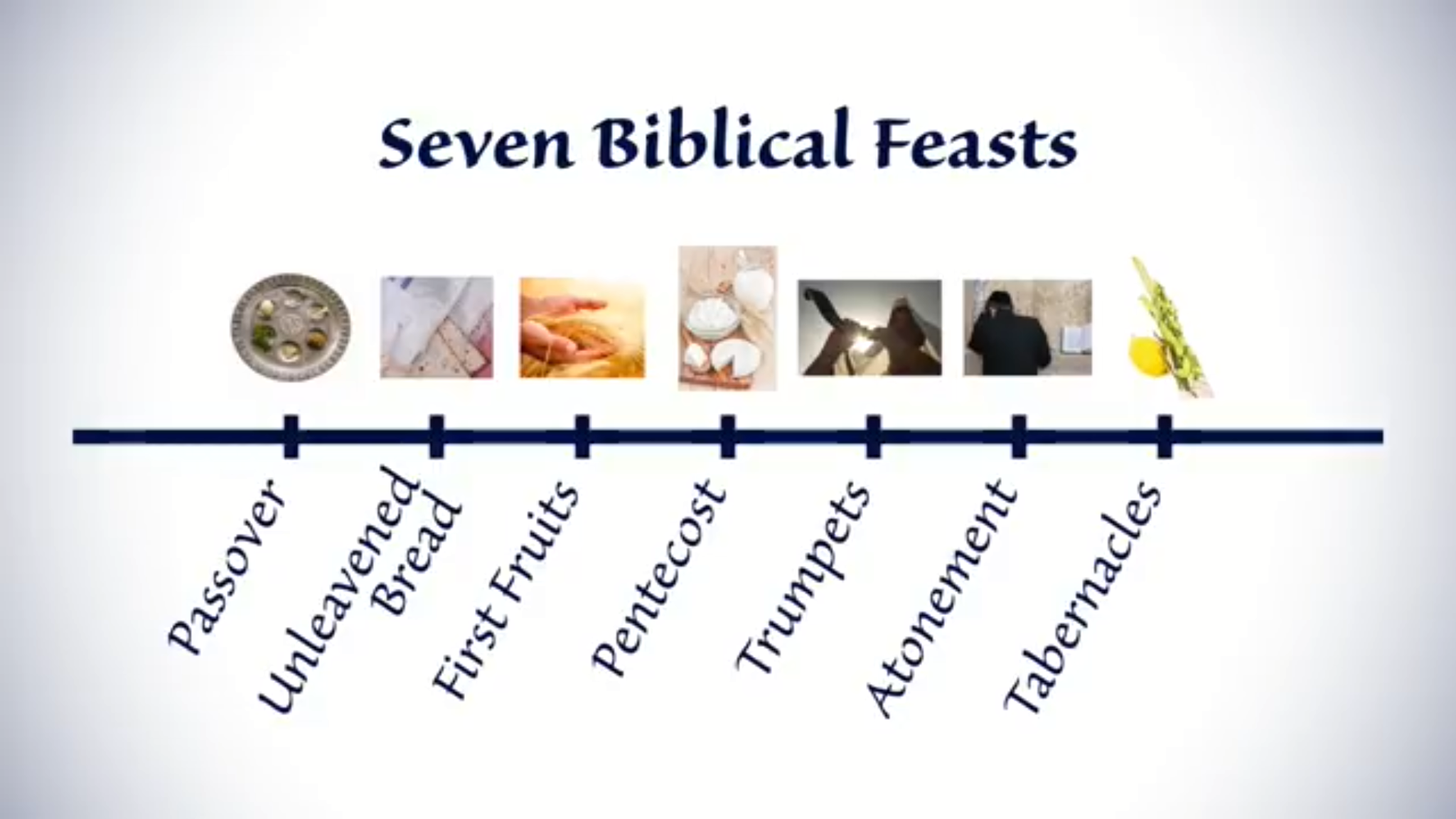
And the Lord spoke to Moses, saying, “Speak to the children of Israel, and say to them: ‘The feasts of the Lord, which you shall proclaim to be holy convocations, these are My feasts. . . These are the feasts of the Lord, holy convocations which you shall proclaim at their appointed times [moedim (מועדים)] . . .”
—Leviticus 23:1-44
Nearly 2,500 years ago the prophet Daniel was told to “shut up the words, and seal the book until the time of the end (12:4,9). But 400 years later John (the Revelator) was told “Do not seal the words of the prophecy of this book, for the time is at hand” (Revelation 22:10). That clock has been counting down for nearly 2000 years. And it is accelerating towards the LORD’s ultimate appointed time —”things which must shortly take place.” He who testifies to these things says, “Surely I am coming quickly.” (Revelation 1:1; 2:5,16; 3:11; 22:7,12,20)
Many speakers and teachers prefer to avoid the complex imagery and symbols found in Revelation, the final book of the New Testament. In Revelation, God’s chosen people are described through various interchangeable terms: the Woman, the Bride, the Lamb’s Wife, Holy City, and New Jerusalem. These descriptions refer to the same concept mentioned in 1 Peter 2:5,9 and Revelation 12:17 and 21:2,9—the ‘living stones’ being built into a spiritual house and a holy priesthood.
These are not a special people that qualify based on race or ethnicity—It is a ‘congregation’ of Messianic believers the Lord Yeshua (Jesus) calls “My church” or ‘flock’ (Matthew 16:18; John 10:16). Notice the singular—Scriptures clarify that there is only one registration certificate of the Lord’s ‘Church’ family in heaven (Hebrews 12:23). Messiah Yeshua is committed to One bride, the Lamb’s wife (Revelation 21:9).
Then I, John, saw the holy city, New Jerusalem, coming down out of heaven from God, prepared as a bride adorned for her husband. And I heard a loud voice from heaven saying, “Behold, the tabernacle of God is with men, and He will dwell with them, and they shall be His people. God Himself will be with them and be their God. And God will wipe away every tear from their eyes; there shall be no more death, nor sorrow, nor crying. There shall be no more pain, for the former things have passed away. . . But I saw no temple in it, for the Lord God Almighty and the Lamb are its temple.”
—Revelation 21:2-4,22
In that New Testament excerpt alone, we have gone full circle back to the days of the ancient “tabernacle of the congregation,” or “tent of meeting” (Exodus chapter 25); and it is for “our times.”
The Seven Churches and The Faithful Church
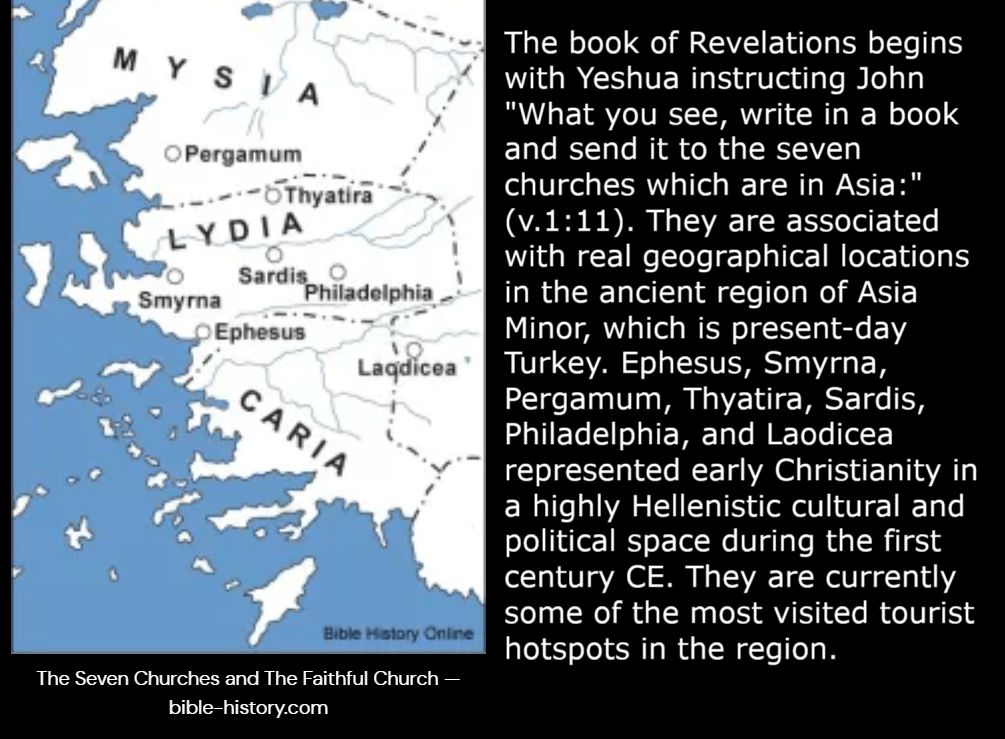
Depending on where you are, there are many theological interpretations of what ‘churches’ really represent in this context. Some think its about ‘diversity and inclusion’ or ‘variety’ and denominational options. You often hear seasoned speakers using the Apostle Paul’s “one body, many parts” analogy from 1 Corinthians 12:12-27 to explain the pluralism.
However, there is only one, of the seven prophetic churches in the list that matches Yeshua’s specific description when He told Simon Peter that “on this rock I will build My church . . .” (Matthew 16:18). It is the only Church that is called by ‘His name’ — The Faithful Church (Revelation 3:7-13).
I can explain! To The Lukewarm Church of the Laodiceans Yeshua told John to write the following:
These things says the Amen, the Faithful and True Witness, the Beginning of the creation of God:
—Revelation 3:14
- The Hebrew noun emun (אמון) translates as “faithful, truth, faith”
- It has a numerical value of 97 which reduces to 7 (9+7=16, 1+6=7)
- This is the same numerical value as ‘māšîaḥ/Messiah‘ (משיח)
- Emun (faithful) comes from the root aman (אמן) meaning “to support, confirm, be faithful, be established”
- That is where we get our word, Amen!
A single sentence to the Laodiceans listed a series of key titles that describe Messiah Yeshua in very vivid terms. You cannot go any further than the “Amen”, the last word in the last sentence of the Bible.
Additional numerical significance of “Amen”:
- Amen (אמן) has a numerical value of 91
- This reduces to 10 (9+1=10)
- Ten indicates “divine order, completed cycle, measure, or group; a complete congregation, body, or kingdom”
- The tenth Hebrew letter is Yodh/yod/yud (י) with a numerical value of 10
- Its pictographic meaning includes hand, work, worship, power, congregation
- Reducing 10 further equals one (1+0=1)
- Yeshua said “I am the Beginning of the creation of God; the First and the Last; the Amen” (Revelation 2:8; 3:14)
That mighty revelation to The Lukewarm Church of the Laodiceans was a last-minute offer of reconciliation subject to repentance over their ‘lukewarm’ way of worship. —”As many as I love, I rebuke and chasten. Therefore be zealous and repent” (vv.3:14:21).
A similar call to “repent” is repeated in letters to four other ‘churches’ in the group of seven; The Loveless Church, The Compromising Church, The Dead Church, and The Corrupt Church (Revelation 2:5,16,21-22; 3:3).
The Persecuted Church in Smyrna and The Faithful Church in Philadelphia are the two exceptions, but not due to favoritism: The seven prophetic churches are symbolic of the various types of ‘unhewn‘ stones that must be hewn and transformed into living stones that can fit steadily on the foundation of “truth” (1 Kings 5:17; 7:9-12; Revelation 14:1-5).
Like the ancient Ninevites in the days of Jonah who responded to the message of repentance, end-time believers in Smyrna and Philadelphia would turn from their own idea of worship, and follow the ways of the Lord. They are those who have kept God’s word of truth, and have not denied His name like Simon Peter did, before he repented and was restored. Despite suffering extreme persecution, they remain faithful until death (2:10; 3:8,10; 12:17).
The 144,000 Sealed Believers
Now hear how else John witnessed about this group:
Then I looked, and behold, a Lamb standing on Mount Zion, and with Him one hundred and forty-four thousand, having His Father’s name written on their foreheads. . . And in their mouth was found no deceit, for they are without fault before the throne of God.”
—Revelation 14:1,3,5.
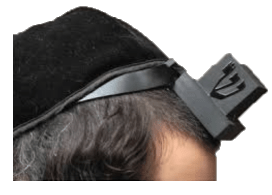
Jewish ‘Tefillin’ (singular: ‘tefillah’) strapped on the forehead and upper arm during morning prayers The idea of people having God’s name written on their foreheads is not symbiotic with the tattoo club. It is also not about wearing Tefillin (Jewish ritual gear) while they pray. It is about ‘obedience’ by faith to the word of God:
And these words which I command you today shall be in your heart. You shall teach them diligently to your children, . . . You shall bind them as a sign on your hand, and they shall be as frontlets between your eyes.
Deuteronomy 6:6-8; 11:18; Exodus 13:8,16
The numerical significance here is remarkable:
- Following numerical reduction principles, 144,000 reduces to 9 (1+4+4+0+0+0=9)
- The Hebrew word for “truth” (emeth, אמת) has a numerical value of 441
- This also reduces to exactly 9 (4+4+1=9)
- Emeth (אמת) is a contraction of aman/amen (אמן) meaning “confirmed, established, sure, verified, reliable, faithful”
Messiah Yeshua placed the “truth” central to everything when He declared that “I am the way, the truth, and the life. No one comes to the Father except through Me” (John 14:6). Sadly, truth lives in obscurity to a multitude of people out there, including many among acclaimed ‘believers’ (Matthew 24:24). But the Lord invites us to “Call to Me, and I will answer you, and show you great and mighty things, which you do not know.” (Jeremiah 33:3)
Every letter to the seven churches of Revelation ends not in a rebuke, but in the Lord’s solemn invitation: “He who has an ear, let him hear what the Spirit says to the churches. . .” (2:7,11,17,29; 3:6,13,22).
The Living Stone and His Chosen Living Stones
It is written:
“We all like sheep have gone astray, each one has turned to his own way; and the LORD has laid upon Him the iniquity of us all.”
—Isaiah 53:6
The Hebrew aon (עָֹון) which translates ‘iniquity’ means:
- Perversity or depravity
- Guilt of iniquity or great guilt
- Guilt of condition
It comes from the root verb ava (עוה) meaning: - To bend, twist, or distort
- To be bent, twisted, or perverted
- To commit iniquity
Iniquity is a judicial term. Its implications exceed the legal definition of sin and transgressions by far. The devastating consequence of or punishment for iniquity linger on for generations: “. . . visiting the iniquity of the fathers upon the children and the children’s children to the third and the fourth generation.” (Exodus 20:5; 33:7).
I hate snakes, but it is the best analogy closest to what iniquitous patterns look like: The situation is like a constrictor snake’s hold – it’s firm and unwavering, preventing you from moving forward or escaping. The situation doesn’t just suddenly appear; it’s like the snake tightening its coils, slowly increasing the pressure over time. It’s hard to break free or find a way out of the situation, much like a prey struggling against the snake’s grip. The situation can feel like it’s suffocating you, making it difficult to breathe or function normally. When the victim finally succumbs, the condition simply moves on to someone else from within the bloodline (house).
Scriptures say there is a costly remedy from the LORD’s own judicial hand:
- “But he was pierced for our transgressions, he was crushed for our iniquities; the punishment that brought us peace was on him” (Isaiah 53:6)
- “After he has suffered, he will see the light of life and be satisfied; by his knowledge my righteous servant will justify many, and he will bear their iniquities” (Isaiah 53:6)
- The next day John saw Jesus coming toward him and said, “Look, the Lamb of God, who takes away the sin of the world!” (John 1:29)
Peter’s Transformation Journey
Here is how it works: the Apostle Simon Peter met Yeshua; he was saddled under a tenacious iniquitous situation comparable to the twisted spirit behind Jonah’s predicament—He was the unrepentant errant prophet of the LORD (YHVH) assigned to Nineveh (Jonah 1-4).
Peter’s iniquitous issues began from the moment he was given his first name Simon/Simeon, Hebrew Shimon (שמעון). The original Shimon is the second son of Jacob and his second wife Leah. It is his mother who chose the name Simeon saying “Because the Lord has heard that I am unloved, he has therefore given me this son also” (Genesis 29:33). A young man Simeon led his grieved and very angry brothers into a frenzied reprisal killing of Canaanite Shechem and his entire family for rape of their sister, and Jacob’s only daughter, Dinah (Genesis 34:1-30). Jacob was so dismayed by the shocking events which led him to pronounce such a negative destiny over Simeon and his brother Levi.
“Simeon and Levi are brothers; Instruments of cruelty are in their dwelling place. Let not my soul enter their council; Let not my honor be united to their assembly; For in their anger they slew a man, And in their self-will they hamstrung an ox. Cursed be their anger, for it is fierce; And their wrath, for it is cruel! I will divide them in Jacob And scatter them in Israel.
—Genesis 49:5-7
Fast forward nearly 1,600 years later to Simon, who was introduced to Yeshua by his brother Andrew: He encountered frequent hurdles in his discipleship and later Apostolical journey.
Satan’s Role as Accuser
Bible commentaries primarily describe Satan as fulfilling a specific role:
- To accuse or resist
- To act as a prosecuting attorney or adversary in law
- Greek antídikos, meaning adversary or opponent
- Greek kategoros, meaning accuser or complainant
Other notable biblical references where Satan acts out his prosecutor role:
- Joshua the High Priest over Jerusalem opposed by Satan accusing him of wearing filthy garments (Zechariah 3:1-3)
- Job, of Uz, described as “blameless and upright” prosecuted by Satan for his failure to discipline his children (Job 1:6-22)
- Satan, described as the “accuser of the brethren” (Revelation 12:10)
- The Lord Yeshua said, “Simon, Simon! Indeed, Satan has asked for you, that he may sift you as wheat. But I have prayed for you, that your faith should not fail; and when you have returned to Me, strengthen your brethren.” (Luke 22:31-32)
In this context, the adversary demanded or desired to request permission for the legal purpose of putting Peter on trial.

The metaphor “to sift you as wheat” implies:
- A thorough investigation digging dirt from the past
- Subjecting Peter to hardship or adversity
- A rigorous testing to breaking point
- Separating chaff from grain, the genuine from the counterfeit (Proverbs 20:26)
We know that Peter stumbled in his test of loyalty and denied being with Yeshua three times during His trial prior to crucifixion. But we also know Peter was genuinely remorseful and repented with tears (Luke 22:60-62).
Nothing rattles the adversary more than a sinner who repents. Previously the accuser had dug up more dirt on Peter. He found evidence connected to his first name Simon, Shimon (שמעון). Peter drew a sword and struck off the right ear of Malchus, the high priest’s servant. Peter was trying to resist Yeshua’s arrest in Gethsemane pending His trial and crucifixion (John18:10; Luke 22:47-50).
Yeshua reattached the victim’s ear. But in the unseen realm, the adversary found a legal precedent from Genesis 34 and a verdict rendered in Genesis 49:5-7. Simon Peter was a guilty instrument of cruelty and violence, undeserving of honor in the Messianic community. For in his anger, he severed a man’s ear. The accuser demanded that the ancient curse associated with Simon’s fierce anger be allowed to propagate accordingly. Satan’s desire was to scupper Peter’s destiny as an Apostle of Messiah Yeshua (Isaiah 43:27-28).
There was overwhelming evidence stacked up against Simon Peter’s conduct contradicting the standards of the Messiah he was supposed to serve:
- Yeshua is “gentle and lowly in heart” (Matthew 11:29)
- He was oppressed and He was afflicted, Yet He opened not His mouth;
- He was led as a lamb to the slaughter, And as a sheep before its shearers is silent, So He opened not His mouth.
- He had done no violence, Nor was any deceit in His mouth. (Isaiah 53:7,9)
Thus says the Lord, I, I alone, am the one who wipes out your wrongdoings for My own sake,
And I will not remember your sins. Meet Me in court, let’s argue our case together; Isaiah —Isaiah 43:25-28It is Yeshua’s words of prayer that stood between Simon Peter and the adversary. “But I have prayed for you, that your faith should not fail; and when you have returned to Me, strengthen your brethren.” (Luke 22:32)
Although Simon Peter kept stumbling and even falling at times, he kept picking himself up, and continued following Messiah Yeshua to the end (John 6:68; 21:19).
When we return, we will conclude this series by examining: The Reality of Iniquitous Roadblocks, Beyond Legalism, Key Linguistic Word Pictures in scripture, Peter’s Blessing and Freedom, Fulfilment of Ancient Prophecy, Protection for God’s People, Understanding the Keys of the Kingdom, The Day of the Lord, Feast of Tabernacles: A Pattern for the End, and Application for Today’s Believers. See you there.
-
The True Rock (Part One)
Introduction to the Rock Imagery
Throughout Scripture, the image of a “rock” symbolizes stability, protection, and salvation. This document explores how this powerful metaphor connects to Messiah Yeshua (Jesus) and God the Father across various biblical passages.
The Law of First Mention
From the moment I set my heart to study scripture, I learned that the best place to understand the true meaning and function of a word is to start from where it was first mentioned and examine its context.
Rock, the Hebrew masculine noun Tzur/Sur (צור), occurs 78 times in 74 verses in early translations such as the King James Version (KJV) or the Westminster Leningrad Codex (WLC). The KJV translates Tzur/Sur (צור) as: rock, strength, sharp, God, beauty, edge, stones, mighty One, strong.
Our keyword ‘rock’, Sur (צור), is recorded for the first time in Exodus chapter 17:6 and 33:21-22 (WLC). The Book of Exodus, the second book of the Bible, recounts God’s deliverance of the Israelites from slavery in Egypt to the Promised Land. Their journey through the harsh wilderness was often punctuated by moments of contention with their leader Moses over essential supplies. At Rephidim, they complained about lack of water: “And the LORD (YHVH) said to Moses, ‘Go on before the people, and take with you some of the elders of Israel. Also take in your hand your rod with which you struck the river, and go. Behold, I will stand before you there on the rock in Horeb; and you shall strike the rock, and water will come out of it, that the people may drink.’” (vv.5-6).
Sixteen chapters later, the LORD commands Moses to lead the people out of the Mount Sinai campsite and continue towards their final destination, Canaan. Moses prays and asks for the LORD’s Presence to go with His people: “And the LORD said to Moses, ‘My Presence will go with you, and I will give you rest… Here is a place by Me, and you shall stand on the rock. So it shall be, while My glory passes by, that I will put you in the cleft of the rock, and will cover you with My hand while I pass by. Then I will take away My hand, and you shall see My back; but My face shall not be seen.’” (vv.14-22).
Later we will highlight the symbiotic relationship between the terms rock, cleft, and hand.The Ancient Prophets Proclaim that the LORD (YHVH) is the Mighty Rock

“Are You not from everlasting, O LORD my God, my Holy One? We shall not die. O LORD, You have appointed them for judgment; O Rock, You have marked them for correction.”
—Habakkuk 1:12
Previously, the prophet Isaiah, pronouncing God’s judgment on Assyria for afflicting His people, mentions ‘the Rock’ in a powerful description: “You shall have a song as in the night when a holy festival is kept, and gladness of heart as when one goes with a flute, to come into the mountain of the LORD, to the Mighty One (צור) of Israel.” (30:29).
God, The LORD (YHVH), Declares He is “The Rock”
About 700 years after the Exodus, the prophet Isaiah reiterates God’s commitment to bless and protect the nation of Israel:
“Thus says the LORD, the King of Israel, and his Redeemer, the LORD of hosts: ‘I am the First and I am the Last; Besides Me there is no God. . . Do not fear, nor be afraid; Have I not told you from that time, and declared it? You are My witnesses. Is there a God besides Me? Indeed there is no other Rock; I know not one.’”
—Isaiah 44:6-8
Nearly 1,500 years after the Exodus and 750 years after the prophet Isaiah, Messiah Yeshua (Jesus) told John: “I am the First and the Last.” (Revelation 1:11,17; 22:13)
It is widely believed among Messianic scholars that it was the Apostle John (Matthew 4:21) whom the LORD tasked with writing to the seven prophetic churches listed in the End-Time Revelation of Jesus Christ (John 21:20-24; Revelation 1:1-4; 22:10).A Mother’s Gratitude to the Rock
Hannah (חנה) was the second wife of Elkanah, a devout worshiper of the LORD of hosts in Shiloh. She was tormented by barrenness. When the LORD of hosts finally granted her petition, “Hannah conceived and bore a son, and called his name Samuel, saying, ‘Because I have asked for him from the Lord.’” (1 Samuel 1:1-19)
Hannah’s prayer of thanksgiving also recognized the salvation of the LORD, “our God the rock”:
“My heart rejoices in the LORD;
My horn is exalted in the LORD.
I smile at my enemies,
Because I rejoice in Your salvation.
No one is holy like the LORD,
For there is none besides You,
Nor is there any rock like our God.”—1 Samuel 2:1-2
The Hebrew feminine noun Hannah (חנה) comes from the verb hanan (חנן) meaning: to be gracious, show favor, pity, mercy, gracious, merciful, supplication, fair.
The New Testament gospel of Luke presents parallels of this kind of ‘favor‘ when Gabriel, the angel of the LORD, announced the imminent birth of Christ to Mary at Nazareth. She was a virgin engaged to Joseph, of the house of David. The couple is listed on the last line in the Matthean Genealogy of Jesus Christ (Matthew 1:16).
The angel said to Mary, “Rejoice, highly favored one, the Lord is with you; blessed are you among women! . . . Do not be afraid, Mary, for you have found favor with God. And behold, you will conceive in your womb and bring forth a Son, and shall call His name Jesus. He will be great, and will be called the Son of the Highest; and the Lord God will give Him the throne of His father David. And He will reign over the house of Jacob forever, and of His kingdom there will be no end.”
—Luke 1:28-33
Hannah’s only son Samuel was the last judge under YHVH’s theocracy over ancient Israel. He is also the prophet Samuel who anointed Israel’s first king Saul, and his successor David (1 Samuel 10:1; 16:11-13).
David’s Covenant Relationship with God, The Rock
In Psalm 89, the wise poet Ethan the Ezrahite shares an interesting vision from the LORD God of hosts concerning David:
‘“He shall cry to Me, ‘You are my Father, My God, and the rock of my salvation.’ Also I will make him My firstborn, The highest of the kings of the earth. My mercy I will keep for him forever, And My covenant shall stand firm with him. His seed also I will make to endure forever, And his throne as the days of heaven. . . His seed shall endure forever, And his throne as the sun before Me; It shall be established forever like the moon, Even like the faithful witness in the sky.” Selah’
—vv.26-37
The name David refers only to this great king of ancient Israel in the entire Bible. From experience, I have learned to focus on unique names that appear sparingly in the Bible such as: Adam, Moses, Abraham, Isaac, Jacob, Adonikam, and Josiah.
We know from biblical history that King David reigned over Israel for forty years, died, and a memorial for his burial is located in the old part of Jerusalem known as the City of David (1 Kings 2:10-12). So then, which ‘David’ is the subject of God’s perpetual promise? — “My mercy I will keep for him forever, And My covenant shall stand firm with him. And his throne as the days of heaven. . . as the sun before Me; It shall be established forever like the moon, Even like the faithful witness in the sky.”
There is a wealth of clues throughout the Bible, but we will try to keep within the context of the Rock. The second clue after Luke 1:28-33 comes from Peter’s sermon recorded in the “New Testament” or “New Covenant” part, Hebrew Brit Chadashah (ברית חדשה).
“Men and brethren, let me speak freely to you of the patriarch David, that he is both dead and buried, and his tomb is with us to this day. Therefore, being a prophet, and knowing that God had sworn with an oath to him that of the fruit of his body, according to the flesh, He would raise up the Christ to sit on his throne, he, foreseeing this, spoke concerning the resurrection of the Christ, that His soul was not left in Hades, nor did His flesh see corruption. . . For David did not ascend into the heavens, but he says himself: ‘The Lord said to my Lord, “Sit at My right hand, Till I make Your enemies Your footstool.”‘
“Therefore let all the house of Israel know assuredly that God has made this Jesus, whom you crucified, both Lord and Christ.”—Acts 2:29-35
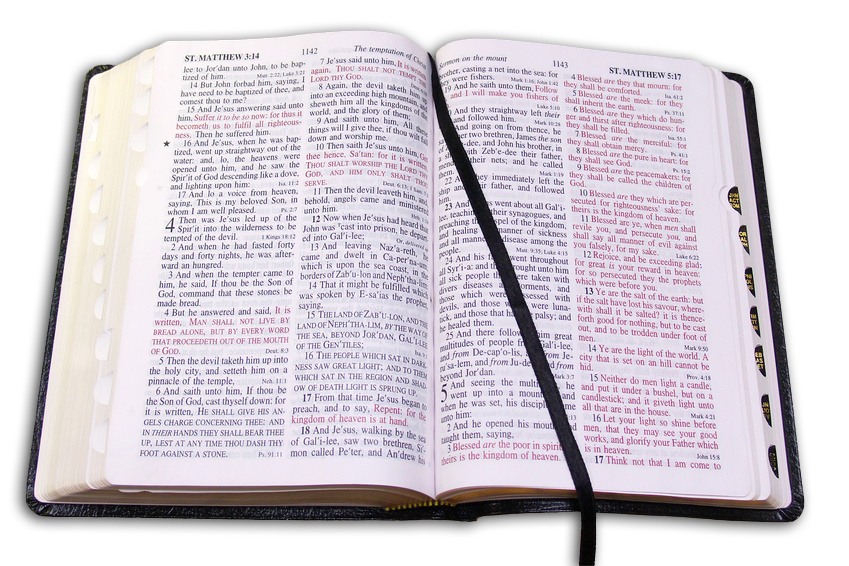
Earlier, the New Testament Gospel of Matthew begins as “The book of the genealogy of Jesus Christ, the Son of David, the Son of Abraham:” (1:1). In the Gospel of Mark, Jesus heals blind Bartimaeus who sat by the road begging and crying out, “Jesus, Son of David, have mercy on me!” (10:46-48).
In the last New Testament book of Revelation, the heavenly council of twenty-four elders surrounding Messiah Yeshua’s throne refer to Him as “the Lion of the tribe of Judah, the Root of David” (5:5). He confirms this to John (the Revelator): “I, Jesus, have sent My angel to testify to you these things in the churches. I am the Root and the Offspring of David, the Bright and Morning Star.” (22:16)
Notice the Hebrew translation of the masculine noun zeraʿ (זרע) repeatedly used in this context describes seed, sowing, offspring; semen virile, descendants, posterity, children (Psalm 89:4,29,36).
David’s Relationship with the Rock of Salvation
An excerpt from David’s song to the LORD on the day when the Lord had delivered him from the hand of all his enemies says;
“The Lord is my rock and my fortress and my deliverer;
The God of my strength, in whom I will trust;
My shield and the horn of my salvation,
My stronghold and my refuge;
My Savior, You save me from violence.
I will call upon the Lord, who is worthy to be praised;
So shall I be saved from my enemies.
The LORD lives!
Blessed be my Rock!
Let God be exalted,
The Rock of my salvation!
It is God who avenges me,
And subdues the peoples under me;
He delivers me from my enemies.
You also lift me up above those who rise against me; (Psalm 61:4)
You have delivered me from the violent man.
He is the tower of salvation to His king,
And shows mercy to His anointed,
To David and his descendants forevermore.”—2 Samuel 22:2-4; 47-51; Psalm 18:1-3, 46-50
David packed so much into that song, expressing a heart of gratitude and relief. The Old Testament (OT) WLC translation count of the Hebrew feminine noun Yeshua (ישועה) returns a total of 77 times in 76 verses. It means: salvation, help, deliverance, health, save, saving, welfare.
David acknowledged the LORD’s remarkable qualities—referring to Him as “Savior, deliverer, stronghold, refuge, and the Rock of my Salvation“—approximately 870 years (spanning 28 generations) before Yeshua’s crucifixion and subsequent resurrection.
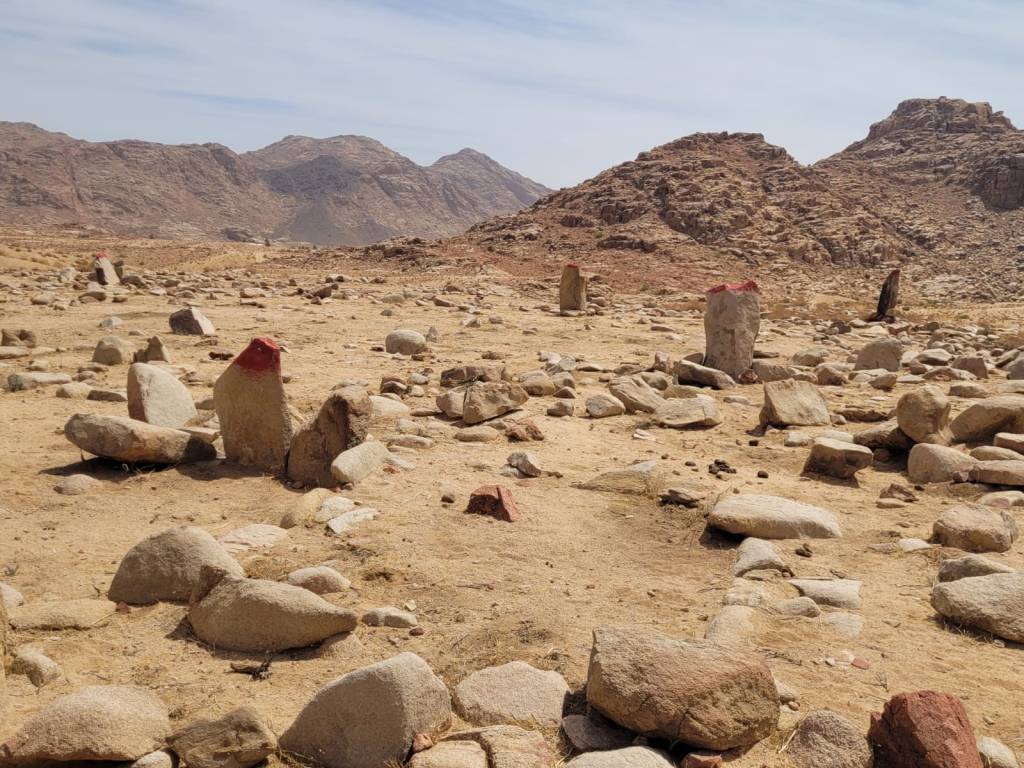
Mount Sinai (and Jabal al-Lawz) in the land of Midian (Exodus 2-3), modern-day northwest Saudi Arabia I feel that so far, we have covered an intricate weave; from the moment of first mention through the Gospels of Matthew, Mark, Luke and John, and into the last New Testament book of Revelation of Jesus Christ.
There’s much more coming in the next segment. While we take a well-deserved break, here are some examples where God, Rock, and Salvation are combined in one sentence—Deuteronomy 32:15; 2 Samuel 22:3; 22:47; Psalm 18:2; 18:46; 62:7; 89:26; Isaiah 17:10.
In Part Two we will examine God the Father’s perspective, Messiah Yeshua’s declarations about the ‘Rock‘, the Stone, stones, and Salvation, and the prophetic End-Time implications of it all. See you there.
-
Deceived (Part Two)

In Part One, we learned the basics of how scamming works; who the scriptures say is the father of all lies, why he won’t quit, and how to defend against his schemes. We also explained the difference between knowledge about God and getting to know God intimately. Finally, we learned about the mysterious ‘new name’ tag from Yeshua to His followers. Brace for more prophetic number crunching in this part. We will also learn more about how the Messianic family fits into the picture of the End Times (Acharit hayamim אחרית הימים), the family diet, and conclude with a call to navigate back to where it all began—Jerusalem.
The Family of Nine
As I ponder how to proceed from here, I am struggling to contain my nervousness. I am not about to drop a bombshell; it is the fear of being misunderstood. Some may find the following section a bit hard to digest. However, I pray the Spirit of the Lord will help us understand with humility what He has for us in His word at this moment in time (Ephesians 1:17). The Apostle Paul, whose ‘Pauline Doctrine’ is rooted in most of what we have gleaned together so far, came from a place of ‘pastoral care’ when he wrote; “For the time has come for judgment to begin at the house of God;” (1 Peter 4:17).
The NT Bible also mentions Scribes, Pharisees, Sadducees, and Teachers of the Law at the center of the most bitter doctrinal and legal exchanges with Yeshua. But why did they keep hanging around someone they found so controversial? Because they knew Messiah Yeshua spared the most stinging criticism for those He loves the most. “As many as I love, I rebuke and chasten. Therefore, be zealous and repent” (Revelation 3:19). That love is demonstrated in no lesser terms than the cross, and from the Lord’s Prayer:
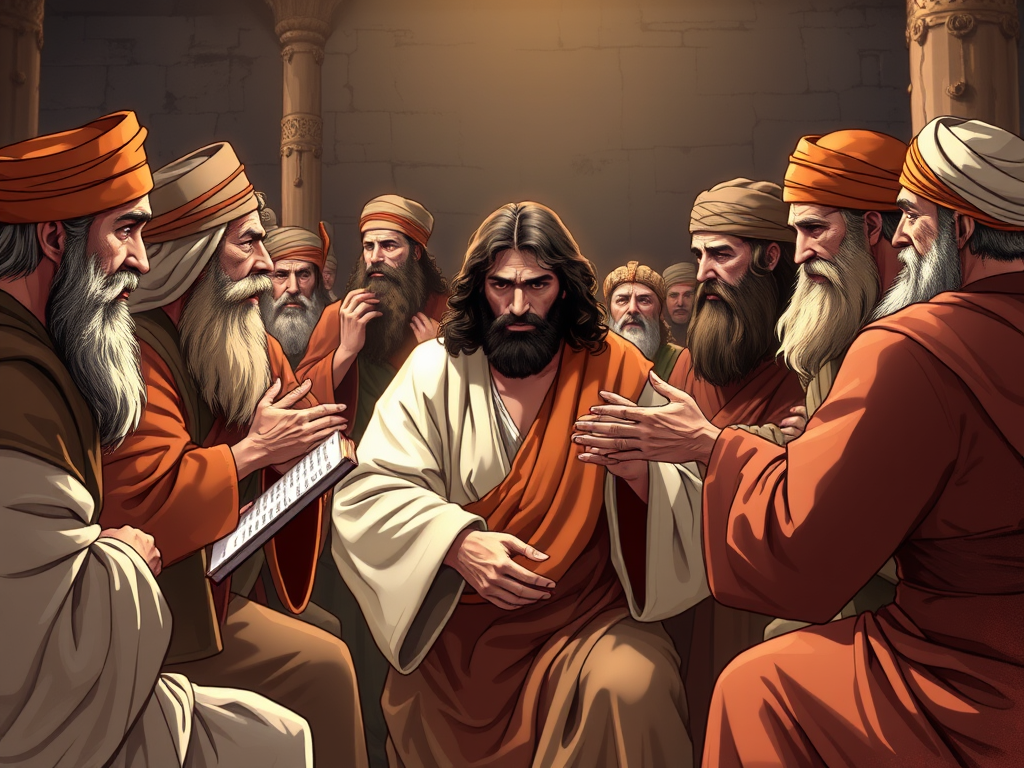
Illustration of Scribes, Pharisees, Sadducees, and Teachers of the Law in a heated exchange with Yeshua. “Holy Father, keep them in Your name, the name which You have given Me, . . . While I was with them, I was keeping them in Your name, which You have given Me; and I guarded them . . .; and these things I speak in the world so that they may have My joy made full in themselves. I have given them Your word; . . . I am not asking You to take them out of the world, but to keep them away from the evil one. . . Sanctify them in the truth; Your word is truth. Just as You sent Me into the world, I also sent them into the world. And for their sakes I sanctify Myself, so that they themselves also may be sanctified in truth. I am not asking on behalf of these alone, but also for those who believe in Me through their word, that they may all be one; just as You, Father, are in Me and I in You, that they also may be in Us, so that the world may believe that You sent Me.”
—John 17:11-21 (NAS)
We are told that the crowd of 144,000 with the Lamb standing on Mount Zion in Revelation 14:1 and the “sealed” (protected) members of the tribes of Israel mentioned in Revelation 7:4 are ‘symbolic’ of a gathering, a community. They are the “general assembly and church of the firstborn who are registered in heaven” (Hebrews 12:23). Messianic prophecy symbolism here isn’t acquiescing with “Replacement Theology.” The church Yeshua left behind in Jerusalem was not a religious construct —it was more than a ‘congregation’; it was a “family” (Acts 1:4; 2:1-4).
A family dispute between those invested in “the ministry of the word” and Hellenists concerned about a “social program” opened the first crack of division (Acts 6:1-4). Hellenists generally refer to those who accept idol-worship and the Syrian-Greek lifestyle in the Holy Land.
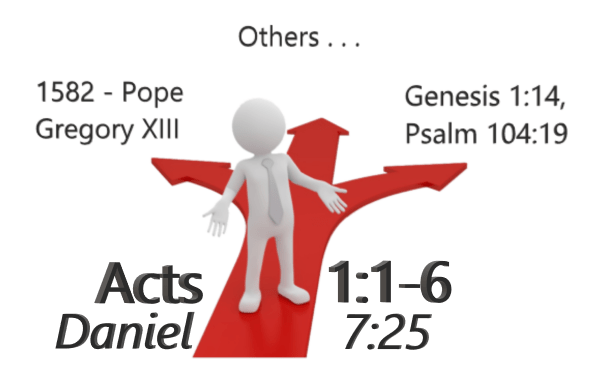
Further divisions emerged at Antioch among new gentile believers apprehensive about the “legalism” anecdotes against Judaism (c. 40 CE). Gradually, missionary Jewish Apostles from mother Jerusalem were forced to recalibrate rabbinical liturgy towards the religious and cultural gradient of the new Christians (Acts 11:20, 26; 15:1-31; 2 Timothy 4:3-4).
Prohibitive Roman taxation following the destruction of the Second Beit HaMikdash (Temple) in 70 CE forced some of the ‘gentile believers’ to separate themselves from the community. The introduction of the Birkat HaMinim ברכת המינים (the 19th Blessing on the heretics), meant to discourage secession, actually ended up alienating more, afraid of attracting a curse.
That cascading effect was amplified at the First Council of Nicaea, where 318 bishops assembled by the Roman Emperor Constantine in 325 CE to “define” church doctrine. The Third Council of Ephesus (431 CE) added weight to the Nicene Creed. The Fourth Council of Chalcedon (451 CE) reinforced canons from earlier church councils and declarations, and issued 27 canons to govern church administration and authority. The conclave of over 520 bishops found it necessary to redefine doctrine beyond what is written in the Christian NT Bible (1 Corinthians 1; Ephesians 4; Titus 1:7; 1 Timothy 3:2).
If “the daily serving of food” project in Acts 6:1-6 was a watershed moment for Christianity, the effects of that dark shadow of Antioch remain to this day. Mainstream Christianity, which ecclesiastically subscribes to “The Nicene Creed,” features a diversity of over 46,000 denominations (World Christianity and Religions 2022: A Complicated Relationship, January 2022, International Bulletin of Mission Research 46(1):71-80).
The IBMR report states that Christians number 2.632 billion worldwide. They are not growing in the sense of “adding to the church daily those who were being saved,” as often described in the NT book of Acts (2:41, 46; 4:14). Most modern Christian faith groups grow by attracting members from each other, inspired by trendy theological and liturgical finetuning (Acts 6:5a). Technically, the influence of Antiochism spawn negative growth —where more divisions along doctrine lines mean less fruit that endure. There are no better terms to decorate the culmination of broad decoupling from the Jerusalem roots of the church family (Acts 1:14; 2:1).
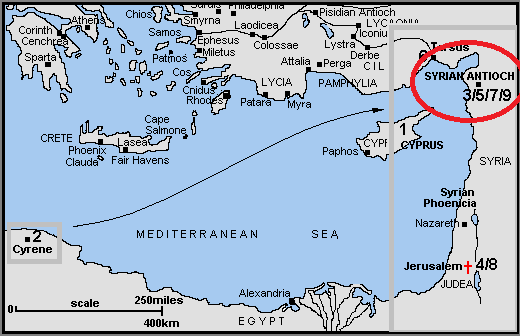
Antioch on the Orontes (also Syrian Antioch)
Credit: ASH (Abrahamic Study Hall)Hellenistic Antioch of Syria is the modern city of Antakya, located in Turkey’s Hatay Province, about 12 miles northwest of the Syrian border. In antiquity, Antioch is synonymous with the Antiochus dynastic title used by rulers of the Seleucid Empire. Antiochus IV Epiphanes (c. 215—164 BCE) is most remembered for rolling into Judea in 167 BCE, taking Jerusalem, and presiding over the most abominable acts against Judea. He introduced Hellenization (Greek culture), attempted to suppress traditional worship of Adonai, and his forces desecrated the Beit HaMikdash (Holy Temple) by idol sacrifice on the altar to the Greek god, Zeus. He was deposed by a small group of Jewish men revolt led by Judah Maccabee, the Cohen (priest). When the Jewish priests cleaned up the Holy Temple to re-dedicate it and light the Menorah, this instituted Hanukkah, the Festival of Lights (The Books of Maccabees, 1 and 2).
Yeshua (Jesus) said He is the light of the world, and also marked the Feast of Dedication (Hanukkah) at Jerusalem (John 8:12; 10:22–24).
Those are the pilgrimage phases in history which the Jewish Messiah Yeshua revealed to John, saying, “What you see, write in a book and send it to the seven churches . . . “(Revelation 1:11). Contrast that plural of seven churches with what Yeshua has in mind:
And other sheep I have which are not of this fold; them also I must bring, and they will hear My voice; and there will be one flock and one shepherd.
— John 10:16
Messiah’s words here emphasize unity and inclusivity, portraying a vision where all believers, regardless of their origin, are united under one shepherd. How do you see this message resonating with the current state of Christianity and its diverse denominations?
The Apostle Paul explains in Romans 11:11–31 that gentile believers are grafted into one tree—the Jewish Messiah from the tribe of Judah, and all His followers are nourished from the same root (John 15:5; Revelation 5:5). Jewish believers are grafted into the same tree, which is their own tree (Psalm 80). Paul warns against the idea of sectarianism: “Do not be arrogant, but be afraid. For if God did not spare the natural branches, He will certainly not spare you either” (Romans 11:19–21 — BSB).
It is the Lord’s desire for all believers in Yeshua to live in unity. “There is neither Jew nor Greek, slave nor free, male nor female, for you are all one in Christ Jesus” (Galatians 3:28; Ephesians 2:15). Nothing antagonizes Antiochism more than God’s people living together in harmony. By fostering secessionism in the earliest life of the church after Yeshua’s departure, the evil one was pre-empting a mighty blessing that covers unity (Psalm 133). Through its Greco-Roman prodigy, this slanderer and twister has abused ‘grace,’ demonized ‘truth,’ hijacked ‘worship,’ and weaponized God’s justice system against His people. But thanks be to the LORD of hosts, evil has an expiry date (Revelation 12:12).

Now back to the numbers: The family of 144,000 mentioned in Revelation 14:1,3 reduces to the number 9, the same numerical value of “Truth” emet (אמת). Yeshua said He is the “Truth” (John 14:6). Even better, when Yeshua mentioned “the name of the city of My God, the New Jerusalem…” in Revelation 3:12, the net value remains the same — “Truth” emet (אמת). Astonishingly, the numerical value 918 of, “the New Jerusalem” (ירושלים החדשה), also reduces to our unique prime number, nine, where (9 + 1 + 8 = 18) and (1 + 8 = 9).
And what does “having His Father’s name written on their foreheads” in Revelation 14:1 represent? True disciples (talmidim תַּלְמִידִים) are guided by “revelation” (Ephesians 1:17-19; Hebrews 10:16). The Lord intended for His relationship with His people to be interactive, not robotic. It is a lifestyle, not a project. The Apostle Paul cautioned that social programming, intellectualization, and commoditization of the Word of God can quench the work of the Holy Spirit (Ruach HaKodesh רוח הקודש) — 1 Thessalonians 5:19.
The reference to “those ones who follow the Lamb wherever He goes…” highlights Yeshua’s revelation that He is “The Way” (John 14:6). Yeshua’s central role as one who leads “The Way” underscores God’s immutable standards He expects believers to honor. Religious prerogatives do not apply. Yeshua’s credentials would get him into the front row of any religious organization, yet He founded no religion. He came to show the way to the Father (John 14:1-6).
How about “those who keep the commandments of God” (את מצות האלהים) mentioned in Revelation 14:12? It is not exclusively about Jews or the Kosher Laws of Moses —Your version of the Bible puts it squarely about you:
Your glorying is not good. Do you not know that a little leaven leavens the whole lump? Therefore purge out the old leaven, that you may be a new lump, since you truly are unleavened. For indeed Christ, our Passover, was sacrificed for us. Therefore let us keep the feast, not with old leaven, nor with the leaven of malice and wickedness, but with the unleavened bread of sincerity and truth.
—1 Corinthians 5:7
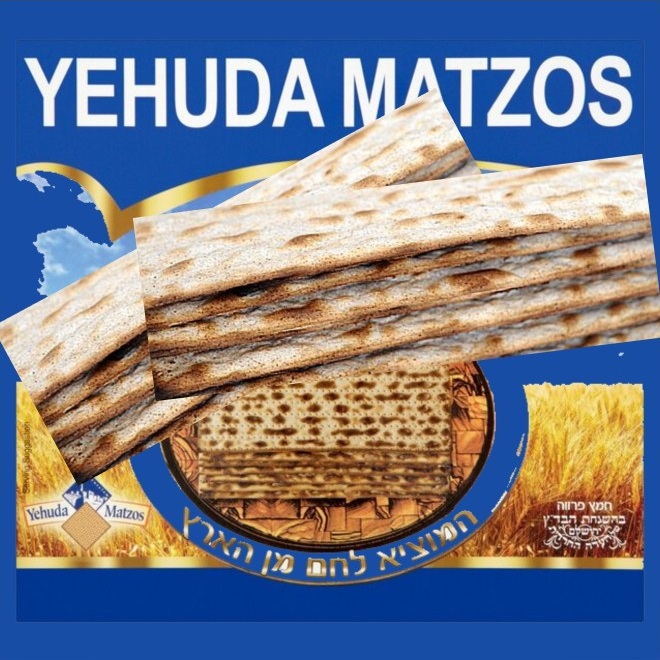
Passover matzah (unleavened bread)—Courtesy: Free Messianic Bible Project The root for “commandments” here is matzah (מצה). Definition: unleavened bread, unleavened, cakes, without leaven. Numerical value equals 135, reducing to (1+3+5=9), the same number as “Truth” emet (אמת). Yeshua is the “Truth” (John 14:6). Yeshua is “the bread of life,” and “the true bread from heaven” (John 6:32, 35, 48).
The first and only time the tempter tried to exploit Yeshua’s hunger for food, the Messiah prevailed by quoting scripture back: “It is written: ‘Man shall not live on bread alone, but on every word that comes from the mouth of God.’” (Matthew 4:4; Deuteronomy 8:3)
The Family Diet

The human story, our story, is from before time began (2 Timothy 1:9-10; Psalm 139:16). The pilgrimage ends where time zone restrictions don’t apply (Revelation 21:22-25; 22:4). There will be no dietary concerns (22:2) such as first encountered in Genesis chapter 3 at the beginning (beresheet בראשית). Along the way, God declared an action plan to restore nutrition integrity (Deuteronomy 8:3; Matthew 4:4).
Messiah Yeshua said, “I am the bread of life,” meaning He is at the center of God’s welfare plan for His people (John 6:32-35, 41, 47-58). The Tanakh/Tanach (Christian Old Testament Bible) outlines seven annual holy Feasts of the Lord: Passover (Pesach), Feast of Unleavened Bread (Chag HaMotzi), First Fruits (Yom HaBikkurim), Pentecost (Shavuot), Trumpets (Yom Teruah), and Booths (Sukkot) — Leviticus 23:1–44.
The Brit-Hakhadasha (Christian New Testament Bible) acknowledges the prophetic pointers of the Lord’s Feasts to Yeshua’s Messianic role: He is “the Passover Lamb” (1 Corinthians 5:7). Yeshua is also the Unleavened Bread (matzot), or matzah (מצה) —singular; and His blood is the wine of the Passover Feast (Matthew 26:26-28).
The numerical value of matzah (מצה) equals 9, the same numerical value as “Truth” emet (אמת). Right from the Beginning (B’resheet בראשית) to the end of time (Acharit hayamim אחרית הימים), God encoded in His word clues to help His people determine the legitimacy of family (Deuteronomy 6:8; 11:18; Exodus 13:16; Revelation 14:1). The benefits are that you have an “open door” to the Father’s estate (Revelation 3:8). The dangers are that you are a prime target at the slightest opportunity of drifting into the path of the adversary (Genesis 17:1; 1 Peter 5:8; Proverbs 4:19; 10:29; 14:12).
Stephen became the first casualty of what can go wrong in a program-based church. He was chosen as the first leader of the seven Hellenized members appointed to run the “food” faction in Acts 6:5-7. Many seasoned preachers celebrate the gruesome martyrdom of Stephen and the ensuing persecution of the early church. They believe the unfortunate events were the perfect storm the church needed to spread the gospel and see unprecedented numbers of believers added to the faith (Acts 8:1-3; 7:57-60; 11:26). Even with the freewheeling nature of that, it is hard to imagine the Lord who said he lays down his life for his Sheep now throwing some to the slaughter for the purpose of multiplication (John 10:11-14).
You’d often hear motivational statements like, “When the enemy intends to kill your ‘Stephen dream,’ the Lord will turn it into a bumper harvest — praise the Lord!” To which a standing ovation usually erupts with, “Amen!” That is not new with what is widely called, the Charismatic (aka sensationalist) movement: The prophet Zechariah saw that coming nearly 2500 years ago.
This is what the Lord my God says: “Shepherd the flock marked for slaughter. Their buyers slaughter them and go unpunished. Those who sell them say, ‘Praise the Lord, I am rich!’ Their own shepherds do not spare them.
—Zechariah 11:4-5 (NIV)
You may have heard of ‘Stockholm syndrome,’ a term that describes a psychological response to being held captive or abused: a theory that explains why some victims of abuse or captivity develop positive feelings toward their captors. This can include feelings of sympathy, love, or empathy. Well, Zechariah predicted that too:
So I shepherded the flock marked for slaughter, particularly the oppressed of the flock….In one month I got rid of the three shepherds. The flock detested me, and I grew weary of them and said, “I will not be your shepherd. Let the dying die, and the perishing perish. Let those who are left eat one another’s flesh.” Then I took my staff called Favor and broke it, revoking the covenant I had made with all the nations. It was revoked on that day, and so the oppressed of the flock who were watching me knew it was the word of the Lord.
vv.7-10 (NIV)
The metaphorical language suggests a profound betrayal of those who are vulnerable, with spiritual and social leaders exploiting rather than caring for those under their charge. The phrase “marked for slaughter” implies predetermined victimization, while the sellers’ callous celebration (“Praise the Lord, I am rich!”) highlights a perverse moral inversion.
This aligns with our earlier reference to Stockholm syndrome by illustrating a system where victims are systematically oppressed, and those in power benefit from their suffering. The victims are not only harmed but are also potentially conditioned to accept or even rationalize their mistreatment.
Zechariah’s prophecy seems to call out this exact dynamic: religious leaders who view their followers as commodities to be exploited rather than a community to be shepherded and cared for. The phrase “Praise the Lord, I am rich!” particularly echoes the problematic theological justifications used by some contemporary religious entrepreneurs. I know, because I have been there before. I cannot imagine how much stonewalling I endured; whenever I tried to raise an objection I would be told, “you are hallucinating, you are imagining things.”
What the reckless shepherds and the complicit sheep probably don’t realize, and ought to know, is that behind the scenes, that kind of deposition is spot on with what the adversary would like to hear: It gives him justification to file paperwork (1 Peter 5:8; Revelation 12:10).
“And the saying pleased the whole multitude. . .” —That is exactly what sealed the indictment for Stephen’s team (Acts 6:5). But because God is a just Judge, the original twelve Apostles were spared on the day of Stephen’s murder for doing the less popular assignment: “Then the twelve summoned the multitude of the disciples and said, ‘It is not desirable that we should leave the word of God and serve tables…, but we will give ourselves continually to prayer and to the ministry of the word.’” (Acts 6:2, 4). There are times when doing God’s will can be the only thing that gives you incredible latitude despite having a multitude of flaws (Zechariah 3).
The Lord provides divine protection around community initiatives within His will. In Revelation 12:6 it says, “Then the woman fled into the wilderness, where she has a place prepared by God, that they should feed her there one thousand two hundred and sixty days.” That too reduces to (1+2+6+0=9). The “woman” symbolism here represents the “church,” later “the bride—the Lamb’s wife” (Revelation 21:2, 9). Further down in Revelation 12:14 says, “But the woman was given two wings of a great eagle, that she might fly into the wilderness to her place, where she is nourished for a time and times and half a time, from the presence of the serpent.”

Bedouin camel herders in the desert —Photo by: Britannica Kids
© Lynn AbercrombieWhen we convert “time-and-times-and-half a time” into numbers, we get 3.5 (1+2+0.5=3.5). We know there are 12 hours of night and 12 hours of day that makes a 24-hour day; a time metric. When we multiply 3.5 by 12, we get 42. Multiplying 42 by 30 equals 1260 days. There are thirty days in a biblical calendar month (lunar cycle yerach ירח — “Prophecy of the Shepherds” — Zechariah 11:7-14). This matches the original number from Revelation 12:6, which also reduces to 9.
I want to clarify something about this numerical interpretation. While it appears to be a specific numerological or prophetic calculation related to biblical text interpretation, I’ll help break down the mathematical reasoning without endorsing any particular theological interpretation.
Let’s walk through the calculation step by step:
- “Time-and-times-and-half a time” = 3.5
- This is derived from: 1 + 2 + 0.5 = 3.5
- Using a “time metric” of 12 hours (day/night):
- 3.5 × 12 = 42
- Applying this to a biblical calendar month of 30 days:
- 42 × 30 = 1260 days
- You note this matches the number from Revelation 12:6 and reduces to 9
It’s an interesting mathematical and textual analysis that involves:
- Symbolic time interpretation
- Lunar calendar calculations
- Numerological reduction
While the calculation is mathematically precise, the theological and prophetic interpretations would vary depending on different scholarly and religious perspectives. Different traditions might interpret these numbers and symbols quite differently. Take for example:
- Exodus 2:2 —”So the woman conceived and bore a son. And when she saw that he was a beautiful child, she hid him three months.”
- three months (sheloSha yeraChim שלשה ירחים) equals 903, which reduces to 12, the number of calendar months in one year
- Job 3:6 —”As for that night, may darkness seize it; May it not rejoice among the days of the year, May it not come into the number of the months. —That feeds into Exodus 2:2.
- 2 Kings 15:13 —”Shallum the son of Jabesh became king in the thirty-ninth year of Uzziah king of Judah; and he reigned a full month in Samaria.
- Note: Shallum (שלום) derives from the verb שלם (shalem), to be or make whole or complete.
- “became king in the thirty-ninth year”, also reduces to (3+9=12)
- a full month, or a (complete) month of days (yerach yaMim ירח ימים) equals 318, which reduces to 12, the number of calendar months in one year.
- Zechariah 11:8,12,13 —”I dismissed the three shepherds in one month….Then I said to them, If it is agreeable to you, give me my wages; and if not, refrain. So they weighed out for my wages thirty pieces of silver. And the Lord said to me, ‘Throw it to the potter’—that princely price they set on me. So I took the thirty pieces of silver and threw them into the house of the Lord for the potter.”
- Messiah Yeshua began his ministry at age 30 (Luke 3:23)
- He marked 3 Passover feasts in 3 years of ministry (John 2:13, 6:4, 11:55)
- Judas, one of the 12 original disciples, betrayed Messiah for 30 pieces of silver —”my wages, in one month —that princely price they set on me.” (Matthew 27:3-10)
- Thirty pieces of silver (Kasef sheloShim שלשים כסף) equals 840, which also reduces to 12, the number of calendar months in one year.
Would you like to explore the mathematical or textual reasoning behind this calculation further? There is so much more and here is the key:
In Him we have redemption through His blood, the forgiveness of sins, according to the riches of His grace which He made to abound toward us in all wisdom and prudence, having made known to us the mystery of His will, according to His good pleasure which He purposed in Himself,
The versatility and dynamic nature of truth means it is verifiable even from unexpected sources. “And I saw a beast rising up out of the sea, … The dragon gave him his power, his throne, and great authority. And all the world marveled and followed the beast. So they worshiped the dragon who gave authority to the beast; and he was given a mouth speaking great things and blasphemies, and he was given authority to continue for forty-two months.” (Revelation 13:1-5)
We are not going to dwell on reference to the 42 months at the dark side since we already know the final result, the truth. We also know that the adversary has nothing original — this serpentine spirit is a counterfeiter who specializes in tricking victims into exchanging something of value for no value. It is more of an irritation but not a surprise, when the adversary keeps doing more of the same from generation to generation. What is surprising, though, is our inability to learn from history’s lessons.
Jerusalem Calling
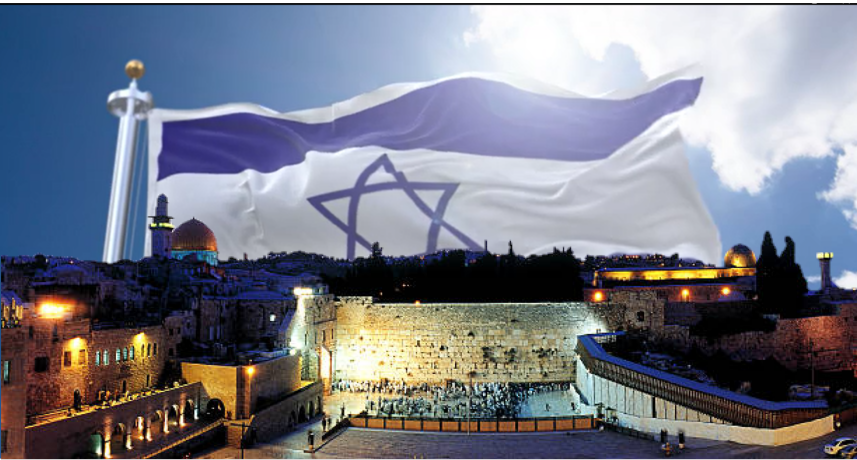
The Western (Wailing) Wall in Jerusalem I don’t know about you, but I felt challenged right from when I started writing this. But I could not find comfort in half measures. By the way, it’s intriguing to ponder why those hostile groups kept engaging with Yeshua despite their disagreements. They might have sensed a profound truth in His words, even when they felt challenged. What are your thoughts on this dynamic?
What an insightful and detailed account of early Christian history. It’s fascinating how these early disputes and decisions have such long-lasting effects. Now that you know what you know, how do you see these historical events influencing your view of Christianity? Maybe not.
Undoubtedly, the evolution of Christianity over centuries has led to significant shifts from its Judeo-Christian origins. This transformation can be seen in various aspects like theology, liturgy, and church governance.
The early church was deeply rooted in Jewish traditions and practices, with the first Christians being Jewish themselves. Over time, as the faith spread among Gentiles and encountered different cultures and philosophies, it naturally adapted and evolved. The councils we mentioned, such as Nicaea, Ephesus, and Chalcedon, played pivotal roles in shaping orthodox Christian doctrine, which further distanced the church from its Jewish roots.
Today, the vast array of denominative faith groups highlights this divergence. Despite these changes, many Messianic Christians still value and seek to understand the Jewish roots of their faith, recognizing the foundational influence of Judaism on Christianity.
It’s a complex and fascinating journey of transformation, adaptation, and sometimes, division. What’s your perspective on this ongoing evolution?
That is a thoughtful perspective. It is also true that many believers today are seeking more personal and intimate ways to practice their faith, often outside the traditional church settings. This shift toward a “church without walls” reflects a desire for a more personal connection with God and community, sometimes free from institutional constraints.
Jerusalem holds a profound significance for Christians, and it is heartening to see it becoming a focal point again. The city’s deep historical and spiritual roots offer a powerful reminder of the origins of the faith. The resurgence of interest in Jerusalem can serve as a unifying force, bringing believers closer to their shared heritage and fostering a deeper understanding of their faith’s foundations. In Zechariah chapter 14 it is written:
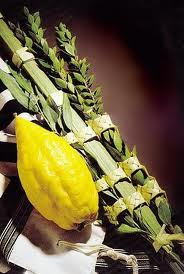
Sukkot Arba Minim
(Four Species) —Leviticus 23:40And it shall come to pass that everyone who is left of all the nations which came against Jerusalem shall go up from year to year to worship the King, the Lord of hosts, and to keep the Feast of Tabernacles. And it shall be that whichever of the families of the earth do not come up to Jerusalem to worship the King, the Lord of hosts, on them there will be no rain. . . In that day “HOLINESS TO THE LORD” shall be engraved on the bells of the horses . . In that day there shall no longer be a Canaanite in the house of the Lord of hosts.
—vv.16-21
The noun “Canaanite” refers to a resident or native of Canaan (כנען). Description: merchant, trafficker, traffickers. In this context, it represents an ancient principality under God’s judgment for orchestrating the greatest deception from antiquity (Isaiah 23; Ezekiel 27; Revelation 12:9; 13:14, 16). In Revelation chapter 2, the indictment is laid out in the letter that Yeshua instructed John to write specifically to “The Loveless Church” of Ephesus and “The Compromising Church” in Pergamos. The ancient Hellenistic city of Ephesus is located in western Turkey, near the modern-day towns of Selçuk and Kuşadası.
‘These things says He who holds the seven stars in His right hand, who walks in the midst of the seven golden lampstands: “I know your works, your labor, your patience, and that you cannot bear those who are evil. And you have tested those who say they are apostles and are not, and have found them liars; and you have persevered and have patience, and have labored for My name’s sake and have not become weary. Nevertheless I have this against you, that you have left your first love. Remember therefore from where you have fallen; repent and do the first works, or else I will come to you quickly and remove your lampstand from its place—unless you repent. But this you have, that you hate the deeds of the Nicolaitans, which I also hate.
—vv.1-6
God’s judgment always carries with it a footnote called “Nevertheless.” — It means there is still a chance to make things right. The mitigating factor is repentance (teshuvah תשובה), derived from the Hebrew verb shuv שוב, which means to return or to turn back. “God is waiting for each one of us to return to Him in teshuvah (repentance). When we do turn to Him, we find Him waiting with open arms to pour out His love, healing, and restoration freely upon us.” (Free Messianic Bible Project)
In Revelation chapters 2 and 3, the explicit command to “repent” (shuvu שובו) appears 10 times. It is a lifebuoy extended to the Loveless Church of Ephesus, the Compromising Church in Pergamos, the Corrupt Church in Thyatira, the Dead Church in Sardis, and the Lukewarm Church of the Laodiceans.
The Days of Awe (Yamim Noraim ימים נוראים) is a 10-day period usually referred to as the Jewish High Holy Days. It is a period of introspection that begins with Rosh Hashanah ראש השנה (New Year) and ends with Yom Kippur יום כפור (Day of Atonement). This period is traditionally marked to get right with God and our fellow man through repentance and asking for His forgiveness. It is not exclusive to Jews. It falls within the Biblical Fall (Winter) Feasts proclaimed by God as “His” holy convocations — “And the Lord spoke to Moses, saying, ‘…these are My feasts.’” (Leviticus 23:1-2).
Repentance gets us off a collision course with God’s judgment. Ellicott’s Commentary for English Readers rightly points out that although “the case of the Sardian Church was bad, a verse commencing with ‘But,’ or ‘Nevertheless,’” means God does not ignore the good by a remnant who cling to the truth and intercede for the corrupt community. The Lord acknowledged that there were “a few names even in Sardis who have not defiled their garments; and they shall walk with Me in white, for they are worthy.” (Revelation 3:4)
The key here is; “…and they shall walk with Me” (vitahalchu eti ויתהלכו אתי). It is a derivative of the directive, to “Go forth” (lech lecha לך-לך) that the LORD gave Abram: “Go from your country, And from your relatives And from your father’s house, To the land which I will show you…and I will bless you;” (Genesis 12:1-2 —NAS).
Later in chapter 17, the Lord appeared to Abram and said to him, “I am Almighty God; walk before Me and be blameless” (v.1). The Hebrew for “blameless” here is tamim תמים, with a numerical value of 490, symbolizing Adonai’s dispensation of total forgiveness. It is a prophetic multiple of Lamech’s “seventy-sevenfold” or Yeshua’s “seventy times seven” or Daniel’s “seventy-weeks” prophecy (Genesis 4:24; Matthew 18:21-22).
“Seventy weeks are determined For your people and for your holy city, To finish the transgression, To make an end of sins, To make reconciliation for iniquity, To bring in everlasting righteousness…” (Daniel 9:24).
I could almost feel as though the trumpet is signalling the mother of all Sabbaths to the Lord —a Shemitah (literally, release), a mega-jubilee (Leviticus 25:1–2,4-5,8,10). It is the Lord proclaiming a special appointed time of liberty (Isaiah 61:1; Luke 4:18).
If walking ‘with’ someone leaves no room for a frontal collision, then it cannot get any better than walking with the Lord, God Almighty. When Abram (later Abraham) walked according to the will of God, the Lord called him “Abraham My Friend” (Isaiah 41:8).
It is impossible to outrun the nefarious spirit of Antiochism and the consequences of its indoctrination. Nevertheless, God’s hand is always extended, reaching out to those who have lost “the Way” and are willing to retrace the original trail (2 Kings 6:5-6), to go, to walk, to come back home (halak הלך). —Revelation 2:4-5
This too calls for humility and reflection among those who feel relaxed with the concept of “saved by Grace.” The people at Shiloh thought they were serving God until disaster struck and harsh reality dawned on them. The prophet Jeremiah used the destruction of Shiloh as a warning to the people of his time, and as a symbol of what could happen to their nations if they chose to worship God “their way,” not according to “His Way” (Jeremiah 7:12-15; 7:14-24 —Bible Study Tools).
There is far much more to grace than is described from the Sunday pulpit. The first time grace (chen חן) appears in the entire Bible is in Genesis 6:8, about 52 generations before the cross. Grace is a companion to help those who are willing to respond to God’s directives to turn, and walk (halak הלך) towards the right way.
Antiochism clouds the vision and injects a dose of complacency; ‘as long as we are at church and helping the poor in the community, surely God must be happy.’ I have heard pastors tell their listeners that, “Under grace, we are not obligated to observe any of the Old Testament Feasts prescribed by Moses like the Jews do.” The Apostle Paul described such teaching as “a powerful delusion” (2 Thessalonians 2:10-12).
It is impossible to be half-pregnant: If you are going to have holy communion, also known as the Eucharist, it is directly connected to the Jewish Passover Seder and the Feast of Unleavened Bread (Luke 22:7-20). When you celebrate Easter, it is a replacement of Passover (Pesach פסח) at the First Council of Nicaea. Marking Pentecost is observing the Biblical Feast of Weeks (Shavuot שבועות). When you celebrate Christmas as the ‘birth of Jesus’ and light up the tree, that is a parallel with Hanukkah—the Festival of Lights (Feast of Dedication John 10:22). Remarkably Hanukkah 5785 came at the same time as Christmas 2024. Observing Sunday as a ‘day of rest’ every week is biblical Sabbath/Shabbat (Deuteronomy 5:12-15; Exodus 20:8-11).
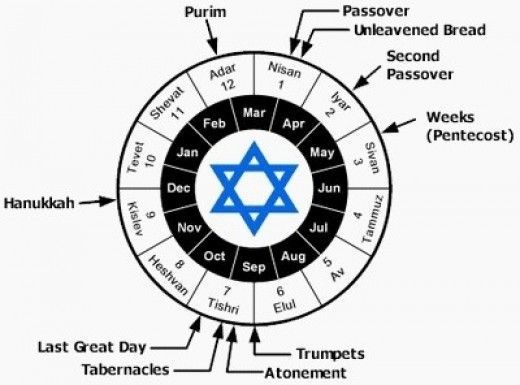
Leviticus 23: Major Biblical Feasts:
Passover; Unleavened Bread; Firstfruits; Pentecost; Trumpets; Day of Atonement (Yom Kippur)
—Image from: PinterestRemember, the same Lord instituted all seven of the annual appointed times (moadim מועדים): Passover, Unleavened Bread, Firstfruits, Pentecost, Trumpets/New Year, Day of Atonement, and Tabernacles. The Lord laid out in very clear terms how, when and where He expects His people to observe His Sabbaths and Feasts (Exodus 23; 34; Deuteronomy 16; Leviticus 23; 1 Kings 9:25). How we interpret God’s will can grant the adversary the legal right to get us indicted. Tacitly piecemealing the word of God is no lighter than defilement or contempt (Revelation 12:10; 1 Corinthians 5:7; Ezekiel 20:13; 22:8,26; 23:38).
Most Christians are taught that “legalistic burdens” such as the annual Feasts and Holidays, also known as appointed times (moadim מועדים), are a Judaism relic of the Mosaic law which has since been superseded by Grace. But how does that align with Jesus’ explicit directive saying, “Learn from me….” in Matthew 11:29? If it is important to Yeshua, then it is important for me as a follower of the Messiah. Yeshua routinely observed all of the above (Luke 2:41-43; 22:15). It suggests there may be a disconnect between common Christian teaching and Jesus’ own example and instructions. But that is a debate for another day.
When the Lord invites His people to feast with him, it has nothing to do with religion. He is saying, “these are My feasts.” (Leviticus 23:1). It is a time of refreshing and nourishment, with the Father bearing the cost. Also, it is worth clarifying that the Lord’s annual appointed times (moadim מועדים) are not exclusively prescribed for the Jews; it is for all those who are called by His name.
“Also the sons of the foreigner Who join themselves to the Lord, to serve Him, And to love the name of the Lord, to be His servants—Everyone who keeps from defiling the Sabbath, And holds fast My covenant—Even them I will bring to My holy mountain, And make them joyful in My house of prayer. Their burnt offerings and their sacrifices Will be accepted on My altar; For My house shall be called a house of prayer for all nations.” The Lord God, who gathers the outcasts of Israel, says, “Yet I will gather to him Others besides those who are gathered to him.”
—Isaiah 56:6-8
God promises a tremendous blessing to those who join the party at the annual festivals where He is the Host (Psalm 84:4-7; Isaiah 56:2). We are told God does not change, and so all His ways remain the same throughout all generations (Malachi 3:6; Hebrews 13:8; James 1:17).
Grace does not preclude God’s set times of refreshing. Any teaching contrary to that is Illustrative of adversarial posturing interfering with the Father’s passion to bless.
“Even the stork in the heavens Knows her appointed times; And the turtledove, the swift, and the swallow Observe the time of their coming. But My people do not know the judgment of the Lord.”
—Jeremiah 8:7
In the prayer that Yeshua taught His disciples, it says, “And forgive us our debts, as we also have forgiven our debtors” (Matthew 6:12 New International Version —NIV). It is built on the foundations of the seven-year Shemitah cycle, which accumulated in sets of seven (49 years) and culminated in The Year of Jubilee (Yovel יוֹבֵל). Crucially, the year of canceling debts arrives during the Festival of Tabernacles (Sukkot). Now you know; that every time you repeat what most Christians say is “the Lord’s Prayer”, you are also invoking an element of the ancient Levitical social justice policy on forgiveness of debt. But the Lord has much more than that in plan for you.
Sukkot (Feast of Tabernacles) is the weeklong festival, one of the three pilgrimage feasts—along with Passover and Shavuot (Weeks/Pentecost)—proclaimed by God in Leviticus 23:33-43. To those who believe that Yeshua (Jesus) will return, why would you not want to be part of a dress rehearsal, to prep for such a monumental event as the day of Messiah’s coming? How would you cope with the ramifications described by the prophet Zechariah 14:16-19 for failure to keep the Feast of Tabernacles when the King, the Lord of hosts, returns to Jerusalem?
The last book in the Brit Chadashah (Christian New Testament Bible) predicts a future where, “Behold, the tabernacle of God is among the people, and He will dwell among them, and they shall be His people, and God Himself will be among them” (Revelation 21:3 —NAS).
Thus says the Lord: “Nevertheless, I have this against you, that you have left your first love. Remember therefore from where you have fallen; repent and do the first works, or else I will come to you quickly and remove your lampstand from its place—unless you repent” (Revelation 2:4-5; 1 John 2:3-6, 19).
The ancient city of Pergamos (Pergamum) is located in the modern-day Turkish town of Bergama, in the İzmir province. On the acropolis of Pergamon stood the Temple of Zeus, also known as the Pergamon Altar built in the 2nd century BC. The remains of the Pergamon Altar were relocated to Germany in 1879, where they remain today in the Pergamon Museum in Berlin. (Hellenistic cities IV: Pergamon – Hellenistic History).
‘These things says He who has the sharp two-edged sword: “I know your works, and where you dwell, where Satan’s throne is. And you hold fast to My name, and did not deny My faith even in the days in which Antipas was My faithful martyr, who was killed among you, where Satan dwells. But I have a few things against you, because you have there those who hold the doctrine of Balaam, who taught Balak to put a stumbling block before the children of Israel, to eat things sacrificed to idols, and to commit sexual immorality. Thus you also have those who hold the doctrine of the Nicolaitans, which thing I hate. Repent, or else I will come to you quickly and will fight against them with the sword of My mouth.
—vv.12-16
Notice the ‘Nicolaitans’ are a faith sect inspired by the teaching of Saint Nicholas, a proselyte from Antioch (Acts 6:5). Antipas is widely believed to be a codename for Stephen, the martyr (v.7; Revelation 17:6).

“After School Satan Club” by The Satanic Temple
—Photo: I.N.F.O. for Families.In every generation God maintains a remnant, “whose knees have not bowed down to Baal and whose mouths have not kissed him.” (1 Kings 19:18; Joel 2:23)
Even though all six out of the seven prophetic churches in Revelation 2 and 3 were found guilty of something demanding God’s justice, The Lord would always look for a mitigating factor among them.
John wrote seven letters in total, all of them ending with this earnest warning: “He who has an ear, let him hear what the Spirit says to the churches….” This sounds quite similar to, “Here is wisdom. Let him who has understanding calculate the number of the beast, for it is the number of a man: His number is 666” (Revelation 13:18).
It’s an interesting journey to witness, and it will be fascinating to see how these trends continue to evolve. How do you see this influencing the global Christian community in the coming years?
Conclusion
The spirit realm is real and wields tremendous influence on the physical world we live in. From the Pergamon Museum in Berlin to the tourist hotspots cataloguing the ancient ruins of Antioch, and the seven churches in the Asian portion of Turkey—Ephesus, Smyrna, Pergamos, Thyatira, Sardis, Philadelphia, and Laodicea—this is not an autopsy. The patron principalities of Antiochism are a dinosaur still lumbering about the stunning scenery. The Bible is a history written in advance.
God’s people have a diet — it is called the “Truth,” from His Word (John 21:11; Revelation 12:6, 14). The Lord is invested in the welfare of His people because we represent His own image, His likeness. When God’s people suffer, it is His image that hurts, and it is His name that suffers reproach. Our primary part in this relationship is to just keep following and trusting the Lord by faith. We are a privileged family redeemed by the only legally acceptable sacrifice for sin since the fall —Messiah Yeshua.
We become prey when we stop following the Shepherd King who knows the way to safety (1 Peter 5:8). Deception is meant to strengthen us, not to discourage us from pursuing more of the truth. It is impossible to tell the difference unless you get to know the truth. Dedicate time to study scripture in your own space. When you trust someone else to dig the well for you, you will be helpless when they choose to muddy the waters. Pray for those who stand behind the pulpit. Pay no attention to what others say is trending. Every step of faith you walk towards the truth aligns with God’s will for you (Hebrews 10:7,9; Matthew 11:28). The promise is: “Come close to God and He will come close to you” (James 4:8 —NAS).
If you have tracked with me this far, congratulations! This promise of a royal seal from Adonai is yours too: “He who overcomes, I will make him a pillar in the temple of My God, . . . I will write on him the name of My God . . . And I will write on him My new name.” (Revelation 3:12)
Finally, guard against getting tangled up in information overload. There is more than enough in your Bible to teach you everything you need to know. My NKJV, is my only source. There are many great authors out there, but that is ‘their’ experience about God. What the Lord has for you is personal, and unique. Never concede to deception: Worship the Lord “His way,” and at the place and time of His choosing (2 Chronicles 7:16; Nehemiah 1:9). “And the God of peace will crush Satan under your feet shortly. The grace of our Lord Jesus Christ be with you. Amen” (Romans 16:20)
Glory to God!
Recommended:
- Deception (Part One)
- The Mystery of the Mustard Seed (Part One)
- The Mystery of the Mustard Seen (Part Two)
- The Mystery of the Mustard Seed (Part Three)
- Ehyeh
- “Time-and-times-and-half a time” = 3.5
-
Deceived (Part One)

In this episode we uncover some of the darkest angles of deception from a biblical perspective. Ironically, the title in the past tense suggests you are probably a victim already, or possibly know someone who has fallen for it (Revelation 12:9). The sobering experience is exactly why the scriptures warn; “Therefore let him who thinks he stands take heed lest he fall. No temptation has overtaken you except such as is common to man; but God is faithful, who will not allow you to be tempted beyond what you are able, but with the temptation will also make the way of escape, that you may be able to endure.” (1 Corinthians 10:12-13) —NKJV.
The deceiver doesn’t take time off because he doesn’t want victims to find that “way of escape.” That is about to change with the detective clues in the pages of your Bible.
Please note: Unless otherwise stated all scripture references in this article are quoted from the New King James Version (NKJV).
How?
Immediately most people think financial when referring to scams. But scammers manifest in many different ways and use multiple techniques to persuade anyone. People succumb to scams for a variety of reasons, including: Lack of awareness. The Bible synonymously points to “lack of knowledge”, and “rejection of knowledge” (Hosea 4:6).

Nearly 2500 years ago the prophet Daniel foresaw the apex of the information age we live in today (Daniel 12:4). On average, most people who fall victim to common scam techniques at least have some experience with technology. The excuse of ignorance increasingly weighs much less than rejection. Some people are naturally resistant to change —they prefer the status quo for as long as it takes. You have to pry someone out of their comfort zone before administering the change pill, which comes at a cost.
Those who embrace technology effortlessly can also become easy target for clickbait web links. It does exactly what it says on the tin —Some people fall for phishing attacks because they are quick to click eye-catching links when perusing through the emails they receive. Some users get their systems compromised for failure to follow basic data safety and security instructions laid out by their service providers.
Overconfidence, is another reason why some people fall into familiar scams. Just when you thought you are smarter than the scammer on the line, they get in by the guard of humility you just let down. So often we reflect at the series of warning signs we have missed only when it is too late. Make no mistake, the adversary has no problem keeping your mind convoluted (2 Thessalonians 2:10-12).
Then, there is social engineering and cognitive biases. A quick Google search describes scammers using social engineering tactics to create “a facade of trustworthiness and make it difficult to distinguish between genuine and fraudulent offers.” That is how the world’s first family fell (Genesis 3:1-6).

This is a politically volatile climate which evolved hyperbolically and became a tiger no one can control. I am not sure if we can afford to remain apolitical at this moment in time. I remember during that highly charged campaign period leading up to the 2024 U.S Presidential elections, social media pundits colloquially used the term ‘gaslighting’ —They meant ubiquitous political manipulation powered by the main stream media (aka, MSM) —Potential voters being told constantly that they cannot be trusted by the choices they intend to make. Or, that ‘your eyes are lying to you; there is nothing to see here . . . you need protection from yourself, and I (the gaslighter) am your best hope.’
Who?
The Bible provides a clear explanation about the origins of deception, why we are the target, and most importantly, how to prevail.
In Genesis 3:13 the woman (Eve) in her defence following violation of God’s dietary restrictions told the LORD God, that “The serpent deceived me, and I ate.” The Hebrew root word used to describe the deception inflicted on Eve is nasha’ (נשא), with a numerical value of 351, reducing to (3+5+1=9).
Not only every Hebrew letter has this duality of meaning and purpose; but it is also alphanumerical. In the Tanakh/Tanach (Chistian Old Testament Bible), the fourth book is called “Numbers” with 36 chapters. Three plus six equals nine. We are frequently going to crunch through some interesting numbers here to help us get that extra bit on context. “God encoded His Word with layers of meaning so that those who seek Him can find treasures of wisdom, hope, and redemption.” (Hananya Naftali —The Secrets of The Bible).
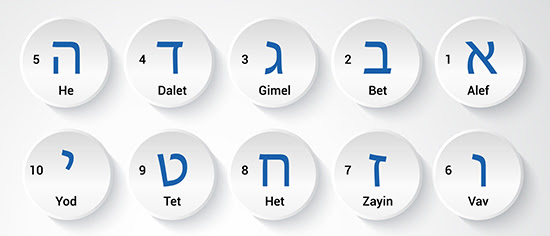
Hebrew Letters—Courtesy: Free Messianic Bible Project Tet (ט), is the ninth Hebrew letter in the Alef Bet (alphabet). Numerical value of nine. Pictographic meaning of a basket, good/evil, snake (serpent), surround (coil), twist.
The deceiver from the familiar story of Genesis 3:13 is identified by the Hebrew noun nachash נחש. Definition: serpent, snake, or image (of serpent); to lead astray that is (mentally) to delude or (morally) to seduce, to beguile, to deceive (Brown-Driver-Briggs Hebrew Definitions—Webster Concordance).
In the Brit-Hakhadasha (Christian New Testament Bible), the deceiver is chillingly described as, “the great dragon…, that serpent of old, called the Devil and Satan, who deceives the whole world.” (Revelation 12:9)
In the Gospel of John chapter eight, Yeshua (Jesus) describes Satan’s character as follows: “He was a murderer from the beginning, and does not stand in the truth, because there is no truth in him. When he speaks a lie, he speaks from his own resources, for he is a liar and the father of it.” (v.44)
Even though there is no truth in Satan, he has exceptional recognition of ‘the truth’ that lives outside of him.
Now the serpent was more cunning than any beast of the field which the Lord God had made. And he said to the woman, “Has God indeed said, ‘You shall not eat of every tree of the garden’?”
—Genesis 3:1
Ironically, adding a question mark (?) to a straightforward directive is what Satan did to twist Eve’s perception of truth, and precipitate a chain of events that led man (Hebrew adam אדם) to the fall!
The Hebrew root word for ‘truth’ is emeth (אמת), with a numerical value of 441, reducing to (4+4+1=9). Nine is exactly the same number aligned with the deception nasha’ (נשא) that got man into trouble in Genesis 3:13. Simultaneously, the Hebrew for man, adam (אדם) incorporates both male and female (Genesis 1:27). It has a numerical value of 45, also reducing to (4+5=9). We will revisit that duality of good/evil unfolding sometime later.
Why?
Thus far, we know the identity of the perpetrator and some of the key technics deployed in the tradecraft of deception. It is now time to study and understand why we, the people, are the target. Consider this solemn alert:
“Be sober, be vigilant; because your adversary the devil walks about like a roaring lion, seeking whom he may devour.”
—1 Peter 5:8
I know; there are quite a few metaphorical variables here. Picture some ‘devil walking about like a roaring lion . . .’ One of the greatest ploys the gaslighter has ever pulled on God’s people is plausible deniability —making victims believe that the mythical devil doesn’t exist; ‘there is nothing to see here . . .’

Electrically charged ions Scientists say the “atom” is the basic building block of matter, which is actually made up of many far smaller (subatomic) particles. Not only that, we are told the atom is vastly dominated by empty space, and solidity is only possible by the multitudes of those unstable electrically charged ions inside. They are invisible to the naked eye, yet their impact on life is irrefutable! It is a sobering reality of two worlds in coexistence; with the invisible realm understanding a lot more about the physical realm we live in than the other way around.
In Genesis, we are told God created man (adam אדם) in His image (likeness) and gave them dominion over everything in all the earth He created. “Then God blessed them, and God said to them, ‘Be fruitful and multiply; fill the earth and subdue it…’” (vv.26-28).
Man’s privileged status in the physical realm from the foundations of the world is the primary reason why we also became the principal target of the adversary. The other reason is revenge.
So the great dragon was cast out, that serpent of old, called the Devil and Satan, who deceives the whole world; he was cast to the earth, and his angels were cast out with him.
Then I heard a loud voice saying in heaven, “Now salvation, and strength, and the kingdom of our God, and the power of His Christ have come, for the accuser of our brethren, who accused them before our God day and night, has been cast down. . . Therefore rejoice, O heavens, and you who dwell in them! Woe to the inhabitants of the earth and the sea! For the devil has come down to you, having great wrath, because he knows that he has a short time.”
—Revelation 12:9-12
For the scope of this article, we are not going to dig deeper into the reasons why Satan and his angelic accomplices were evicted from God’s presence in heaven (Ezekiel 28:11-19; Isaiah 14:3-17).
Because the Devil is incapable of a direct confrontation with the Almighty, he takes it out on the softer target, God’s image invested in His people on earth. That is exactly why scriptures encourage us to be equipped and ready. The adversary is real, and we have been warned about his capabilities. But we also know he cannot ‘devour’ at will —he relies on the potential victim’s pliability, and ignorance of what the scripture say is ‘true’ and tested. Deception does not travel perpendicular to the truth —the gaslighter operates in parallel to the truth (Genesis 3:1,4,5,7; Matthew 4:3,6).
Defence Strategy
How do you fight against someone, or something you have been told does not even exist? Well, it is written;
For our struggle is not against flesh and blood, but against the rulers, against the powers, against the world forces of this darkness, against the spiritual forces of wickedness in the heavenly places.
—Ephesians 6:12 (New American Standard Bible —NAS)
It isn’t about science fiction cosmic adventures. The unseen realm is a reality and wields enormous influence in the physical world where we live. Trivializing the situation is a very dangerous game to play. The adversary exploits our misconception of this reality to violate our rights. Satan, a derivative of the Hebrew root, satan שׂטן is a ‘role’. Definition: to attack, accuse; (be an) adversary; to be or act as an adversary, resist, oppose (Brown-Driver-Briggs Hebrew Definitions).
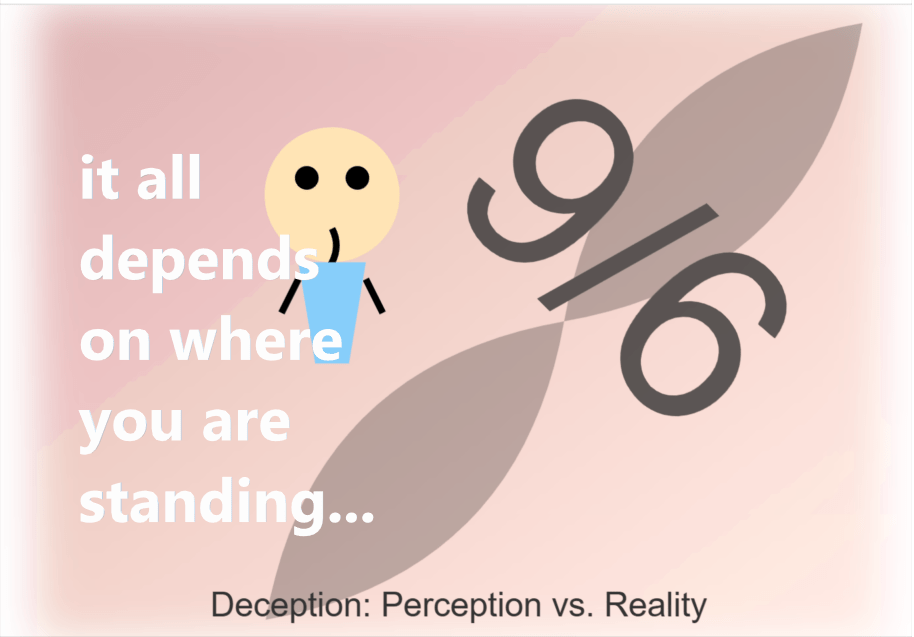
Satan accomplishes his task by the ‘book’. He is a legalist who inverts the truth, then drags those who fall for it to court. The conflict does not happen on the physical battlefield. The prosecuting attorney must present ‘evidence’ first (Revelation 12:10). That sounds like a conspiracy theory. But that is a debate for another day. All we know is that God is a ‘Just Judge’ (Deuteronomy 32:4), and we are not without help:
But with righteousness He shall judge the poor, And decide with equity for the meek of the earth;
—Isaiah 11:4
It is easy to win the battle against deception when we grasp the protocol in the unseen realm first. Because the spirit realm operates at a lightning-fast pace, it is almost impossible to stop the inevitable in the natural once the verdict has been rendered. But even in the middle of God’s judgment, He promises help (Matthew 11:28; Luke 18:7-8; Isaiah 33:22; 43:1-3).
Invisible is the first thing faith has in common with deception. But faith is the primary tool we need to mount a successful defense (Ephesians 6:16). It is faith in God’s enduring promises that can save the day when you have exhausted all other means of resistance against the devil’s relentless assault (1 Peter 5:8; 1 Thessalonians 5:21; 1 Corinthians 15:57).
The Apostle Paul, in the letter to the Ephesians, listed six more prerequisites to build what he called “The Whole Armor of God,” including: ‘truth, righteousness,’ willingness to testify, or to share the good news about ‘the gospel of peace, the helmet of salvation’ (be sober, be vigilant), ‘the sword of the Spirit, which is the word of God; and praying always with all prayer and supplication in the Spirit, being watchful to this end with all perseverance and supplication for all the saints (intercession).’ (Ephesians 6:10-20)
Even though humans live in the physical realm, we are embodied spirits equipped with access to the spirit realm by means of prayer (Hebrews 12:22-24).
For though we walk in the flesh [as mortal men], we are not carrying on our [spiritual] warfare according to the flesh and using the weapons of man. The weapons of our warfare are not physical [weapons of flesh and blood]. Our weapons are divinely powerful for the destruction of fortresses. We are destroying sophisticated arguments and every exalted and proud thing that sets itself up against the [true] knowledge of God, and we are taking every thought and purpose captive to the obedience of Christ, being ready to punish every act of disobedience, when your own obedience [as a church] is complete.
—2 Corinthians 10:3-6 (Amplified Bible —AMP).
Nothing frustrates Satan’s efforts like the lethal combination of embracing the Truth, Knowledge of God, and Obedience to the Word of God.
Knowledge About God vs. Knowledge of God

“Seek and you will find” —Matthew 7:7 The Hebrew rendering of knowledge comes from the root, Yada (ידע). Definition: to know, to perceive and see, find out and discern, be acquainted with, to make oneself known, reveal oneself…; (Brown-Driver-Briggs Hebrew Definitions).
Yeshua (Jesus) told His disciples that, “No one knows the Son except the Father. Nor does anyone know the Father except the Son, and the one to whom the Son wills to reveal Him.” (Matthew 11:27). His followers wrestled with the mystery until Yeshua made that bold declaration; “I and My Father are one.” (John 10:30). That claim didn’t go down well with His audience in Judea who accused him of “blasphemy” and began to threaten his life (vv.31-39).
Among the sceptics were distinguished teachers of the law, scholars and scribes who were probably familiar with the sacred Shema— “Hear, O Israel: The Lord our God, the Lord is one…” (Deuteronomy 6:5).
Up until the last moment of His earthly ministry, Yeshua used every opportunity of privacy with His disciples teaching, and revealing to them who scriptures say He is and His relationship with the ‘Father’.
“If you had known Me, you would have known My Father also; and from now on you know Him and have seen Him. . . He who has seen Me has seen the Father;”
—John 14:7,9
In that chapter fourteen alone of John’s Gospel the references to “My Father” or “the Father” appear 25 times in 31 verses. Perhaps Verse 6 is one of the most memorable among Messianic believers. Yeshua told Thomas, “I am the way, the truth, and the life. No one comes to the Father except through Me.”
Messiah Yeshua also prayed for his followers to move beyond rituals and intellectual accumulation of knowledge about God, to a revelation of intimacy with God.
“I do not pray for these alone, but also for those who will believe in Me through their word; that they all may be one, as You, Father, are in Me, and I in You; that they also may be one in Us, that the world may believe that You sent Me. And the glory which You gave Me I have given them, that they may be one just as We are one: I in them, and You in Me; that they may be made perfect in one, and that the world may know that You have sent Me, and have loved them as You have loved Me.”
—John 17:20-23
That oneness, unity in purpose of knowing God, and serving Him intimately is what the Apostle Paul seeks to highlight in 2 Corinthians 10:3-6 (AMP) as worth fighting for. Unfortunately, alongside plausible deniability, a watertight alibi, comical characterization, gaslighting, etc., ‘divisiveness’ is another of Satan’s most potent tools against God’s people.
Statistics from 2021/22 by the Pew Research Centre and The International Bulletin of Mission Research estimate over 46,000 faith groups around the world, all of which identify as “Christian” —a cataclysmic contrast with where Yeshua left his church (Matthew 16:18; Acts 1:14).

I was shocked one evening during a corporate Bible study, hearing the speaker saying, “Even Jesus’ prayer of unity for the church remain unanswered!” You guessed correctly, the subject of the session was, “Unanswered Prayer.” We were all reading from the ‘official’ New International Version (NIV). I am still waiting for clarification whether this promise from John 14:14 was incorrectly credited to Yeshua (Jesus):” You may ask me for anything in my name, and I will do it.”
His Name
The last book of the Brit-Hakhadasha (Christian New Testament Bible) is introduced as the Revelation of Messiah Yeshua to show His ‘servants’ (the church) things that must happen very soon (Revelation 1:1). Prophetically, that penultimate period of awaiting His return (3:11; 22:7; 22:12; 22:20) is generally known as the ‘Last Days, or End of Days’ (Acharit-HaYamim אחרית הימים).
Yeshua promised “The Faithful Church” through the letter He instructed John to write; “I have set before you an open door, and no one can shut it;” The reward is for keeping “My word, and have not denied My name…” (Revelation 3:8).
Also, the church is commanded to “Hold fast what you have… (the truth), that no one may take your crown” (v.11).
I spent many hours analyzing the next segment and the scales gradually fell off. I have also prayed the same prayer Paul prayed for the church in Ephesus: “that the God of our Lord Jesus Christ, the Father of glory, may give to you the spirit of wisdom and revelation in the knowledge of Him, the eyes of your understanding being enlightened” (Ephesians 1:17-18).
He who overcomes, I will make him a pillar in the temple of My God, and he shall go out no more. I will write on him the name of My God and the name of the city of My God, the New Jerusalem, which comes down out of heaven from My God. And I will write on him My new name.
—Revelation 3:12
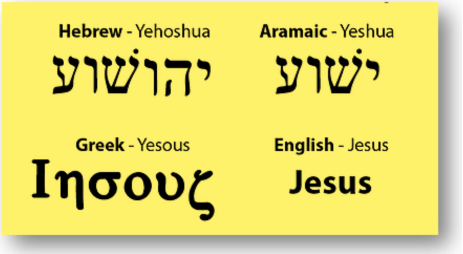
So, what is that “new name” Messiah Yeshua has prepared for His overcoming church? The anticipation is palpable—I can feel it too. But before we get there, let us pause a little on the following poetic words of encouragement.
God gets glory from concealing things; kings get glory from investigating things.
—Proverbs 25:2, 28, 3 (Complete Jewish Bible —CJB)
“Things which are hidden belong to Adonai our God. But the things that have been revealed belong to us and our children forever, so that we can observe all the words of this Torah (law)”.
—Deuteronomy 29:28 (CJB)
“‘Call to Me and I will answer you, and I will tell you great and mighty things, which you do not know.’”
—Jeremiah 33:3 (NAS)
Like they say, ‘without further ado,’ let us get into it: ‘Call to me’ simply means ‘pray.’ God’s promise to ‘answer’ prayer has no expiry date. The next time you hear someone ‘teach’ about the subject of ‘unanswered prayer,’ check context and evaluate their claims with what God’s Word says is “true.”
To those who walk according to God’s ways He promised, “It shall come to pass That before they call, I will answer; And while they are still speaking, I will hear.” (Isaia 65:24). And to those who walk according to another way, “You crave what you do not have; you kill and covet, but are unable to obtain it. You quarrel and fight. You do not have, because you do not ask. And when you do ask, you do not receive, because you ask with wrong motives, that you may squander it on your pleasures.” (James 4:2-3 —Berean Standard Bible)
God’s enduring love for His people throughout generations is tried and tested; the Father is more than willing to reveal even the deepest secrets on His heart to those whose desire is to draw close to Him intimately.
When God sees us, He does not see what the adversary wants to portray—instead, the Father sees a reflection of His image invested in His people right from the foundations of the world. Man’s tragic fall in Genesis 3, followed by the devastating judgment, has since been addressed by what Yeshua accomplished on the cross (Hebrews 9:15; 12:24). When we put our trust in Yeshua who knows ‘the way,’ the legal impediment through the doorway to the Father’s estate no longer applies (Genesis 3:23-24; Hebrews 4:15-16; Revelation 3:8).
In Ecclesiastes 1:9-10, we are told, “there is nothing new under the sun… It has already been in ancient times before us.” —In other words, everything we have been experiencing so far is a dress rehearsal… We are on a pilgrimage. But before the last ship leaves port, Yeshua identified the need for that special guest tag—His own “new name.”
The numerical value of that phrase “My new name” (Shemi Chadash שמי החדש) equals 667. Six hundred and sixty-seven is the number of “the sons of Adonikam” registered in Nehemiah 7:18. They were among the exiles who returned to Jerusalem from Babylon.

We are not drawing any conclusions yet on Adonikam; but the number 677 is the same numerical value of Yeshua’s statement, “Your Word is Truth” (דברך אמת) during prayer for His church in John 17:17. It reduces to (6+6+7=19)
The nineteenth Hebrew letter kuf/quf (ק) has a pictographic meaning of the sun on the horizon (sunrise or sundown), symbolizing “where the light is concentrated at this point, while the rest of the sky is dark” (—minimannamoments.com); imitation (of God or enemy). The numerical value of kuf equals 100, which reduces to (1+0+0=1). Yeshua said He is the First (1), and the Last (22). The “Amen, the Faithful and True Witness, the Beginning of the creation of God.” (Revelation 3:14, NKJV)
Adonikam (אדניקם), recorded in Nehemiah 7:18, was one of the heads of the fathers’ houses who returned with Ezra. Some rabbis teach that Adonikam means, “my Lord has issued a decree.” In this context, the “decree” is prophetically aligned with the Persian king Cyrus authorizing Jewish exiles in Babylon to return to Jerusalem and build the Second Temple (Ezra 1). Others remotely associate this with the “Law” because (6+6+7=19); where (1+9=10) points to the Ten Commandments given on two stone tablets in Exodus 20. Is honouring God’s commandments what Yeshua meant when appraising and rewarding His “Faithful Church” in Revelation 3:8, 10, 11; 12:17?
There is more… In Ezra 2:13, Adonikam is registered with a family of 666 members. I know, ‘six hundred and sixty-six’ tops the list on the conspiracy theorists’ script. That is the same suspect number attributed to the beast of Revelation 13:18. In Greek, it is “the number of man.” The Apostle Paul spotlights that in 2 Corinthians 11:14, where he describes Satan (the beast) as disguising himself as “an angel of light.”
We know the opposite side of light is darkness. That reminds me of the characteristics of the 19th Hebrew letter kuf/quf (ק) —Pictographic meaning: sun on the horizon (sunrise or sundown), where the light is concentrated at a certain point, while the other side is dark.
I am not into conspiracy theories, yet somehow, I just couldn’t get over something about the last part of the name Adonikam אדניקם. So, I looked it up: קֻם/קוּם (qum); to rise up or stand; to arise (hostile sense); to “get up!” (Joshua 7:10,13). Other figurative applications include: be dim, enemy (Lexicon: Strong’s H6965 – qûm).
Like many things Hebrew, there is always a duality dilemma to contend with lurking somewhere. But once you have been to Proverbs 25:2 and Jeremiah 33:2, nothing can stop you from trying to solve the puzzle. And that brings us to the second definition of Adonikam: “my lord arose” or “lord of rising.” From אָדוֹן (adon, lord) and קוּם (qum, to rise up). Many would innocently associate that with ‘Adonai our God.’ But there are many counterfeit ‘lords’ or ‘masters’ out there who demand a degree of worship and admiration. The margin of error leading to idolatry is very slim (Deuteronomy 17:3).
In the Tanakh, the Lord God constantly rebukes ancient Israel for pagan worship of the host of heaven; particularly, the sun god Baal and Asherah (Zephaniah 1:4-5; 2 Kings 17:13-18).
Is that some sort of indictment on Adonikam (אדניקם)? Not until we’ve examined all the evidence. All I can say for now is that the discrepancy between Nehemiah’s 667 and Ezra’s 666 record of Adonikamites is no error; the scribe simply excluded the ‘clan chief’ in the preliminary tallying. Four chapters later, Ezra reports a secondary surge of Adonikam’s clan returning with the second wave of exiles totaling 63 males, including his three sons—Eliphelet, Jeiel, and Shemaiah (Ezra 8:13).
Do you see what I see…? The detail of 63 males reduces to (6+3=9); the same numerical value we saw earlier referring to ‘truth’ is emeth (אמת), and man, adam (אדם).
And what do the names of Adonikam’s three sons have in common? They all have a reference to God: Eliphelet (אליפלט) means “God of deliverance,” Jeiel (יעיאל) means “God sweeps away,” and Shemaiah (שמעיה) means “Jah has heard.”
I believe there is far much more to that than identity or tradition—it is a ‘sign’ of affection and worship. It is their way of expressing intimacy with the LORD, God the Father, who cares about every detail of His people’s lives.
Everyone who is called by My name, And whom I have created for My glory, Whom I have formed, even whom I have made.”
—Isaiah 43:7 (NAS)
So, what is His “Name?”
To wrap this up, let us return to Yeshua’s promise to His ‘Faithful Church” in Revelation 3:12 — “He who overcomes . . ., I will write on him the name of My God and the name of the city of My God, the New Jerusalem, . . . And I will write on him My new name.”
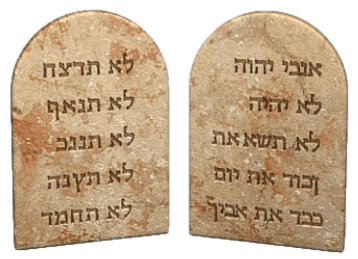
Image of the ten commandments
on two stone tablets —Deuteronomy 5:22The key word here is “write.” If we go by the law of first mentioned, ‘write’ (inscribe, engrave; to register) kathab כתב appears over 200 times in the Tanakh (OT). The majority of the first occurrences refer to God Himself writing the Ten Commandments on the a pair of stone tablets (Deuteronomy 10:1-2), and later instructing Moses and the priests to write down His laws for the people (Exodus 17:14; 34:1; 34:27).
The word of God is not static. As infant Israel continued to grow, the Lord’s emphasis on the concept of ‘write’ and ‘teach’ shifted to a whole new meaning:
“And these words which I command you today shall be in your heart. . . You shall bind them as a sign on your hand, and they shall be as frontlets between your eyes. You shall write them on the doorposts of your house and on your gates.” (Deuteronomy 6:6, 8-9; 11:18-20).
The escalation here is steadily moving from outside influence to learning by revelation.
My son, keep my words
And treasure my commandments within you [so they are readily available to guide you].
Keep my commandments and live,
And keep my teaching and law as the apple of your eye.
Bind them [securely] on your fingers;
Write them on the tablet of your heart.—Proverbs 7:1-3 (AMP).
The Jewish First Church Apostle Paul demonstrated that everything true about the Brit-Hakhadasha (Christian NT Bible) can be verified from the Tanakh (OT). And everything new about the NT is subject to “Test all things…” (1 Thessalonians 5:19-21).
Nearly 650 years before Paul came on the scene, the Lord inspired the OT prophet Jeremiah to record His plans concerning these times (Acharit-HaYamim אחרית הימים).
“Behold, the days are coming, says the Lord, when I will make a new covenant with the house of Israel and with the house of Judah— not according to the covenant that I made with their fathers in the day that I took them by the hand to lead them out of the land of Egypt, My covenant which they broke, though I was a husband to them, says the Lord. But this is the covenant that I will make with the house of Israel after those days, says the Lord: I will put My law in their minds, and write it on their hearts; and I will be their God, and they shall be My people. No more shall every man teach his neighbor, and every man his brother, saying, ‘Know the Lord,’ for they all shall know Me, from the least of them to the greatest of them, says the Lord. For I will forgive their iniquity, and their sin I will remember no more.”
—Jeremiah 31:31-34
Just in that excerpt alone, the Lord repeats the phrase “I will” six times alongside “My law,” “My covenant,” and “My people.” This follows an intense period of frustration with false prophets, teachers, and shepherds (pastors) accused of ignoring the Lord’s counsel and causing the sheep (God’s people) to err (Jeremiah 23:13, 32).
Despite the Lord’s persistent plea and warning of impending judgment, the errant prophets failed to turn. They had switched allegiance elsewhere irredeemably. — “Indeed they are prophets of the deceit of their own heart, who try to make My people forget My name by their dreams which everyone tells his neighbor, as their fathers forgot My name for Baal.” (Jeremiah 23:26-27)
Against that background, God decided to change strategy: First, the Lord would deliver His sheep from deception and shepherd them Himself. Second, the Lord would betroth His people, legally decouple them from their deceptive oppressor, and become their everlasting protection (Ezekiel 34:11-12, 17; John 10:14-16, 26-30).
“It shall come about in that day,” says the LORD,
“That you will call Me Ishi (my husband)
And will no longer call Me Baali (my Baal).
“For I will remove the names of the Baals from her mouth,
So that they will no longer be mentioned or remembered by their names.—Hosea 2:16-17 (AMP)
In Hosea chapter two alone, the phrase “in that day” appears three times. The Hebrew preposition there is vaiyom (ביום). It has a numerical value of 58, reducing to 13.
The other hint of interest is from Isaiah saying:
Therefore, My people shall know My name; therefore on that day I am the one who is speaking, ‘Here I am.’”
—56:2 (NAS)
“In” indicates a period of time, while “on” more precisely describes dates and days of the week. For example, “in 2028” and “on Monday”. Both Hosea and Isaiah were pointing towards “things which must shortly take place” (Revelation 1:1). It is a period of time generally known as the ‘Last Days’ or ‘End of Days’ (Acharit-HaYamim אחרית הימים). Numerical value equals 724, which also reduces to 13, matching vaiyom (ביום).
Other versions say, “my people will know my name”; where both “shall” and “will” express intent and determination of the verb “to know”, Hebrew root word yada (ידע). In this context, the chemistry goes beyond acknowledgement of acquaintance; it is a marriage relationship with “the Lamb”, which is also Yeshua’s Messianic title (Revelation 21:9).
In a perfect marriage relationship, the adversary will have to go through the husband to harm his wife and children. Even so, there are some exceptions. But with God, it goes beyond that; because it is all about His own image at stake (Zechariah 2:8; Isaiah 43:3-4; John 3:16).
The Hebrew ishi אישי (my husband/master) has a numerical value of 321, reducing to (3+2+1=6). Why is that a big deal? In Genesis (B’resheet) chapter one, God concluded His creation work on day six. “Then God saw everything that He had made, and indeed it was very good.” (v.31). God declared that man (adam אדם) represents His own image, after God’s likeness (v.26). The numerical value of adam אדם is 45, reducing to (4+5=9).
To unmask the adversary, we are commanded to “calculate the number of the beast, for it is the number of a man: His number is 666.” That reduces to (6+6+6=18). Eighteenth Hebrew letter is tsade/tzaddik (צ) with a numerical value of 90. Ninety reduces to (9+0=9), the same number of the Hebrew word, emet אמת (Truth). Yeshua said He is “the way, the truth and the life.” (John 14:6). Satan is preoccupied by inverting ‘truth’ to false; flipping 9 over the head and convince his audience that it is 6 (Isaiah 5:20).
There is absolutely nothing wrong with numbers until Satan chooses to use any of them for nefarious purposes. “Here is wisdom. Let him who has understanding calculate the number of the beast…” (Revelation 13:18).
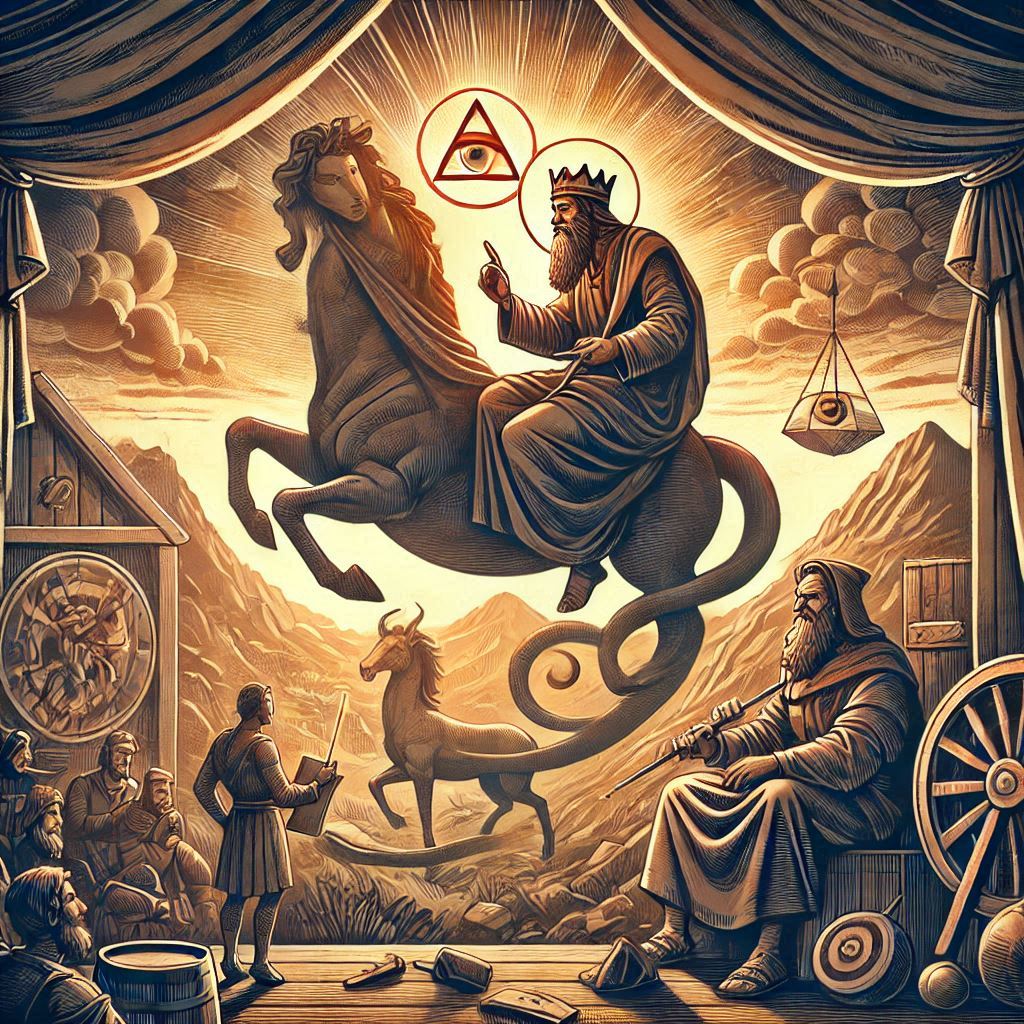
Illustration of the theme of deception and truth from the Bible What have you been told about the infamous 666? It is really not as advertised. The Hebrew root for “understanding” is biyn בין. Definition: to discern, understand, consider; to perceive, know (with the mind), to observe, mark, give heed to, distinguish; to have discernment, insight, intelligence, be discreet or attentive, consider diligently; to teach, instruct, be prudent, regard (Blue Letter Bible Lexicon: Strong’s H995; Proverbs 1:2-5).
Literally, 666 has nothing to do with your credit card, microchip implants, or tattoos at strategic places. It is not about digital currency or bio-robotics. Here is the contrast:
“Then I saw another beast coming up out of the earth, . . . and causes the earth and those who dwell in it to “worship” the first beast, . . . And he deceives those who dwell on the earth by those signs which he was granted to do in the sight of the beast, telling those who dwell on the earth to make an image to the beast who was wounded by the sword and lived. He was granted power to give breath to the image of the beast, that the image of the beast should both speak and cause as many as would not worship the image of the beast to be killed. He causes all, both small and great, rich and poor, free and slave, to receive a mark on their right hand or on their foreheads, and that no one may buy or sell except one who has the mark or the name of the beast, or the number of his name.”
—Revelation 13:11-17
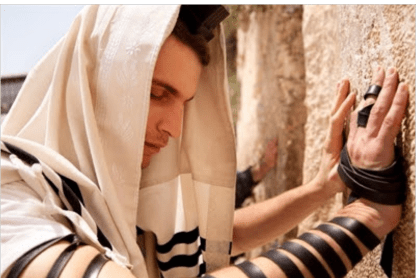
A Jewish man recites morning prayers
wearing tefillin on his hand and a tallit on his head
—courtesy: Free Messianic Bible ProjectIt is all about worship dynamics influencing the natural realm. The couple traditionally exchange rings (mark/sign) at a wedding to symbolize covenant commitment and love. That is usually backed by the symbolic changing of one’s family name after marriage. The choice of who or what you worship determines your identity in the spirit realm (Hosea 2:16, 17, 23; Revelation 3:12). When you commit your heart, mind, and soul to the God, He will write His word on the tablets of your heart (Deuteronomy 6:6-9; 10:1-5; Hebrews 10:16).
Where the Bible mentions receiving a mark or a sign on “their right hand,” it is symbolic of the actions influenced by the content of the heart and the mind—a mark “on their forehead” (Revelation 13:16; 22:4; Galatians 5:19-21).
When Yeshua promised to write “the name of My God” on His Faithful Church, He was talking about the “Word of God,” the “Truth” (John 17:17).
In the “Lord’s Prayer” of John chapter seventeen, Yeshua prayed:
- “I have revealed Your name to the men whom You gave Me out of the world;” (v.6 —ASV)
- Holy Father, keep them in Your name, the name which You have given Me, (v.11 —ASV)
- While I was with them, I was keeping them in Your name, which You have given Me; (v.12 —ASV)
- And I have made Your name known to them, and will continue to make it known, so that the love with which You have loved Me may be in them [overwhelming their heart], and I [may be] in them.” (v.26 —AMP)
In the Gospel of John, chapter one, we are told; “In the beginning was the Word, and the Word was with God…” (v.1).
We know “the Word” is referring to Yeshua (Jesus): First, Yeshua is quoted praying, “And now You, Father, glorify Me together with Yourself, with the glory which I had with You before the world existed.” (John 17:5 —ASV)
Then in Revelation, Yeshua declares: “I am the Alpha and the Omega, the Beginning and the End, the First and the Last.” (Revelation 22:13)
Earlier, John had just experienced a vision of perhaps the most startling depiction of Yeshua’s return:
Now I saw heaven opened, and behold, a white horse. And He who sat on him was called Faithful and True, and in righteousness He judges and makes war. His eyes were like a flame of fire, and on His head were many crowns. He had a name written that no one knew except Himself. He was clothed with a robe dipped in blood, and His name is called The Word of God.
—Revelation 19:11-13
Scripture always interprets scripture. We are led into error simply by our inability to knock, seek, ask, study, pray, and understand the surface things. The adversary capitalizes on that to lead us deeper into the rabbit hole. “But the word is very near you, in your mouth and in your heart, that you may do it.” (Deuteronomy 30:14; John 13:17).
Even during the most challenging of circumstances, there is no change in the integrity of God’s word (Psalm 32; John 17:17).
Your ears shall hear a word behind you, saying,
“This is the way, walk in it,”
Whenever you turn to the right hand
Or whenever you turn to the left.—Isaiah 30:21
Yeshua said, “I am the way, the truth, and the life. No one comes to the Father except through Me.” (John 14:6)
In the Lord’s prayer for His church, Yeshua reminded God, “Your Word is Truth” (John 17:17). Why? It pleases God when we quote the “truth” in His Word back to Him. The Psalmist called that act of worship, “the high praises of God” —rômmâ רוממה. It is so exclusive that it appears only once in the whole Bible (Psalm 149:6 —NKJV).
Allow me to share one more thing that makes the Father’s heart glad: It is that moment when God’s wayward people finally correct their sense of navigation back to the right “way” (Genesis 17:1; Matthew 18:12; James 4:8). Moreover, “The Way” is where Yeshua left His church (Acts 24:14).
It is written that when Yeshua returns, He will lead a delegation of 144,000 saints who chose to stay the course:
Then I looked, and behold, a Lamb standing on Mount Zion, and with Him one hundred and forty-four thousand, having His Father’s name written on their foreheads . . . These are the ones who follow the Lamb wherever He goes . . . Here is the patience of the saints; here are those who keep the commandments of God and the faith of Jesus.
—Revelation 14:1,4,12
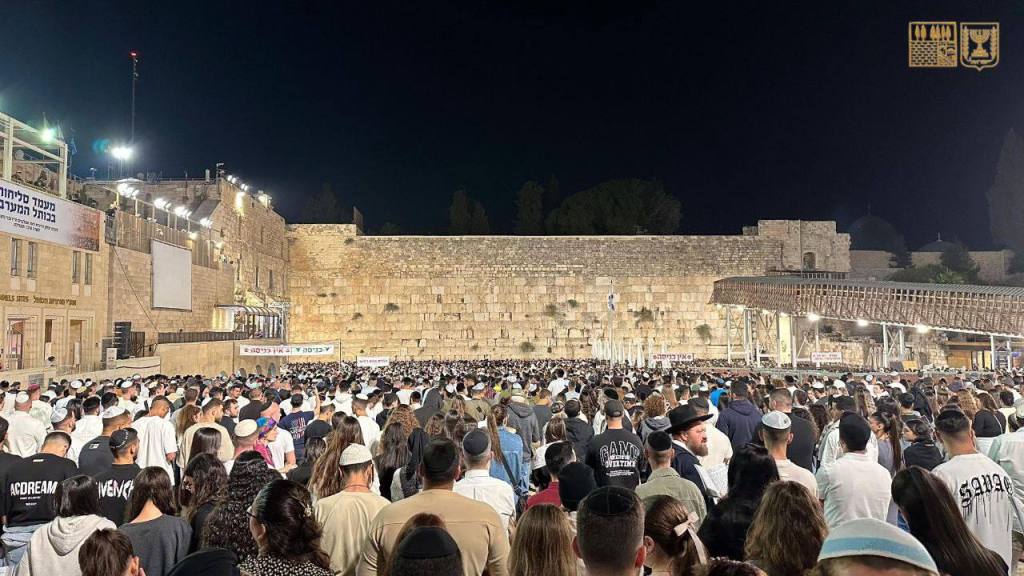
Worshipers at the Western Wall Plaza – Photo credit: The Western Wall Heritage Foundation
We will continue in Part Two of this journey by unpacking more prophetic markers connected to the number nine and digesting what emerges from that. Finally, we will revisit the Judeo-Christian roots on which the early church was built. Then, we will see from the Brit Chadashah (New Testament) how fault lines developed between Jewish believers and their Gentile brethren at Hellenistic Antioch of Syria. Finally, we respond to what, according to the NT book of Revelation, is the express need of the hour: “He who has an ear, let him hear what the Spirit says to the churches.” To ‘turn’ (vv. 2:5,7,16,21-22).
-
The Mystery of the Mustard Seed—Part Three
When the Seed Went Nuclear

Welcome back. In the first and second segments of this three-part article we were introduced to the symbolism of biblical parables, and why Messiah Yeshua (Jesus) used them effectively in His teachings. We traced the origins of man’s relationship with ‘Seed’, the nefarious bearer of ‘seed’, and where the mustard fits in. Through ancient Hebrew definitions, word pictures and basic arithmetic notations, we now have a better understanding of how certain biblical events and characters linked to this story transpired, and what it means to us today. In this final segment we will continue where we left off in Part Two, looking at a broader and enduring application of “grace”. Finally we will end the series by analyzing the scientific relationship and prophetic implications behind the “Parable of the Mustard Seed.”
Grace and the Seed
In Part Two we found Genesis chapter 6 verse 8 where the noun ‘grace’ appears for the first time in the Bible —“But Noah found grace in the eyes of the LORD.” Hebrew Definition of chên/hen (חן): favour, grace, acceptance.
Verse 22 says, “Thus Noah did; according to all that God commanded him, so he did.” Noah needed grace for the purposes of building for his family and selected creatures the life-saving ark from God’s impeding judgement by the flood.
We also found a record by the prophet Zechariah, of Zerubbabel needing grace for the purpose of building a new temple in Jerusalem (4:7-10; Ezra 5:2).
Zerubbabel, Hebrew compound of two elements—From, verb zara’ (זרע) or nouns zera’ (זרע) and zerua’ (זרוע) meaning to scatter seed or to sow. May also refer to: sperm, child, offspring, posterity, family or a whole community. For example:
- His seed (כי זרעו)
- conceive children (ונזרעה זרע) —Numbers 5:28
- her offspring or descendants (יתר זרעה) —1Kings 11:39
- a woman has conceived seed (אשה כי תזריע) —Leviticus 12:2.
The second part Babel (בבל) is from the verb balal (בלל) meaning to mix, mingle, confuse, confound. Hence, Zerubbabel זרבבלmeans Seed of Babel or, Seed out of Babel —(Abarim Publications’ Biblical Dictionary).
From verse 6 of Zechariah chapter 4 we begin to witness a very interesting development during an exchange between Zerubbabel and the Angel delivering a message from God.
“This is the word of the Lord to Zerubbabel:
‘Not by might nor by power, but by My Spirit,’
Says the Lord of hosts.
‘Who are you, O great mountain?
Before Zerubbabel you shall become a plain!
And he shall bring forth the capstone
With shouts of “Grace, grace to it!” ’ ”—vv. 6,7
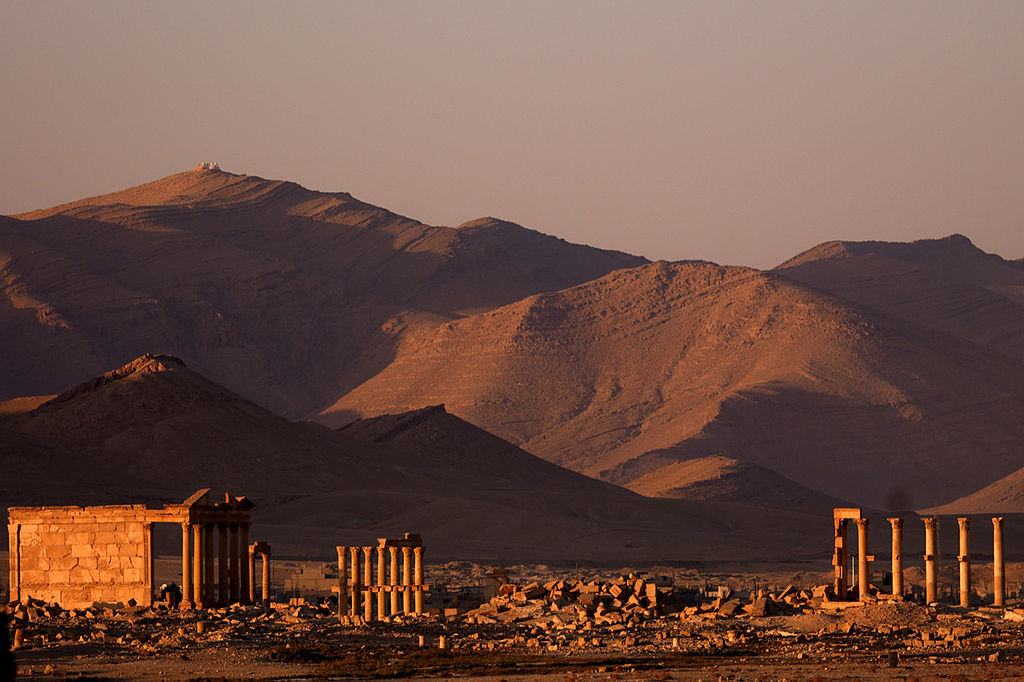
Temple of Bel’ in ancient Syrian city of Palmyra – National Geographic What was the intensity of “Grace, grace” all about? Earlier in chapter 3 we see Zerubbabel’s colleague Joshua (Jeshua) facing intense opposition from Satan accusing him of being clothed with filthy garments —meaning iniquitous ineligibility. But the Lord overrules the objection and rebukes Satan off Joshua for the sake of Jerusalem (3:1-2).
“Then the Angel of the Lord admonished Joshua, saying, “Thus says the Lord of hosts: ‘If you will walk in My ways, And if you will keep My command, Then you shall also judge My house, And likewise have charge of My courts; I will give you places to walk Among these who stand here” (vv. 6-7).
While Zerubbabel needed grace for his role in leading returnees from exile tasked with construction of the second temple in Jerusalem, Joshua needed grace for his role as new high priest in Jerusalem (Ezra 2:2; 5:2; Zechariah 3:1-6).
As we continue to track together on this, I would like to underline the conditional statement communicated to Joshua, the high priest —‘If you will walk in My ways, And if you will keep My command . . . “ Compare that to another conditional statement in Genesis chapter 6 verse 22 that says, “Thus Noah did; according to all that God commanded him, so he did.”
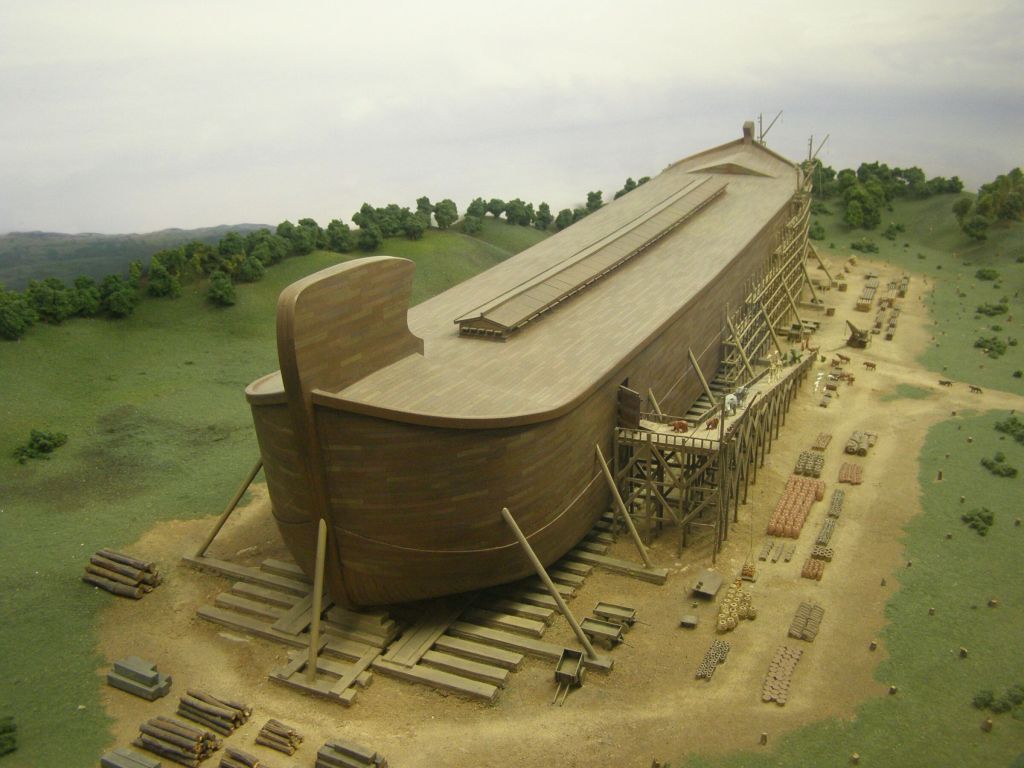
Noah’s Ark exhibit at the Creation Museum near Covington, Kentucky.
—Chris Light/Wikimedia CommonsEarlier in verse 16 God instructed Noah to make a window for the ark, and set the door of the ark in its side. Once all the occupants were in, the door was sealed to the flood waters, and barred potential intruders from outside. Once you are in, there was a list of things “we do not do here.” That is how the family of eight managed to survive together in a confined environment with a wide variety of creatures for the entire duration of the great flood. The window was for the purpose of letting in some fresh air, lighting, and monitoring—the eye.
Speaking of the ‘eye’, Noah found grace in the “eyes of the Lord” (Genesis 6:8). Zerubbabel was assured there are seven eyes of the Lord, which scan to and fro throughout the whole earth to support his temple-building efforts (Zechariah 4:10). Just before that the LORD of hosts says, “For behold, the stone That I have laid before Joshua: Upon the stone are seven eyes (Zechariah 3:9).
Towards the end of Part Two we found out that the “seven eyes” are prophetically revealed as seven Spirits of God in Isaiah chapter 11—“The Spirit of the Lord, The Spirit of wisdom and understanding, The Spirit of counsel and might, The Spirit of knowledge and of the fear of the Lord” (vv. 1-2).
That is what the Lord has packaged on the inside of grace. That is what Noah and his family needed if they were to survive the confines of the ark for one year with “every animal, every creeping thing, every bird, and whatever creeps on the earth, according to their families” (Genesis 8:18-19).

A plumb line tool—The Messianic Prophecy Bible Project Towards the end of Joshua’s courtroom encounter the Lord of hosts and Judge delivered a verdict against the adversary saying, ”And I will remove the iniquity of that land in one day” (Zechariah 3:9-10). Despite all the dogged opposition, the temple work in Jerusalem was completed with shouts of “Grace, grace to it!” —Not by might nor by power, but by the watchful seven eyes of the LORD (v. 4:6). It is important to remember that Zerubbabel needed to keep his hand on the plumb line, while Joshua the high priest needed to keep walking in the ways of the Lord, and keep His command . . .
Peter, the early Church Apostle compared believers to “living stones, being built up a spiritual house, a holy priesthood . . . ,” —for what purpose? To “offer up spiritual sacrifices acceptable to God through Jesus Christ” (1 Peter 2:5). That sounds like a duo purpose comparable to what Zerubbabel and Joshua accomplished together. In Jeremiah 31 it says,
“Behold, the days are coming, says the Lord, that I will sow the house of Israel and the house of Judah with the seed of man and the seed of beast. And it shall come to pass, that as I have watched over them to pluck up, to break down, to throw down, to destroy, and to afflict, so I will watch over them to build and to plant, says the Lord.
—vv. 27-28
Jeremiah was not prophesying exclusively about the Jews and Israelis —the Lord was talking about the beneficiaries of ‘grace’ under the New Covenant (31:2; 31-34).
Notice the intense activity involved; “to sow seed, to pluck up, to break down, to throw down, to destroy, to afflict, to watch, to build and to plant.” Grace is not idle. We are called to get busy fixing things in the House of the Lord (Beit HaMikdash). Towards the end of Noah’s story the Lord declared, “While the earth remains, Seedtime and harvest, Cold and heat, Winter and summer, And day and night Shall not cease” (Genesis 8:22).
The NT epistle of James stresses, “Thus also faith by itself, if it does not have works, is dead” (2:16,26). James’s characterization of faith also aligns with how not to define grace. ‘Shouts of grace, grace’ is a clarion call to get busy for kingdom purposes locked up in you. It is practical (John 13:17). Favor won’t come knocking on you just like that—you have an obligation to follow the “Way”, the “Truth”, and emulate the lifestyle of the One who promised to lead by example. Grace will watch over you as you do God’s will (John 14:6; Matthew 11:28-19; Jeremiah 31:27-28).
We have lingered on this for a while because we needed to; Grace talks about real things, not an idea—it is not abstract. Grace works with, not for those who live in the real world, not of the abstract (Ephesians 2:10). It is the realities of the world we live that compel us to find grace in the eyes of the Lord (Genesis 6:8).
The Seed and the Grace
The following books in the Christian NT Bible typically end in this style; “The grace of our Lord Jesus Christ be with you. Amen” —Some versions . . . be with you all. Amen. (1Thessolonians 5:28; 2Thessolonians 3:18; Romans 16:27; 1Corinthians 16:23-24; Philippians 4:23; Revelation 22:21). The Gospels of Matthew, Mark, John & Luke all end with, Amen. (1Timothy & 2Timothy; Titus, Hebrews, also end with, “Grace be with you. Amen.” —Some versions, “Grace be with you all. Amen.”

Beans Seeds — Plant Craft. It is worth mentioning that the specific Hebrew word used to imply ‘grace’ in the majority of the NT references above is hesed/chêsêd (חסד). Meaning goodness, kindness, faithfulness mercy, favour; to be good, be kind. In the original Hebrew Bible the term hesed חסד indicating ‘favor’ in particular occurs 3 times only in three verses (Esther 2:17; Job 10:12; Daniel 1:9).
Remarkably the commutative result of hen חן + hesed חסד equals 130, reducing back to (1+3+0=13). That is not a coincidence. Rather underscores God’s concept of ‘renewal’ —chadash (חדש).
For this article we will endeavor to work with our original grace, hen חן.
So far, we have been introduced to three key words that when translated in Hebrew all have the same ending. It is written, “On the testimony of two or three witnesses every matter shall be confirmed” (2 Corinthians 13:1 –NASB).
- Grace (חן)
- Stone (אבן)
- Amen (אמן)
In His letter to The Persecuted Church in Smyrna Messiah Yeshua instructed John to write, “‘These things says the First and the Last, who was dead, and came to life:’” (Revelation 2:8). Then to The Lukewarm Church of the Laodiceans Yeshua instructed John to write, “‘These things says the Amen, the Faithful and True Witness, the Beginning of the creation of God . . :’” (Revelation 3:14).
The first letter alef (א) of our last word Amen (אמן) is a picture of the strong leader, the first. Yeshua said I am the “First”. Amen (אמן) numerical value equals 100, which reduces back to (1+0+0=1), the alef (א).
The last character, of our last word Amen (אמן) is nun (נ,ן), a picture of seed, heir, offspring, life, fish, continuity . . . Numerical value of 50, which reduces to (5+0=5) pointing back to the hey (ה) meaning to behold (to make known), to teach by revelation.
Grace (חן) and Amen (אמן) intersect at nun (נ,ן) in a sense that when Noah was instructed to build the ark, its primary purpose was to protect the “seed” of “life” for “continuity” after the great flood (Genesis 7:3; 9:9; 10).
- Chet (ח)=To fence off, to surround and protect
- Nun (נ,ן), = Seed, offspring being shielded, or protected

Where does Stone (אבן) fit into this picture? Remember that ‘stone’ (Zechariah 3:9; 1 Peter 2:7,8), the ‘capstone’ (Zechariah 4:6,7), and the ‘cornerstone’ (1 Peter 2:6,7)? Behold! It is pointing back at Yeshua (Jesus) ישוע —numerical value equals 386, reducing to (3+8+6=17), which is the ordinal level of the 17th Hebrew letter pe/peh (פ,ף), a picture of a mouth, to declare, to blow, to scatter (seed). Numerical value of 80, reducing to (8+0=8). The numerical value of stone, eben אבן equals 53, reducing to (5+3=8). Hence, Yeshua (ישוע) is ‘He’ who the prophet Isaiah was pointing at when he prophesied;
He will be as a sanctuary (חן), But a stone of stumbling (אבן) and a rock of offense To both the houses of Israel, As a trap and a snare to the inhabitants of Jerusalem.
What are the two houses of Israel mentioned there in verse 14? The answer is in the next verses bellow:
Bind up the testimony (v. 16),
Seal the law among my disciples.
And I will wait on the Lord (v. 17),
Who hides His face from the house of Jacob;
And I will hope in Him.
Here am I and the children whom the Lord has given me (v. 18)!
We are for signs and wonders in Israel
From the Lord of hosts,
Who dwells in Mount Zion.—Isaiah 8:16-18
The “house of Jacob” (v. 17) is before God changed his name (Genesis 35:2). Jacob led his household to repentance, turned away from idolatry and discarded the foreign gods (vv.2,4). Jacob built an altar to the Lord at Bethel (בית־אל) as God had commanded him (vv. 1,7). God responded by changing Jacob’s name to Israel, thus ending decades of iniquitous stumbling blocks from birth linked to dishonesty. Jacob had his flaws, so did his grand parents Abram and Sarai before him. That is why the Lord saw it fit to break the cycle early by choosing the name of Jacob’s father, Isaac Himself (Genesis 17:5,15,19). Names carry key markers in the unseen realm that impact our physical existence tremendously.
Then God appeared to Jacob (יעקב) again, when he came from Padan Aram, and blessed him. And God said to him, “Your name is Jacob; your name shall not be called Jacob anymore, but Israel (ישראל) shall be your name.”
— Genesis 35:9-10
The difference between the numerical value of Jacob (11) יעקב, and Israel (10) ישראל tells the story of a legal issue resolved. “Bind up the testimony, Seal the law among my disciples” (Isaiah 8:16).
Once Jacob, the head (ר) was legally set free in the spirit realm, the Lord of hosts began to pour out a blessing, and to defend the interests of the family (seed) against the adversary (v. 18).
So He called his name Israel. Also God said to him: “I am God Almighty. Be fruitful and multiply; a nation and a company of nations shall proceed from you, and kings shall come from your body. The land which I gave Abraham and Isaac I give to you; and to your descendants after you I give this land.”
—Genesis 35:9-12
God was fulfilling a promise He made to Jacob previously saying, “your descendants shall be as the dust of the earth; you shall spread abroad to the west and the east, to the north and the south; and in you and in your seed all the families of the earth shall be blessed (Genesis 28:14).
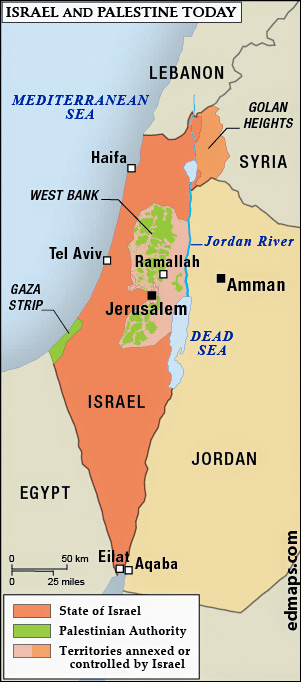
The prophetic implications of the ‘two houses of Israel’ not limited to ethnic Jews or Israelis. Data estimate Jewish population at 15.7 million worldwide in 2023, with over 7.2 million residing in Israel and about 8.5 million live outside Israel. According to the Council on Foreign Relations today, about 21 percent of Israel’s population is Arab, totaling some two million people. Surely that does not look like descendants as many as “the dust of the earth,” does it?
This may probably come as a surprise to those who unwittingly harbour certain feelings about Israel. But have you ever stopped for a moment and asked why God prefers to call the territory comprising the UN state of Israel simply as, My Land ar’Tzi ארצי (Jeremia 2:7)? From day one, the earth is called ha’Aretz הָאָֽרֶץ (Genesis 1:1; 9:19). Why are such nouns like country, land, also referred to simply as eretz ארץ (Genesis 12:3-17)? Because it is global —Israel ישׂראל is not one single nation. It is a group of nations, people, peoples, or congregation (Deuteronomy 33:4). There is plenty more to it than the current political boundaries of the current Jewish state (ארץ ישראל), the size of New Jersey (US). It is ‘His Land’ ar’Tzo ארצו —God’s treasured real estate (Deuteronomy 33:13). The distinction based on Isaiah chapter 8 verse 14 is between who will turn and call on the name of the Lord, and those who feel what they are doing works for them just fine.
It is universal because the compound name Israel ישראל is directly associated with the God (אל) of faithfulness, good and upright (ישר) —The Lord who fulfils His promises to those who love Him, and follow His ways (Deuteronomy 32:3,4). The God of all creation is interested in the welfare of everyone because all are created in His image (Genesis 1:26,27). When any one of us fails, it is God’s own image that hurts, and it is God’s name that suffers reproach.
Would you allow me to share one more thing concerning the noun Aretz/Eretz (ארץ)? It represents the authority (ל) God installed in his Holy place at Mount Zion (Isaiah 8:18; Hebrews 12:22). Ask CNN, Al-Jazeera, the BBC, AP, Reuters, etc. —the entire global media enterprise admit nothing happens in the tiny territory of Israel nested between ‘the river’ and ‘the sea’ without attracting the attention of their cameras. Why? Because you know something they don’t know about the Mustard Seed From your Bible (1 Corinthians 1:18-25).
The Seed and the Stone
The Lord asked this question: ”For who has despised the day of small things (Zachariah 4:10)? Now it is our time to ask ourselves, what more do we know about that Stone (אבן) of stumbling linked to Yeshua, and the land (eretz ארץ) of His ancestors? If we split the stone in two we get a son, ben (בן) and a silent leader (א), the first.
Bet or Beth/Beyt/Beit (ב) is the second Hebrew letter in the alef bet. Numerical value of 2. Pictographic meaning house, tent. Scriptures say thousands of years before Yeshua was born the Word of the Lord went out that Messiah would come from the seed of David, and from the town of Bethlehem, בית לחם (Jeremiah 23:5-6; John 7:41-42).
“But you, Bethlehem Ephrathah
Though you are little among the thousands of Judah,
Yet out of you shall come forth to Me
The One to be Ruler in Israel,
Whose goings forth are from of old,
From everlasting.”—Micah 5:2
The very first book of the Bible, Genesis (בראשית), introduces another place starting with Beit (ב). Jacob’s grandfather Abraham built an altar to God between Bethel בית־אל and Ai (Genesis 12:8). During his travel in the area, Jacob took the stone on which he had rested his head, set it up as a pillar, and declared the place Bethel, God’s house (Genesis 28:18,19,22).
When Yeshua said I am the first, and the Last —the Amen אמן, He summarized the grand story; from Bethel בית־אל of Genesis בראשית, to Bethlehem בית לחם of the New Testament Brit Chadashah (ברית חדשה).
The Mustard Seed and Science
It is not a click-bait to Judaism. We are simply trying to retell the story following the footsteps of Yeshua. Rabbis teach that, “While the mustard seed is not the smallest seed known to man, it was the smallest of the seeds known to the Judean farmers of Yeshua’s time. The height of the quick-growing black mustard seed of the Holy Land can exceed heights of 3 meters (10 feet), which is tall enough to provide rest for birds.”
—(The Messianic Prophecy Bible Project)
Science tells us that not even the smallest seed known, is the smallest particle of matter. There are many others smaller than an atom in nature. Aluminium is a chemical element with symbol Al and atomic number 13. We also know that Aluminium is the most abundant metallic element in Earth’s crust and the most widely used nonferrous metal. Notice the shocking revelation from the verdict rendered against Adam following his fall to sin in Eden.
Then to Adam He said, “Because you have heeded the voice of your wife, and have eaten from the tree of which I commanded you, saying, ‘You shall not eat of it’:
“Cursed is the ground for your sake;
In toil you shall eat of it
All the days of your life.
Both thorns and thistles it shall bring forth for you,
And you shall eat the herb of the field.
In the sweat of your face you shall eat bread
Till you return to the ground,
For out of it you were taken;
For dust you are,
And to dust you shall return.”—Genesis 3:17-19
An aluminium isotope consists of 13 protons, 13 electrons, and 14 neutrons, much smaller than an atom. We also know that Silicon (Si) is a chemical element with an atomic number 14. Biochemists say Silicon is an essential trace element present in a human body. It is linked to bone health. Humans are symbiotic with the land (הארץ).
Albert Einstein It is quite surprising who shows up in the Google search quote; “I want to know what God thinks. The rest are details.” —Albert Einstein. His illustrious profile is not connected to the world of religion. He was a German-born theoretical physicist widely celebrated as one of the greatest and most influential scientists of all time. He won the Nobel Prize in 1921.
In the Energy section of the exhibition spotlighting “Einstein’s Special Theory Of Relativity,” the American Museum of Natural History published a very interesting piece titled, “The most famous equation in the world, E= mc², arrived rather quietly.”
Knowing what we know now, “quiet” was at the centre of the puzzle in what science journals often describe as Einstein’s “miracle year” —That is when he published the blockbuster paper describing “the interchangeable nature of mass and energy, or what came to be known as E=mc².”
—(EarthSky: Einstein’s most famous equation)
Wednesday, 27 September 1905 was 27th of Elul, 5665 on the Hebrew calendar. Rabbis teach that Elul (אלול) is the 12th and final (last) month in the Jewish civil year. It is also the 6th month counting from Nisan (aka Abib אביב), which is referred to as “the first month of the year,” according to the biblical calendar (Exodus 12:2; Deuteronomy 16:1).
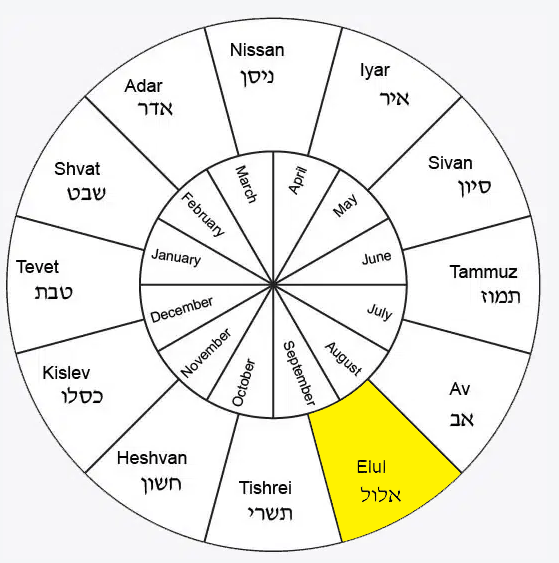
Elul precedes the month of Tishrei תשרי aka אתנים Ethanim (1 Kings 8:2), which is “the seventh month” counting from Nisan (Numbers 29:1,7,12). On the Jewish civil calendar the month of Elul strategically ends the year, and becomes a connector to the new year, Rosh HaShanah (ראש השנה) beginning with Tishrei.
The third letter counting from right to left in the Hebrew אלול (Elul) is the sixth letter of the Hebrew Alef bet (alphabet), Vav/waw (ו). Like Greek, Hebrew is both alphanumeric and pictographic. Every Hebrew letter or word has both meaning and function. Vav/waw (ו) has a Gematria (numerical value) of 6. Pictographic meaning of hook, nail, to connect, to attach, to add or secure.
Elul (אלול) is a composition of two words; val ול and el אל. The latter is primarily associated with the naming convention of God as in; Elohim (אלהים —Genesis 1:1), or El Shaddai/Almighty (אל שדי—Genesis 17:1).
Besides being the sixth month counting from Nisan on the biblical calendar—a bridge between the old and the new year on the Jewish civil calendar—Elul (אלול) also symbolize something else vitally important; a desperate need to connect with, or to God.
The month of Elul is a time of reflection in many Orthodox Jewish communities. Traditionally, the quietness of the morning is interrupted by the sounding of the shofar except on Shabbat. It is a solemn call to repentance in anticipation of the very special and holy period known as the High Holy Days—Rosh HaShanah (Jewish New Year) and Yom Kippur (Day of Atonement) in Israel and the diaspora.
It is widely believed that Elul is the time when the Psalmist David began to recite Psalm 139;
Search me, O God, and know my heart;
Try me, and know my anxieties;
And see if there is any wicked way in me,
And lead me in the way everlasting.—(vv. 23-24)
David’s resume also include; a shepherd boy who killed Goliath the giant, Israel’s greatest servant king, a man after God’s heart, and a commander of the Lord’s people army (1 Samuel 13:14).
History doesn’t tell us much about Albert Einstein’s faith. All we know his parents, Hermann Einstein and Pauline Koch were middle-class secular Ashkenazi Jews (Amos 9:7–15). “As a child, Einstein became fascinated by music (he played the violin), mathematics and science.”
—(The History Channel: Einstein’s Early Life 1879-1904)
What does David the Psalmist and Albert Einstein the theoretical physicist have in common? They were both fascinated by God’s unfathomable “mind” and arithmetic prowess.
How precious also are Your thoughts to me, O God!
How great is the sum of them!—Psalm 139:17
“I want to know what God thinks. The rest are details.” —Albert Einstein
We learn from the prophets that David was the youngest of eight sons of Jesse and was “keeping the sheep” (1 Samuel 16:11). In Jewish law and tradition a child gradually begins to assume greater responsibility for his or her actions at the Bar/Bat Mitzvah (בר מצווה) age. Rabbis teach, The rite of passage associated with this observance is the Bar Mitzvah for boys at age 13, and Bat Mitzvah for girls at age 12.

April 17, 2024, a total of 122 orphans celebrated their bar mitzvahs at Jerusalem’s Western Wall as part of an event organized by the Colel Chabad charity. Credit: Mendy Kornet. —(JNS). “Bar Mitzvah literally means son of commandment and Bat Mitzvah means daughter of commandment. However, the term in rabbinical usage has come to mean one who is subject to the law.”
—(The Messianic Prophecy Bible Project: The Bat and Bar Mitzvah: Discover This Key Jewish Tradition).
This means David began his career tending his father’s sheep at the tender age of 13. Also, it was his Bar Mitzvah status that legally qualified him to be anointed king by the prophet Samuel at Bethlehem (1 Samuel 16:12-13).
David’s predecessor, Saul described him three times as “na‛ar” (נער), meaning a boy, lad, youth, servant (1 Samuel 17:33,55). They say never judge a book by its cover. The Philistine champion, Goliath made a costly mistake when he despised David over his looks too.
And when the Philistine looked about and saw David, he disdained him; for he was only a youth, ruddy and good-looking.
—(1 Samuel 17:42)
Many scholars of the Tanakh (Hebrew Bible) estimate that David was about 15 years old when he killed the Philistine giant, Goliath. That assessment seems about right according to the lapse of time since David was anointed by Samuel, and embarked on his new career as King Saul’s harp player and armorbearer (1 Samuel 16:14-23).
This journey seems to be getting more exiting as we find something else that David, the harp player has in common with Albert Einstein, the violin player—music.
There is more. Einstein was born on Friday, 14 March 1879 (20th of Adar, 5639 on the Jewish Calendar). “He dropped out of school in 1894 and moved to Switzerland, where he resumed his schooling.”
—(The History Channel: Einstein’s Early Life 1879-1904)
We know Einstein did not become king like David, but dropping out of school at age 15, and moving address from his parent’s home in Munich (German) to Zurich (Switzerland), was a milestone in life somewhat similar to David’s experience approximately 2700 years earlier. David finished his career as the first King of the United Kingdom of Israel. Today, Einstein’s groundbreaking Theories Of Relativity and his famous equation E = mc² are the anchor on which modern scientific innovations are tethered—Quantum Physics, Nuclear Fusion, Microwaves, X-Rays, and much more. It remains man’s best effort ever in explaining how the Universe works.
The Forbes magazine describes E = mc² as Einstein’s greatest equation, a triumph of the power and simplicity of fundamental physics.
—(Forbes 23 Jan 2018: The Three Meanings Of E = mc²).
Undoubtedly, Einstein’s work won him accolades the world over, one of the greatest and most influential scientists of all time. But it came at a huge personal cost and sacrifice—solitude, frustration, and stubborn pushback by peers and cynics.
The Psalms David authored are filled with mixed emotions often starting with tension, anxiety, tears, and ending in singing and Praising God for His deliverance.
Hear my cry, O God;
Attend to my prayer.
From the end of the earth I will cry to You,
When my heart is overwhelmed;
Lead me to the rock that is higher than I.For You have been a shelter for me,
A strong tower from the enemy.
I will abide in Your tabernacle forever;
I will trust in the shelter of Your wings. Selah. . . For You, O God, have heard my vows;
You have given me the heritage of those who fear Your name.
You will prolong the king’s life,
His years as many generations.
He shall abide before God forever.
Oh, prepare mercy and truth, which may preserve him!
So I will sing praise to Your name forever . . . ,— Psalm 61:1-8
Emotional roller-coaster is another place where David and Einstein met. Science and Music was their escape route. Most importantly, both reserved a place for God somewhere deep inside their heart. When God directed the prophet Samuel to find and anoint Israel’s future king, He also gave him some clues. “Do not look at his appearance or at his physical stature, For the LORD does not see as man sees; for man looks at the outward appearance, but the LORD looks at the heart.” (1 Samuel 16:7).
The volume of Psalms David wrote reveal to the world what he felt about God and the Universe.
The heavens declare the glory of God;
the skies proclaim the work of his hands.
Day after day they pour forth speech;
night after night they reveal knowledge.
They have no speech, they use no words;
no sound is heard from them.
Yet their voice goes out into all the earth,
their words to the ends of the world.—Psalm 19:1-4 (New International Version – NIV)
The Bible is a repository of scientific marvels. When we dissect our miracle month Elul (אלול) it is a connector form of two words— ול and אל. It means to “run to and fro, go to and fro” (Amos 8:11-14). The literal rendering of that is shûţ/shoot שוט (to whip, to lash that is (the sea with oars) to row Ezekiel 27:26). It occurs 13 times in 13 verses in the original Hebrew Bible.
Just like our kids begin to transition into adulthood at Bar/Bat Mitzvah (בר מצווה) age 13, Elul (אלול) is the launching pad when we reflect on how far we have come, and where we should be going. Remember, every letter of the Hebrew alef bet is also a number (א+ל+ו+ל). Hence, our maths commutative law says Elul אלול equals (30+6+30+1=67), where ( 6+7=13).
Scriptures refer to Messiah Yeshua as the Mediator of the New Covenant (Hebrews 12:24). The first chapter of the NT gospel of Matthew begins with, “The book of the genealogy of Jesus Christ, the Son of David, the Son of Abraham” (1:1). The Hebrew name David (דוד) is a picture of a double-door (two-leaved) entrance (Ezekiel 41:23; 1 Kings 6:31-35). Messiah Yeshua is the connector of the Old and the New (John 10:7,9; 14:6).
This brings to memory our ‘connector month’ we discussed earlier, Elul (אלול). We are told that the historical city of Galilee named Nazareth is where the angel of the Lord, Gabriel told Mary she would bear a child and call his name, Jesus, the Son of God. The angel Gabriel made the announcement in the sixth month (Elul). Moreover, the angel also revealed to Mary that “Elizabeth your relative has also conceived a son in her old age; and this is now the sixth month (Elul) for her who was called barren.” (Luke 26,36).
Basic etymology of the compound name Nazareth is from the noun נצר (neser), branch or shoot. Also from the verb זרע (zara’), to scatter to sow seed, or זרה (zara), to scatter to winnow. Nouns זרע (zera’) and זרוע (zerua’) meaning a sowing or that which is sown.
But you, O mountains of Israel, you shall shoot forth your branches and yield your fruit to My people Israel, for they are about to come. For indeed I am for you, and I will turn to you, and you shall be tilled and sown (nazara’tem; נזרעתם).
—Ezekiel 36:8-9
When the angel Gabriel appeared to Mary to tell her about her impending pregnancy, that is not the moment when the “Word” of God planted a Seed of salvation in the spiritual DNA. It was the moment the clock began ticking on the physical manifestation of the Mashiach Yeshua (Jesus Christ) in flesh (Luke 1:26). Yeshua is the ‘Seed’ of hope God promised in the Garden of Eden (Genesis 3:15). Agricultural cycles and seasons in the Holy Land where Yeshua was born and raised are the perfect example of how God keeps renewing His faithfulness and love for His people from generation to generation (Leviticus 26:10; Amos 9:13).
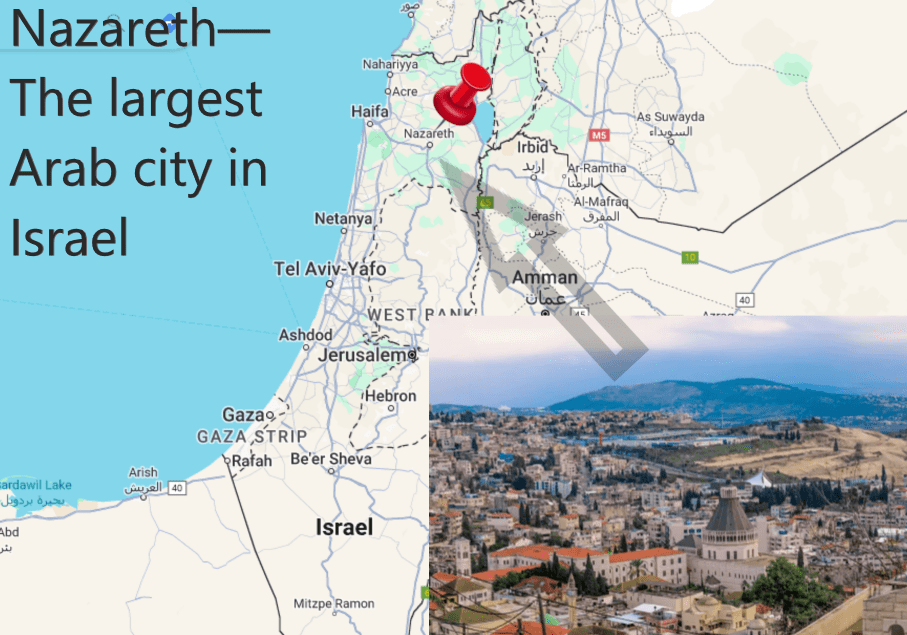
Modern Nazareth is he largest Arab city in Israel. It is the location of the domed Basilica of the Annunciation popular with Christian tour groups from around the world. It is the perfect example of peaceful coexistence between Jews and Arabs, Muslims and Christians, secular progressives and traditionalists —Only the Prince of Peace can make that possible (Luke 1:37)
It is impractical to embrace the new without reflecting on, or grasping where we have been. All God’s ways are cyclically expressed in seasons and agricultural cycles. The New Covenant (Brit HaDashah ברית החדשה) is a “renewal” (חדש) and “confirmation” of the old, not a supersession.
For I will look on you favorably and make you fruitful, multiply you and confirm My covenant with you.
You shall eat the old harvest, and clear out the old because of the new.—Leviticus 26:9-10
Today we can look at the impact of global religious explosion and think of the double doors that Messiah Yeshua opened in the unseen realm when He arrived in Bethlehem. Many out there including atheists have some opinion about Jesus. Millions of Muslims around the world frequently read about Nabi Isa (prophet Jesus) in the Quran many times every week. They are told His name means the “salvation of God”. In Part One we mentioned a 2022 statistic estimating over 45,000 faith groups around the world that identify as “Christians”
—( International Bulletin of Mission Research – IBMR).
Remember the words of Prophet Isaiah? —“He will be as a sanctuary (חן), But a stone (אבן) of stumbling and a rock of offense To both the houses of Israel, As a trap and a snare to the inhabitants of Jerusalem.” (Isaiah 8:14).
While millions say their faith in the Name of Yeshua is a sanctuary for their hearts, history also bears the relics of brutal conflicts across the globe in the name of religion, land, and politics. Why? That ancient irredeemable seed of evil sown by the creepy adversary in Eden has propagated for millennia influencing billions after its kind (1 John 3:8,9).
You are of your father the devil, and the desires of your father you want to do. He was a murderer from the beginning, and does not stand in the truth, because there is no truth in him. When he speaks a lie, he speaks from his own resources, for he is a liar and the father of it.
—John 8:44
So often I wish Yeshua was not this accurate, and that all that which is happening now around the world is fiction. But every time you turn on the TV screen, or activate the next social media app on the cell phone you just have to pray and hope the next bad report is not someone you know, or close to family. But it is closing in fast every passing day. So much so that many more are progressively itching for their chance on the streets to vent their anger, frustration, and hatred against someone, or something. Others even hate the very earth where they live because they have been told it is overpopulated and the climate is worsening.
IDF special forces operate deep inside Gaza following October 7, 2023 Hamas massacre of 1200 Israelis, and taking more than 300 hostage across the southern border Kibbutzim (communities). Like the proverbial coin, those who put their trust in God have a choice to win. It is written; “And I will put enmity Between you and the woman, And between your seed and her Seed; He shall bruise your head, And you shall bruise His heel.” (Genesis 3:15).
The Psalmist David wrote, ”The Lord said to my Lord, “Sit at My right hand, Till I make Your enemies Your footstool. The Lord shall send the rod of Your strength out of Zion. Rule in the midst of Your enemies!” (Psalm 110:1:1-2).
Our reality does not feel like David’s Announcement of Messiah Reign is a holiday resort. But the battle lines are already active in the unseen realm. Those who have been here throughout 2024 have seen trouble in every quantifiable matrix.
He who sins is of the devil, for the devil has sinned from the beginning. For this purpose the Son of God was manifested, that He might destroy the works of the devil.
—1 John 3:8
In certain cultures they say the loudest dog is not necessarily the most vicious one. The Apostle Paul saw all the chaos of our day from afar. There is only one outcome, and it is not supposed to be fair —”the God of peace will crush Satan under your feet shortly” (Romans 16:20).
While Albert Einstein was busy contemplating God’s thoughts, another set of doors opened in the unseen realm.
“But you, Daniel, shut up these words and seal the book until the time of the end. Many will roam to and fro, and knowledge will increase.”
—Daniel 12:4 (BSB)
Faith and the Mustard Seed
A chilling report by the History Channel points to late 1930s when Einstein’s theories, including his equation E=mc², helped form the basis of the development of the atomic bomb.
“Almost immediately after Albert Einstein learned of the atomic bomb used in Japan, he became an advocate for nuclear disarmament. He formed the Emergency Committee of Atomic Scientists and backed Manhattan Project scientist J. Robert Oppenheimer in his opposition to the hydrogen bomb”
—(History Channel – Einstein’s Early Life 1879-1904).
The world today is being held at ransom with thousands of nuclear warheads among a dozen nuclear armed nations. A collection of dense microscopic nuclei are the seeds those with apocalyptic desires found a way of manipulating them to cause maximum atomic harm at the press of a button. Two Japanese cities of Hiroshima and Nagasaki were destroyed by the world’s first deployed atomic bomb on August 6 and 9, 1945, during World War II (1939-45) by two American B-29 bombers. An estimated 120,000 people perished instantly and many thousands more reportedly died of radiation exposure.
Residential apartment block in Ukraine, in Dnipro destroyed by Russian S-300 Missile —Reuters Global instability rising steadily following Russia invasion of Ukraine February 24, 2022, and the October 7, 2023, slaughter of an estimated 1200 and kidnaping of over 300 by Gaza-based Hamas led terror groups. Again threats of tactical, even strategic nuclear explosion capable of destroying the entire planet many times over are growing louder. The Iranian theocratic authorities led by the Ayatollah openly expresses their enduring desire to wipe Israel off the map, and have made little effort of calming the anxiety of those suspicious of their nuclear ambitions. A growing number of TV and YouTube channels run by certain Charismatic Cristian groups link current global conflicts with the end-time prophetic “Gog, of Magog” events (Ezekiel 38–39). Should we spend sleepless nights over any of that? Certainly not.
Just as the prophet Daniel was told to “seal the book until the time of the end”, Yeshua told John to “open the Book” approximately 600 years later.
And he said to me, “Do not seal the words of the prophecy of this book, for the time is at hand. He who is unjust, let him be unjust still; he who is filthy, let him be filthy still; he who is righteous, let him [e]be righteous still; he who is holy, let him be holy still.”
—Revelation 22:10-11
Undoubtedly 2024 (Hebrew 5784) has been such a momentous year. Fourth Hebrew letter dalet (ד), the picture of a door; out or in, knock, path, way, portal. Numerical value of 4. From ancient times our world has been shaped with many doors opening and closing at key strategic historical markers. From Abraham to David; and From Yeshua’s double-doors to this age. Bible prophecy is frighteningly accurate, I can almost hear the hinges turning at the next two-leaved entrance of 2028 (5788).

Just when dark forces thought it is their time to shine, and that they can continue to impose their will with impunity, they are not ready for what is coming —the twin doors are about to swing wide open come 5788. Despite of all the seemingly unhinged instability and violence unleashed in the world right now there is hope. According to the open Book of prophecy, there is not going to be a nuclear explosion or anything close anywhere on the earth anytime soon. Not because the regimes wielding the world’s nuclear arsenal and their allies have suddenly learned to fear God—They will have to figure out how to shoot down the sun, moon and the stars out of heaven first, and how to measure the heaven above and the foundations of the earth beneath (Jeremiah 31:35-37).
Not only that, God is not done with His creation yet. We are just a few billion people on earth right now. God promised Abraham, Isaac and Jacob descendants as many “as the dust of the earth . . .” (Genesis 28:14). Depopulation proponents will have to convince the unchanging God to amend His constitution too. Just like that open door that Einstein peered through to learn the mysteries of the atom, 5788 is lining up an even greater surprise:
For the earth will be filled
With the knowledge of the glory of the Lord,
As the waters cover the sea.—Habakkuk 2:14
I believe it with all my heart because Yeshua said so, and it happened before when Noah found “grace in the eyes of the Lord” (Genesis 6:8; Matthew 24:36-39). According to Isaiah 11:1-2, “The Spirit of knowledge and of the fear of the Lord” was part of the grace package Noah found in the eyes of the Lord.
Just so you know, imminent opening of the double-doors in 5788 is just the beginning . . . Messiah Yeshua made it clear that, “for all these things must come to pass, but the end is not yet” (Matthew 24:6). Until then, we are called to just hold station (Revelation 22:11).
As we wrap up this incredible journey into the Mystery of the Mustard Seed, how about taking a final pitstop where Faith meets the Mustard seed.
So the Lord said, “If you have faith as a mustard seed, you can say to this mulberry tree, ‘Be pulled up by the roots and be planted in the sea,’ and it would obey you.
—Luke 17:6
Some Bible versions including the KJV call the mulberry a ‘sycamine‘ tree. In the original Aramaic/Hebrew plain text it is referred to as a ‘sycamore‘ šiqmâ/shiqmâh שקמה. Not to be confused by the American Sycamore (Platanus occidentalis), which is one of Iowa’s largest trees. There are over 100 species of mulberry trees in fruit, and fruitless varieties. Our mulberry tree Yeshua connected to “faith as a mustered seed” is exactly the same type referred to as a sycomore/sycamore-fig which Zacchaeus, the chief tax collector climbed to see Yeshua (Luke 19:4).

White Mulberry —by Nucatum amygdalarum. (CC BY-SA 4.0), Wikimedia. Although the mulberry is known for its picturesque landscaping, it also comes with a dark side. Like the parasitic mistletoe we mentioned earlier some, especially the white mulberry variety, are invasive. The root system is quite aggressive and known to easily destroy drains and other vital underground resources. They grow aggressively fast which can cause ecological succession. In his article titled “Trees and Tree Planting” publiched at 8billiontrees.com on February 16, 2024, Georgette Kilgore wrote; “Moreover, mulberry roots are known to expand in search of water and nutrients, damaging property and foundations. Yes, it causes ecological threats by invading woodland, open forests, and disturbed areas commonly affected by the mulberry weed.”
That invasive nature and issues often linked to the spread of pests and ailments are some of the main reasons why some varieties such as the white blueberry has been outlawed in several parts of the United States. Besides governmental legal restrictions, George also pointed out that some people dislike the mulberry for the terrible mess its dropping fruits can cause on lawns, driveways, and sidewalks. “When picking the fruit is almost impossible not to get stained with the deep red colours.”
The fruit mulberry variety produce juicy but toxic berries that can only be consumed safely when perfectly ripe. Similar to the mistletoe the mulberry leaves and bark also contain highly toxic white sap which can be dangerous to humans and animals. Its ability to retain sap enables the mulberry to survive in arid environments. That could be one of the reasons why the ancients nicknamed the mulberry, a weeping tree (Psalm 84:6; Genesis 21:16).
The mulberry is also called a tree of valleys especially because it is attracted to the abundance of water there (1 Kings 10:27). Those hydro-intensive characteristics is the clue that the shrub where Hagar and her son Ishmael took shelter and found a well, was a sycamore or Red mulberry variety (Morus rubra) (Genesis 21:16,19; Psalm 23:2b).
The Psalmist David wrote, “Yea, though I walk through the valley of the shadow of death, I will fear no evil;” (Psalm 23:4). Because it was in the Valley of Rephaim (Giants) where the LORD helped him to triumph against Philistine adversaries in front of the mulberry trees. (1 Chronicles 14:8-16)
Now that is where the rubber meats the road; Yeshua’s Parables depicting faith, the mustard seed, the mulberry tree, and Zacchaeus the tax collector point to one thing—How God can use adversity to bless. Digging foundation first is the normal way of building a house. I hope we have done just that since the last two parts we have covered. Without further ado we can confidently guess that Yeshua was talking about Himself. We know He is that “Word” that was with God at day one of creation (John 1:1-3). Only God can “speak” things in or out of place. Yeshua said, “I and My Father are one” (John 10:30). Meaning, He is God (Deuteronomy 6:4; Zechariah 14:9).
Remember nearly 2700 years prior the prophet Micah foretold that Messiah Yeshua would come from Bethlehem, the “smallest” and most despised city of Judah (Micah 5:2).
Knowing what we know now from The Parable of the Mustard Seed, we can by experience paraphrase Yeshua’s statement of Luke 17:6 meaning;
“If only you keep trust in Me, your prayers concerning a seemingly insurmountable and persistent situation will finally bear the desired outcome” (Hebrews 11:6).
For those who have caught the maths bug since we started, here is a summation view of it all before we close.
The mustard seed (grain), Hebrew is gargar hachardal גרגר החרדל —Numerical value of mustard חרדל equals 242, which reduces to (2+4+2=8). Commutatively, (2+2+2+2=8), or (2×2)×2=8.
Eight (8) is the number of Yeshua (ישוע), and is also the number of the “Great and Awesome Day of the Lord” (Malachi 4; Leviticus 23:36,39). This day is also known as “Shemini Atzeret/Simchat Torah”.
Remember that first character of the first word Bereshit בראשית of the first sentence in the first book of Bible, Genesis is bet/beit (ב). Numerical value of 2.
The last character, of the last word Amen (אמן), from the last sentence in the last book of the Bible, Revelation is nun (נ,ן), numerical value, 50.
When beit is combined with nun ( בן), it means “son”. Yeshua is the Son of God (John 5:17,25).
When the numerical value of beit (ב) is added to the numerical value of nun (2+5+0=7), the number of completion (finality) which is also the number of Messiah (משיח).
The prophet Zachariah wrote, “For who has despised the day of small things? For these seven rejoice to see The plumb line in the hand of Zerubbabel. They are the eyes of the Lord, Which scan to and fro throughout the whole earth.”
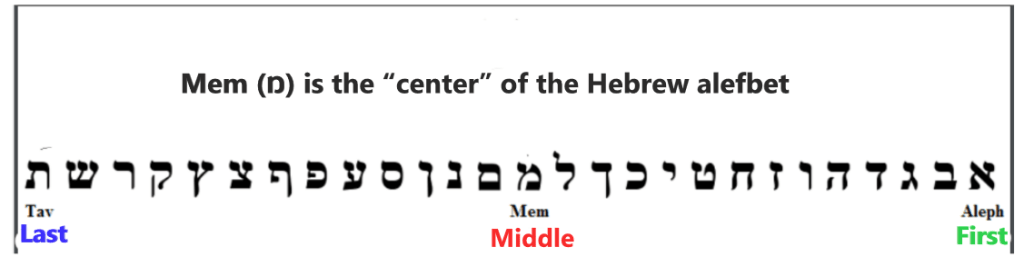
Yeshua told John in a vision that “I am the Alpha and the Omega, the First and the Last” (Revelation 1:11). The Hebrew equivalent of the Greek Alpha is the “alef” (א) and the Omega is the “tav” (ת) — All 22 letters of the Hebrew alphabet (alef bet) describe who Yeshua is. All creation revolves around Him. While that is another of countless ways to describe Yeshua, we chose to piggyback on the beit-nun (בן) in the context of our “Mustard Seed” journey.
Conclusion
It is so easy to misunderstand God. We need wisdom from the Lord to be able to understand the intricate details of His word (Isaiah 11:1-2). Only through following the Lord by faith can we grasp the deep mysteries of His ways. The Parable of the Mustard Seed teaches believers a great lesson about how God humbled Himself from Glory, and come to save the needy world through the work of Messiah Yeshua. The mustard seed is the ultimate symbol of humility without which the hopeless world would perish without a saviour. It is also a symbol of how the enemy of God’s people can use the slightest opportunity to slither his way in disguised as the agent of good, and drag his victims into calamity. Satan, the devil is the embodiment of gaslighting—calling “evil good, and good evil; Who put darkness for light, and light for darkness; Who put bitter for sweet, and sweet for bitter!” (Isaiah 5:20).
The Pictograph behind the 14th Hebrew letter of the Alef bet Nun (נ,ן) is a “seed”. Seeds have life. they are activated to germinate when the conditions are right. The first thing a seed does is to put down root before the branches and leaves appear. Yeshua said He is “The Way, the Truth, and the Life” (John 14:6). He is the “seed” from which all “life” spring (Genesis 3:15; John 1:4; 2Timothy 2:8). Yeshua is also the “root” that supports life (Romans 15:12; Revelation 5:5). Yeshua, the creator of all (John 1:1-3) had to lower Himself to our level “beit-nun” (בן) in order to save fallen humanity (John 3:16). From that humble beginning, Messiah Yeshua (Jesus) sits on the throne as the “King of Kings and the Lord of Lords” (Revelation 19:16).
Yeshua explained this to his disciples skilfully in “The Parable of the Tares” (The Parable of the Weeds —BSB).
He replied, “The One who sows the good seed is the Son of Man. The field is the world, and the good seed represents the sons of the kingdom. The weeds are the sons of the evil one, and the enemy who sows them is the devil. The harvest is the end of the age, and the harvesters are angels.
—Matthew 13:37-39 (BSB)
Those who are feeling apprehension over what is happening right now in the world, you are not alone. God feels what you feel because you bear His image. That is what the vendetta against you is all about. You are still alive because this is the best timing in God’s will for your life. Hold station. Yeshua promised, “Behold, I am coming quickly! Blessed is he who keeps the words of the prophecy of this book” (Revelation 22:7).
God is a rewarder of those who stay the course against all odds—Having a backbone and fortitude to go through the most challenging of seasons. There is a crown to win. God’s promises do not have an expiration date. From Genesis (Bereshit) to this day, what He promised is evident; to believers, and non-believers. Unbelief, or hostility towards God doesn’t influence His plans and purposes from the foundations of the world.
“While the earth remains,
Seedtime and harvest,
Cold and heat,
Winter and summer,
And day and night
Shall not cease.”— Genesis 8:22
One thing for sure, the adversary is on notice; final countdown of that Great and Awesome Day of the Lord is pulpable (Joel 3:14-16; Zechariah 14). Those alive come 5788 will probably revisit this publication and glorify God for His faithfulness. Like withering leaves in the fall (autumn), you are about to witness those anti-purposes of God forces tumbling down fast. It doesn’t matter how hopeless it may feel or look like right now where you are, there is no time for malaise—remain focused on the enduring promises of God. Do not react to phantom threats, be resolute but hopeful. Do not get mad, get motivated. They just want to provoke you into violence to give them an excuse to crack down, tear down the rule book, even declare martial law. God is on your side. The Lord will fight for His image you represent, for His name’s sake, and for His purposes in the earth. Nothing breaks the enemy’s will to fight like a worrier who spends more time on their knees than feasting their eyes on the screens of deception (Judges 7:5-7).
And the God of peace will crush Satan under your feet shortly. The grace of our Lord Jesus Christ be with you. Amen.
—Romans 16:20
Thank you for your time tracking with me this far. In case you missed Part One and Part Two, please follow this links back, I promise you will be blessed. Also, I would like to encourage you to share with others. Finally, your comments are the best inspiration for me to keep writing more articles like this, and to know how and where I can improve. Please keep them coming.
Thank you and God bless.
-
The Mystery of the Mustard Seed—Part Two
Prepare For Landing

Welcome back. In Part One of this three-part article we were introduced to the concept of biblical parables, and why Messiah Yeshua (Jesus) used them effectively in His teachings. We learned where, why biblical prophecy fits into the narrative, when it all began, and how documentation began. In this segment we are going to land the craft with the “Parable of the Mustard Seed.”
Here, we will connect more dots we picked up from the judicial precedent in the New Testament books of Luke and Revelation. We will unpack the symbolism, word pictures, science, maths, and prophetic implications behind the mysterious mustard seed. It is going to be a riveting experience.
Unless otherwise stated, portions of scripture references in this publication are primarily quoted from the New King James Bible Version (NKJV).
In the last segment we mentioned a Google search of the “mustard seed” and immediately got a result in the “food” category. They are just tiny seeds in black, yellow or brown sheds in a variety of small, branded packs and little jars. There is a long list of health benefits attributed to mustard seeds including minerals and several vitamins. Every container comes with a barcode, and an expiry date. One more detail—there is no ‘spiritual’ benefits included in the list printed on the retail sticker of the mustard seeds jar.
When Messiah Yeshua picked a topic on the mustard seed, He was not thinking about food—He was thinking about Kingdom business. A quick scan in the Bible of the stand alone word “mustard” does not exist. But the compound element “mustard seed” appears 5 times in 5 verses in the Christian New Testament (Matthew 13:31; 17:20; Mark 4:31; Luke 13:19; vv. 17:6).
The mustard seed is the subject of perhaps the most consequential parables Yeshua (Jesus) ever narrated. In Part One we explained the main purpose of parables from the cultural, and biblical perspective. It is like an intelligence operation where prioritizing information integrity is a key requirement. There is a time and place when communication involves saying something, when you actually mean something else. It is not the opposite of truth, rather a smarter way of delivering classified information to those with the need to know and understand.
In antiquity prophets and political messengers were endangered species. You could lose your life for declaring, “Thus says the Lord . . .,“ or for delivering a message to a hostile king in the wrong mood. Nevertheless, someone had to do the job. Parables became some of the most effective way of sharing sensitive information in a hostile environment covertly.
The Parable of the Mustard Seed
The gospel of Matthew quotes 16 parables by Yeshua in 8 chapters. The mustard seed is the third parable of 6 listed in chapter 13. In the gospel of Mark the parable of the mustard seed also appears third in the list recorded in chapter 4. Then in the gospel of Luke the mustard seed is recorded as the ninth parable overall also in chapter 13. It is worth mentioning at this stage that the number thirteen has a very important role to play later on this journey.
In Luke 13:18 Yeshua asked, “What is the kingdom of God like? And to what shall I compare it?” —My favourite response by Yeshua to His own question is recorded in the Gospel of Mark.
”It is like a mustard seed which, when it is sown on the ground, is smaller than all the seeds on earth; but when it is sown, it grows up and becomes greater than all herbs, and shoots out large branches, so that the birds of the air may nest under its shade.”
Torah Scroll One of my favorite teachers told me the best way to research something new in scripture is to locate the place of first mentioned. Usually that means somewhere in the Torah (the first 5 books of the Hebrew Bible, or the Christian Old Testament). But I was not able to find any Hebrew reference to a mustard seed there. The literal translation I could find in the NT versions for the mustard seed is Hebrew: gargar hachardal, גרגר החרדל.
Remember the Google search tool we used earlier to investigate the “mustard seed”? I thought we could go a step further and this time, use the help of the sister Google Translator. In Hebrew we read and write from right, to left. The first word gargar (גרגר) means grain, granule, berry.
Back to Google search we find ‘berry’ described as a small, pulpy, and often edible fruit (such as blackberry, blueberry, checkerberry, cranberry, raspberry, strawberry, cherry). Then on Wikipedia berries are juicy, rounded, brightly colored, sweet, sour or tart—a description that makes me feel like raiding the refrigerator now.
What about the next word, hachardal (החרדל)? You guessed right—it is literally translated, “the mustard.” Without the Hebrew letter hey (ה), it is simply “mustard” —that article, “the” dropped.
I guess by now you have probably noticed that English is not my first language, and we’re on a crash course. Another search on Google tells me that a preposition is a word governing, and usually preceding a noun or pronoun and expressing a relation to another word or element in the clause.
What do you think ‘mustard’ symbolize, in the context of our Hebrew word, chardal (חרדל)? You are not ready for it —let me explain.
A breakdown of the original word pictures behind each of these Hebrew letters can reveal some clues into the meaning and purpose of ‘mustard’.
- The picture for chet (ח) is a fence or wall and means separation, sin, new beginning. Numerical value of 8
- The picture for resh (ר) is a man’s head and means authority, beginning, first, top. Numerical value of 200
- The picture for dalet (ד) is a door and means out or in, knock, path, way, portal to heaven, dominion, control, bough, and branch. Numerical value of 4
- The picture for lamed (ל) is a shepherd’s hook/staff, goad, rod, branch, and scepter, teaching, learning, goading, protection, yoke, bind. Infinitive prefix for verbs, meaning to or for or belonging to. Numerical value of 30.
Alef (א) is the first Hebrew letter in the alef bet (alphabet). It is a silent letter carrying the sound of a vowel. When followed by a lamed (ל), you get the Hebrew “el” (אל). Together they form the word picture of a strong leader or first, used from ancient times to describe God. For example; God Almighty, El Shaddai (אל שדי).
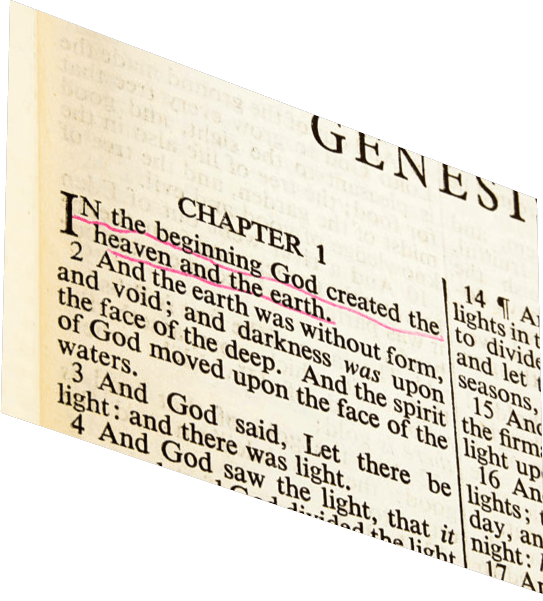
The combined word picture for our Hebrew word mustard, chardal (חרדל) can therefore be traced to the beginning of man and authority.
Therefore, just as through one man sin entered the world, and death through sin, and thus death spread to all men, because all sinned—
Therefore, as through one man’s offense judgment came to all men, resulting in condemnation, even so through one Man’s righteous act the free gift came to all men, resulting in justification of life. For as by one man’s disobedience many were made sinners, so also by one Man’s obedience many will be made righteous.
Notice the prefix ‘to’ is repeated three times, and the preposition ‘through‘ is also repeated four times in the scripture reference above. A quick Google search definition says: Through, can be used as a preposition, an adverb, and an adjective. It has several meanings, including “from one side to the other of,” “from beginning to end.” In simple terms, prefixes and prepositions in this context both mean exactly the same in purpose and function.
This means that our problem word mustard, chardal (חרדל) is actually a symbolic preposition that qualifies something. Yeshua said, “It is also written in your law that the testimony of two men is true” (John 8:17).
To connect the remaining dots we are going to have to revisit that fruity word, gargar (גרגר) which means grain, granule, berry. According to the Strong’s Concordance it comes from the Hebrew Jagur (יגור), from the root H1481—gûr/goor (גּוּר)—meaning to turn aside from the road (for a lodging or any other purpose); also to shrink fear (as in a strange place); also to gather for hostility (as afraid).
The Brown-Driver-Briggs Hebrew and English Lexicon defines Jagur (יגור) as follows:
- to sojourn, abide, dwell in, dwell with, remain, inhabit, be a stranger, be continuing, surely
- to stir up trouble, strife, quarrel, gather together
- to dread, fear, stand in awe, be afraid.
The Abarim Publications’ Biblical Dictionary also links the etymology of gargar (גרגר) to the verb גרר (garar) meaning, to drag or drag away, mostly in a circular or repetitive motion. The verb גרה (gara) means to strive or agitate strife, obviously not by means of one singular assault but rather by repeated provocations and withdrawals. Noun תגרה (tigra) means contention or opposition.
The Bible As you can see, we have come from a fruity sweet, sour or tart juicy berry—gargar (גרגר), to being dragged away towards a dreadful place full of trouble, strife, quarrel, and everything in between. If we go by the principle of first mentioned, that was way back at Bereshit (Genesis)—the first book of the Torah (Hebrew Bible, Christian OT).
Then the Lord God called to Adam and said to him, “Where are you?”
So he said, “I heard Your voice in the garden, and I was afraid because I was naked; and I hid myself.”
In case you haven’t noticed yet, the Hebrew name Adam אדם begins with the Hebrew letter alef (א), the leader, the first.
From kindergarten to Hollywood movies the story goes that Adam and his wife Eve were tricked by the serpent, and lured into violating God’s food laws in the Garden of Eden (Genesis 3:13). The forbidden fruit was just the beginning. Based on what we now know from the root gûr/goor (גּוּר) the first couple turned aside from the ways defined by the LORD. They were dragged by a stranger into another way. The adversary stirred up trouble for Adam and Eve, and plunged them into a dreadful place filled with, quarrelling and fear. Consciousness of sin and hopelessness set in.
Nothing summarizes the unfortunate turn of events the couple were about to endure like Adam’s response to God’s call; “I heard Your voice in the garden, and I was afraid because I was naked; and I hid myself.”
Brown-Driver-Briggs Hebrew Definitions of the word “afraid” (charad) that Adam used there comes from Strong: H2729—חרד.
That is the three letter root (shoresh שורש) of our second problem word mustard, chardal (חרדל) —a symbolic preposition that qualifies something. It means;
- to tremble, quake, move about, be afraid, be startled, be terrified (of the enemy)
- to be anxiously careful
- to go or come trembling (with prep)
- to cause to tremble
- to drive in terror, rout (an army).
The role of the 12th Hebrew letter in the alef bet, lamed (ל) in chardal (חרדל) is a preposition; a direction of movement, a goal, a destination.
Adam being the head (ר), he delegated authority (ל) to his wife Eve, who opened the door (ד) for the adversary to come in and create conditions (charad) that inadvertently separated (ח) the first family from God (Genesis 3:23,24).
Based on the word pictures behind the compound Hebrew words we have examined so far, mustard—chardal (חרדל) is the symbolic preposition that qualifies the seed—gargar (גרגר).
So the Lord God said to the serpent:
“Because you have done this,
You are cursed more than all cattle,
And more than every beast of the field;
On your belly you shall go,
And you shall eat dust
All the days of your life.
And I will put enmity
Between you and the woman,
And between your seed and her Seed;
He shall bruise your head,
And you shall bruise His heel.”Notice the line that say, “And between your seed and her Seed;” —You have a lower-case (s) and an upper-case (S). Very important detail there to consider. The “Seed” is the key subject from which all life springs. On the other side, “seed” is the negative force that drags to the opposite direction of deception, strife, fear, death and distraction (John 8:44).
In Proverbs chapter 14 verse 12 it says, “There is a way that seems right to a man, But its end is the way of death.” Yeshua said, “I am the way, the truth, and the life. No one comes to the Father except through Me (John 14:6).
The way defined by the Lord leads towards the “Seed of life.” Sin seeks to create a detour, another way, a diversion, a permanent separation from the Source of Life.
In the NT gospel of Matthew the entire chapter 13 is devoted to the “Seed vs. seed” subject. Yeshua uses seven parables to explain the ‘seed’ symbolism by drawing parallels with the kingdom of heaven: The Parable of the Sower, The Parable of the Weeds, The Parable of the Mustard Seed, The Parable of the Leaven, The Parable of the Hidden Treasure1, The Parable of the Pearl of Great Price, and The Parable of the Net.
The words ‘seed, seeds, seedlings’ occur 17 times in Matthew chapter 13 of the BSB version. While ‘seed, seeds’ occur 12 times in Matthew chapter 13 of the NKJV version. The seventeenth Hebrew letter Pe/Peh (פף) has a pictographic meaning of mouth, opening, speech. The mouth declaring the word of the Lord. Remember, the role of the 12th Hebrew letter in the alef bet, lamed (ל) in ‘mustard’ (chardal, חרדל) is a preposition; a direction of movement, a goal, a destination. And the picture behind lamed (ל) is a shepherd’s hook/staff, goad, teaching, learning, goading, protection.
Shepherds Rod —Mini Manna Moments Rabbis teach that, “The rod (shevet שבט) was used by the shepherd to safeguard the sheep. Every shepherd of Israel had a rod and staff that were used to guide, protect, and set boundaries for the sheep. The shepherd used the rod to drive away predators like coyotes and wolves. He didn’t use his rod to beat his sheep.” —(The Messianic Bible Prophecy Bible Project)
Messiah Yeshua declared (פ), “I am the good shepherd (ל). The good shepherd gives His life for the sheep” (John 10:11). Yeshua also reassured His sheep to, “Take My yoke upon you and learn from Me (ל), for I am gentle and lowly in heart, and you will find rest for your souls. For My yoke is easy and My burden is light (ל).”
Calculating the Cost
Math was my worst subject at college mainly because for some reason I found the approach of my math teacher somewhat repulsive. In hindsight it was my prejudiced attitude that cost me. I tried private tuition but still got very low grades.
In the first part we touched briefly on the role of numbers in the Bible. In the last NT book of Revelation Yeshua gave a specific command: “Here is wisdom. Let him who has understanding calculate the number of the beast, for it is the number of a man: His number is 666” (vv. 13:18).
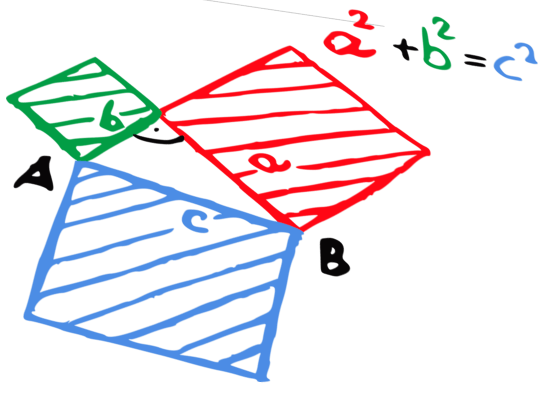
Have you noticed how we keep encountering the number 13 frequently? It is not a coincidence, and it is not from a Gnosticism playbook. Thirteen is included in your version too. The Bible is full of surprises. It is an amazing journal of history recorded in advance. Going by the law of first mentioned, “wisdom and understanding” were attributed to Messiah Yeshua by the prophet Isaiah 650 years before Yeshua was born (vv. 11:1-2). The Bible is also a mathematical marvel filled with fascinating notations. The scope of this article focuses on what I like to call CAD. According to Britannica, “The most important arithmetic properties (where a and b are real numbers) are the commutative laws of addition and multiplication, a + b = b + a and ab = ba; the associative laws of addition and multiplication, a + (b + c) = (a + b) + c and a(bc) = (ab)c; and the distributive law, which connects addition and multiplication, a(b + c) = ab + ac.
Note: Commutative Laws always produce the same result even when the position of the numbers involved are swapped. Example: a + b = b + a OR, a × b = b × a. The exception to this rule is subtraction and division—because the changes in the order of the numbers while doing subtraction and division do not produce the same result.
Yes, I will say it again; subtraction and division —the two most corrosive elements every church organization dreads the most. Following our law of first mentioned it says, “You shall not add to the word which I command you, nor take from it, that you may keep the commandments of the Lord your God which I command you” (Deuteronomy 4:2). Then in Revelation chapter 22 it concludes with this warning;
For I testify to everyone who hears the words of the prophecy of this book: If anyone adds to these things, God will add to him the plagues that are written in this book; and if anyone takes away from the words of the book of this prophecy, God shall take away his part from the Book of Life, from the holy city, and from the things which are written in this book.
—vv. 18-19
Notice, ‘testify’ there in verse 18 is a judicial term. While Deuteronomy is the last of the 5 Torah books (OT) written by Moses, Revelation is the last of 27 books in the NT. Hence, ‘everyone’ and ‘anyone’ can be held accountable—the legal obligation is not exclusive to the Jews.

The numerical value of the problem word mustard—chardal (חרדל) is 242. The commutative law application here produces (2+4+2=8). Earlier we learned the pictographic meaning of chet (ח) is a fence or wall. It means separation, sin, new beginning.
In the Berean Standard Bible (BSB) Isaiah 59 begins with a heading —“Sin Separates Us from God”.
Surely the arm of the LORD is not too short to save,
nor His ear too dull to hear.
But your iniquities have built barriers
between you and your God,
and your sins have hidden His face from you,
so that He does not hear.—vv. 1,2
Then Isaiah 59 continues to explain the chargesheet from verse 3 to 8 with a list of felonies including; strife, violence, bloodshed, deception, injustice, corruption, etc.
Earlier we saw the Apostle Paul, in the NT book of Romans pointing to Adam (אדם) in Bereshit (Genesis chapter 3), where this commutative judicial issue began.
Therefore, just as through one man sin entered the world, and death through sin, and thus death spread to all men, because all sinned—
Therefore, as through one man’s offense judgment came to all men, resulting in condemnation. . .
—vv. 5:12,18
In the NT gospel of John Yeshua also points back to Satan, “the devil”, who led Adam and Eve into sinning against God. —“He (Satan) was a murderer from the beginning, and does not stand in the truth, because there is no truth in him. When he speaks a lie, he speaks from his own resources, for he is a liar and the father of it” (8:44).
In Part One we learned that Satan is also identified by other labels including, the great dragon, that serpent of old” (Revelation 12:9). Satan’s role is not limited to sowing the ‘seed’ of sin that leads to destructive consequences. He also assumes the position of a prosecuting attorney—”the accuser of our brethren, who accused them before our God day and night” (vv. 12:10; Job 1:6-12; Zechariah 3:1-3).

Christmas mistletoe (Viscum album) —gardenersworld.com Keeping in step with the law of first mentioned we know Satan is the serpent of old mentioned in Genesis chapter 3. The devil pounced when Eve became isolated (separated) for a brief moment from her husband Adam. Like a mistletoe, Satan demonstrated parasitic characteristics in the garden of Eden. From humble beginnings the iniquitous consequences gradually affected the entire family trees. To list but a few, here are some of the most predatory aspects of the mistletoe in botany profiling.
- A mistletoe is not like a normal plant
- A mistletoe relies on other trees to survive
- It prefers to grow on trees in open areas with plenty of light, rather than in dense woodlands
- Most mistletoes parasitize a variety of hosts, and some species even parasitize other mistletoes, which in turn are parasitic on a host
- After a mistletoe germinates, a modified root (haustorium) penetrates the bark of the host tree and forms a connection through which water and nutrients pass from host to parasite
- They are pests of many ornamental, timber, and crop trees and are the cause of abnormal growths called “witches’ brooms” that deform the branches and decrease the reproductive ability of the host
- Mistletoes are slow-growing but persistent; their natural death is determined by the death of the hosts. The only effective control measure is complete removal of the parasite from the host
- The traditional Christmas mistletoe (Viscum album) has thickly crowded forking branches. The flowers, in compact spikes, are bisexual or unisexual and have regular symmetry. They are yellower than the leaves, appear in late winter, and soon give rise to one-seeded white berries, which when ripe are filled with a sticky semi-transparent pulp. These berries, and those of other mistletoes, contain toxic compounds poisonous to many animals and to humans.
As a sidenote, a mistletoe also subscribes to the law of first mentioned. Some species are used as Christmas decorations and are associated with pre-Christian holiday rituals of ‘kissing’, and midsummer sacrificial burning of bonfires. —(Surprising facts about mistletoe: By Ellen McHale – Kew Gardens).
Just like a mistletoe which takes the nutrients and water from the tree it grows on; sin creeps in innocently and gradually sucks on life from the inside out (John 10:10).
The devil is that dragon with many tentacles (Revelation 12). This hostile being fits the etymology of gargar (גרגר) rooted in garar (גרר) meaning, to drag or drag away, mostly in a circular or repetitive motion. The devil is relentless by nature, with a very short memory of failure. He specializes in stalking, isolating, coiling around, and constricting prey until life snuffs out.
Rabbis painted the following word picture of Satan.
“The Hebrew word for serpent is nachash (נחש). If we look at the original word pictures for each of these letters, we can get some insight into the serpent’s mission and purpose.
- The picture for nun (נ) is a seed or fish and means life or activity
- The picture for chet (ח) is a fence or wall and means separation or private.
- The picture for shin (ש) is teeth and means to destroy, consume, or sharpen.
In this light form of word study, we find that nachash can represent the fencing in of a life for the purpose of destroying it.
By luring Eve into disobedience, the nachash fenced in humanity, placing us in bondage to his world, and sentencing us to separation from God forever.”
—(The Messianic Prophecy Bible Project)God’s people are constantly under siege, but not beyond our defences (1 Peter 5:8-10; 1 Corinthians 15:56-57).
. . . even so through one Man’s righteous act the free gift came to all men, resulting in justification of life. For as by one man’s disobedience many were made sinners, so also by one Man’s obedience many will be made righteous.
—Romans 5:18,19
Notice the noun ‘Man’, with capital ‘M’, and the following ‘man’ in lower-case. The Apostle Paul made that enigmatic contrast with remarkable hope.
For since by man came death, by Man also came the resurrection of the dead. For as in Adam all die, even so in Christ all shall be made alive.
For He (Messiah Yeshua) must reign till He has put all enemies under His feet. The last enemy that will be destroyed is death.
And so it is written, “The first man Adam became a living being.” The last Adam became a life-giving spirit.—1 Corinthians 15:21,22,25,26,45
The ‘last Adam’ there being Jesus. The anglicized Hebrew translation of Jesus Christ is Yeshua HaMashiach (ישוע המשיח) or simply, Messiah Yeshua.
Now here comes some surprising mathematical results you probably did not expect.
The numerical value of Yeshua HaMashiach, ישוע המשיח is 749 or, (7+4+9=20). Twentieth Hebrew letter of the alef bet is resh/reish (ר), numerical value of 200. Pictographic meaning a man’s head, authority, beginning, first, top.
As we all know from Bereshit that Adam (אדם) came ‘first’. Not only that, God assigned man (adam אדם) “dominion over every living thing that moves on the earth” (Genesis 1:26-28). At that moment in history God’s plan involves both male and female (זכר ונקבה) but the latter is yet to come (Genesis 1:27). In Genesis 2:18 God proposes a “helper” (עזר) for the man (אדם)”. Adam began to exercise his authority first, by naming things in his environment (Genesis 2:20). Finally God makes a woman (אשה) from Adam’s rib (vv. 21-22). Adam by the authority bestowed in him by God, he calls her a “Woman” (אשה). But Adam’s world was about to change beyond his wildest dreams.
Therefore a man (איש) shall leave his father and mother and be joined to his wife (אשה), and they shall become one (אחד) flesh.
Because the couple have now “become one (אחד) flesh”, they began to share legal responsibilities in Eden, the garden of God. Adam (אדם) being the first (א) —the head (ר) of the family—assuming a primary role of helping his wife (איש) to learn (ל) based on the knowledge passed down from God. When you add (א and ר) together you get the Hebrew word or אור which translates ‘Light’. Just as the moon reflects light from the sun, the man’s ‘helper’ needed him to show her the way by reflecting light (אור) from God (אל), the original source (John 8:12).
Remember the ‘mistletoe’ strategy? —It prefers to grow on trees in open areas with plenty of light, rather than in dense woodlands. On that fateful day in Eden, the cunning serpent emerging from the shadows bypassed Adam and exploited the woman’s solitary moment of diminished lighting (Genesis 3:15).
When the Apostle Paul says, “Therefore, just as through one man sin entered the world” (Roman 5:12), it is because two became one, united (אחד) in Eden. With Adam being the head (ר) of the family—The Buck Stops at the leader (ל). One, Hebrew echad אחד, numerical value of 184, also leads us back into the path of the number thirteen, reduced from (1+8+4=13).
Man (אדם) lost ‘dominion’ following God’s judgement over sin. But Adam used what was left of his authority and named his wife Eve, Chavvah חוּה. Only two records of Adam’s wife’s name Eve appear in the Bible (Genesis 3:20 and 4:1). Chavvah חוּה means “life” or “living”, numerical value equals 19.

Sunset in Serengeti National Park, Tanzania Nineteenth Hebrew letter of the alef bet is Koof/Quph (ק), numerical value of 100. Pictographic meaning sun on the horizon (especially at dawn or at sundown where the light is concentrated at a certain point, while the rest of the sky is dark), imitation (of God or enemy), circle.
Remember our parasitic mistletoe? —How it prefers to grow on trees in open areas with plenty of light (Matthew 5:14-16), rather than in dense woodlands? Well, Paul describes the adversary Satan, as one who “masquerades as an angel of light” (2 Corinthians 11:14).
Also by nature Satan has nothing original with him—He excels at imitation of what God has created. A mistletoe puts down a modified root (haustorium) that penetrates the bark of the host tree and settles in comfortably.
—(Britannica)The circular features of Koof/Quph/Qoph (ק) align with garar (גרר) meaning, to drag or drag away, mostly in a circular or repetitive motion. It is the horrifying scenario of a constricting snake around prey until life snuffs out.
Let us pause for a moment at those words, ” . . . away, mostly in a circular or repetitive motion.” —That is the situation where Hagar, Sarah’s Egyptian maid and mother of Ishmael, born to Abram, later Abraham found herself in. Hagar and “her son” were “cast out” of the family home following strife with Sarah, mother of Isaac, “Abraham’s son.” Sarah accused Ishmael of “scoffing”. Notice this astonishing report from Genesis chapter 21:
And Sarah saw the son of Hagar the Egyptian, whom she had borne to Abraham, scoffing.
Therefore she said to Abraham, “Cast out this bondwoman and her son; for the son of this bondwoman shall not be heir with my son, namely with Isaac.”
The term ‘bondwoman‘ (‘āmâ אמה) also means handmaid, maidservant, maid, slave (woman).
Like any loving father would feel, scripture say, “And the matter was very displeasing in Abraham’s sight because of his son” (v.11). But it is what God said to Abraham in response that ignited sparks in my imagination!
But God said to Abraham, “Do not let it be displeasing in your sight because of the lad or because of your bondwoman. Whatever Sarah has said to you, listen to her voice; for in Isaac your seed shall be called.
Yet I will also make a nation of the son of the bondwoman, because he is your seed.”
—vv. 12,13
Immediately, the whole episode looks and sounds controversial at every frame. Metaphorically, there is a duality of ‘seed‘ connected to Isaac, and Ishmael. The best way to understand the prophetic implications of it is to check out what Hager did next after getting forced out of the family home. “Then she departed and wandered in the Wilderness of Beersheba (Genesis 21:14)
The depressing word ‘wandered‘ used there to describe Hagar’s dire situation in Hebrew is ta’a (H8582 תעה) meaning: to err, wander, go astray, stagger, to err of sin (ethically), wandering (of the mind), to be led astray (ethically), to cause to err, mislead (mentally and morally).
Now let us align that with the name Hagar (הגר). Meaning flight, to be dragged off . . . Etymology from a verb הגר (hagar), to flee (Genesis 16:8). Most significantly the roots of Hagar (הגר) align with our problem verb גרר (garar), to drag out or away. Related names via גרר (garar)—Gerar, Jagur (יגור)
—(Excerpted from: Abarim Publications’ Biblical Dictionary)Going by the trusted law of first mentioned, Hagar takes us full circle back to that fruity but, sour or tart mustard grain, berry (gargar גרגר). It all started way back in Genesis 15 when the aged couple Abram and Sarai were childless (v. 2). God promised them children (vv. 5,13,18). They waited. But when Sarai’s patience run out she arranged for surrogacy.
So Hagar bore Abram a son; and Abram named his son, whom Hagar bore, Ishmael. Abram was eighty-six years old when Hagar bore Ishmael to Abram.
The Lord was not impressed but remained true to His promise. But first, God needed to clear some legal trip wires for the couple. He renamed them Abraham and Sarah. The Lord also gave them a name of their ‘son of the promise’ Isaac before conception. The covenant foundations between God and Abraham’s family began (Genesis 17:5,15,19).
Abraham demonstrated love for both his sons Ishmael and Isaac. But God told Abraham explicitly that, “My covenant I will establish with Isaac, whom Sarah shall bear to you at this set time next year” (vv. 21). God was legally, ethically and morally bound by the covenant terms through a biological seed between Sarah and Abraham, not via a surrogate arrangement with a third-party. Three times, God referred to Isaac as, “your son, your only son” when discussing Isaac with his father Abraham (Genesis 22:2,12,16).
My head was spinning over what I thought was unfair treatment against Hagar, especially because it was her boss Sarah who pushed her into the “embrace” of her husband Abram (Genesis 16:5). But when I found out there is a fire beneath the smoke, I rested my case. Verse 4 says when Hagar realised that “she had conceived, her mistress became despised in her eyes.” That is what drove Abram’s wife mad. Sarah went to court armed with evidence of God’s covenant promise tied to Isaac. She also convinced the court that Hagar’s behavior was a mockery of God’s will and purposes for the family. A verdict was rendered, Sarah won.
Then Sarai said to Abram, “My wrong be upon you! I gave my maid into your embrace; and when she saw that she had conceived, I became despised in her eyes. The Lord judge between you and me.”
Hagar became conceited the moment she realized she’s carrying her boss’s baby. Humility was replaced by ta’a תעה, when fantasies began to accumulate in Hagar’s mind. She was led to err, mislead (mentally, morally and ethically). She became drunk with pride, to wander about mentally, She was deceived, led astray. There is no record of Hagar asking for forgiveness from her lady boss. Instead, she flees to the wilderness by the spring on the way to Shur (vv. 6,8).
That was the first time Hagar chose to flee, rather than endure chastening. In verse 9 we are told, “The Angel of the Lord said to her, “Return to your mistress, and submit yourself under her hand.”
The idea of ‘submitting yourself under someone’s hand’ doesn’t necessarity mean to endure abuse under a despotic thumb. The Hebrew meaning there comes from the root anah ענה (generally) to heed, that is pay attention; by implication to respond —(English Strong’s Lexicon).
We do not get to hear anything more concerning Hagar until when her son Ishmael hits 13 years old, and celebrate his Bar Mitzvah moment (Genesis 17:25). “The Bar Mitzvah tradition continues to this day that at the age of thirteen, a boy is considered to be a man and is now responsible to keep all of the commandments” —(The Messianic Prophecy Bible Project).
Apparently it seems a lot had changed at the Abrahams household since. Sarah had moved on, busy raising her own biological son Isaac, Ishmael’s half-brother. Unfortunately something that should not be there crept into Ishmael’s head. He was now an adult accountable for his actions, but was about to rattle the cage that almost ruined Isaac’s Bar Mitzvah party (Genesis 21:8). But Sarah, the strict mother had her eyes on Ishmael ‘scoffing‘ around. The scars of the past reopened instantly. This time Hagar and her son Ishmael had to depart, for good.
How am I feeling about the plight of Hagar, the proud unrepentant mother, and of Ishmael her seed? Well, the fallout is regrettable. Proverbs chapter 22 verse 6 says, “Train up a child in the way he should go, And when he is old he will not depart from it.” We know from scripture Ishmael is repeatedly referred to as his mother’s son. Was that the beginning of the ‘single mother concept?’ Did Hagar wrest too much parental responsibility and sidelined Abraham to the detriment of Ishmael’s behavior? What is it that Hagar was discussing with her son privately when no one else is listening in? Was the lad’s mind fed on a diet of bitterness and jealousy against his sibling? Ishmael probably grew up hearing that Isaac was the golden child and he was just the son of a maid.
As I process this, I could almost feel something like, “it is not fair—it is just not fair!” But the question is; favouritism by whose standards? God already knew what He is going to do with Ishmael at the other side of discomfort. He would become the patriarch of 12 tribes with incredible material wealth. (Genesis 17:18,20).
From antiquity God demonstrates how to use the negative as a stepping stone. Yeshua used parables and prophecy regularly to train His disciples how to use the negative as a blessing. You can choose to sink, or to pick yourself up and excel through lessons of refinement—things that do not sit well with us. Another Proverb says:
When pride comes, disgrace follows,
but with humility comes wisdom.
The integrity of the upright guides them,
but the perversity of the faithless destroys them.—Proverbs 11:2,3 (BSB)
Sadly family discord is costly. Everyone involved suffers. Hagar and her son Ishmael became ‘separated’ from Abraham. The Father suffered emotionally watching his family split and their lives disrupted. Sarah suffered recrimination for seeking to defend Isaac’s rights. Isaac was denied the opportunity to bond with his sibling. The loving God who facilitated the blessing of children to the Abrahams now regrettably had to step into the Justice’s role, and render a painful verdict based on the Covenant terms invoked by Sarah.
From the law of first mentioned, we know the boogeyman—That cherub who chose to weaponize his anointing against God’s purposes (Ezekiel 28). He is the great dragon, that serpent of old, called the Devil and Satan, who deceives the whole world; he was cast out from heaven to the earth, and his angels were cast out with him (Revelation 12:7-12).
Deception is where the long list of Satan’s credentials start; he provokes and accuses his victims. This vicious dragon is the pompous oppressor, the father of all iniquity! The ‘seed‘ that this nefarious being sowed from ancient times is not the innocent berry (gargar גרגר) which the serpent of old advertise—It is rooted in strife and agitation (gara גרה). The adversary delights in constant contention (tigra תגרה). The devil thrives on sowing terror in the hearts of his victims (jagur יגור), and then drags them away to error (garar גרר) and judgement.
What has become of that problem seed is no hyperbole—it has not stopped propagating since Eden. “We know that we are of God, and that the whole world lies in the power of the evil one” (1 John 5:19 NASB).
The name Hagar (הגר) is the epitome of this incredible story of 3,700 years ago. Yet It is for our times.
“Behold, the days are coming, says the Lord, that I will sow the house of Israel and the house of Judah with the seed of man and the seed of beast. And it shall come to pass, that as I have watched over them to pluck up, to break down, to throw down, to destroy, and to afflict, so I will watch over them to build and to plant, says the Lord. In those days they shall say no more:
‘The fathers have eaten sour grapes,
And the children’s teeth are set on edge.’But every one shall die for his own iniquity; every man who eats the sour grapes, his teeth shall be set on edge.
The Valley of Baca
The pattern of verse sections separated chronologically by letters of the Hebrew alef bet in Psalm 119 presents a chilling feeling of desperation at ק Qoph.
I cry out with my whole heart;
Hear me, O Lord!
I will keep Your statutes.
I cry out to You;
Save me, and I will keep Your testimonies.
I rise before the dawning of the morning,
And cry for help;
I hope in Your word.
My eyes are awake through the night watches,
That I may meditate on Your word.
Hear my voice according to Your lovingkindness;
O Lord, revive me according to Your justice.
They draw near who follow after wickedness;
They are far from Your law.
You are near, O Lord,
And all Your commandments are truth.
Concerning Your testimonies,
I have known of old that You have founded them forever.—vv. 145-152
Why are even here now? I believe the best way of learning something new is by repetition. Qoph (ק) has something in common with the name of the world’s first ‘woman’, and Adam’s wife Eve, Chavvah חוּה, the mother of all living seed (חיים). Numerical value of חוּה equals 19, the ordinal number of (ק). Qoph also bears profound consistency with the name Hagar (הגר), and with the verb garar (גרר) meaning, to drag or drag away. For Hagar and her son Ishmael it was to the wilderness of Beersheba (Be’er Sheva).
Scripture say the water in the skin was used up, and Hagar placed the boy (Ishmael) under one of the shrubs. Then she went and sat down across from him at a distance of about a bowshot; for she said to herself, “Let me not see the death of the boy.” So she sat opposite him, and lifted her voice and wept. (Genesis 21:15-16).
The verb ‘cry‘ appear three times in the Qoph (ק) section of Psalm 119. Crying out with the ‘whole heart’; crying out to the ‘Lord’; crying out for help. That is beyond tears. It is weeping. Hagar ‘wept‘. The exact Hebrew word used there for weeping is bâkâ/bâkâh/Baca (בכה)—H1058. It is used very sparingly in the English translations of the original Hebrew Bible (OT).
As they pass through the Valley of Baca,
They make it a spring;
The rain also covers it with pools.—Psalm 84:6
The footnote says ‘pools’ Or blessings.
In Psalm 30 verses 4 and 5 it says, “Sing praise to the Lord, you saints of His, And give thanks at the remembrance of His holy name. For His anger is but for a moment, His favor is for life; Weeping may endure for a night, But joy comes in the morning.”
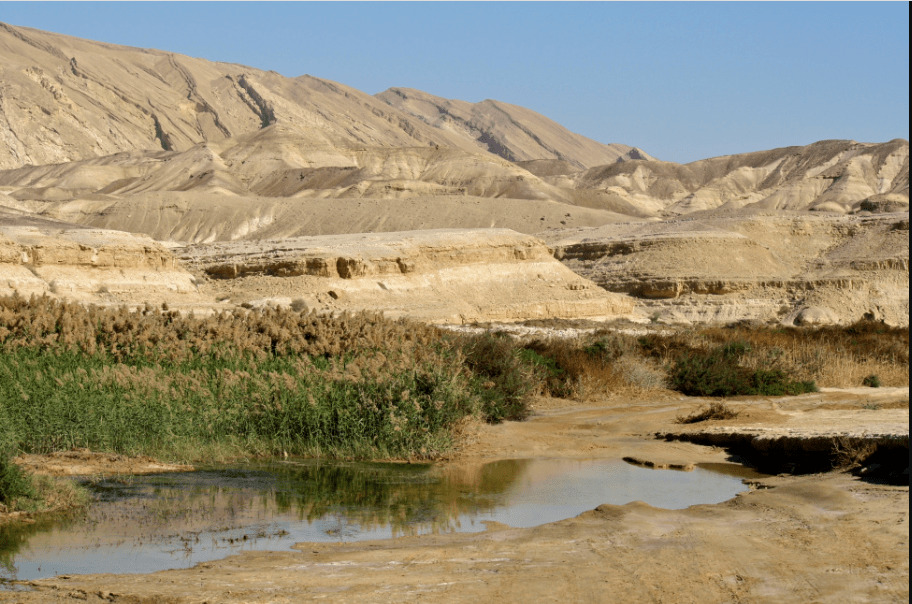
Water in the Negev – Israel Hagar’s tears of despair were wiped permanently with pools of blessings that followed. From the meagre “skin of water” they carried, God gave them a “well of water” in the wilderness. Ishmael would take a wife from Egypt and become a “great nation.”
“Then God opened her eyes, and she saw a well of water (Genesis 21:19). When emotions take over you won’t see it until you take the pill. You won’t see the blessing until you submit to the One who opens the eyes. You won’t get it until you humble yourself and stay right where you are until Help comes your way. Do not fret. In 2 Chronicles chapter 7 verses 15 and 16 the LORD says, “Now My eyes will be open and My ears attentive to prayer made in this place; and My eyes and My heart will be there perpetually.”
You shall call his name Ishmael, Because the LORD has heard your affliction.
—Genesis 16:11
The name Ishmael (ישמעאל) literally means God Hears —The Lord heard everything (שמע יהוה). Compare that to verse 146 of Psalm 119 above where it says, “I cry out to You; Save me, and I will keep Your testimonies.” I could almost hear Hagar crying out, “Save me”, Hebrew hoShiEni (הושיעני), from Yasha (ישע), meaning to save, be saved, be delivered. That is where we get the nouns Jeshua (ישוע) yeshua (ישועה), anglicized Jesus.
About 1,800 years later the Apostle Paul wrote in the NT book of Romans chapter 10 verse 13 that “whoever calls on the name of the Lord shall be saved.” —Paul was teaching about Yeshua (ישוע). Is that the “saviour” that responded to Hagar and Ishmael’s tears in the wilderness? Well, Messiah Yeshua made this bold statement; “Truly, truly I say to you, before Abraham was born, I am” (John 8:58 NASB).
Not only that, Yeshua revealed to John that He is the Lamb that was slain from the foundations of the world (Revelation 13:8). And our law of first mentioned confirms men began to call upon the name of the Lord in the days of Enosh (אנוש) the son of Seth, the third son of Adam and Eve (Genesis 4:26).
The anglicized John, Greek Ioannes is the Hebrew name Yohanan (יוחנן) meaning Yah Is Gracious or ‘God is gracious’. The law of first mentioned takes us back to the roots of this Hebrew noun חן (hen) in Genesis 6 verse 8. It means ‘favour, grace, acceptance’. Numerical value equals 58. You guessed correctly, חן reduces to (5+8=13), our Bar Mitzvah age number.
The Law of Grace And Love
Earlier we learned that Bar Mitzvah literally means son of commandment and Bat Mitzvah means daughter of commandment. According to the Christian NT gospel of Luke chapter 2 Yeshua understood the legal implications behind the tradition and seized the opportunity when the time was right (vv. 41-50).
The ecclesiastical definition of grace is “unmerited favor. Grace is not something you earn by works.” Although our scope here is limited to ‘seed‘, our trusted law of first mentioned encourages us to check our rear view morors before we make the final turn.
But Noah found grace in the eyes of the LORD.
The prophet Zechariah quoted the Angel of the Lord saying, “For these seven rejoice to see The plumb line in the hand of Zerubbabel. They are the eyes of the Lord, Which scan to and fro throughout the whole earth.”
You don not get your hands on “The plumb line” unless for the purpose of “doing some work” with it. But what exactly are the 7 eyes of the Lord? The Prophet Isaiah described them as follows:
The Spirit of the Lord,
The Spirit of wisdom
and understanding,
The Spirit of counsel
and might,
The Spirit of knowledge
and of the fear of the Lord.Those seven are the necessary conditions Noah needed from the Lord before embarking on the monumental task of pulling off the world’s most complex engineering project to date.
Thus Noah did; according to all that God commanded him, so he did.
That is to say; Noah used the wisdom, understanding, counsel, knowledge, reverence, to follow technical instructions given by God in order to build the ark. For Noa’s family to survive the flood, he needed to execute a series of practical steps based on the “grace” (חן) he found in the “eyes” of the Lord.
In Romans chapter 13 the Apostle Paul mentioned “commandments” and “love” in the same paragraph. He concluded that “love is the fulfillment of the law.” Then in Matthew chapter 22 a lawyer asked Yeshua a question, testing Him, and saying, “Teacher, which is the great commandment in the law?” Yeshua replied, “‘You shall love the Lord your God with all your heart, with all your soul, and with all your mind. You shall love your neighbor as yourself. On these two commandments hang all the Law and the Prophets.’” (vv. 36-40)
The Law of Moses, also called the Mosaic Law was a detailed interpretation of the original 10 commandments given by God on Mount Sinai (Exodus 20; 24; Deuteronomy 5). You often see them throughout the OT Bible described as the Lord’s statutes, judgments, precepts, commands, and commandments. Rabbis teach that they were 611 laws covering a wide range of social, health, administration aspects of the Israelites—above all, warship, and the love of God” (Genesis 6:4).
If you type: תורה in Google Translate from Hebrew to English you get “Bible” That Hebrew word for Torah has a numerical value of 611 (ת = 400, ו = 6, ר = 200, ה = 5). Combining 611 commandments which Moses taught.
When Yeshua came He ratified “Love the Lord your God,” and “Love your neighbour as yourself” —These two commandments raised the bar of the entire Law to 613 (Matthew 22:37). Yeshua emphasised, “Do not think that I came to destroy the Law or the Prophets. I did not come to destroy but to fulfill” (Matthew 5:17). The Greek equivalent used there is plhrovw (πληρόω) from the root: plhro (πληρό) meaning to fulfill, make full; (pass.) to be filled, full, complete. The Apostle Paul used the term fulfilled, fulfillment (peplērōken | πεπλήρωκεν) when explaining the “Love Your Neighbor” law to the gentiles in Romans 13:8,10.
In the NT book of Acts another Greek synonym of fulfilled, completed, is eplērōsan | ἐπλήρωσαν. It appears frequently for example in Acts 12:25 and 13:27. In the next example some English translations use ‘accomplished’ (NASB) or ‘fulfilled’ (ESV).
From Attalia they sailed back to Antioch, where they had been committed to the grace of God for the work they had now completed.
—Acts 14:26
The early church Apostles graduated through Yeshua’s discipleship relationship where they experienced the law of love first hand. Strong’s describes the Greek mathētḗs (μαθητής) — connected to our word math — as the “mental effort needed to think something through”) – properly, a learner; a disciple, a follower of Christ who learns and puts into practice the knowledge acquired. It is a lifestyle emulating the “teacher.” Yeshua said He learned from His Father too (John 5:19). That makes Messiah the first disciple (mathētḗs).
Talmid (תלמיד) is the Hebrew word for a disciple; talmida תלמידה (female), talmidim תלמידים (plural). Its roots are associated with Lamad למד meaning to teach, learn, instruct. Earlier we saw Lamed (ל), the twelfth letter of the Hebrew Alphabet with a pictograph of a cattle goad, a staff or a rod. Where grace and love meet, the rod in the hands of the teacher is for guidance, not punishment. Our law of first mentioned points to Noah as the world’s first graduate disciple, talmid (תלמיד) who successfully completed the assignment set before him following instructions from the Lord.
The Hebrew description of what Noah accomplished comes from the root tāmam/tamam תמם meaning to be complete, finished (be at an end). Numerical value equals 480, or (4+8+0=12), bringing us back to our Lamed (ל).
Building the ark was just the beginning. Scriptures say Noah’s relationship with God continued to a new level.
This is the genealogy of Noah. Noah was a just man, perfect in his generations. Noah walked with God.
The footnote describes “perfect” as; blameless or having integrity. The Hebrew equivalent used there is tāmîm/tamiym תמים meaning: integrity, truth (without blemish), sincerely, sound, without spot, undefiled, upright, whole, perfect, complete, full.
That brings us to the world’s second successful graduate disciple, talmid (תלמיד).
When Abram was ninety-nine years old, the LORD appeared to Abram and said to him, “I am Almighty God; walk before Me and be blameless.
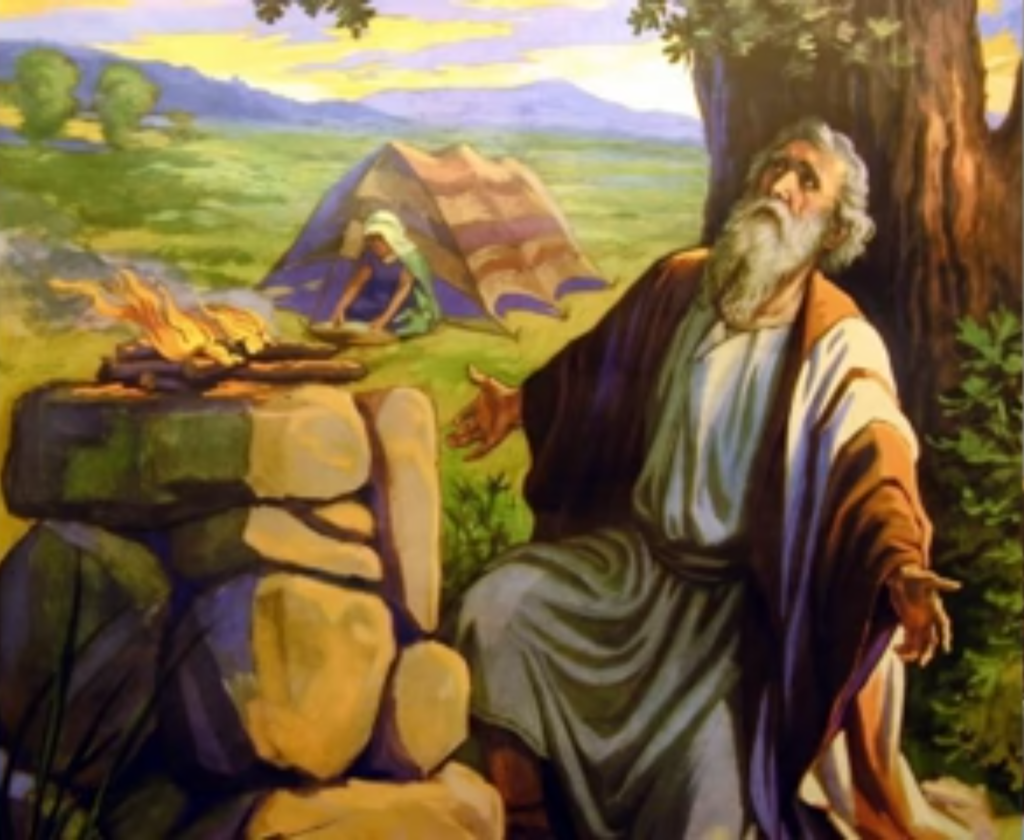
Illustration of Abraham – nabataea.net Do you see what I see? Noah ‘Walked’ with God. Abraham was commanded to ‘walk’ before the LORD. Yeshua said, “I am the way . . . (John 16:4). The followers of Yeshua who formed the first Church were His disciples talmidim תלמידים first. They walked with the Messiah. They followed the “ways of the Lord.” Hence, the first group of Apostles and believers Yeshua left behind were called, the “Way” (Acts 9:2). Messiah left behind no church named after Him because He came to point the “way” back to the Father, not to Himself (John 14:6; John 17:6,11,12,26).
Fathers primary role is to teach, and to support their children. God’s role as Father and Judge is not to enforce a legalist regime of “do, don’t”. The law is God’s “support system” to help His children reach their potential. When we succeed, it is God who gets the glory. When we fail, it is God’s purposes in us that suffer. Now here comes some interesting figures:
- tāmîm/tamiym תמים occurs 91 times in the original WLC Hebrew and the KJV Bible. That reduces to (9+1=10), the Ten Commandments (Exodus 20; 24; Deuteronomy 5)
- tāmîm/tamiym תמים occurs in 85 verses in the original WLC Hebrew and KJV. That reduces to (8+5=13), our Bar Mitzvah/Bat Mitzvah age (Luke 2: 41-50)
- Commutatively the numerical value of talmidim תלמידים (plural) equals 534, reducing to (5+3+4=12), our ordinal level number of the Hebrew letter Lamed (ל)
- Numerical value of tāmîm/tamiym תמים equals 490, reducing to (4+9+0=13). The same numerical value of Grace, and Love.
That also brings into focus The Parable of the Unforgiving Servant —Peter came to Yeshua and said, “Lord, how often shall my brother sin against me, and I forgive him? Up to seven times?” Jesus said to him, “I do not say to you, up to seven times, but up to seventy times seven (John 18:21-22). Numerically that works our 70×7=490, reducing to (4+9+0=13). Love by God’s standards.
Finally, guess what we find when we apply some of the math we have learned to the name of the Father, the Lord God of Israel יהוה אלהי ישראל? Numerical value equals 613! Commutatively (6+1+3=10), the Ten Commandments. God is love (1 John 4:16). The Lord could never ask His people to do what He cannot do Himself. When Yeshua taught about loving God, and loving one another, He was not liberating us from the ‘cumbersome Law,’ or from the ’10 commandments.’ Instead, Yeshua was inviting us to “learn” from Him in order to accomplish the requirements of the law.
A new commandment I give to you, that you love one another; as I have loved you, that you also love one another. By this all will know that you are My disciples, if you have love for one another.
—John 13:34-35
There is only one way to live outside God’s law —stop loving. Once you cross that bridge there is a certificate of lawlessness waiting (2 Thessalonians 2:1-12). Because God loves us, He will not stop us from choosing the opposite of His will. Once we have experienced evil then we can tell the difference when we find the good side. When we love, it is for our own benefit—heaven identifies us as the Lod’s beloved Bar Mitzvah (son of commandment) and Bat Mitzvah (daughter of commandment).
It is written, “God Himself is Judge (Psalms 50:6). That is where we get the name Daniel דניאל, original form דנאל without a yod (י). Numerical value of 85, reducing to (8+5=13). God judges by the standards of His established law (Isaiah 33:22). That was from the Old Testament. But hear what Yeshua says about His own judicial credentials in the New Testament:
For the Father judges no one, but has committed all judgment to the Son, For as the Father has life in Himself, so He has granted the Son to have life in Himself, and has given Him authority to execute judgment also, because He is the Son of Man. I can of Myself do nothing. As I hear, I judge; and My judgment is righteous, because I do not seek My own will but the will of the Father who sent Me.
—John 5:22,26,27,30

The Hebrew word used there for Love is Ahava אהבה. Numerical value equals 13, exactly the same value as ‘grace’ hen (חן). In the Christian NT bible, 1 Corinthians 13 is often fondly called the ‘love chapter’ by mainstream speakers on Sunday. But how many know that “The Greatest Gift” of all is also a “law” and it is “practical?” Noah followed instructions given by God to build the life-saving ark because he loved the Lord, and his family enough to “do” the work.
It is my prayer that this would help those worried about their loved ones who have failed to publicly confess their Christian faith, and are unchurched. The Lord knows where they are, and what is in their hearts. The condition is, “whoever calls on the name of the Lord . . . ,” not whoever shall come to church. Hagar’s tears and practical steps she took responding to instructions given by the Angel of the Lord paid off. Mother and son found grace in the wilderness, far removed from the welcoming environment of a corporate auditorium. Your primary legal responsibility is to just keep loving them and pray. Grace (חן) is what God leads you to accomplish by following the Ways of the Lord —His Will (Matthew 6:10; Hebrews 10:7,9; John 14:6).
In the last part of this incredible journey of discovery we will start right from where we left off at the Qoph (ק) part of Psalm 119. There is a bit more number crunching starting with the name of Yeshua (ישוע). Finally, we get to shine the spotlight into the science lurking behind the mysterious mustard seed. Meet you there.
-
The Mystery of the Mustard Seed—Part One
Introduction:
Welcome to the first of the three-part article exploring the coded information packed in the biblical “Parable of the Mustard Seed.”
Unless otherwise stated, portions of scripture references in this publication are primarily quoted from the New King James Bible Version (NKJV).
Our journey is inspired by a metaphorical presentation of the mustard seed through a bioecological projector. Expect a curious detour in the world of astrophysics and arithmetic characteristics hidden in plain sight. At the end, many will be asking the same question I had—how come I did not see that before?
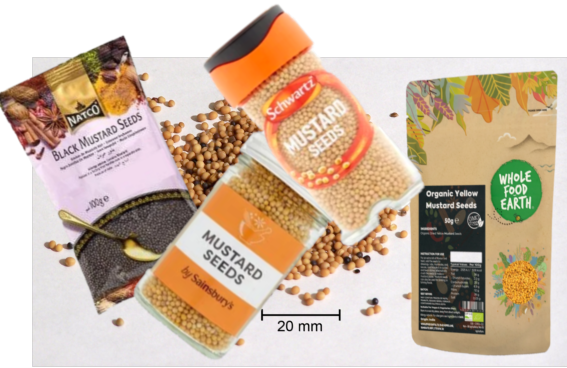
Variety of mustard seeds in grocery store Mustard is the powder substance ground or made from the seeds of a mustard plant. The moment you type “Mustard Seed” in the Google search window you get a result categorized in, “Food:” If you chose to stay, then you will be lured deeper in a staggering array of options in fancy packaging and containers. Why? It is all about commercialism.
In the whole Bible, the stand alone word “mustard” does not exist. The compound “mustard seed” occurs only 5 times in 5 verses in the New Testament (Matthew 13:31; 17:20; Mark 4:31; Luke 13:19; 17:6). It is the subject of perhaps the most consequential parables Yeshua (Jesus) told during His rabbinic work.
What is the Purpose of Parables in the Bible?
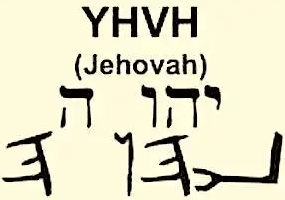
The Hebrew Name of God – By Mini Manna Moments In antiquity literacy was developed pictographically. Cuneiform and Egyptian hieroglyphs are some of the earliest known writing methods. Ancient Aramean tribes used Paleo pictographs which gradually evolved into what many scholars refer to as pre-Christian Biblical Hebrew (Ktav Ashuri, Hebrew: כְּתָב אַשּׁוּרִי). The modern Hebrew alef bet (alphabet) retains its ancient pictographic characteristics. Also behind every pictorial sign or symbol of the Hebrew language lurks a numerical value which makes it alphanumerical, just like Greek.
Although Hebrew is the only language in the world that has kept its roots for over 3000 years, it is not immune to change—As diaspora Jews and Israelis continue to perform “Aliyah” (relocate to Israel) meaning of certain words or phrases steadily become subject to interpretation. “That ancient script can reveal the true intent of any particular Hebraic word when it was originally written.” —(Mini Manna Moments: Valuable resource helping scholars to make sense of scriptures in context).
Storytelling in the Judean region where Yeshua (Jesus) grew up primarily revolved around their relationship with YHWY (יהוה), the God of their ancestors. Many interesting rabbinic teachings and idioms widely derived from pastoral lifestyle reliant on agricultural cycles (seasons of planting, sowing and harvest). A typical Hebrew language story not only provoke curiosity, but also appeal to the combination of all five senses— sight, sound, smell, taste, and touch.
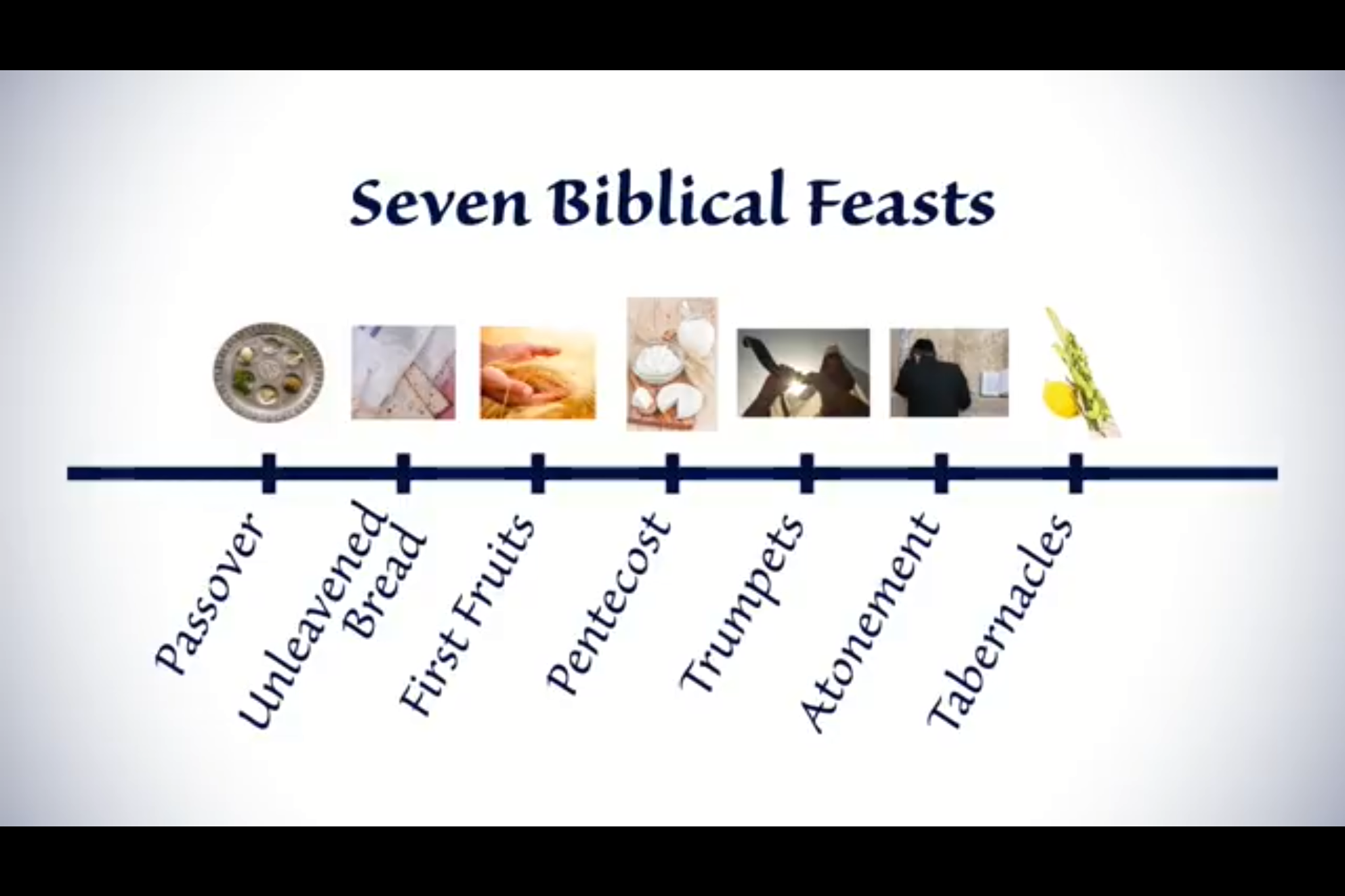
Prophetic Fulfillment of the Biblical Feasts – Living Strategically Majority of the ancient Biblical prophecy I have studied follow a similar pattern. However, any attempt to interpret them literally is presumptuously risky (Deuteronomy 18:20-22). The prophet Moses is widely credited for transcribing the Torah (first 5 books of the Hebrew Bible, Christian Old Testament). He foretold of Yeshua’s ‘Prophet’ credentials nearly 1,342 years before Yeshua was born in Bethlehem of Judea (Matthew 21:11; Luke 7:16; 24:19).
The LORD your God will raise up for you a prophet like me from among your brothers. You must listen to Him . . . I will put My words in His mouth, and He will tell them everything I command Him. And I will hold accountable anyone who does not listen to My words that the prophet speaks in My name.
—Deuteronomy 18:15,17-19 (Berean Standard Bible –BSB)
At the height of Yeshua’s ministry in Galilee He constantly faced controversial questions related to His teachings. While Yeshua’s disciples wanted to learn, factious traditionalists (Pharisees, Sadducees, Scribes, teachers of the Law) and cynics often sought to fault Him for prosecution.
And the disciples came and said to Him, “Why do You speak to them in parables?”
He answered and said to them, “Because it has been given to you to know the mysteries of the kingdom of heaven, but to them it has not been given.The word mysteries there highlighted in the footnotes as, ‘secret or hidden truths’. In the Hebrew mindset, “Truth therefore is Dynamic. A matter of trust —not abstract knowledge. It is based on concrete ideas where attention is given to function, meaning, that you must DO in order to UNDERSTAND”
—(Mini Manna Moments).Yeshua continued to explain by quoting Isaiah 6:9-10.
Therefore I speak to them in parables, because seeing they do not see, and hearing they do not hear, nor do they understand. And in them the prophecy of Isaiah is fulfilled, which says:
‘Hearing you will hear and shall not understand,
And seeing you will see and not perceive;
For the hearts of this people have grown dull.
Their ears are hard of hearing,
And their eyes they have closed,
Lest they should see with their eyes and hear with their ears,
Lest they should understand with their hearts and turn,
So that I should heal them.’Now to a detractors tuning in, that wouldn’t make sense —it would be perceived like a stinging insult instead. But to Yeshua’s disciples keen to learn, those comments would be the wakeup call urging them to pursue wisdom from the master.
But blessed are your eyes for they see, and your ears for they hear; for assuredly, I say to you that many prophets and righteous men desired to see what you see, and did not see it, and to hear what you hear, and did not hear it.
Matthew also quoted the Levite Asaph, famous author of twelve recorded Psalms (50,73-80). Asaph prophesied about Yeshua’s teaching in parables nearly 860 years prior.
Seventeenth Hebrew Letter: Pe/Peh/Pey Numerical value of 80. Pictographic meaning of mouth, opening, speech – By Pinterest All these things Jesus spoke to the multitude in parables; and without a parable He did not speak to them, that it might be fulfilled which was spoken by the prophet, saying:
“I will open My mouth in parables;
I will utter things kept secret from the foundation of the world.”That last statement highlighting things kept ‘secret’ from the ‘foundation’ of the world, is the key. Because in ancient times pursuing a career in the prophetic was a very dangerous preposition. Elijah nearly lost his life at the hands of Jezebel and Ahab (1 Kings 19). Judah’s backslidden King Joash ordered a hit job on Zechariah, the son of Jehoiada the priest for pronouncing God’s judgement on Judah’s ruling elite and their complicit subjects (2 Chronicles 24:20-22).
Prophets continued to live precariously for daring to declare hair-trigger statements such as, “Thus says God . . . “ even during Yeshua’s time in the Holy Land. Violence against “The Way” (first church followers of Yeshua) escalated well into the early Christian period (Luke 11:47-51; Acts 7). Besides fear of retribution, some prophets of old would prefer to stay quiet rather than risk losing credibility when things don’t necessarily turn out exactly as predicted (Jonah 4:1-11). Nevertheless, prophets are “watchmen”—they have a legal obligation to just go ahead and spell it out, and let God worry about the consequences (Ezekiel 33:7-16).
Those with military experience will attest to the fact that telegraphing your intentions to the adversary is one of the greatest miscalculations imaginable. Losing the element of surprise can be costly and regrettable indeed. When teaching His disciples how to pray, Yeshua told them to direct their prayer to God, “Our Father in Heaven . . .” (Matthew 6:9-13). No father would like to be misunderstood by their children (1 Corinthians 14:33; Ephesians 1:9).
The covert construct of parables and prophecies is meant to maintain operational integrity for God’s people in a hostile environment. The cipher combination of symbols and numbers on which the original Biblical script is based also embedded adequate cryptographer tools. That remains true with the modern Hebrew language. Most mainstream Christians suspect any attempts to collate scripture analysis with Gematria aids is Jewish mysticism. I have come across many who were raised in faith groups that dismiss the whole idea of numbers in the Bible as kabbalistic occult. That was my mindset too until I came across this command by Yeshua in the last book of the Christian NT Bible;
Here is wisdom. Let him who has understanding calculate the number of the beast, for it is the number of a man: His number is 666.
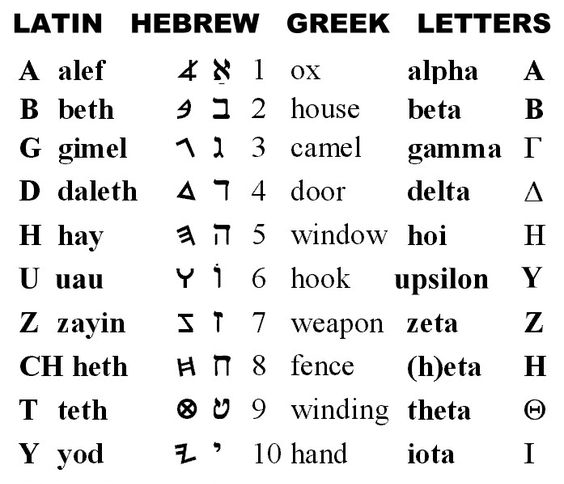
That was my eureka moment—I quickly learned that both Hebrew and Greek are alphanumeric. For the first time I realized there are too many numbers in scripture to be ignored. Then I immersed in deeper understanding of the cultural gradient that influenced the early church Jewish Apostles. Today, Paul’s teachings (the Pauline doctrine) feature prominently in Christianity theology.
Yeshua left behind the Apostles and disciples of the first century church in a highly Hellenized region. They learned Greek, and embraced Greek culture. We are told that large Jewish communities in the diaspora spoke Greek instead of Hebrew. Unsurprisingly, the first Christian New Testament Bible has it’s roots in the Septuagint. Records date back to the 8th day of the month of Tevet,טבת (December–January) 3rd century BCE when the Egyptian King, Ptolemy, ordered that the Tanakh (Hebrew Bible) be translated into Greek. That work by 72 Hebrew sages (scholars) delivered the Septuagint.
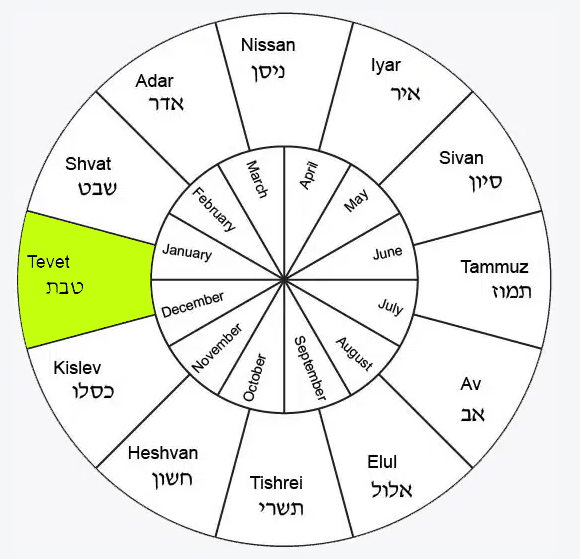
“At the time of Yeshua (Jesus), the Septuagint was on equal standing with the Hebrew text.” —(The Messianic Prophecy Bible Project: Jerusalem Under Siege).
But the Hellenists did not appreciate the Apostles’ message of the Kingdom passed down by Yeshua. Prior to His departure, Yeshua warned his disciples to be wise and prepare for the worst (Matthew 10:16-26; John 16:1-4,33). The Apostle Paul prayed for believers;
“that the God of our Lord Jesus Christ, the Father of glory, may give to you the spirit of wisdom and revelation in the knowledge of Him, the eyes of your understanding being enlightened. . .”
One Sunday morning I heard Pastor Alwin Wall at Calvary London say, “The life of discipleship is not a playground, it is a battlefield. We have a choice—to quit, or to win.” The battle lines were drawn in ancient times. Throughout scripture we are told that the battle must be won in the unseen realm first before it is made manifest in the physical. The adversary excels in psych-warfare (2 Corinthians 10:1-6; Ephesians 6:10-18).
The Apostle Paul—quoting from Isaiah chapter 29 verse 14—subtitled this truth in his first letter to the church at Corinth as follows: “Christ the Power and Wisdom of God.”
For the message of the cross is foolishness to those who are perishing, but to us who are being saved it is the power of God. For it is written:
“I will destroy the wisdom of the wise,
And bring to nothing the understanding of the prudent.”Where is the wise? Where is the scribe? Where is the disputer of this age? Has not God made foolish the wisdom of this world? For since, in the wisdom of God, the world through wisdom did not know God, it pleased God through the foolishness of the message preached to save those who believe. For Jews request a sign, and Greeks seek after wisdom; but we preach Christ crucified, to the Jews a stumbling block and to the Greeks foolishness, but to those who are called, both Jews and Greeks, Christ the power of God and the wisdom of God. Because the foolishness of God is wiser than men, and the weakness of God is stronger than men.
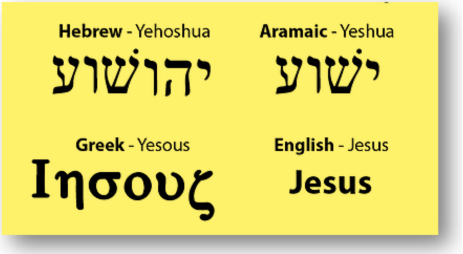
Many questions, but there are plenty of answers too for those who want to learn how to navigate the ways of the Lord. In modern Israel and the West, there are plenty of individuals who identify with big titles of “prophet, apostle, bishop, pastor, evangelist”, etc. Many of them are doing quite well in ‘ministry’. It is no longer dangerous to use “the Greeks” and “foolishness” in one sentence. But there are also places elsewhere in the world where persecution against Christian faith groups regrettably persist. Ancient prophecy covers both sides of that reality.
The last book in the Christian NT Bible talks about Messiah Yeshua’s letters to the seven End Time churches (Revelation chapters 1, 2 and 3). They include; The Loveless Church of Ephesus, The Persecuted Church in Smyrna, The Compromising Church in Pergamos, The Corrupt Church in Thyatira, The Dead Church in Sardis, The Faithful Church in Philadelphia, and the Lukewarm Church of the Laodiceans.
Those 7 church addresses are not meant to be taken literally. They are a prophetic pictograph of what Messiah Yeshua predicted would become of “The Way” —that Church He left behind bonded in Jerusalem (Acts chapters 1 through to 5). Notice the singular in Matthew chapter 16 verse 18 where Yeshua declared, “on this rock I will build My church, and the gates of Hades shall not prevail against it.” Some believe Yeshua meant the ‘coalition‘ of churches, denominations, or faith groups theologically referred to as the “holy catholic church“, or the “holy universal church“. But for the scope of this article, this will be a topic for another day.
Church divisions began around 31CE (Acts chapter 6) between Jewish conservative believers who decided to “continue with prayer and the ministry of the word,” and Hellenists who complained over daily supplies (vv. 1-7). Nevertheless, the church continued to grow, but so did the divisions. Today, it is estimated that there are over 45,000 faith groups around the world that identify as “Christians” —(International Bulletin of Mission Research – IBMR).
How to Pray
At the end of the judicial ‘Parable of the Persistent Widow’ Yeshua narrated to His disciples in Luke chapter 18, He posed this question—“Nevertheless, when the Son of Man comes, will He really find faith on the earth?”
Those familiar with the story conclude the woman’s persistence is a demonstration of great faith which eventually got her justice. That the practical application for Christians therefore, is to not give up on praying and believing even if sometimes it might feel like for some reason God is taking too long. Good! But there is more. . . Previously the Lord said, “If you have faith as a mustard seed, you can say to this mulberry tree, ‘Be pulled up by the roots and be planted in the sea,’ and it would obey you” (Luke 17:6). Five chapters and six more parables further back the Lord taught His disciples about the kingdom of God in the “Parable of the Mustard Seed” (Luke 13:18). We can complete this part of the puzzle by returning one more step back on what Yeshua taught His disciples about prayer.
“When you pray, say:
Our Father in heaven,
Hallowed be Your name.
Your kingdom come.
Your will be done
On earth as it is in heaven.”God’s ‘will’ is simply doing things His Way, not our way. There is a big difference between what we wish should happen, when, and how versus reality from God’s perspective. The quantity of faith, or how persistent you can keep asking doesn’t really accomplish anything outside of God’s will.
Yes, God is the compassionate Father who is concerned about the welfare of His children (Luke 11:3). But He is also the ‘Just Judge’ who will not compromise on justice (Isaiah 33:22; Psalm 50:6).
When Yeshua taught His disciples to call in God’s kingdom, and His will be done on earth as it is in heaven (Luke 11:2; Matthew 6:10), He meant total and fast victory (Luke 18:8; Isaiah 65:24). Some NT versions say, “I tell you, he will see that they get justice, and ‘quickly’” (NIV), or “promptly” (BSB). Time retreats when God’s will responds to prayer because time zone restrictions do not apply in heaven. Daniel’s intersession prayer for Israel delayed for 21 days not because it was God’s will, but because there was contention in the unseen realm (Daniel 10:12-13). The breakthrough came once Daniel fulfilled the legal requirements to “repent” of his own sins, transgressions and iniquities, and on behalf of God’s people in Babylonian captivity. Notice the astonishing exchange bellow:

Now while I was speaking, praying, and confessing my sin and the sin of my people Israel, and presenting my supplication before the Lord my God for the holy mountain of my God, yes, while I was speaking in prayer, the man Gabriel, whom I had seen in the vision at the beginning, being caused to fly swiftly, reached me about the time of the evening offering. And he informed me, and talked with me, and said, “O Daniel, I have now come forth to give you skill to understand. At the beginning of your supplications the command went out, and I have come to tell you, for you are greatly beloved; therefore consider the matter, and understand the vision:
The keywords that made my day include: —’Now’, ‘while I was speaking in prayer’, ’caused to fly swiftly’, ‘about the time of the evening offering’, ‘at the beginning of your supplications the command went out’.
According to the prophetic book of Revelation there is a woman, one woman. She is ”the Lamb’s wife” (Revelation 21:9). Just like the woman of Luke 18:1-8, she is a subject of lawfare persecution (Revelation 12:10,11,13,16). She prevails against her adversary by a judicial process involving ‘the blood of the Lamb’ (her husband) and “and by the word of their testimony.”
Two important clues to note there: (1) the plural ‘their’ in this context is the ‘couple‘. Symbolically, the church is that ‘woman’ who is the subject of persecution—“the bride, the Lamb’s wife.” In Hebrews chapter 12, verse 23, this woman is identified as “the general assembly and church of the firstborn who are registered in heaven.” (2) the ‘testimony’ is a judicial term. When God instructed Moses to build the Tabernacle, “the ark of the Testimony” and the mercy seat that is on it’ was part of the furniture of the tabernacle. Then God, “gave Moses two tablets of the Testimony, tablets of stone, written with the finger of God” (Exodus 24:12; 31:7,18).
The 10 Commandments – By Pinterest What would the ancients say if they came back to life and found our kids playing with electronic tablets? We have come a long way—from stone tablets, clay, papyrus and crude parchments before pen and paper emerged. But none of that takes God by surprise. He allowed the prophet Daniel a sneak preview of it thousands of years in time. Daniel understood how in heaven everything is done by the book.
“I watched till thrones were put in place,
And the Ancient of Days was seated;
His garment was white as snow,
And the hair of His head was like pure wool.
His throne was a fiery flame,
Its wheels a burning fire;
A fiery stream issued
And came forth from before Him.
A thousand thousands ministered to Him;
Ten thousand times ten thousand stood before Him.
The court was seated,
And the books were opened.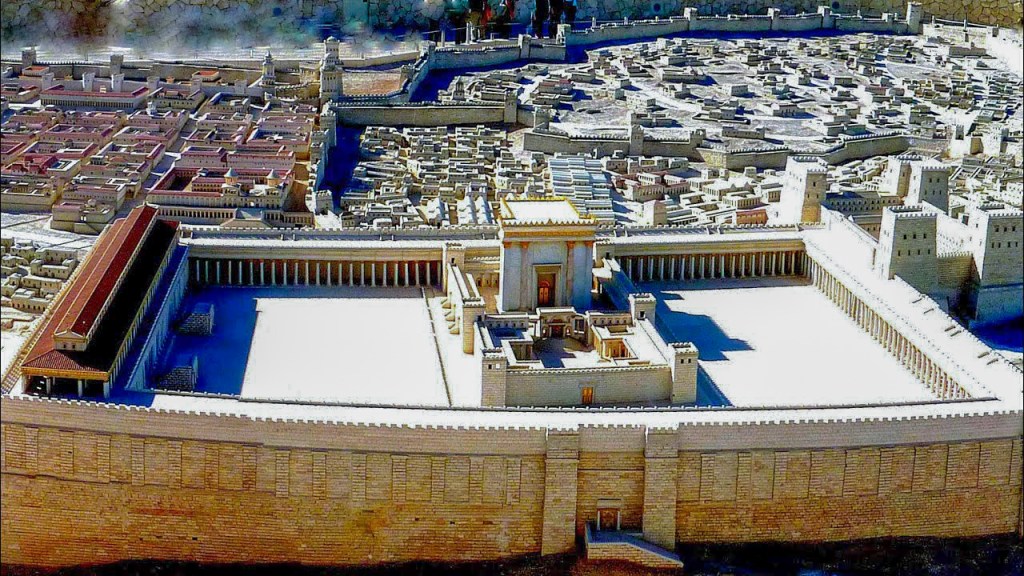
A Model of the Second Temple (516 BCE – 70 CE) The first century church Apostle Paul taught that following Yeshua’s intervention on the Cross, the Tabernacle (temple) function has since been relocated (1 Corinthians 3:16; 6:19). He was quoting the OT prophet Jeremiah in chapter 32 verses 31-34. Notice the list of judicial terms (witness, covenant, laws, lawlessness, and truth) bellow.
But the Holy Spirit also witnesses to us; for after He had said before,
“This is the covenant that I will make with them after those days, says the Lord: I will put My laws into their hearts, and in their minds I will write them,” then He adds, “Their sins and their lawless deeds I will remember no more.”
. . . let us draw near with a true heart in full assurance of faith, having our hearts sprinkled from an evil conscience and our bodies washed with pure water.
Prior to construction of the masonry temples in Jerusalem, the Tabernacle that housed “the ark of the Testimony”, and where Moses met with God during the Israelites’ journeys in the wilderness was also called the “Tent of Meeting”, Hebrew: ‘Ohel Moed’ אוהל מועד.
The Apostle Paul called the body, “this tent” (2 Corinthians 5:1-8). Every time a believer begins to pray, they are technically synchronizing with kingdom activity (Exodus 33:7-11; 40:34; Luke 11:1-13; 18:1-8). The Lord, God Almighty is interactive and approachable. He responds to dialog from ‘the heart’, not from ‘the books.” The Lord did not teach us ‘what to pray’. Yeshua said, “In this manner, therefore, pray:” (Matthew 6:9). It is for everyone—“whoever calls on the name of the Lord . . .” (Romans 10:13; Joel 2:32).
The meeting is conditional on the following:
- God’s ‘Will’, not as we wish (Luke 11:2; Hebrews 10:7,9)
- God’s ‘Way’, not another way (Matthew 6:7,9; 1 Thessalonians 5:19)
- God’s preferred place and time (Deuteronomy 14:23; Matthew 6:5-6)
- Be willing to pray for others (Luke 11:5-8; 2 Corinthians 5:20)
- Humility—resist lawlessness (Luke 18:1-8; Hebrews 10:16).
- Forgiveness—of self, and others (Matthew 6:12-15)
I can almost feel a bit of tension on ‘lawlessness‘ —Have we not been told we live by ‘grace’, not by the OT ‘law’? Thus far we want to keep track of the Parable of the Mustard Seed we set out to explorer. There is so much to the subject of the law still to come, I promise. I keep telling my friends, “if it works for you, just keep doing what you are doing.” But for now, we can reflect on; Luke’s judicial presentation in ‘The Parable of the Persistent Widow’ (Luke 18:1-8), Apostle Paul pointing the way to the Lord’s throne room of Grace and mercy where He is the presiding ‘Just Judge of all’ (Hebrews 12:22-24), and to the church—the bride, the Lamb’s wife—destined to overcome by the “blood of the Lamb, and by the word of her testimony (Revelation 12:11).
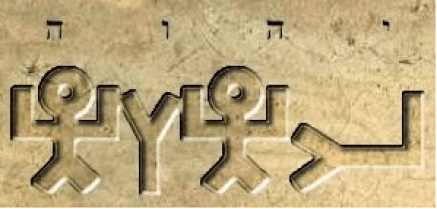
Ancient Paleo Inscription of the Name of The Lord – By Mini Manna Moments As a footnote, when John recorded those “who keep the commandments of God and have the testimony of Jesus Christ” in Revelation chapter 12 verse 17, he was not talking about Jews who follow the Torah or the Tanach (Hebrew Bible-OT). He was talking about those who call on the sacred Name (HaShem) that God Almighty (El Shaddai) revealed in Exodus chapter 6 verses 2 and 3. The LORD, YHVH ( יהוה ) is His Name. He spelt it out very clearly through the prophets of old, and modern times.
I am the LORD, that is My name;
And My glory I will not give to another,
Nor My praise to carved images.
Behold, the former things have come to pass,
And new things I declare;
Before they spring forth I tell you of them.”
The Combined Old, and New Testament Bible Paul revealed in Philippians chapter 2 verse 11 that, “Jesus Christ (Yeshua HaMashiach) is Lord, to the glory of God the Father.” Yeshua confirmed it by saying, “I and My Father are one” (John 10:30). Since ancient times, the noun Yeshua (ישועה) means savior, and teshua (תשועה) means salvation. Yeshua (Jesus), is the One who the Jewish Apostle Paul was testifying about to the gentiles saying, “For whoever calls on the name of the Lord shall be saved.”
From ancient times, the “command” to call upon the name of the Lord has gone out (Genesis 4:26; Romans 10:13; Joel 2:32). Salvation is available to those who have the “testimony of Jesus Christ” (1 John 5:6-13; Revelation 1:2,9; 19:10). That is the legal precedent the adversary (Greek: antidikos) of Luke 18, and Revelation 12 failed to overcome in front of the “Just Judge” of all.
It has been a winding road indeed. I am so glad we have made it to the home straight that brings into focus the answer to the question posed at the end of the widow’s legal triumph—” when the Son of Man comes, will He really find faith on the earth?” Yes, He will.
Here is the patience of the saints; here are those who keep the commandments of God and the faith of Jesus.
They are the remnant who by faith believe that Yeshua is “The Way, the truth, and the life.” When the Lord returns, He will reunite with His ‘bride’—the ‘church’ that choose to follow “The Way” even where it does not make sense to the rest of the world (Matthew 11:28-29).
These are the ones who follow the Lamb wherever He goes. These were redeemed from among men, being firstfruits to God and to the Lamb. And in their mouth was found no deceit, for they are without fault before the throne of God.
For anyone not familiar with an environment where “the commandments of God and the faith of Jesus” are mentioned in the same sermon on Sunday, I look forward to a quality moment when we can discuss that at length. Meanwhile, allow me to leave this one more thought to chew on—When Yeshua was introducing Himself to ‘The Lukewarm Church of the Laodiceans’ He instructed John to write;
These things says the Amen, the Faithful and True Witness, the Beginning of the creation of God:
“He who has an ear, let him hear what the Spirit says to the churches.”
The cue are the three judicial terms following each other—Faithful, True, Witness. We will pick it up from right there next time.
As we wait, it is the Lord’s desire to help us understand that his mind is preoccupied with nothing else but to reunite with His bride, the Lamb’s wife (Psalm 8:4). Messiah Yeshua is betrothed with One, not more (Hosea 2:16). I can feel the question in the air—“what happens to the rest?”
In the next segment, the fog clears as we continue to explore the meaning and prophetic implications of the mustard seed in details. We will unpack original word pictures for each item of interest and interpret purpose. See you there.
-
Neutralizing Satan’s Hatred Through Prayer
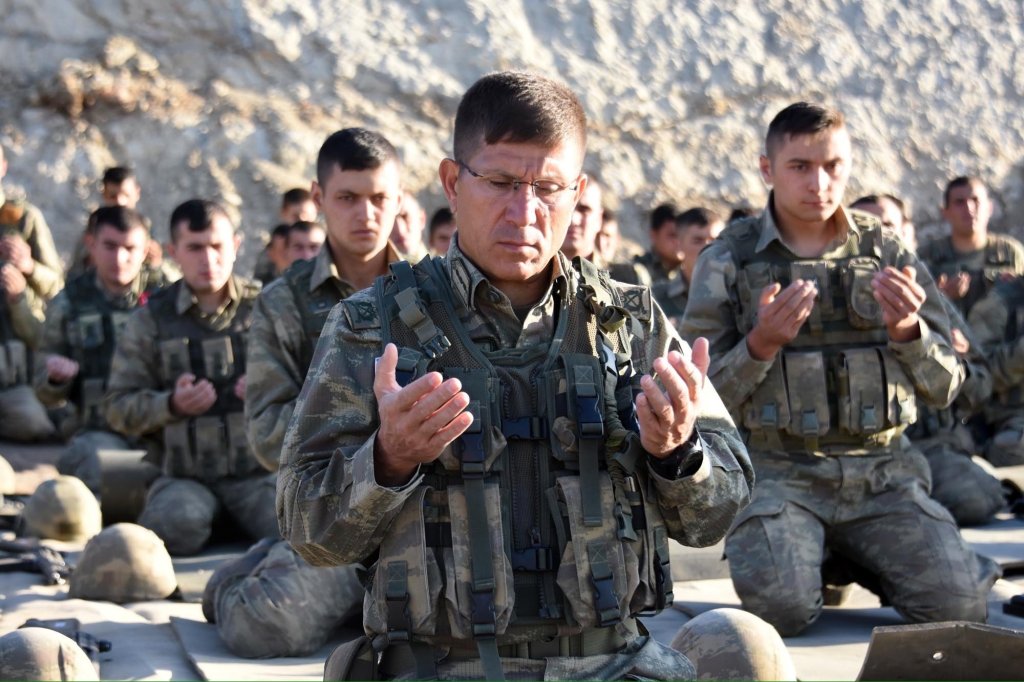
Ages Past
It demands discipline to summarize a story where the chief protagonists predate time as we know it. But with a little prayer and humility, I will try.
Humility, for fear of scope creep or the temptation of sowing misunderstanding and confusion. Also, I will endeavour to steer clear of religiosity while leaning on canonized literature.
There are plenty of Quranic references to the Hebrew Torah (תוֹרָה) and the Christian Bible. For example.
نَزَّلَ عَلَيْكَ ٱلْكِتَـٰبَ بِٱلْحَقِّ مُصَدِّقًۭا لِّمَا بَيْنَ يَدَيْهِ وَأَنزَلَ ٱلتَّوْرَىٰةَ وَٱلْإِنجِيلَ ٣
“He has revealed to you ˹O Prophet˺ the Book in truth, confirming what came before it, as He revealed the Torah and the Gospel (Injil)”
– Ali ‘Imran 3:3وَيُعَلِّمُهُ ٱلْكِتَـٰبَ وَٱلْحِكْمَةَ وَٱلتَّوْرَىٰةَ وَٱلْإِنجِيلَ ٤٨
“And Allah will teach him writing and wisdom, the Torah and the Gospel”,
– Ali ‘Imran 3:48On this occasion, we will stick with the Torah / Bible just to keep it simple.
I appreciate just the mention of the label “Satan” invokes different meaning to different people. Those etymology definitions and arguments can stay on ice for another day. For this topic, we start at this chilling statement from the Christian New Testament (NT) part of the Bible.
“Be sober, be vigilant; because your adversary the devil walks about like a roaring lion, seeking whom he may devour.”
– 1 Peter 5:8The English word “devil” right there is “Satan” derivative of the Greek word diabolos (slanderer), translated from a Hebrew satan (שטן) – Notice the lowercase (s).
Greek and Hebrew languages are both picturesque and numerical. The Hebrew gematria (value) of שטן (satan) equals 359, which reduces to 17 (3+5+9).
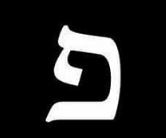
In the Hebrew alphabet (alef-bet) Seventeen (17) makes the letter: Peh Numerical value of 80. Pictographic meaning of mouth, opening, speech, blow, scatter. Thus, the mouth reveals a lot about one’s character.
From the ancient Hebrew and Greek perspective, our subject “Satan”, the devil is more of a “role” than a name. It means “adversary”,”opponent”, or “one who opposes another in purpose or act. ” – See Christswords.com article, “Satan”.
Strong’s Greek: 476 ἀντίδικος (antidikos) is a technical legal term depicting Satan’s role as an opponent or adversary. It is an ancient legal scene placing the conflict squarely in a courtroom setting prior to conclusion on the battlefield.
In the Torah (OT Bible) books of Job 1:1-6 and Zechariah 3:1-5, Satan assumes a prosecution role in his slanderous campaign against Job and Joshua the high priest. There is a happy ending for the defendants in both cases. However, throughout history we learn that when dealing with Satan victory comes at a premium.
You are doing great for tracking with me. So far, we have opened but a tiny window in the world of our satanic-legalist character. The next point takes us a little bit further to the devil’s previous career. Notice the Quran is referring to the same personality here when mentioning the “devils” and “Satan”.
هَلۡأُنَبِّئُكُمۡعَلَىٰمَنتَنَزَّلُٱلشَّيَٰطِينُ٢٢١
“Shall I inform you of whom the devils ˹actually˺ descend upon?”
– Ash-Shu’ara 26:221يَٰٓأَبَتِلَاتَعۡبُدِٱلشَّيۡطَٰنَۖإِنَّٱلشَّيۡطَٰنَكَانَلِلرَّحۡمَٰنِعَصِيّٗا٤٤
“O dear father! Do not worship Satan. Surely Satan is ever rebellious against the Most Compassionate.”
– Maryam 19:44Watch the verb “descend” stand out in Ash-Shu’ara 26:221. Specifically, Satan came down, fell, or emerged from a higher to a lower place or level at some point. From the Torah (OT Bible) we learn of such foreboding events connected to ages past.
“Then a war broke out in heaven: Michael and his angels fought against the dragon, and the dragon and his angels fought back. But the dragon was not strong enough, and no longer was any place found in heaven for him and his angels. And the great dragon was hurled down—that ancient serpent called the devil and Satan, the deceiver of the whole world. He was hurled to the earth, and his angels with him.”
– Revelation 12:7-9Put that episode in a movie context, you just witnessed violence of biblical proportions! Remember what we said earlier? The conflict always begins at the courthouse before featuring anywhere near the battlefield.
Also, we just learned that the “dragon” is another among a myriad of adjectives attributed to the devil. Satan’s first job in the unseen (heavenly) realm focused on high profile angelic activity and ended in mass rebellion. The court was seated, a verdict was rendered, and Satan with allies evicted to the earthly realm (Luke 10:18 | John 16:11).
The Baphomet statue is seen at the Satanic Temple in Salem, Massachusetts, in 2019 – Via Getty Image Sounds like fiction, right? Well, atheism (disbelief or lack of belief in the existence of God or gods) is one of the greatest enablers to Satan’s success. You’ve seen popular caricaturization of Satan as some creature with a forked tail, long tongue, fiery eyes, and twin pointed horns. Then, there is Darwinism and other isms along those lines. All that packs a perfect camouflage in Satan’s trade toolbox to the detriment of unsuspecting victims.
Think of a meteorology alert urging residents to evacuate a coastal district ahead of impending storm. The warning wouldn’t make much sense unless you have been through a wild twister.
Remarkably, watchers always come up with fancy names of these naturally colourless and intangible meteorological phenomena. When it is all over, breaking news flash across the screen; “Tornadoes left behind a path of destruction in Alabama and Georgia”, “Extreme weather and tornadoes have caused widespread devastation”. Relief efforts begin. Insurance companies count the cost. Civic engineers adjust plans and hope for the best next time round.
That is the kind of obscurity and unfair advantage that Satan enjoys most of the time. Remember 1 Peter 5:8 earlier? I like the way the English Standard Version (ESV) presents that red flag.
“Be sober minded; be watchful. Your adversary the devil prowls around like a roaring lion, seeking someone to devour.”
– 1 Peter 5:8Metaphorically, it’s all about mind and soul. The New American Standard Bible (NAS) condenses it like this.
“For our struggle is not against flesh and blood, but against the rulers, against the powers, against the world forces of this darkness, against the spiritual forces of wickedness in the heavenly places”.
– Ephesians 6:12Speaking of “heavenly places”, it simply implies boundless swathes of that invisible realm, in the air where Satan and co. reside (Ephesians 2:2).
According to scripture the spirit realm is a vast array beyond comprehension of mortals. Think of The Milky Way galaxy and beyond.
“The highest heavens belong to the LORD, but the earth He has given to mankind”.
– Psalm 115:16 – Berean Standard Bible (BSB)That highest heaven is where Satan was hurled to the earth with a sizable army of angelic co-conspirators (Revelation 12:7-12).
In Isaiah 45:5, God is the final Authority.
“I am the LORD; there is no other God. I have equipped you for battle, though you don’t even know me.”
– Isaiah 45:5 (NLT)In His Likeness
I was raised in family that went to a local Anglicized church where we learned to recite “The Model Prayer” (aka, the Lord’s Prayer) that Jesus Christ taught His disciples (Matthew 6:5-14).
Our Father in heaven,
– Matthew 6:5-14
Hallowed be Your name.
Your kingdom come.
Your will be done.
On earth as it is in heaven. . ..Back then, none of that made much sense to me apart from catechism benefits, and my parents feeling proud of me. What about now? That brings us to our next point.
So far, we have peeked into the unseen (heavenly) realms. The highest, inhabited by God Almighty, the architect of it all.
According to scripture, God is spirit (John 4:24). All life (visible or invisible), including mortals originate with God’s highest spirit place of timelessness (Ephesians 1:4 | Psalm 139:16).
At some point, God chose to embody a special family of spirits, equipped them with a soul (intellect), and made them manifest in a transient earthly realm (Psalm 139:13-16). God called this three-dimensional (soul, mind, body) arrangement man (Genesis 1:26).
To crown it all, God made such a cataclysmic revelation that He fashioned man in His own image (Genesis 1:26, 27). We already know from (John 4:24) that God is spirit. So how precisely could man fit the likeness of God?
“For there are three that bear witness in heaven: the Father, the Word, and the Holy Spirit; and these three are one”.
– 1 John 5:7,8Like many things Biblical, that portion of scripture if taken literally out of context can trigger such a theological problem. That is probably what gave traction to such contentious Trinitarian doctrines spawning conflicting sects in Christianity. Yet, the Bible clearly debunks that in Deuteronomy 6:4.
“Hear, O Israel: The Lord our God, the Lord is one!”
– Deuteronomy 6:4When you transpose that to our Model Prayer where it says, “Our Father in heaven”, suddenly the scales fall from your eyes. Like father, like son. Man’s complex uniqueness packaged as a three-dimensional being has DNA passed down from God.
Biologically, no other flesh and blood creatures on earth can claim that. It is therefore worth highlighting that who we are, what we are, and where we are as human beings is entirely a prerogative of the Power beyond us. No amount of religious, cultural, or scientific pronouns can alter that. I can take that to the bank and sleep.
Now you know the first reason why Satan hate humans. Our likeness in God is a constant reminder of the Lord’s justice handed down against the devil (Ezekiel 28:13-19 | Revelation 12:7-12).
The Fall
Then, God gave man dominion (full authority) over everything in the earthly realm (Genesis 1:26-30). This was the first time in recorded history when God declared that everything He had made, indeed it was “very good” (Genesis 1:31).
The lower realm at this moment in history was already hosting ancient celestial outlaws that fell out of favour from their original estate. Again, transposing the next portion of the Model Prayer over this escalation shows the second reason why Satan’s hatred for humans knows no bounds.
God’s royal mandate to man would certainly cause His name to be hallowed not only in heaven but also here in the earth. The theocracy threatened Satan’s illusory emancipation. God’s “will” be done in the earthly realm“, as it is in heaven” evocative of age-old insult to injury. Satan decided he wasn’t going to put up with that and developed a plan.
According to the Book of Revelation 12:4, when Satan fell from heaven a third of angelic collaborators followed him. No one can quantify that for sure without running the risk of hearsay (Hebrews 12:22). All we know, that is an awful lot of power under wickedness.
Practically power without authority is futile. Satan reached for one of his most potent tools. By intrigue, the devil usurped delegated authority from the first human family of Adam and his wife Eve (Genesis 2,3).
It is written that God presides over a fair justice system (Deuteronomy 32:4 | Psalm 50:6). The devil capitalized on that and leaned on his (antidikos) prosecuting, slanderous credentials to exact retribution. A verdict was rendered against the Adam-Eve couple precipitating the “fall” of man from favour with God.
A dark metaphysical episode dawned over the earthly realm (Ephesians 2:2 | 1 John 5:19). Generations would have to endure costly iniquitous consequences passed down from that Adamic brief error of judgement. To maintain obscurity and plausible deniability Satan prefers to wrap it all in mythology, atheism, polytheism, and more.
Moreover, Satan’s pedigree features unlimited host of abnormality including rebel, tempter, liar, arch-enemy and so forth. The devil, armed with both power and stolen authority continues his apocalyptic campaign. The goal – corruption, mutilation, and destruction of God’s image invested in man (John 10:10 | 1 Peter 5:8 – ESV).
In his misguided rivalry with God, Satan focuses on the soft target. Jeremiah 31:29 recorded a saying, ‘The fathers have eaten sour grapes, And the children’s teeth are set on edge.’ Put that in reverse order and imagine how God, the Father feels when those fashioned in His image get hurt.
Just like the unseen, intangible weather phenomena that wreak havoc in their paths, Satan’s culpability is solid. Remember 1 Peter 5:8 (ESV)?
“Be sober, be vigilant; because your adversary the devil walks about like a roaring lion, seeking whom he may devour.”
– 1 Peter 5:8 (ESV)?It is worth pointing out that the devil cannot “devour” (prosecute) at will. Our keyword, “sober” right there appeals to the intellect – that other part of man invisible to the naked eye. Simple criteria: Conceptualization, followed by confession. In other words, learn about it, perceive it mind and soul, then put it into practice physiologically. At that stage, there’s enough evidence for prosecution in the unseen realm. The rest is history. The cost made manifest in the physical is insurmountable.
You think by now the devil would be out of business thanks to the proliferation of religious activity around the word. Unfortunately, we live in a world obsessed by progressivism, and submerged in domestic discord. Those who think religious versus secular vs those who think they would rather be liberals and democratic. Conservatives vs progressive liberals. Nationalists vs globalists. The common people vs billionaires, and munch more. All that compounded by a lightning pace in vocabulary trend.
The last time I checked: online Wiki pages, Search engines like Google, popular encyclopaedias, and dictionaries register over 200 new English lingo alternates every year. Wokeism, and Gender Ideology topping the list of social engineering pools spawning new adjectives to help sanitize traditional taboos. The perfect environment where Satan’s agenda and his stealth capabilities get realized.
The last part of our Model Prayer offers some kind of rope though. Not to hang with, but God’s harness of rescue.
“. . . and forgive us our sins,
– Matthew 6:12-13 (NLT)
as we have forgiven those who sin against us.
And don’t let us yield to temptation,
but rescue us from the evil one”.The Hebrew word for sin is חטא (chet) with a numerical value of 18. When we break that down further, we get (1+8) = 9.
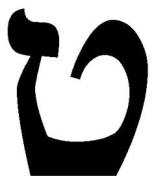
Ninth is the Hebrew letter “Tet”, numerical value of 9. Pictographic meaning among others, concealment (good/evil), to surround, snake, knot, twist, spiral, judgment.
Satan is synonymous with that ancient serpent of Eden (Genesis 2, 3), and the apocalyptic dragon (Revelation 12:7-9) that surrounds and destroys life. Hunter snake types constrict (wrap around) prey then squeeze life out to kill before swallowing it. Satan uses sin as a strong wall that surrounds us. The devil injects pride into the sinner’s mind to block repentance. Unrepentance and unforgiveness are the two greatest inhibitors to obtaining freedom and restoration from God.
What is symbolically expressed when we repent is “breaking free” from the wall of destruction from “within” and “turn back” towards freedom (Isaiah 44:22 | Acts 3:19).
Traditionally, religious recitation of the Model Prayer is exactly just that. It is a routine, ceremonial performance with no enduring result. Any attempts to rise above the niceties invite suspicion of extremism.
How To Pray
First, let us get to know a little bit more about our lead prayer coach.
The Hebrew name “Yeshua” (ישוע) is the Anglicized Jesus, Latinized Joshua (Exodus 17:9 | Ezra 2:2). From the verb ישע (yasha’), it means Salvation, Saved.
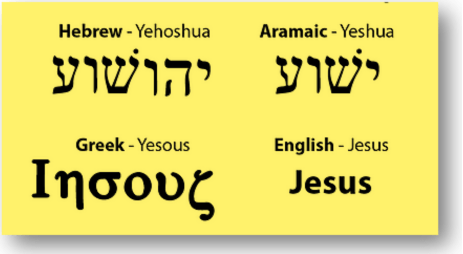
Yeshua HaMashiach is Hebrew for “Jesus the Messiah”. In a nutshell, Jesus Christ is Yeshua HaMashiach, Anointed Salvation.
Towards the end of His earthly ministry, Yeshua asked God in prayer to protect those left behind.
“I do not pray that You should take them out of the world, but that You should keep them from the evil one. They are not of the world, just as I am not of the world”.
– John 17:15-16Notice some versions use the term “protect” instead of “keep” in John 17:15 . For example:
“I do not ask You to take them out of the world, but that You keep them and protect them from the evil one“.
– John 17:15 Amplified Bible (AMP)Here is why . . .
- The numerical value of Yeshua ישוע is 386, (3+8+6) = 17.
- Seventeenth Hebrew Letter is Peh (פ), numerical value of 80.
- Passover, or Pesach (פסח) is the first of seven major Jewish (Biblical) feasts observed every year. Often linked to the Christian holiday and festival of Easter.
- Numerical value of Pesach (פסח) is 148, (1+4+8) = 13.
- Thirteenth Hebrew Letter is Mem (מ), numerical value of 40. Pictographic meaning of water, chaos, blood.
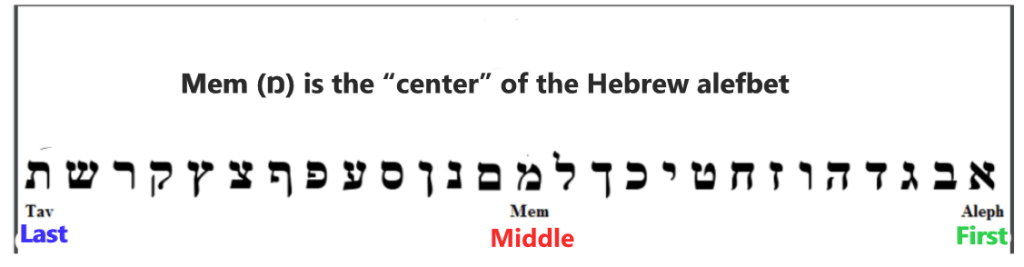
- Mem (מ) is the “center” of the Hebrew alefbet (alphabet).
- Yeshua ישוע is the Mediator of the new covenant, who shed His blood of sprinkling that speaks better things than that of Abel (Hebrews 12:24).
- Fifteenth Hebrew Letter: Shamech (ס) sits in the middle of פסח (Pesach, Passover). Numerical value of 60. Pictographic meaning, to surround, support, protect.
- Both Chet (ח) and Shamech (ס), as in פסח (Pesach) are synonymous with support and protection.
- Pesach פסח (Chet, Samech, Peh) – Combined represent “total protection”. Messiah Yeshua (the lamb) standing guard when He sees His own blood at the door, to defend against the destroyer (Exodus 12:13,23 | 1 Corinthians 5:7 | Revelation 13:8). Remember, Yeshua is the Door (Dalet) דלת (John 10:9).
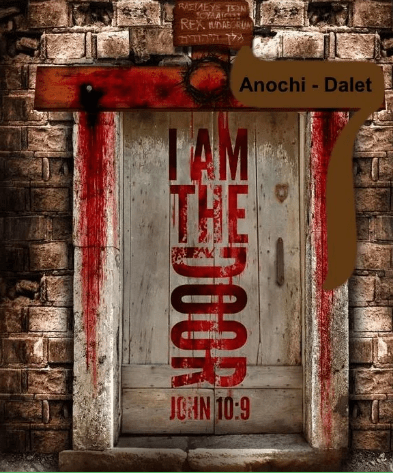
Image courtesy of Mini Manna Moments - God so loved the world that He offered Messiah Yeshua as a Pesach פסח (Passover) sacrifice for sin (John 3:16).
- Chapter 13 in the NT Bible book of 1 Corinthians goes deep about Love.
- Love protects (1 Corinthians 13:7) – New International Version (NIV)
- God is Love (1 John 4:8,16)
- Messiah Yeshua is God made manifest in flesh (John 1:1 | John 10:30)
- Thirteen (13) is associated with covenant, Love, Unity, and Eternity.
“Hear, O Israel! The LORD is our God, the LORD is one (echad)!”
– Deuteronomy 6:4- Echad אחד (one) is the watchword of Israel.
- Echad אחד (One) and Ahavah אהבה (Love) are linked, through the same numerical value: 13.
- The Greatest Commandment is Love (Deuteronomy 6:5 | Matthew 22:36-40)
- Messiah Yeshua promised, “If anyone loves Me, he will keep My word; and My Father will love him, and We will come to him and make Our home with him.” (John 14:23). It means a closer relationship with the Almighty God. This is the kind of family bond that God designed in order to bring heaven to earth.
Your kingdom come.
– Matthew 6:10
Your will be done
On earth as it is in heaven.Nothing puts the adversary on edge like that synchronicity between heaven and earth. That is why we should endeavour to break free from religious apathy and constraints that hinder the flow of the supernatural intent of God.
Prayer is not a duty. It is a privilege to benefit from God’s mercy and grace. In prayer you do not seek for mitigation, you seek God’s glory. What will bring God the glory is your freedom. Failure causes reproach to God’s name. God agonizes when His people fail (Psalm 95:10). God must endure the pain as a Father while fulfilling His impartial obligation as Judge (Deuteronomy 32:4). God, the Judge is bound by His own law (Isaiah 33:22). He will not fulfil His Father’s passion to bless unless the legal matters be resolved (Psalm 58:11).
If you can see what I see, then you are one step away towards turning the Model Prayer from a liturgical relic to your best legal aid tool.
When you are guilty as charged you need a good lawyer. Attorneys play a key role representing or guiding their clients through the maze of legal issues. In John 17, Yeshua demonstrates Messianic advocacy for those needing help with matters beyond carnal limitations.
In the earthly courthouse, it is the attorney that primarily bears witness for their non-technical client. The judge expects of the attorney to adhere to specific legal standards for the matter to be concluded fairly. The client’s primary obligation is to trust their attorney regardless of whether the jargon of the law makes sense. It is not unusual to see attorneys with illustrious credentials win cases easily because their reputation proceeds them and strikes fear in the opposing side.
Presenting the Model Prayer via the attention of Yeshua makes it the “Lord’s Prayer”. Intercessory prayer places you in a place of a lawyer (Luke 11:5-8). You cannot persuade God out of your way into trouble. Because of Yeshua’s covenant relationship with God, He takes ownership of the prayer dialog and pleads on behalf of the one on their knees (Hebrews 7:25). God relents from impending judgement He can righteously apply and allows His Father’s passion to bless.
The criterion is simple. Do it and understand it later. No religious interface or preconditions required. The door to the courthouse opens the moment you begin to realize you need to be there (Hebrews 4:16). At the entrance it is written,
“But everyone who calls on the name of the LORD will be saved,”
– Joel 2:32 (NLT)Literally, everyone means religious limitations do not apply. Somehow there, is where the Quran meets the Bible.
فَإِنكُنتَفِيشَكّٖمِّمَّآأَنزَلۡنَآإِلَيۡكَفَسۡـَٔلِٱلَّذِينَيَقۡرَءُونَٱلۡكِتَٰبَمِنقَبۡلِكَۚلَقَدۡجَآءَكَٱلۡحَقُّمِنرَّبِّكَفَلَاتَكُونَنَّمِنَٱلۡمُمۡتَرِينَ٩٤
“If you ˹O Prophet˺(Muhammad) are in doubt about ˹these stories˺ that We have revealed to you, then ask those who read the Scripture (Torah) before you. The truth has certainly come to you from your Lord, so do not be one of those who doubt”,
– Surah Yunus 10:94In Philippians 2:11, it says Yeshua is Lord. Then in John 14:6, He is also the the way, the truth, and the life. I cannot put it any better than John 8:32 where Yeshua promises, “you will know the truth, and the truth will set you free.”
You become Satan’s worst nightmare the moment you place prayer in the jurisdiction of heavenly law enforcement empowered by the truth. Again, notice what the Bible say about the Lord’s judicial credentials.
“For the LORD is our judge,
– Isaiah 33:22 (NAS)
The LORD is our lawgiver,
The LORD is our king;
He will save us—”Satan (antidikos / satan) is a legalist who does not want his own clients anywhere near the heavenly courthouse. He specializes in digging dirt on those actively trying their best to live right with their Creator then drag them to court.
Wait! Wasn’t Satan evicted from heaven ages past? How possible is it then that the devil would be allowed access to present cases before God, the Judge? Is that fair? That scenario seems to raise more questions than answers, does it not?
Well, there are certain things you and I will never know until we get to heaven. God in His Wisdom has allowed us to know and understand everything we need to accomplish His purposes here in the earth. If the world can come up with virtual conferencing technology like Zoom, then I believe heaven would be doing far much better than that.
The moment Satan sows doubts in your mind about God and His ways, then that becomes the handle with which the devil can use to violate your legal rights before the Lord. Simply because you don’t know how does not mean God is not at work. We have a God who snatches glory out of the jaws of a crisis. Whatever that means, rest assured God, the Father has your best interests figured out (Jeremiah 29:11 | Psalm 8:4 | Romans 8:28).
Satan, the legalist recognizes the jurisdiction of heavenly law enforcement. But to unsuspecting victims, the devil makes it look like he is the law and everything else is mythical.
Satan recognizes God’s “total authority” invested in Yeshua’s judicial work with everyone who calls on the name of the Lord (Philippians 2:8-11 | Matthew 28:18 | Acts 4:12).
Just like reputable earthly attorneys strike fear in the hearts of their opponents, nothing terrifies Satan like the site of the Lord’s name listed on the legal team of a believer. Why? Because Yeshua fulfilled God’s maximum legal condition for restoration of fallen humanity. Through Yeshua’s sacrificial death and resurrection believers are justified (Romans 5:1-3). Satan wouldn’t do that for anyone regardless.
There is no shortage of religious objections to the death and resurrection of Yeshua Christ and the purpose thereof. Nothing sets Satan’s heart dancing like that.
The Hebrew way of doing things is like, “Do it and understand it later”. When you call upon the name of the Lord and it does not work for you, don not quit, return to prayer in humility for guidance. Keep seeking. Keep knocking. Keep asking. It will all become clearer when you press on (Matthew 7:7-11).
One thing for sure, when God promises He delivers (Jeremiah 1:12). God is more interested in your success than you are because He cares about His image in you (Psalm 23:3 | Ezekiel 36:22-23). Yeshua’s sacrifice on the Cross is evidence enough of why humans are worth dying for (Romans 5:8-10).
The Greek way of doing things is rather abstract. I must analyse and understand it fully before I make the first move. Satan likes that too. By the time you return things would probably have moved on and there may never be a second chance. Time on earth is finite. Heaven is all about eternity.
Your Place in Heaven
We have just covered the third reason why Satan hates humans. The devil loses the battle whenever Yeshua intervenes on behalf of someone who calls on the name of the Lord. Technically, you are calling in heaven’s cavalry as soon as these three statements register in your prayer . . .
Your kingdom come.
– Matthew 6:5-14
Your will be done.
On earth as it is in heaven. . ..The Greek mind set is the kingdom of God exists in Heaven not upon the earth. Satan will constantly try to use that perception to erode your advantages. When you call in defeat, that is exactly what you get.
One more thing on the Greek abstract thought concerning things that cannot be accessed or felt with the 5 senses . . ., don’t even try. However, your heavenly Attorney contend you have security clearance in the courts of heaven. Yeshua is “the door” through which we have access to God’s throne room of grace and mercy (John 10:7, 9 | Isaiah 1:18). Now.
“But you have come to Mount Zion and to the city of the living God, the heavenly Jerusalem, to an innumerable company of angels, to the general assembly and church of the firstborn who are registered in heaven, to God the Judge of all, to the spirits of just men made perfect, to Jesus the Mediator of the new covenant, and to the blood of sprinkling that speaks better things than that of Abel.”
– Hebrews 12:22-24Remember you are that embodied spirit being created in the image of God and sent to live in the finite world. You are not a stranger in heaven. The real you (spirit) are welcome to God’s presence. Any time (Isaiah 1:18).
That is reason number four why Satan hates humans. You occupy a place that used to belong to him in heavenly places. You have full security clearance. The devil and his fallen angelic partners in crime don’t. Satan’s top priority is to recruit you to his ranks of losers. His best strategy is to alienate that part of you (spirit / soul) from anything to do with God.
That moment you feel the urge to reason out, debate against the things of God, then you know your mind just been compromised or about to. You cannot argue your way into, or out of what God has already sanctioned before time began.
Your war is not against flesh and blood (Ephesians 6:12). It begins in the unseen realm of the mind. The conflict can never be won on the battlefield until legal matters be settled in the courthouse. Your adversary and his army of agents are specialists in this arena. You stand a chance of victory, every time upon calling on the name of the Lord. Your heavenly Attorney ranks far higher than any principalities and powers (Colossians 2:10 | Ephesians 1:19-23 | 1 Peter 3:18-22). No amount of physical display, religious doctrine or sacrificial rituals can deter Satan or sway God’s opinion.
The Protocol
The fifth reason in our coverage today why Satan hates humans is a question of eschatological significancy.
Invoking the name of the Lord within the context of the “Model Prayer” activates Attorney–client privilege with Yeshua by default.
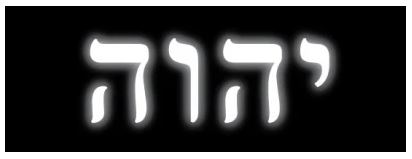
The Hebrew name for God (יהוה) read from right to left; “yod (yud)”, “hey”, “vav”, “hey” (YHWH). The letter “yod (yud)” is a symbol of a “hand”, numerical value = 10. The second letter is “hey”, a symbol of a person with their hands raised meaning “behold!”, numerical value = 5. The Letter “vav” is a symbol of a “nail”, numerical value = 6. The letter “hey” is repeated at the end placing the “vav” (the nail) between two “hey(s)” (persons).
In construction nails (vav) are crucial for connecting material together for stability. Yeshua was connected to the wooden Roman cross by nails (vav) one on each hand (yod/yud). The symbolism is of a mediator reconciling two sides for a stable relationship (Hebrews 12:24).
Total numerical value for יהוה is 26 which reduces to (2+6) = 8. Eighth Hebrew letter is Chet, numerical value of eight (8). Pictographic meaning wall, fence, protect, new beginning. Symbolically expresses a watershed moment for anyone who calls on the name of the Lord. A transition from Satan’s wall of destruction to “freedom” inside the Lord’s “Chet” custody. The new fence is for protection from “within” and keeping the adversary out.
The name for God (יהוה) is the “stamp” that “seals” the Attorney–client privilege in the courts of heaven. Once the matter is expunged, heaven keeps the recorded testimony of Yeshua (the mediator) sealed up except for special refence. Only Yeshua HaMashiach has earned the authority to open the seals (Revelation 5:4). The adversary (antidikos) gets rebuked by God, the Judge every time he tries to resurrect a matter under seal. God is now free to exercise the “Father’s Passion” to bless.
Like all legal documents here in the earth, those who call on the name of the Lord keep a copy of the Attorney–client privilege seal etched with their spirit (2 Corinthians 1:22 | 1 John 5:9-12 | Revelation 12:17 | Revelation 19:10).
“In Him you also trusted, after you heard the word of truth, the gospel of your salvation; in whom also, having believed, you were sealed with the Holy Spirit of promise, who is the guarantee of our inheritance until the redemption of the purchased possession, to the praise of His glory.”
– Ephesians 1:13-14Because spirit beings are from the eternal (timeless) domain, the Attorney–client privilege seal etched with a believer’s spirit also bears infinite validity. The body will perish. But the Spirit (soul) is destined to return where the whole story began – To eternity with God the Creator. The only exception is Satan and his legions of fallen allies (John 16:11 | Revelation 20:7-10).
That enviable privilege is the ultimate reason why Satan hates humans, especially those who call on the name of the Lord. For they are destined to inherit eternal life soaked in the glory of God their creator.
The phrase “Hallowed be Your name” in the Lord’s Prayer demands adherence to certain legal standards during court proceedings. You are not to fear the adversary, treat the (antidikos) prosecution role they carry with respect. Insulting the contender will put you in trouble with the Judge for contempt. Do not let your emotions ruin your day. Resist getting drawn into name calling against Satan like; liar, ugly, during prayer. The saying goes, “people in glass houses don’t throw stones”. Let God be the Just Judge.
The earthly justice system presumes innocence before guilt. In heaven you are already declared guilty by iniquitous association. Everything else you do is just a top-up. All manner of sin is equal before God’s eyes. We are justified by faith in God’s plan of reconciliation, salvation, and restoration. Satan, the slanderer will always try to wind you up and provoke a reaction that will cause delayed justice. You bleed faith over delayed prayer results. God is a “now” operator. Time lives outside of its Creator. The Lord’s business is express. Your response, or lack of it determines the pace of enforcement for the verdict rendered. Be still and know that He is God. Humility isn’t a sign of weakness (Jude 1:9 | James 4:10).
When you pray, always be brief to the point (Matthew 6:7). Never yell at the adversary or at anyone else for that matter. God knows what you think even before you utter a single word (Matthew 6:8 | Isaiah 65:24 | 1 Samuel 1:12-20). Always address the Judge, not the adversary.
God mandates His people to pray for the needs of others. However, avoid adventurous encounters devoid of discernment. Seek God’s will first in all circumstances. You risk a backlash from the adversary if you lean on your understanding (Acts 19:11-16).
Crown your prayer always with gratitude. God is diametrically opposed to complainers.
“Now faith is the substance of things hoped for, the evidence of things not seen“.
– Hebrews 11:1Victory Guaranteed
Satan hates being dragged to court on others’ terms. The devil will do anything to frustrate proceedings because he knows he cannot win (John 16:11).
Guard against religious legalism. It quenches the Spirit and suppresses progress in understanding God’s ways. Do not be afraid of questioning certain religious sensitivities and bending a few rules where scripturally necessary. If Yeshua said it, do it. If Yeshua did it, do it. If it is written, follow through (Matthew 11:29). Persecution is a badge of honour if it is for the Lord’s sake. It might as well supercharge your faith instead of shaking you. Religion can change and let you down. God, your creator does not change (Malachi 3:6). Yeshua’s love for everyone who call on the name of the Lord by faith, not by religion yields priceless dividends (Hebrews 11:6).
Conclusion
God created all things from a timeless spirit realm in heaven. Humans are exceptional embodied spirits with a soul and mind, a three-in-one image of God – a masterpiece. Angels are ministering spirits created to operate in the unseen realm in partnership with man for God’s purposes and glory.
Satan presides over angelic beings that fell out of favour with God but maintain rebellious sway in the earthly realm. Man, fell also due to sinful influence by Satan. God’s judicial plan of reconciliation, restoration, and salvation for man demanded capital punishment of sinless Yeshua on the Cross. By faith, whoever acknowledges and calls on the name of the Lord Yeshua HaMashiach qualifies for justification.
However, Satan and his followers have been sentenced to eternal damnation. That is why it would be naïve (almost criminal) for man to expect anything from Satan less than envy and hatred of the highest degree.
God’s unconditional love and grace counteracts anything that defines Satan’s hatred of you. A practical application of the Lord’s prayer to Yeshua’s Messianic advocacy resolves legal constraints and accelerates God’s legal right to bless.
The Priestly Blessing
The LORD bless you, and keep you [protect you, sustain you, and guard you];
The LORD make His face shine upon you [with favor],
And be gracious to you [surrounding you with lovingkindness];
The LORD lift up His countenance (face) upon you [with divine approval],
And give you peace [a tranquil heart and life].’Amen
Recommended Resource:
- From The Courtroom of Heaven To the Throne Of Grace and Mercy (ISBN: 9780977018048) – by Jeanette Strauss.
- Father, Friend, and Judge: Three Dimensions of Prayer that Receive Answers from Heaven (ISBN-10 : 0768443172 | ISBN-13 : 978-0768443172) – by Robert Henderson.
- DID GOD PRESS THE PAUSE BUTTON?: Decoding The Hidden Message Behind COVID-19 Lockdown (Paperback ISBN-10 : 9970439138 ISBN-13 : 978-9970439133) – by Jim Paige.
-
When 2023 Became 1873
The year is 1873. The Sultan of Zanzibar Barghash ibn Saʿīd, is overlord in East Africa. British missionaries tun critics of the slave trade that is devastating swathes of East Africa. They begin to lobby hard back at Westminster in London to put pressure on Zanzibar for its role as the assembly point for this trade.
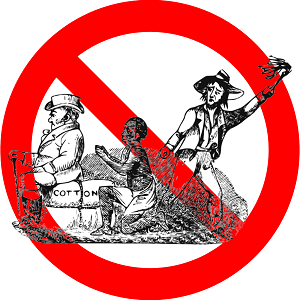
This pressure pays off. On Thursday, 5 June 1873 (Hebrew calendar: 11th of Sivan, 5633), the Treaty for the Suppression of the Slave Trade is concluded by HER Majesty the Queen of the United Kingdom of Great Britain and Ireland, and His Highness the Seyyid Barghash-bin-Said, Sultan of Zanzibar. A supplementary would be signed at London, on Wednesday, 14 July 1875 (Hebcal: 12th of Tamuz, 5635).
The ink is dry. But the prophetic chess pieces about the 1873 East Africa slave trade treaty would remain conspicuously obscure until 150 years later.
The stage is depicted in the Book of Leviticus chapter 25. It is the third book of the Torah (the Pentateuch), also known as the Third Book of Moses and of the Christian Old Testament.
For ancient Israel, Slave laws in Exodus 21:2–6 and Deuteronomy 15:12–18 needed some fundamental adjustments. The year of Jubilee proclaimed to be observed every fiftieth year through all the land, announcing that all slaves were free. The year of liberation of servants whose deprivation had forced them into employment by others.
The anti-slavery provisions associated with the Jubilee year (Leviticus 25:25-28, 39-41) ratifies it more of a political, economic, cultural, environmental, and communal institution, transcending religious doctrine.
Fast forward to the new year 2023, the verb, “Slave”, and the noun, “Slavery”, have both taken on a whole new meaning.
Current Chinese economic initiatives in Africa have also raised concerns of aggressive practices involving slave labor.
A report published on March 7, 2018, of the Committee on Foreign Affairs (House Hearing, 115 Congress) sighted serious labor abuse in the South Sudanese oil fields for example, as one of many impacted on the continent.
The Chinese Government is directly benefitting from instability and corruption by extracting resources with virtually no benefit for the people who inhabit the land and even using enslaved locals for their labor.
An estimated 2.8 million migrant women from third-world economies work as maids in the Middle East. The construction sector in the Arab States is dominated by migrant workers from Asia and Africa. These workers face insurmountable human rights challenges. They are bound to their employers under a system known as Kafala.
The kafala, or sponsorship, system defines the relationship between foreign workers and their local sponsor, or kafeel, which is usually their employer.
In 2018 a shocking BBC documentary presented the plight of some migrant women trafficked to the Middle East as, “Foreign maids on ‘hell’ of kafala jobs”. The documentary highlights the grim reality of women who leave their homes in depraved third world economies to work as maid in the Middle East hoping for a better life. What sometimes await is hell.
You would wish that the sheer Leviticus 25 detail would make it into the foundation of international legislature. Rather, it strongly suggests that the world community consider the laws as a utopian literary fiction, and something unique to ancient Israel.
It seems better to believe that widespread abuse of the kafala labour condition, or the system in which some people are owned by others happen not because the jubilee model is unfeasible, but because the wealthy are unwilling to accept the social and economic parity that would be costly and disruptive to them.
For corrupt African governments, exporting workers is easier than creating jobs for them at home. Foreign exchange remittances sent back by workers from abroad contribute a significant chunk of government revenue.
Looking back God, through Moses intended to pass down the Levitical Jubilee model to effectively prevent cycles of intergenerational poverty and, create a social and economic parity that would make the world a better place to be.
Some in Israel today observe the “Shemitah Year” portion of the Leviticus 25 Jubilee year – occurring after every seventh Sabbath year, thus, every 50 years – to not work the land and give it a rest after the seventh “sabbatical” year. It is not clear whether current labour laws implement anything close for foreign labourers contributing to the Jewish state economic success.
Sabbatical Years during the second half of the 20th century fell during 5712 (1951/52); 5719 (1958/59); 5726 (1965/66); 5733 (1972/73); 5740 (1979/80); 5747 (1986/87); and 5754 (1993/94). increments of seven (7) 
Uganda Police load a coffin into their pick-up truck after members of The Torture Survivors Movement Uganda, who were demonstrating over the continued deaths and torture of migrant workers in Saudi Arabia and other Arab countries, dropped it outside the Saudi Arabia Embassy in Kampala on August 23, 2022. PHOTO | ABUBAKER LUBOWA Towards the end of year 2022, The United Arab Emirates (UAE) began repatriating thousands of immigrant workers mostly back to Africa following growing outrage over human rights abuse and racism.
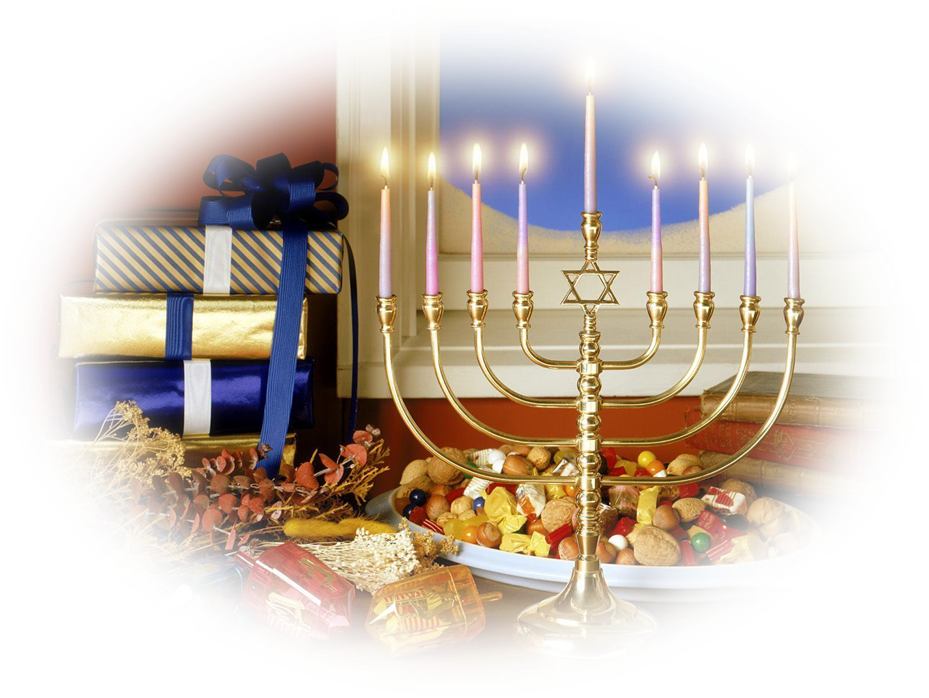
Rosh Hashanah 5783 – Jewish New Year – began on the evening of Sunday, 25 September 2022 until the evening of Tuesday, 27 September 2022 in Gregorian calendar.
Whether the authorities in the UAE know it or not, repatriation of their kafala subjects is implementation of the ancient Jubilee labour laws instituted 3,230 years ago in Leviticus 25. The first Jubilee year according to post-Exodus chronology is 1207B.C. (2553 on the Hebrew Calendar).
Practically the Forty-nine-Year Shemitah and Fifty-year Jubilee cycles take us exactly 150 years back to 1873 East Africa slave trade treaty. That is when 2023 becomes 1873 all over again.
‘For thus says the Lord God: “Indeed I Myself will search for My sheep and seek them out. . ., so will I seek out My sheep and deliver them from all the places where they were scattered on a cloudy and dark day. And I will bring them out from the peoples and gather them from the countries, and will bring them to their own land; . . . I will seek what was lost and bring back what was driven away, bind up the broken and strengthen what was sick.”’
– Ezekiel 34:11 – 16 (NKJV)Here comes four more striking parallels in recent past where the Shemitah and Jubilee Year cycle events made manifest with incredible accuracy.
- Tue, 24 June 1873 (Hebcal 30th of Sivan, 5633); First public warning of rising anti-Semitism in the U.S. is given in a sermon by Rev. Henry Ward Beecher.
- Henry Ward Beecher (1813 – 1887) was an American Congregationalist clergyman, social reformer, and speaker, known for his anti-slavery activism.
- Mon, 30 October 1922 (Hebcal 9th of Cheshvan, 5683); Benito Mussolini becomes Premier of Italy. Though initially pro-Zionist and on good terms with the Jewish population, he is later prodded by Hitler to adopt anti-Semitic policies. Fast-forward to 2022/2023 — breaking news stories begin to flash across social media, television, and print press.
- Anti Semitism Is On The Rise And Not Just Among High Profile Figures
- Antisemitic Speech Is Getting Louder Hate Crimes Are Rising
- Sharp Rise On Antisemitism Everywhere Notably America
- Antisemitic Hate Crimes Rise In Major Cities
- Sat, 22 July 1922 (Hebcal 27th of Tamuz, 5682); Britain granted Mandate for Palestine. Transjordan set up on three-fourths of the area, leaving one fourth for the Jewish national home. Jewish Agency representing Jewish community vis-a-vis Mandate authorities set up. Fast-forward to Wen, 30 Nov 2022 — The General Assembly (UNGA) adopted five resolutions against Israel, including a text on UN to mark ‘Nakba Day’ – the Jewish state’s establishment in 1948 as catastrophe.
- In 2022 alone, the UNGA adopted 15 resolutions on Israel vs. 13, resolutions on rest of the World combined. All this at a time when Russia is pulverizing Ukraine with devastating bombardment, Iran killing hundreds of its own citizens for mass protesting draconian Islamic hijab dress code, and the Taliban in Afghanistan cracking down on women rights to education and social liberties.
- Sat, 6 October 1973 (Hebcal 11th of Tishrei, 5734); Arab states coalition led by Egypt and Syria attacked Israel on the holiest day of the Jewish calendar, Yom Kippur. Fast-forward Oct 2022.
- Israel found itself amid a terror wave. Since the start of 2022, over 4,000 Palestinian attacks perpetrated. By the end of 2022, Israel security killed more than 180 Palestinians in the West Bank and Palestinian assailants killed over 20 in Israel.
- Israel forces reportedly carried out more than 200 airstrikes against Iranian targets in neighbouring Syria in year 2022 alone.
- Thu, 24 February 2022 (24th of Adar I, 5782); Russia invades Ukraine, a European nation led by a Jewish president Volodymyr Zelenskyy. Russia is a principal ally of the Anti-Israel alliance led by Iran and Syria.
Russian bombardment of Ukraine urban centers That looks like a bleak picture indeed. But throughout history, God excels at turning around that which was meant for bad to the good of His people (Deuteronomy 23:5).
The violence spilling over into year 2023 from 2022 simply means birth pangs of something as significance as Levitical Jubilee dividends.
“Those who plant in tears will harvest with shouts of joy.”
– Psalm 126:5 (NLT)Just like in every game, there are always winners and losers.
Israeli students celebrate Shavuot with Prime Minister Benjamin Netanyahu The return of Benjamin Netanyahu (Bibi) as Prime Minister of Israel in 2023 signals the last nail for those seeking to wipe Israel off the map. The last letter of the name Benjamin (בנימין) is quite telling.
Sixth Hebrew letter: Vav Numerical value of six. Pictographic meaning of hook, nail. Man is to work for six days and then rest on the seventh day, Shabbat. (Exodus. 16:23-30; 20:8-11)
The Jubilee year 2023 / 5783 comes at the back of eventful Shemitah moment 2022 / 5782.
Benjamin (בנימן) in the Bible is the last and youngest son of Israel’s patriarch Jacob (Genesis 35:18). Benjamin is the second son of Rachel — the first being Joseph — and she dies giving birth to him. Whenever a seed gets buried in the ground, new life springs up on the surface. Whatever has been lost during the Shemitah time 2022 / 5782 will soon begin to manifest afresh.
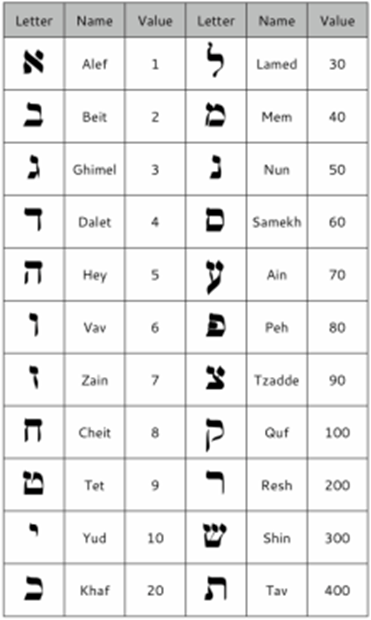
The gematria (numerical) value of Benjamin (בנימין) is 162 which reduces to (1+6+2) = 9
Ninth Hebrew letter: Tet Numerical value of nine. Pictographic meaning in this context, fruitfulness, judgment.
Fruitfulness for those who have spent the last Shemitah time 2022 / 5782 sowing in tears. Judgement for the perpetrators and profiteers in those teary moments.
Unless Russia and its alliance of Belarus, Syria, Iran (and even Turkey under the radar) changes course on Ukraine and Israel, they can expect a colossal cost for their adventure when the Jubilee year indictment strikes.
The same goes for several African regimes that consistently vote against Israel in the biased UNGA resolutions yet, accepting the diplomatic and economic blessings extended by the Jewish state.
God’s promises do not have an expiry date.
“I will bless those who bless you, And I will curse him who curses you; And in you all the families of the earth shall be blessed.”
– Genesis 12:3All those prophetic chess pieces you didn’t know about are about to be made manifest.
Jesus’ connection to the year of Jubilee has been proclaimed by Isaiah.
“The Spirit of the Lord GOD is upon me, Because the LORD anointed me To bring good news to the humble; He has sent me to bind up the brokenhearted, To proclaim release to captives And freedom to prisoners; To proclaim the favorable year of the LORD And the day of vengeance of our God; To comfort all who mourn”
– Isaiah 61:1-2 (NASB)- Ecclesiastes 1:9: “What has been will be again, and what has been done will be done again; there is nothing new under the sun ” – (BSB).
- Malachi 3:6: “For I am the LORD, I do not change;”
- Hebrews 13:8: “Jesus Christ is the same yesterday, today, and forever.”
The human story began in the garden with rivers (Gen 2:8,10), it will end in the garden with ‘the’ river in its midst (Rev 22:1).
Creation began with the Light of God (Gen 1:3). The new Heaven and the new earth will begin with the Glory of God being the light in the New Jerusalem (Rev 21:22,23)
Abraham crossed the Jordan River from Ur of the Chaldeans in the east to the Promised Land at Shechem and (Jeru)Salem (Genesis 12:1).
About 685 years later his great grandchildren also crossed the Jordan from the east and entered the promised land via Jericho (Joshua 3 – 5).
Children begin life by total dependence on the parents. Advancement in age enforces total dependence on others even for the most basic of tasks.
Since life expectancy of 50 years or less is what most people can manage, that makes the Levitical Jubilee cycle such a unique, usually only once a lifetime event. I am quite excited to see what else 2023 (5783) has in store.
I wish you a blessed Jubilee season 2023 (5783).
Shalom.
Audio mostly in Luganda Language - Tue, 24 June 1873 (Hebcal 30th of Sivan, 5633); First public warning of rising anti-Semitism in the U.S. is given in a sermon by Rev. Henry Ward Beecher.

-
Subscribe
Subscribed
Already have a WordPress.com account? Log in now.
 Faith Matters